What to Do If Your Backflow Tester Is Not on Your Utility’s Approved List
You booked the annual test, the technician showed up, and the assembly may even have passed.
Then the utility says something like: “We can’t accept this report because the tester is not on our approved list.”
That is a real compliance problem, but it is not the kind you solve by guessing.
Some utilities rely on city-approved or utility-registered tester lists. Some rely on state certification plus current calibration documents. Some require both. If the person who performed the test does not match that program’s approval rules, the utility may leave the account open even if the field work itself looked fine.
This article explains what that warning usually means, what official utility programs actually require, and how to figure out whether you need a corrected filing, a registration fix, or a completely new test.
For broader background, keep why backflow testing is required, how utilities track backflow test compliance, and our FAQs nearby.
Short answer: stop and verify the approval rule before you assume the test counts
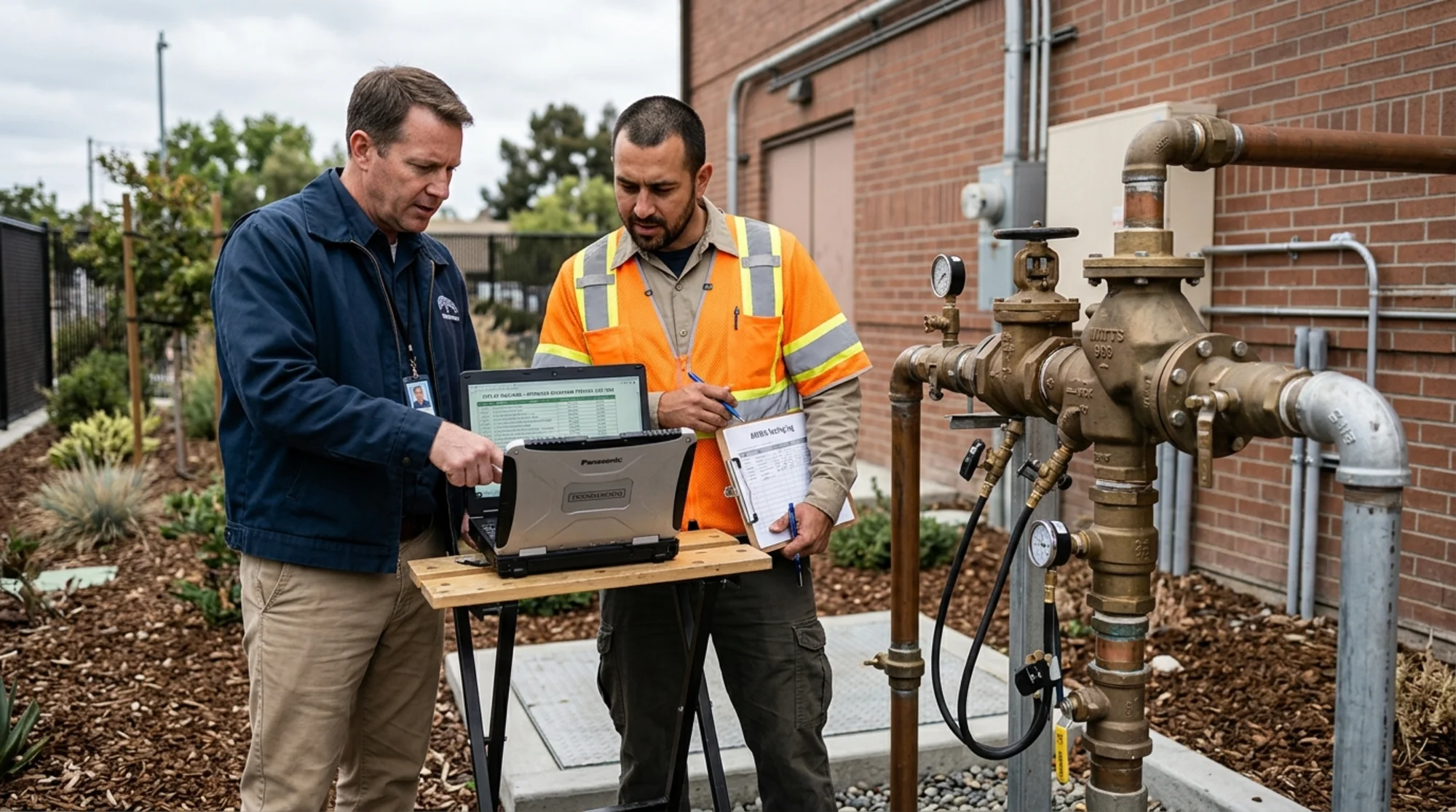
Property manager and backflow tester comparing a utility-approved tester list on a laptop beside an outdoor backflow assembly
If your tester is not on the utility’s approved list, the safest assumption is the compliance record is still unresolved until the utility says otherwise.
That does not always mean the tester is unqualified in general. It can mean several different things:
- the tester lacks the state credential your program requires
- the tester has the state credential but is not registered with the local utility
- the tester is approved, but their calibration documents are not current in the utility’s system
- the utility keeps a public approved list and the tester simply is not on it yet
- the report was submitted without the exact documents the utility needs to accept that tester
The key is that utilities are not just tracking whether someone took pressure readings in the field. They are tracking whether the person, equipment, and paperwork meet the program rules used to protect the public water system.
EPA and CDC both frame backflow prevention as a drinking-water protection issue, not just a maintenance chore. That is why utilities care about recognized testers, proper documentation, and records they can defend later if there is a contamination question.
If you are already dealing with a rejected report, pair this guide with why your backflow test report was rejected and what to do if your utility says it never received your backflow test report.
What “approved” means in real utility programs
There is no single national approved-list rule. The meaning changes by jurisdiction.
Charlotte Water: approved testers list
Charlotte Water says all backflow prevention devices must be tested by an approved tester and links to a list of approved testers. That is the clearest version of this issue: if the person who tested your device is not on the list Charlotte recognizes, you need Charlotte to tell you whether the tester can be added or whether another approved tester must handle the work.
Philadelphia Water Department: city-certified technicians
Philadelphia Water Department publishes City-Certified Backflow Prevention Technicians resources and says those technician lists are updated weekly. That tells owners two important things: the utility is actively curating who it recognizes, and list status can change over time.
Austin Water: state license plus Austin registration
Austin Water requires testers to hold a TCEQ Backflow Prevention Assembly Tester license, register with Austin Water, register their gauge information, and then submit reports through the WEIRS database. In other words, a tester might hold a real Texas credential and still not be fully accepted for Austin’s workflow if the local registration step is missing.
Seattle Public Utilities: state-certified tester plus certification and calibration records on file
Seattle Public Utilities says all backflow prevention assemblies must be tested by a State of Washington Certified Backflow Assembly Tester. It also says the tester is responsible for providing Seattle with current certification and calibration certificates, and that test reports cannot be submitted without that information in the system.
Washington state: public BAT list and minimum report content rules
Washington Department of Health publishes Backflow Assembly Tester duties, field-test-report content requirements, and a BAT Public List. That is a good example of how a state regulator and a local utility can work together: the state defines minimum credentialing and reporting expectations, while the utility controls what it will accept operationally.
So when a utility says your tester is “not approved,” the next question is not “Are they a plumber?” It is:
“Which exact approval requirement is missing in this program?”
If you want local context while you compare requirements, our pages for Austin, Texas, Charlotte, North Carolina, Philadelphia, Pennsylvania, and Seattle, Washington are useful starting points. Utility-specific summaries like Austin Water backflow testing, Charlotte Water backflow testing, and Philadelphia Water Department backflow testing help translate the rules into a property-owner workflow.
What to do immediately after you get this notice
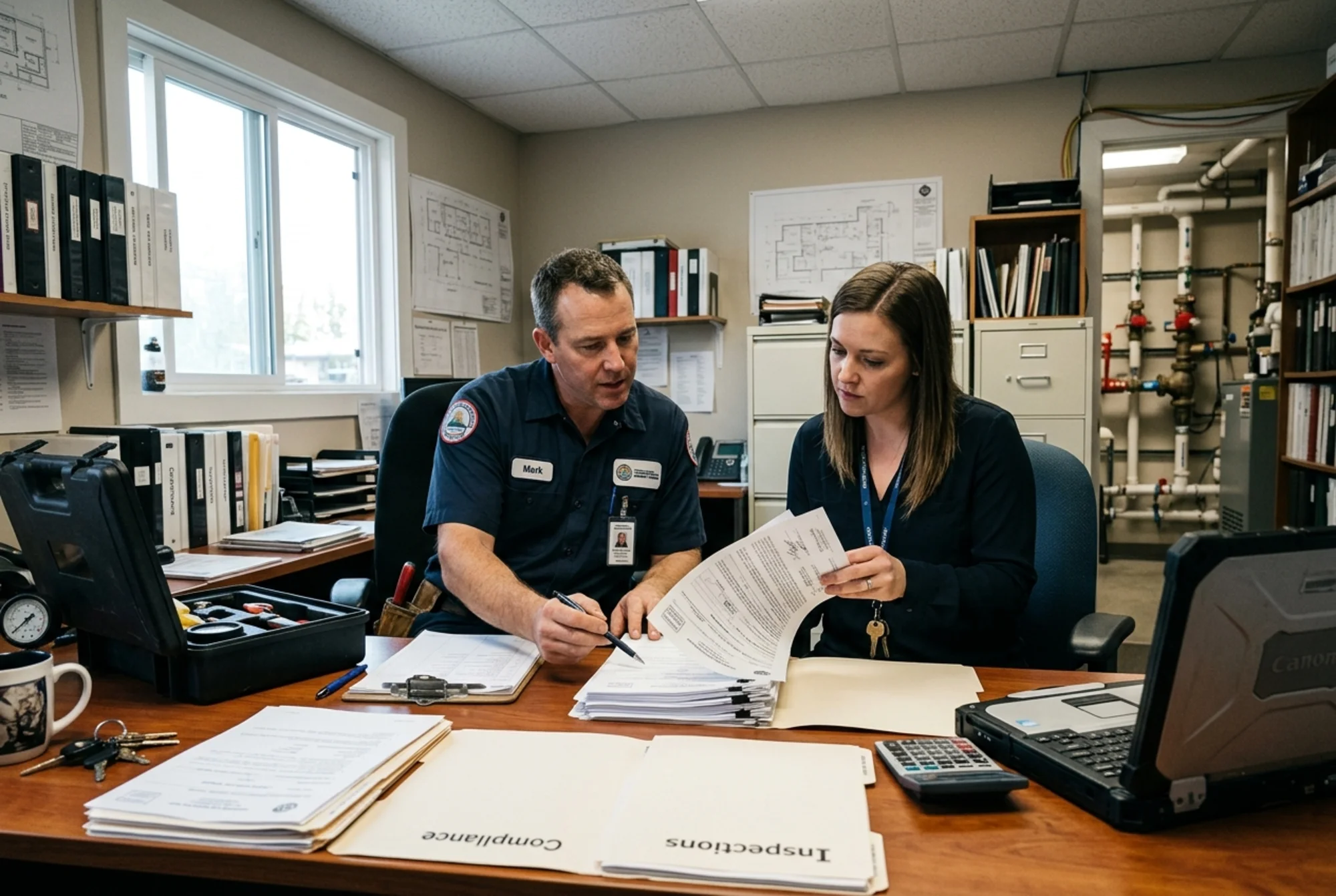 Property manager and certified backflow tester reviewing approval paperwork in an office with documents turned away and no visible readable text
Do these steps in order.
1. Ask the utility what exactly is missing
Use simple wording:
“When you say the tester is not approved, do you mean the person lacks the required credential, is not registered with your utility, or has missing certification or calibration documents on file?”
That one question can save a lot of wasted motion.
2. Ask whether the existing test can be cured or whether a new test is required
Do not assume you need to start from zero. In some programs, the utility may allow the tester to finish a missing registration or submit updated credentials. In other programs, the utility may require a new test from a recognized tester.
You want the utility’s answer in plain language:
- Can this tester fix the approval problem?
- If yes, what must they submit?
- If no, do you require a complete retest by an approved tester?
3. Get the full paperwork package from the tester
Ask for:
- the completed test report
- the tester’s license or certification number
- proof of local utility registration, if they have it
- the test kit serial number and calibration certificate
- proof of submission, if they already filed anything
- photos of the assembly data tag if available
Even if the utility will not accept the report yet, you still want the paper trail.
4. Check whether the utility publishes a public list
Some utilities and state programs publish approved or certified tester directories. Charlotte Water points owners to an approved tester list. Washington Department of Health publishes a BAT Public List. Philadelphia publishes technician resources and lists it updates weekly.
If there is a public directory, search it yourself before you argue with anyone. That turns a vague dispute into a concrete yes-or-no check.
5. Preserve your deadline position with fast follow-up
If the utility’s due date is close, reply quickly and document that you are actively correcting the issue. Even if the original test does not end up counting, a prompt paper trail is much better than silence.
When you probably need a different tester
Sometimes the answer is pretty clear.
You should expect to hire an approved replacement tester when:
- the utility confirms the original tester is not recognized in that program
- the tester cannot produce the required state credential
- the tester cannot provide current calibration documentation the utility requires
- the local program requires direct submission through an approved portal the tester cannot access
- the utility tells you it needs a fresh report from someone already on its accepted list
That does not automatically mean the first technician was acting in bad faith. It may just mean they work in other jurisdictions and missed a local approval step. But from the owner’s side, the practical question is still the same: what will close the record now?
If the assembly was recently repaired or replaced as part of the same service visit, also keep how to update utility records after replacing a backflow preventer handy. Record mismatches get worse when approval issues and device-change issues overlap.
Questions to ask the next tester before you book
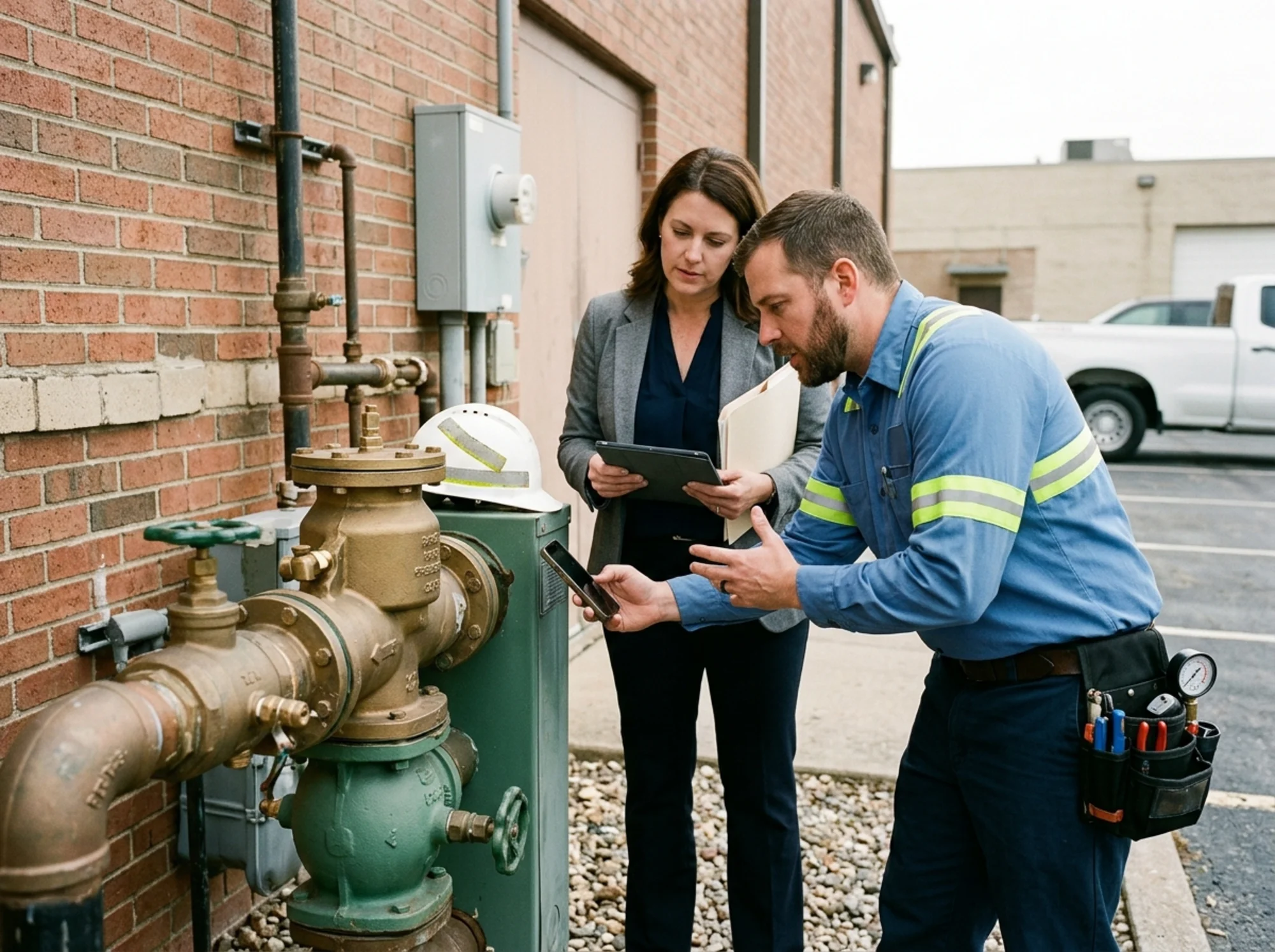 Certified backflow tester at a commercial property photographing an assembly serial tag while discussing utility submission steps with a property manager
Before you schedule a replacement appointment, ask these questions directly:
- Are you approved, registered, or otherwise accepted by my utility’s backflow program?
- Can you point me to the utility or state list where I can verify that?
- Are your certification and gauge calibration records current?
- Do you submit reports directly to this utility, and through what system?
- If the utility rejected a previous tester, have you handled this utility’s workflow before?
- Will you send me the filed report and proof of submission for my records?
A solid provider should answer those quickly and without defensiveness.
If they cannot explain the approval path, that is a warning sign.
How to avoid this next year
Most approved-list problems are preventable.
A simple annual workflow helps:
- verify the utility or jurisdiction before booking
- check the tester against the utility or state directory when one exists
- ask for current certification and calibration details up front
- confirm who submits the report and through which portal or email channel
- save the completed report and any submission proof immediately
- verify the utility closed the record instead of assuming it happened automatically
That may feel like extra admin, but it is easier than paying for a rushed retest during deadline season.
The bottom line
If your backflow tester is not on your utility’s approved list, do not treat that as a minor paperwork footnote.
Treat it as a program-acceptance issue that needs a precise answer from the utility:
- what approval is missing,
- whether the current tester can cure it, and
- whether the utility needs a new report from an approved tester.
Once you know that, the fix usually becomes straightforward.
Until then, the safest assumption is that the annual compliance record is still open.
If you need to line up a qualified provider after the utility clarifies the rule, start with your local city and program pages, then find a backflow tester near you before the deadline gets tighter.
Sources
This article references guidance and regulations from authoritative sources including:
- U.S. Environmental Protection Agency (EPA) - Cross-Connection Control and Backflow Prevention Fact Sheet (PDF)
- American Water Works Association (AWWA) - Cross-Connection policy statement
- Texas Commission on Environmental Quality (TCEQ) - Occupational Licenses: Backflow Prevention Assembly Tester (BPAT)
- Washington State Department of Health - Cross-Connection Control and Backflow Prevention
- Austin Water - Backflow Prevention Assembly Tester Information
- Charlotte Water - Commercial Development / Backflow
- Philadelphia Water Department - Cross-Connection & Backflow Compliance
- Seattle Public Utilities - Backflow Assembly Testing
- Centers for Disease Control and Prevention (CDC) - About Drinking Water
Last updated: May 31, 2026