What to Do If Your Utility Rejects a Backflow Test Because the Gauge Calibration Is Expired
A backflow test can look complete on site and still get rejected later for one very specific reason: the test gauge calibration was expired, missing, or not acceptable to the utility’s program.
Utilities are not only tracking the device. They are also tracking whether the test was performed by the right person, with the right paperwork, using equipment the program can trust.
So if the utility says the gauge calibration is a problem, do not jump straight to “the assembly failed” or “the tester is a fraud.” First figure out whether the issue is missing paperwork, an actually expired calibration date, a tester-registration problem, or a local utility rule the tester did not satisfy.
For related context, keep why backflow testing is required, why your backflow test report was rejected, and our FAQs nearby.
This is usually a report-validity problem before it is a plumbing problem
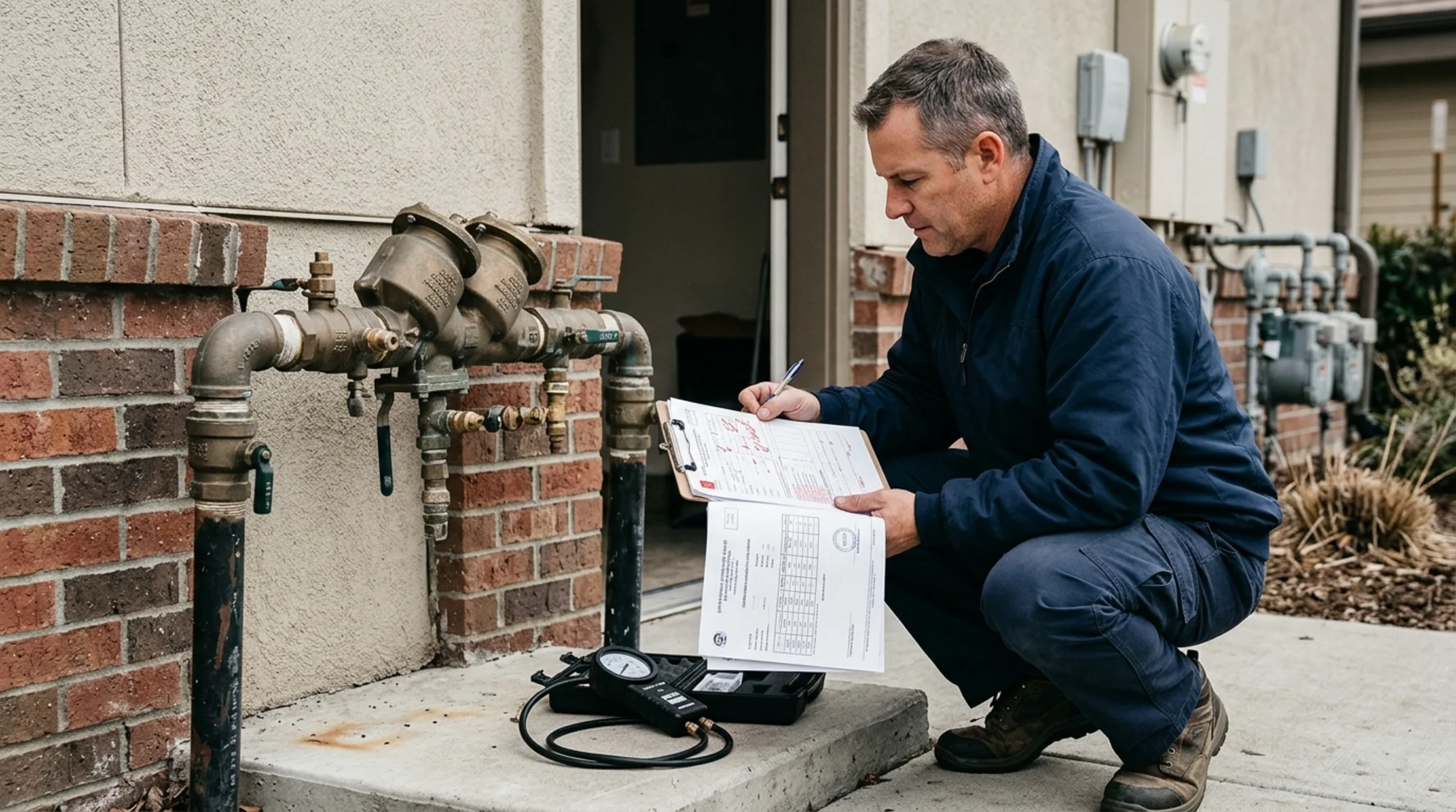
Property manager reviewing a rejected backflow report and a differential pressure gauge calibration certificate beside an outdoor backflow assembly
An expired calibration notice does not automatically mean the assembly itself is defective.
It usually means the utility is not willing to close the compliance record until it can confirm the test was performed with properly documented equipment.
A failed assembly reading points to repair, rebuild, or replacement. A calibration issue points first to test validity and documentation. The device may have passed mechanically, but the utility may still keep the property open because it cannot rely on the submitted test packet.
Washington’s rule shows how specific this gets. WAC 246-292-036 says a completed backflow inspection and field test report must include field test kit information such as the manufacturer, model, serial number, and the date of the most recent laboratory accuracy verification or laboratory calibration. Seattle Public Utilities goes a step further and says test reports cannot be submitted unless the tester’s certification and test equipment calibration documents are already in its system.
If you want local context while you sort that out, compare our city pages for Austin, Texas, Seattle, Washington, and Charlotte, North Carolina.
What official programs actually require
Utilities do not all use the same workflow, but the official sources point in the same direction: calibration records are not optional paperwork.
Seattle Public Utilities
Seattle requires annual testing by a State of Washington Certified Backflow Assembly Tester, and it says the tester is responsible for providing current certification and test-equipment calibration certificates. SPU explicitly notes that test reports cannot be submitted without that information in the system.
Washington State rule
Washington WAC 246-292-036 requires field test reports to include the test kit manufacturer, model, serial number, and the date of the most recent laboratory accuracy verification or calibration. That means the report itself is supposed to carry traceable equipment information.
Austin Water
Austin Water requires each tester to submit a complete and legible Test and Maintenance Report within five calendar days through the WEIRS database. It also requires Austin registration materials that include a photo of the gauge and a calibration certificate showing the gauge passed calibration requirements within the last 12 months.
TCEQ licensing still matters too
Texas also requires a person who tests or repairs backflow prevention assemblies to hold a TCEQ license. In other words, a tester can need both a real state credential and utility-specific calibration or registration compliance.
Some programs layer in local approval rules
Charlotte Water’s backflow page says all backflow prevention devices must be tested by an approved tester. That is a useful reminder that “my tester is certified somewhere” and “my utility will accept this tester’s paperwork” are not always the same thing.
If you are comparing program workflows, our utility pages for Austin Water, Charlotte Water, and Philadelphia Water Department are useful jump-off points.
What to do right away if the utility flags the calibration
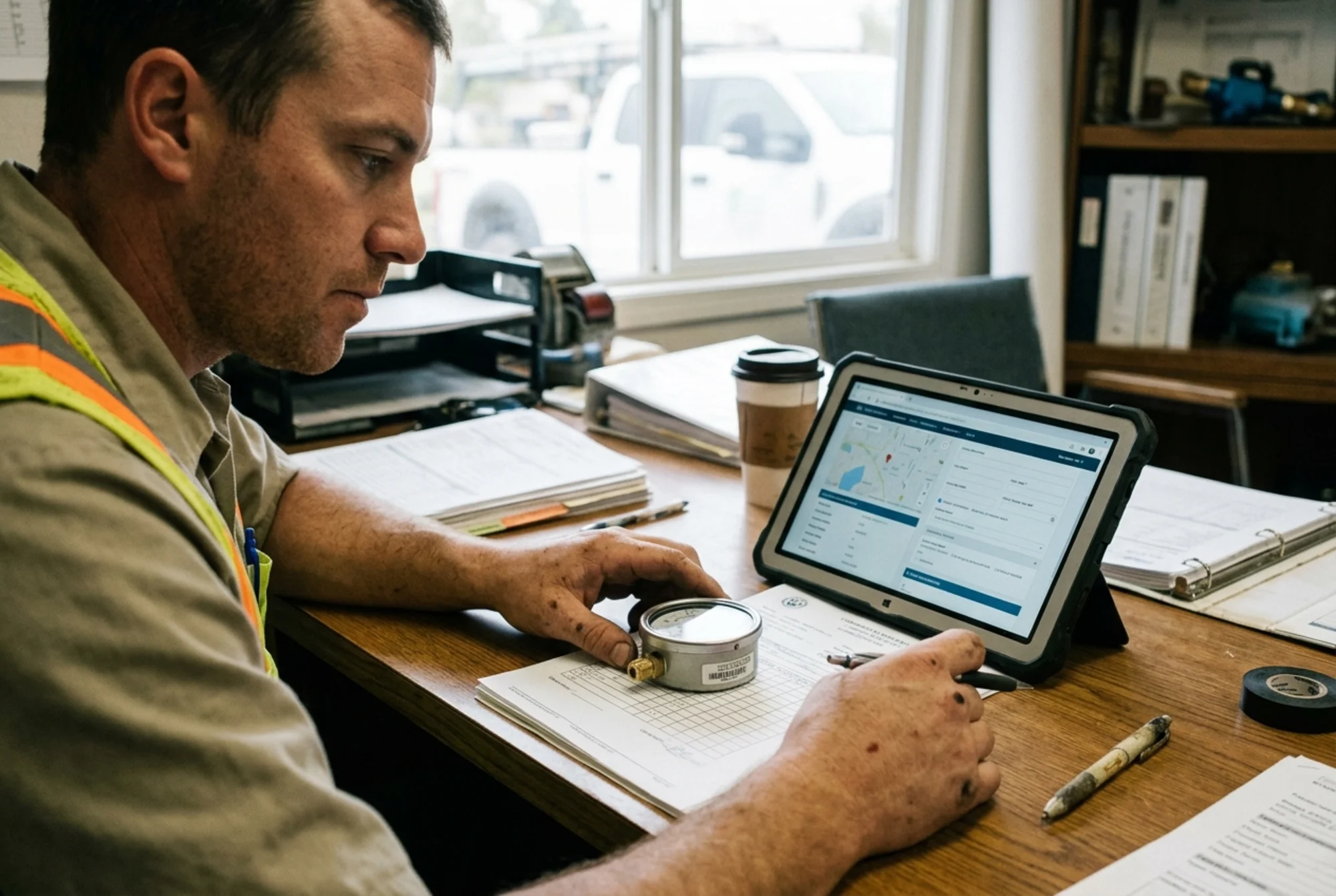 Certified backflow tester organizing a gauge serial number photo, calibration certificate, and utility portal submission details on a desk
Move in this order.
1. Ask the utility exactly what is wrong
Use direct wording:
“Was the gauge calibration actually expired on the test date, or is the issue that the calibration document was missing from the submission or not on file in your system?”
That one question can separate a paperwork fix from a retest.
2. Get the full packet from the tester
Ask for:
- the completed test report
- the test gauge manufacturer, model, and serial number
- the calibration certificate used for that gauge
- the date the report was submitted
- proof of submission if available
- the tester’s certification or license number
Do not settle for verbal reassurance. You want the actual documents.
3. Compare the calibration date to the test date
If the gauge certificate was still current on the date of the test, the problem may be a missing upload, a mismatched serial number, or an incomplete registration file.
If the gauge certificate had expired when the test was performed, the utility may decide the original test cannot be accepted.
4. Confirm whether corrected paperwork is enough
If the equipment was current but the paperwork was incomplete, some utilities may accept a corrected submission or updated credential packet. If the calibration had actually lapsed, the utility may require a fresh test from a tester whose certification and gauge records are current.
Do not guess which one applies. Ask the utility to say it plainly.
5. Protect your deadline position
If your due date is close, tell the utility you are actively correcting the calibration issue and ask what temporary documentation they want while the fix is in progress. Silence is what turns a paperwork problem into an overdue problem.
If you are already juggling a separate submission issue, also read what to do if your utility says it never received your backflow test report and who submits the backflow test report: the owner or the tester?.
When you probably need a new test instead of corrected paperwork
A new test is often the safer path when:
- the calibration certificate was already expired on the actual test date
- the gauge serial number on the report does not match the certificate
- the tester cannot produce a valid calibration certificate at all
- the utility says the tester’s calibration or certification records were not acceptable for that jurisdiction
- the utility explicitly requires a new valid report rather than a corrected file
If the utility has already told you the original test is not valid, the better question is usually:
“Who can give me a compliant test packet the fastest?”
That may mean hiring a different provider, especially if the first tester also missed the utility’s local approval or submission rules. If that starts to look likely, pair this article with what to do if your backflow tester is not on your utility’s approved list.
Questions to ask the replacement tester before you book
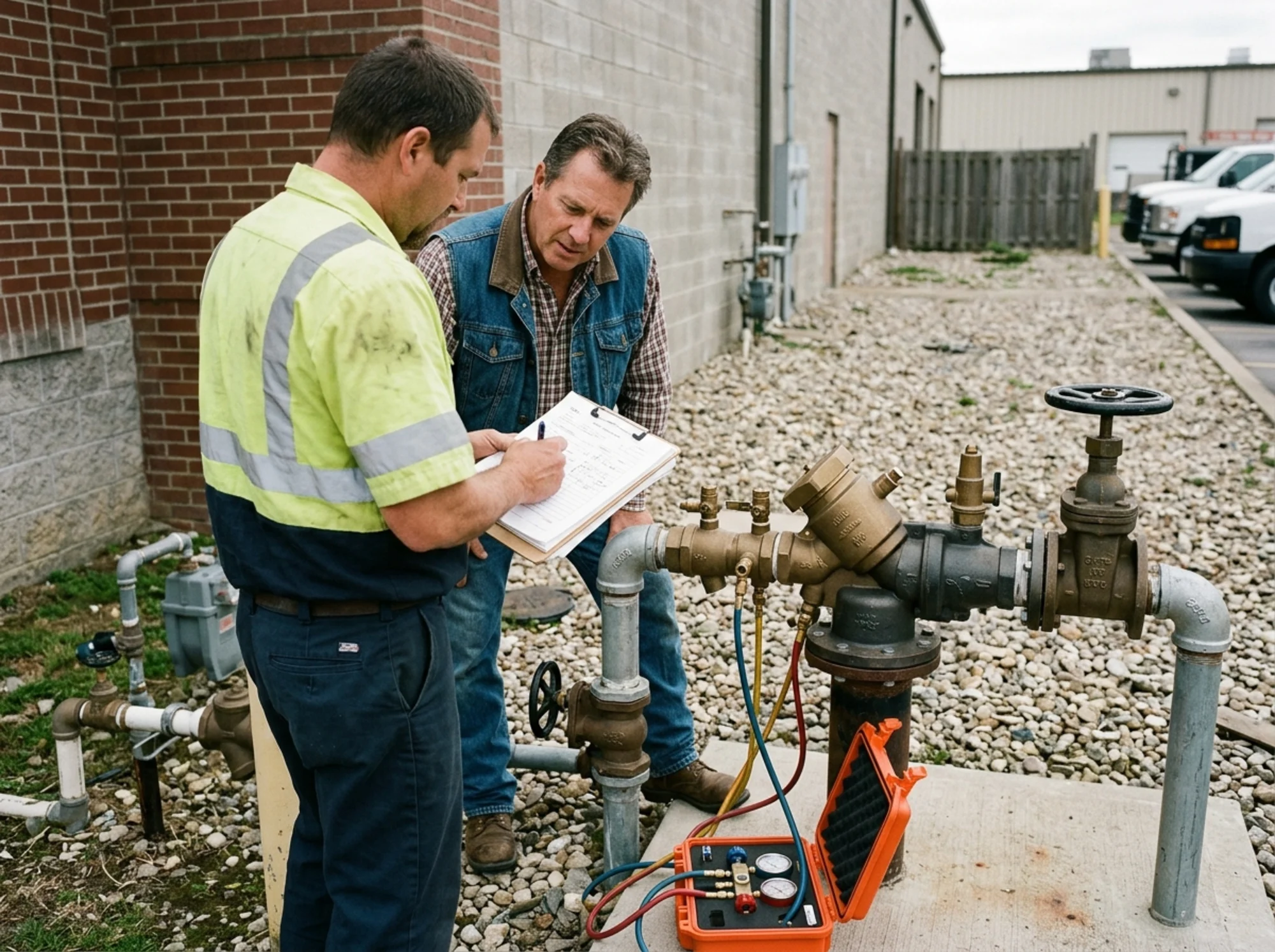 Property owner and an approved backflow tester reviewing a corrected test packet beside a commercial water service assembly
Before scheduling the follow-up appointment, ask these questions directly:
- Is your tester certification current for this jurisdiction?
- Is your gauge calibration current, and can you send the certificate before the visit?
- Does this utility require you to be locally registered or approved?
- Will you submit through the utility’s required portal or channel?
- Will you send me the exact filed report and proof of submission?
- If the utility rejected a prior test for calibration reasons, have you handled this program before?
If they get vague about gauge records, that is the warning sign.
How to avoid this problem next year
Most calibration-based rejections are preventable.
A simple workflow helps:
- verify the utility or jurisdiction before booking
- ask for the tester’s current credential and gauge calibration certificate up front
- confirm the gauge serial number on the certificate matches the one used on the report
- ask how the report will be submitted and how long it usually takes to post
- save the final report and submission proof the same day
- confirm the utility marked the assembly compliant instead of assuming it happened automatically
That sounds administrative because it is. But EPA, CDC, and utility cross-connection programs all treat drinking-water protection as a documented process, not a handshake.
If you manage several sites, add calibration checks to your annual scheduling checklist along with assembly serial numbers, due dates, and utility contact details.
The bottom line
If your utility rejects a backflow test because the gauge calibration is expired or missing, treat it as a test-validity and compliance-record problem that needs a precise answer fast.
Find out whether the calibration was actually out of date or simply missing from the file. Get the full report packet. Compare the gauge certificate to the test date and serial number. Then ask the utility whether corrected paperwork will solve it or whether a new test is required.
That approach is much faster than debating the problem in the abstract — and it gives you the best chance of closing the record before the deadline turns into a violation.
Sources
This article references guidance and regulations from authoritative sources including:
- U.S. Environmental Protection Agency (EPA) - Overview of the Safe Drinking Water Act
- American Water Works Association (AWWA) - Cross-Connection Control & Backflow Prevention resources
- Washington State Legislature - WAC 246-292-036: Backflow preventer inspection and field test report content
- Washington State Department of Health - Cross-Connection Control and Backflow Prevention
- Seattle Public Utilities - Backflow Assembly Testing
- Austin Water - Backflow Prevention Assembly Tester Information
- Austin Water - Backflow Prevention Overview
- Texas Commission on Environmental Quality (TCEQ) - Occupational Licenses: Backflow Prevention Assembly Tester (BPAT)
- Charlotte Water - Backflow
- Philadelphia Water Department - Cross-Connection & Backflow Compliance
- Centers for Disease Control and Prevention (CDC) - About Drinking Water
Last updated: June 2, 2026