Top Backflow Preventer Brands and Models: Watts, Wilkins, Febco
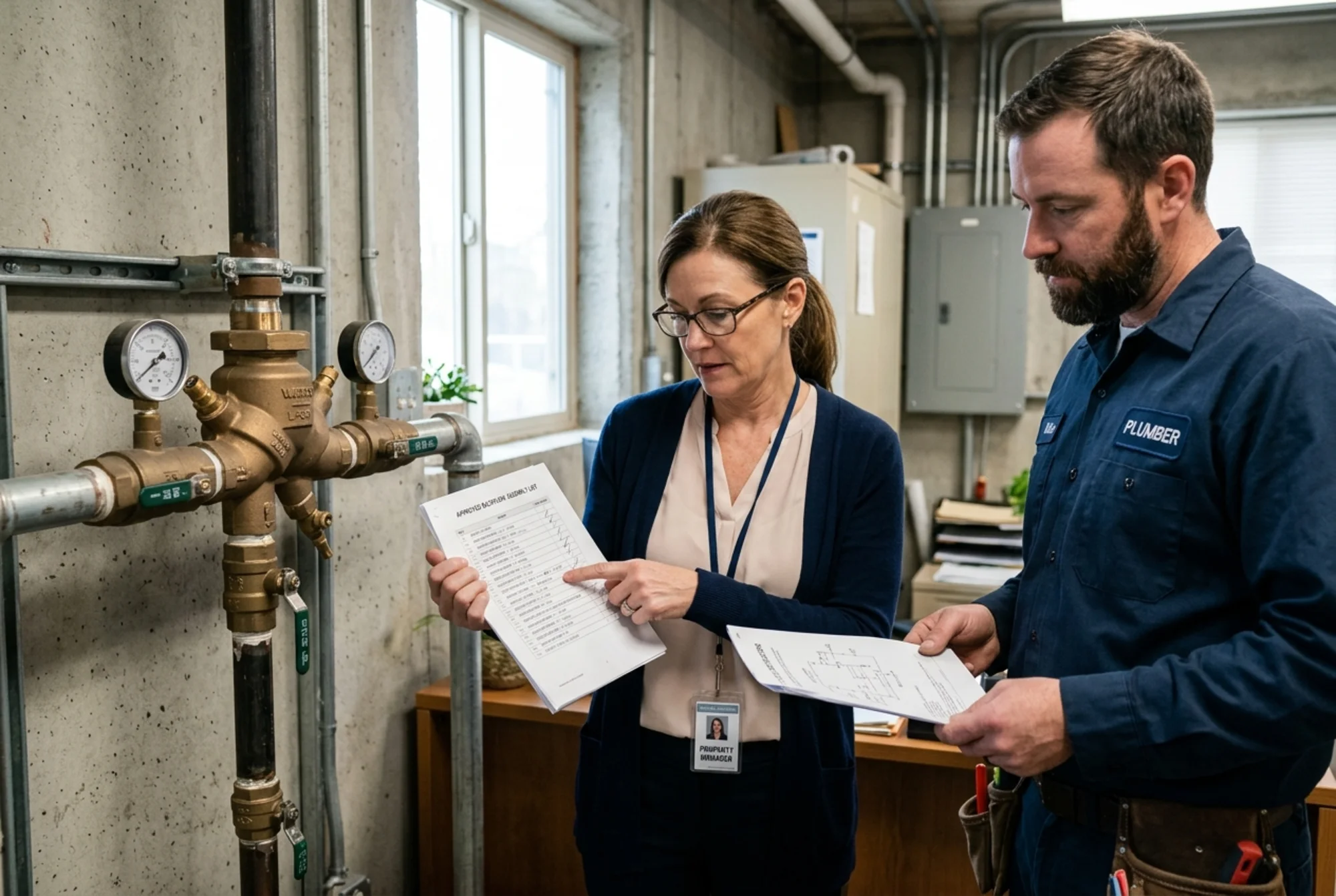
Top Backflow Preventer Brands and Models: Watts, Wilkins, Febco
When property owners start asking about backflow prevention, they often hear the same brand names first: Watts, Wilkins, and Febco. That usually leads to the next question: which brand is best, and which model should I install?
The honest answer is a little less exciting than people expect. In backflow prevention, the “top” brand is not automatically the one with the biggest reputation or the one your neighbor has. The right choice depends on whether the assembly is approved for your use case, whether it matches the hazard level and line type, whether your local utility accepts it, and whether a qualified tester or plumber can service it over time.
That is why official programs focus less on marketing and more on approved assemblies, exact models, sizes, and testability. The EPA sets the broader drinking-water protection framework through the Safe Drinking Water Act, while utilities and state regulators enforce their own cross-connection control rules. In practice, that means choosing from assemblies that appear on recognized approved lists, then matching the correct model to the property.
If you want the broader public-health context first, our guide on why backflow testing is required is a good starting point.
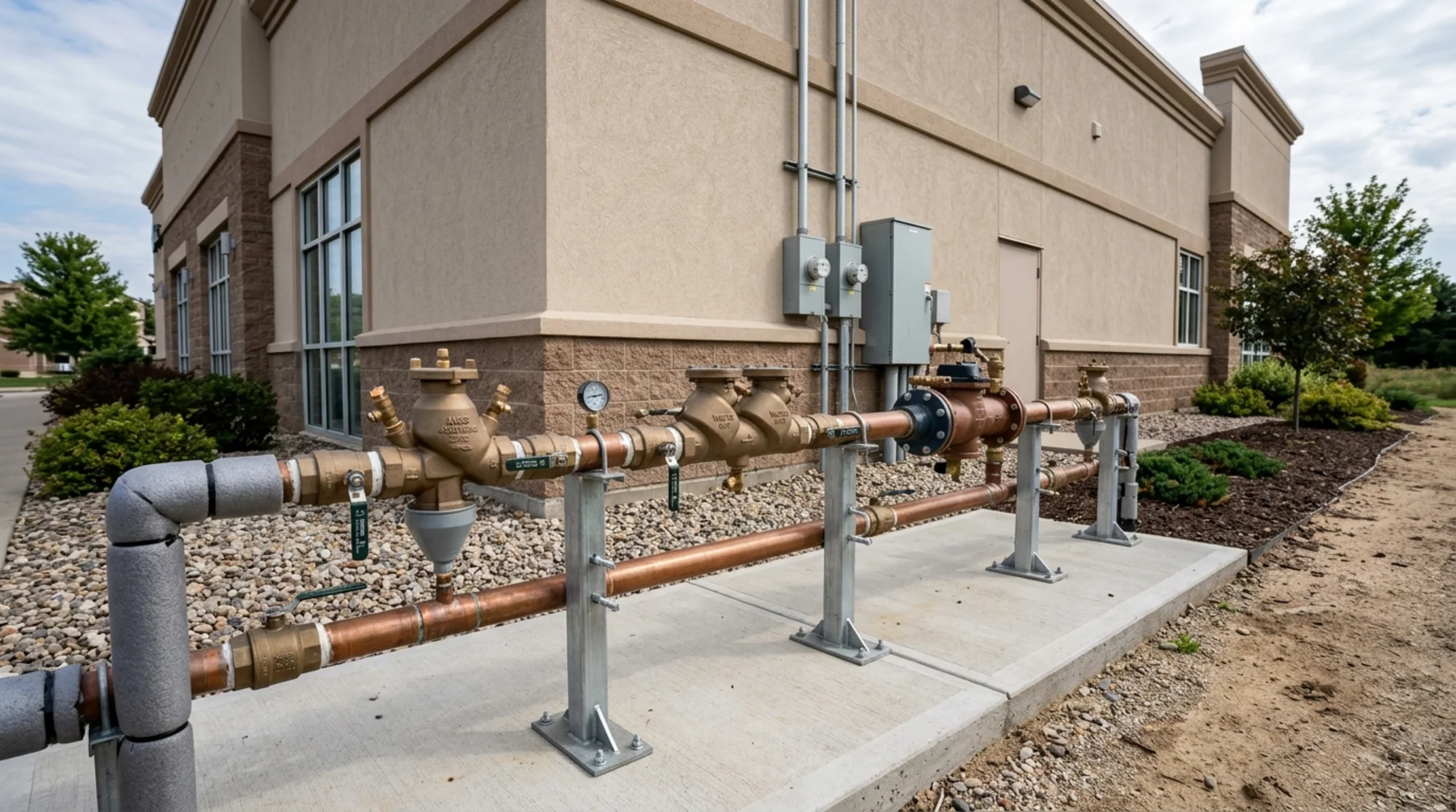 Wide realistic photo of several different commercial backflow prevention assemblies installed on an outdoor water service line beside a light commercial building, clean piping, natural daylight, no visible brand logos or text overlay
What “top brand” really means in backflow prevention
A backflow preventer is not like choosing a phone or a refrigerator. Utilities do not care which brand feels most premium. They care whether the assembly protects the public water system and meets the applicable program rules.
The USC Foundation’s List of Approved Backflow Prevention Assemblies is one of the most important references in the field. USC explains that its list includes assemblies that successfully completed the Foundation’s laboratory and field evaluation program, and that each approved assembly is listed by assembly type, manufacturer name, model, size, approval date, and renewal date. Washington’s Department of Health explicitly says assemblies that appear on the USC-approved list are acceptable for protection of the public water system under its rules. Philadelphia Water Department also points users to the USC list for city-approved assemblies, with an additional lead-content requirement.
That tells you something important right away: when people talk about top brands, they are usually talking about manufacturers with multiple approved assembly lines that show up often on public-water jobs, irrigation systems, fire lines, and commercial properties.
So yes, names like Watts, Wilkins, and Febco matter. But what matters more is whether the exact assembly and exact model are approved for your specific installation.
Why Watts, Wilkins, and Febco come up so often
These brands are common in the field because they are associated with well-known backflow assembly lines used across residential, irrigation, commercial, and light industrial applications.
In plain English, people run into these names for a few reasons:
- They are widely distributed. Contractors, plumbers, and testing companies see them often.
- They appear on approved-assembly workflows. Utilities and testers are used to checking exact models against recognized approval lists.
- They cover multiple assembly types. Different model families exist for RP assemblies, double checks, pressure vacuum breakers, and other applications.
- Replacement parts and service familiarity matter. A model that your local market knows how to test and repair is often more practical than an obscure alternative.
That does not mean one of these brands is automatically the best for every property. It means they are common names in a category where model suitability matters more than brand loyalty.
If you are still getting familiar with the basics, our related article on what is a testable backflow preventer explains why some assemblies matter more than simple hose-end devices.
Brand is only the first filter, model is where the real decision happens
This is the point many owners miss.
Two backflow preventers from the same manufacturer can be built for very different situations. One model might be appropriate for a domestic service line at a commercial property. Another might be intended for irrigation. Another might be used in a higher-hazard setting that requires a reduced pressure principle assembly.
When a utility, plumber, or tester evaluates a model, they are usually looking at factors like:
1. Assembly type
Is the device a reduced pressure principle assembly (RP or RPZ), a double check valve assembly (DCVA), or a pressure vacuum breaker assembly (PVBA/PVB)? The type has to match the hazard level and application, not just the brand name on the body.
2. Approval status
Is the exact model on the accepted approved-assembly list? USC emphasizes that approved assemblies are tracked by exact manufacturer and model. Philadelphia’s program also reminds owners that only assemblies meeting its approved-list criteria can be used.
3. Size and orientation
The right model still has to be the right size and fit the required installation layout. An otherwise reputable model can still be wrong if it does not fit the hydraulic demand or installation constraints.
4. Lead-free or local utility requirements
Philadelphia specifically notes that only assemblies with a qualifying lead-content rating are approved for use in the city. Other utilities may have their own additional conditions.
5. Serviceability and parts support
Even a perfectly approved model becomes a headache if replacement parts are hard to source locally or if no one in your area regularly services it.
That is why the better question is not “Is Watts better than Febco?” It is “Which approved model fits this exact property and program?”
How property owners should compare models without guessing
If you are trying to compare Watts, Wilkins, and Febco assemblies, use a simple process.
Start with the utility or program requirements
Before thinking about brand preference, confirm what the property actually needs. That may mean checking with your local water utility, your plumbing plans, or a utility-program page such as our Philadelphia Water Department backflow testing guide or Austin Water backflow testing guide.
Confirm the assembly type first
Do not compare a double check model against an RP model as if they are interchangeable. They may not be.
Verify the exact model on an approved list
If a contractor suggests a model, ask for the exact make and model and confirm it appears on the relevant approved list or is accepted by the utility. Washington DOH and Philadelphia’s program both point users back to this kind of approval workflow.
Ask about testing and repair support
A common model with easy access to rebuild kits and local testing support is usually a safer long-term choice than a niche model that leaves you scrambling later.
Look at your property type, not just the device catalog
A homeowner with an irrigation line, an HOA managing shared systems, and a restaurant with higher-risk plumbing conditions can all end up needing very different assemblies. Compare this with our guides to backflow prevention for irrigation and lawn sprinkler systems and backflow testing for restaurants and food service businesses.
Common mistakes people make when shopping by brand
The mistakes are pretty predictable.
Assuming every model from a trusted brand is acceptable
Even well-known manufacturers make different assemblies for different use cases. A respected brand name does not override the need for exact model approval.
Letting price drive the entire decision
A cheaper assembly that is harder to service, not accepted by the utility, or not sized correctly is not actually cheaper.
Forgetting the paperwork side
Backflow compliance is not just installation. It is installation, testing, documentation, and ongoing maintenance.
Replacing “same for same” without checking current requirements
An older model may have been acceptable when it was installed, but your utility may now expect a different assembly type, a lead-free standard, or a different approval status.
Ignoring the local service ecosystem
If every tester in your area regularly works on certain model families, that practical reality matters.
For property owners comparing markets, it can help to browse city and state pages like Philadelphia, Pennsylvania, Austin, Texas, and California to get a feel for how local requirements vary.
A practical way to talk to your plumber or tester about brands and models
You do not need to become a backflow engineer to make a solid decision. Ask a few direct questions:
- What exact assembly type is required for my property?
- What exact make and model are you recommending?
- Is that model on the relevant approved list or accepted by my utility?
- Are repair kits and replacement parts readily available for it?
- Who will test it after installation, and who submits the report?
- If this model fails later, is rebuild support common in my area?
Those questions usually tell you more than a generic “this is a top brand” sales pitch ever will.
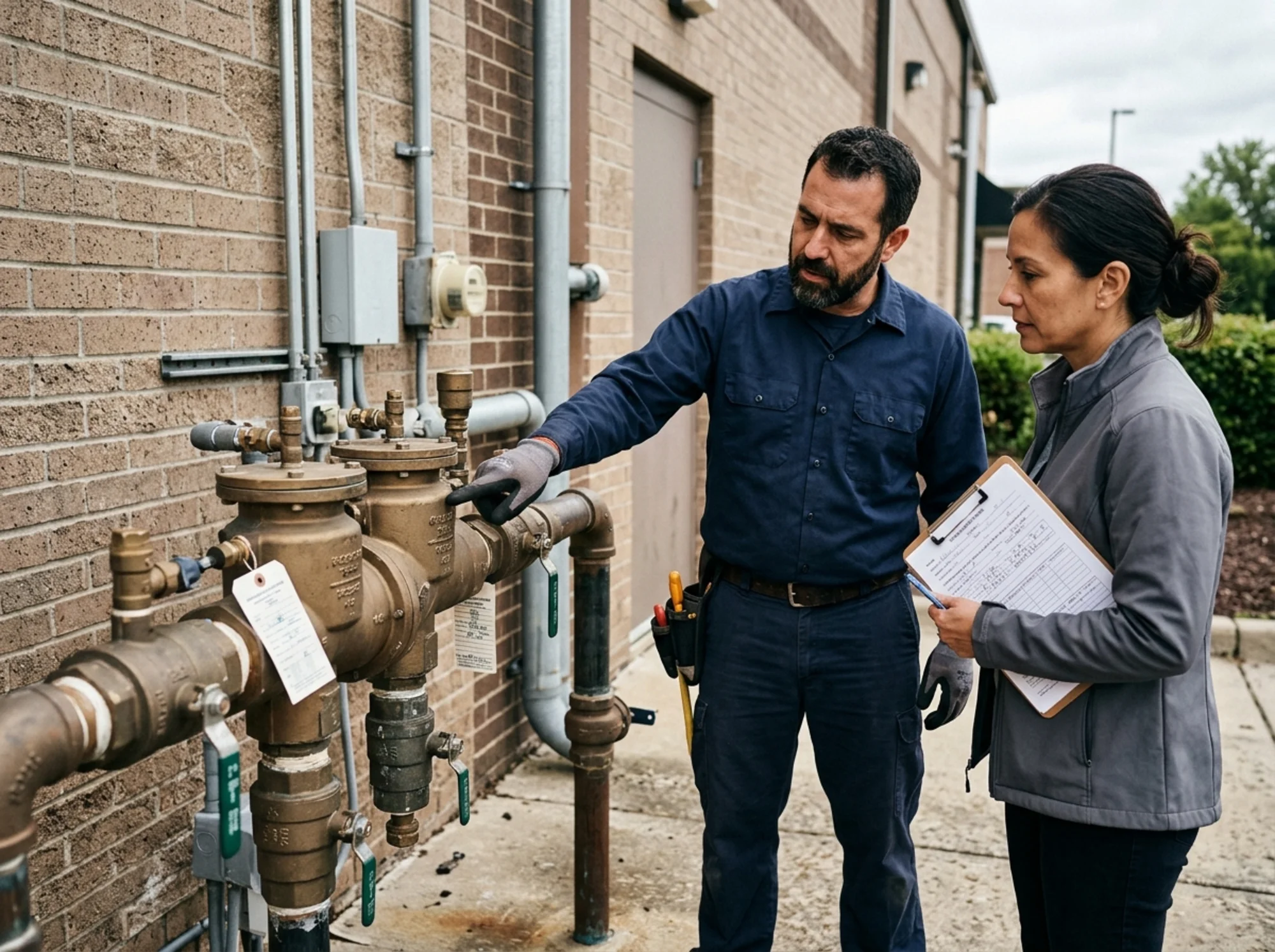 Documentary-style realistic photo of a certified backflow tester pointing at the model and size information on a backflow assembly while reviewing compliance paperwork with a property owner, natural lighting, no visible logos or text
So which brand should you choose?
For most property owners, the best answer is: choose the approved, correctly sized, locally serviceable model that fits your property’s hazard and utility requirements.
Sometimes that will be a Watts assembly. Sometimes it will be a Wilkins assembly. Sometimes it will be a Febco assembly. The winning factor is not the logo on the body. It is whether the assembly is the right one for the job and whether you can keep it compliant year after year.
That is also why annual testing matters. Even the right brand and model still has to pass its required test and stay in working order. If you need help now, you can find a backflow tester near you, review our FAQs, or compare with our guide on what size backflow preventer your property needs.
Bottom line
Watts, Wilkins, and Febco are common names in backflow prevention because they are associated with widely used assembly lines that show up often on approved-list and field-service workflows.
But the real decision is never just brand. It is brand plus exact model, assembly type, approval status, size, local utility acceptance, and long-term service support.
If you want to avoid expensive mistakes, do not ask only “What’s the top brand?” Ask which approved model is right for your property, and get that answer from a qualified professional who understands your local program.
Sources
This article references guidance and regulations from authoritative sources including:
- U.S. Environmental Protection Agency (EPA) - Safe Drinking Water Act overview
- American Water Works Association (AWWA) - Cross-Connection Control and Backflow Prevention resources
- USC Foundation for Cross-Connection Control and Hydraulic Research - List of Approved Backflow Prevention Assemblies
- Washington State Department of Health - Cross-Connection Control and Backflow Prevention
- Philadelphia Water Department - Cross-Connection & Backflow Compliance
- Centers for Disease Control and Prevention (CDC) - Preventing drinking water-related illnesses
Last updated: April 27, 2026