What Is a Testable Backflow Preventer and Why Does It Matter?
You will often hear two similar phrases used as if they mean the same thing: backflow preventer and testable backflow preventer. They overlap, but they are not identical.
A testable backflow preventer is a mechanical assembly designed so a certified tester can connect gauges, isolate the device, and verify that it is still working correctly. That matters because many utility compliance programs do not just want a device installed. They want a device that can be inspected, documented, and re-tested over time.
For homeowners, this usually comes up after an irrigation install, a new utility notice, or an annual testing reminder. For commercial properties, it matters even more because higher-hazard connections often require a specific type of assembly and a paper trail the utility can audit later.
What “Testable” Actually Means
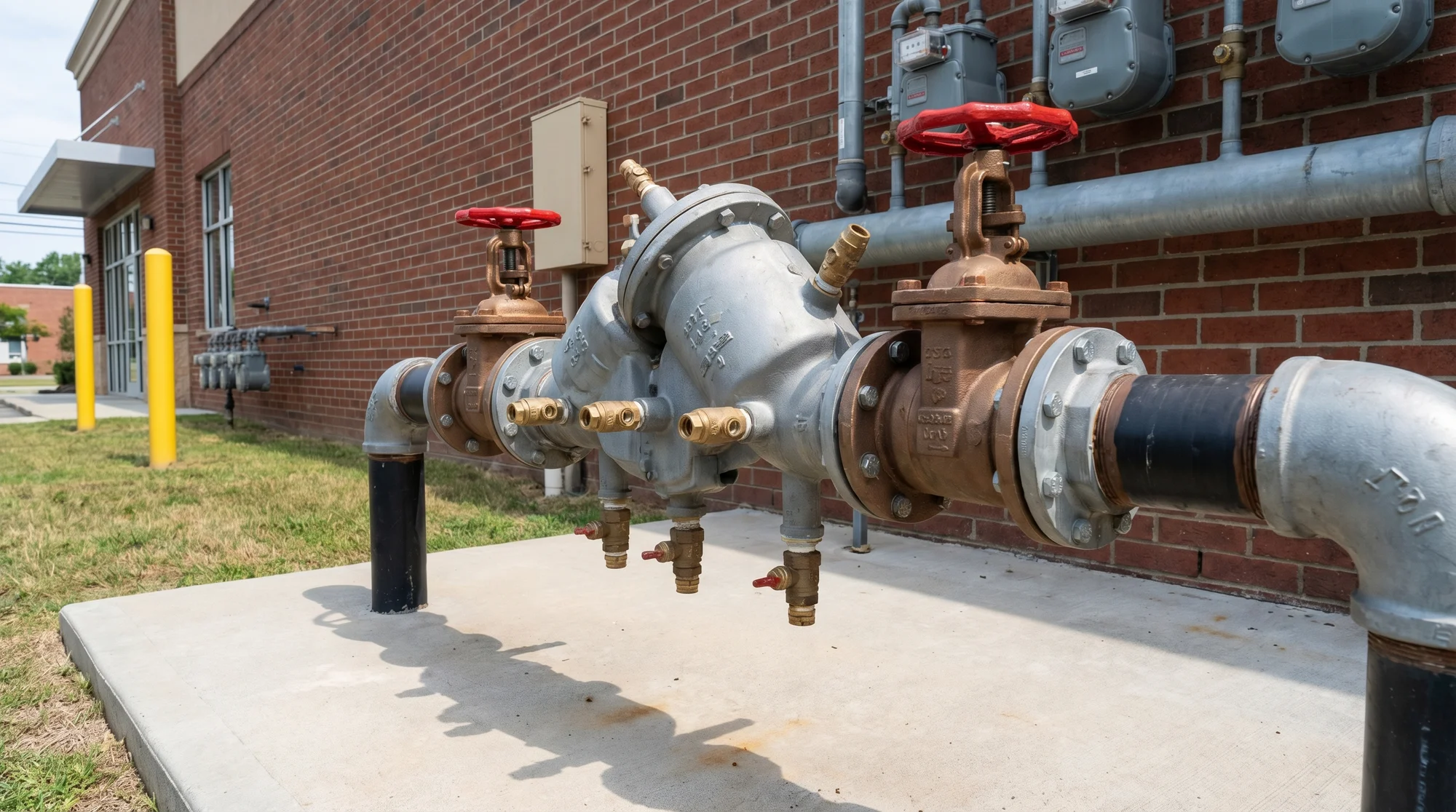
A testable backflow preventer has built-in features that allow a certified technician to evaluate whether the internal checks and relief functions are still protecting the potable water supply. In practice, that usually means the assembly includes:
- shutoff valves on the inlet and outlet side
- test cocks or test ports where gauges can be attached
- internal check valves, air inlets, or relief components that can be measured under controlled conditions
That is the big distinction. A simple device may provide some level of backflow protection, but if it cannot be checked with the accepted testing procedure, it is not considered a testable assembly.
Florida DEP identifies the principal mechanical backflow preventers as the reduced-pressure principle assembly, pressure vacuum breaker assembly, and double check valve assembly, and it also explains that these devices need periodic testing. That is why the word assembly shows up so often in utility rules. The assembly is meant to be verified, not just installed and forgotten.
Testable assemblies include the valves and test ports a certified technician needs to verify that the device is still protecting the drinking water supply.
Which Devices Are Usually Testable
The exact list depends on your utility and local rules, but the most common examples are:
Reduced Pressure Zone assemblies
Often called RPZ, RP, or RPBA, these are used where the hazard is more serious. They are designed to protect against both backsiphonage and backpressure and include a relief valve that can discharge if internal checks are not holding correctly.
Double Check Valve Assemblies
Usually called DCVA or DC, these are commonly used on lower-hazard connections. They are still testable, but they do not have the same relief-valve behavior as an RPZ.
Pressure Vacuum Breaker Assemblies
Usually called PVB or PVBA, these are often used on irrigation systems where the main concern is backsiphonage rather than backpressure. Portland Water Bureau specifically notes that residential irrigation systems commonly use DCVAs and PVBAs.
Detector assemblies on fire services
Larger commercial and fire protection systems may use detector-style assemblies such as DCDA or RPDA configurations. These are more specialized, but they are still part of the testable-assembly world.
If you want a broader overview of device types, our related guide on inline vs bypass backflow preventer installations and the Learning Center page on why backflow testing is required are good next reads.
What Usually Is Not Testable
This is where people get tripped up. Not every backflow prevention device is a testable assembly.
Examples that are often not testable include:
- hose bib vacuum breakers
- simple faucet vacuum breakers
- many atmospheric vacuum breakers
- small dual-check style devices used in limited applications
That does not mean they are useless. It means they serve a different role. Portland Water Bureau, for example, notes that hose bib vacuum breakers used on residential hose connections do not need to be tested. They still help prevent contamination through a hose, but they are not the same as a utility-tracked testable assembly on an irrigation main or service connection.
So if someone says, “I already have a backflow preventer on my hose,” that may be true, but it does not automatically satisfy a utility requirement for a testable assembly.
Why Utilities Care So Much
Utilities are responsible for protecting the public drinking water supply, not just one property at a time. The EPA’s Safe Drinking Water Act framework and state cross-connection programs exist because contamination on one property can affect the public system if water reverses direction through a cross-connection.
That is why utilities care about testable devices specifically. A testable assembly gives them something they can manage through a compliance program:
- the device type can be documented
- the serial number can be tracked
- the assembly can be tested on a schedule
- failed results can trigger repair and re-test requirements
- the utility can show that protection was verified, not assumed
Philadelphia Water Department’s backflow compliance program reflects this clearly. The city maintains approved assembly information, certified technician resources, and official test and maintenance forms. That only works when the assembly on the property is the kind that can actually be tested and documented.
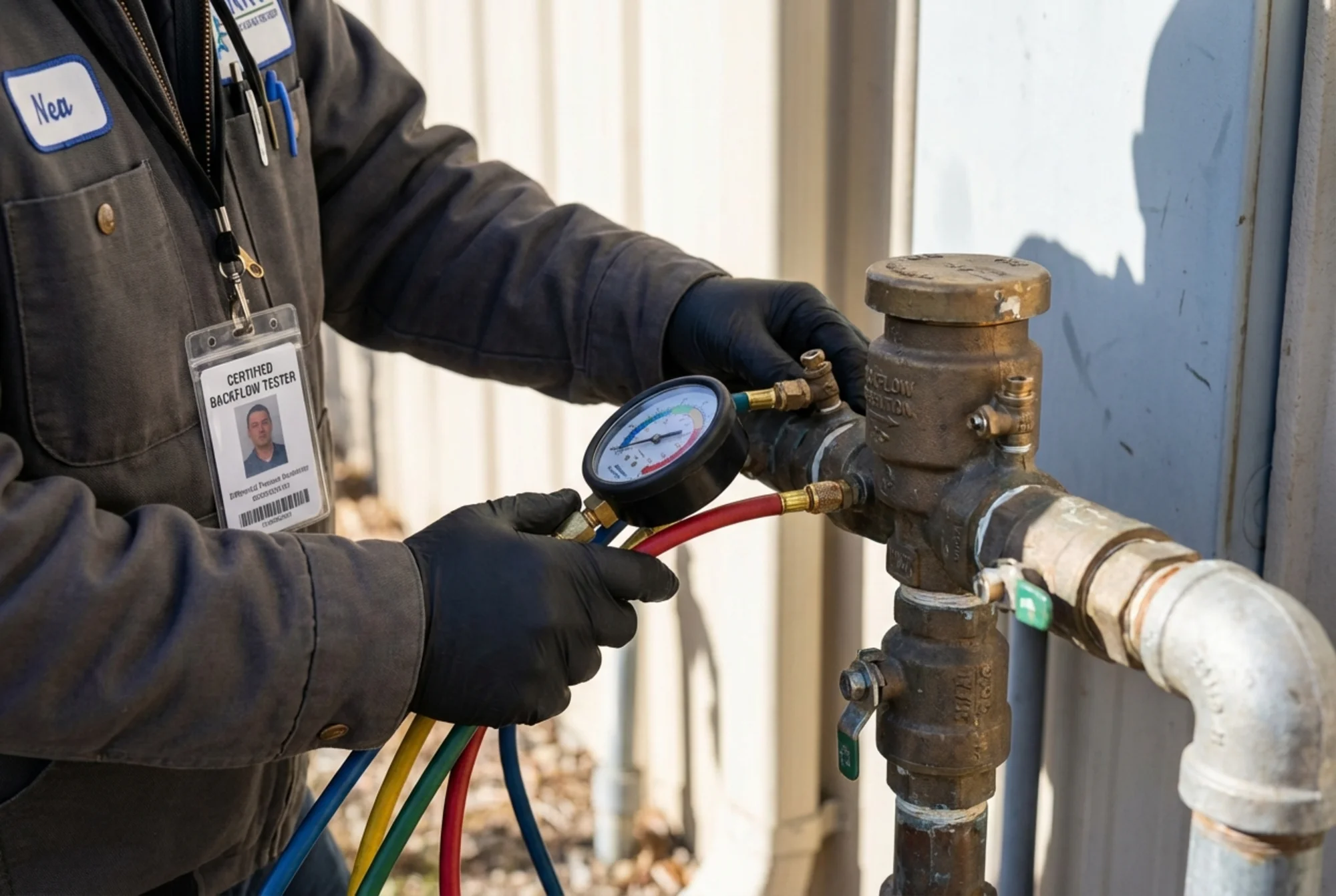 A testable assembly matters to utilities because it can be checked, documented, and tied to a repeatable compliance process instead of a one-time installation.
What This Means for Property Owners
If your property has a utility-managed backflow requirement, a testable assembly usually affects four things:
1. You may need annual testing
Many utility programs require periodic testing, often annually, by a certified tester. That requirement usually applies to the assembly, not to every simple vacuum breaker on the property.
2. Installation details matter
A device that is technically correct but installed where it cannot be accessed or tested may still become a compliance problem. Shutoff valves, test cocks, drainage, and clear working space matter.
3. Repairs need documentation
If the assembly fails, the next step is usually repair or replacement followed by re-testing, not guesswork. Our article on how to prepare your property for a backflow test can help you avoid the most common appointment problems.
4. You should not swap devices casually
Property owners sometimes assume a cheaper or simpler device is “close enough.” That is risky. The required assembly type is tied to the hazard, the utility program, and sometimes the exact service configuration.
If you are trying to understand local context, browse utility pages like Austin Water or Philadelphia Water Department, and compare provider options in places like Austin, Texas and Charlotte, North Carolina. You can also use our FAQs if you are still sorting out the basics.
Questions to Ask When You Get a Notice
If your utility says you need a testable backflow preventer, ask:
- Which assembly type is required for my property?
- Is this a new installation requirement or an annual test requirement?
- Does the utility maintain an approved assembly list?
- Who can test it, and how are results submitted?
- If the current device is not testable, does it need replacement or can another compliant option be approved?
Those questions will usually save you from ordering the wrong device or hiring the wrong contractor. If you need help choosing a professional, our guide on how to choose the right provider is a practical place to start.
The Bottom Line
A testable backflow preventer is a mechanical assembly that can be verified with gauges and documented by a certified tester. That is what separates it from smaller, simpler devices that may still offer limited protection but are not part of the same compliance workflow.
Why does it matter? Because utilities need more than a promise that a device is there. They need a device that can be checked, recorded, and re-tested over time to help protect the public water supply.
For property owners, the safest move is simple: if your utility says a testable assembly is required, do not treat that as a generic plumbing suggestion. Treat it as a specific compliance requirement tied to public health, documentation, and ongoing maintenance.
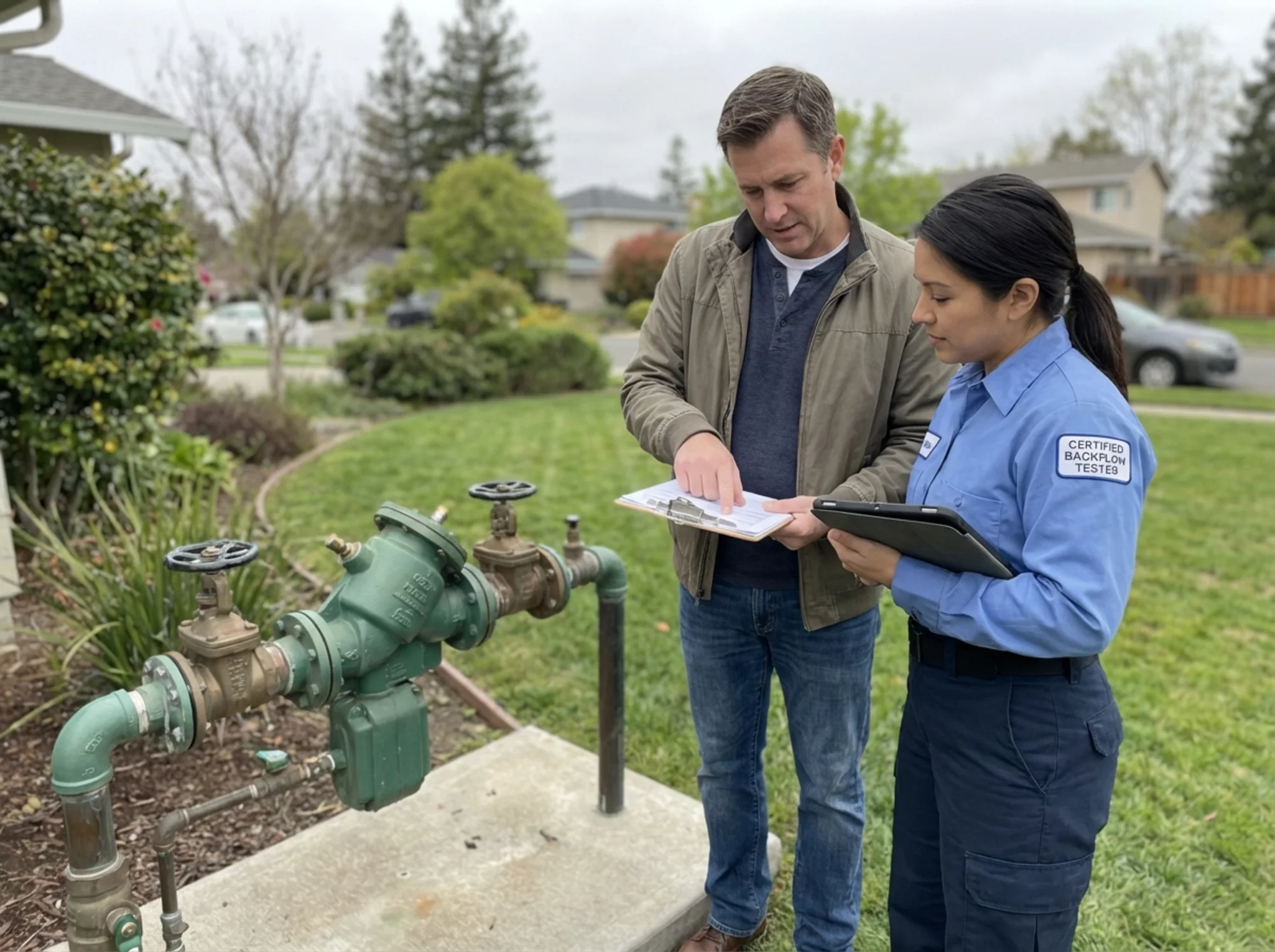 For owners, the practical difference is straightforward: a testable assembly can be verified on schedule and kept in compliance with utility requirements.
Sources
This article references guidance and regulations from authoritative sources including:
- U.S. Environmental Protection Agency (EPA) - Safe Drinking Water Act overview
- American Water Works Association (AWWA) - Cross-Connection Control and Backflow Prevention resources
- Florida Department of Environmental Protection - Cross Connection Control and Backflow Prevention Program
- Portland Water Bureau - How to choose and install a backflow prevention assembly
- Philadelphia Water Department - Cross-Connection & Backflow Compliance
- Centers for Disease Control and Prevention (CDC) - Preventing Drinking Water-Related Illnesses
Last updated: April 13, 2026