Backflow Prevention for Irrigation and Lawn Sprinkler Systems
Backflow Prevention for Irrigation and Lawn Sprinkler Systems
Irrigation systems feel harmless because they mostly water grass, planters, and landscaping. But from a drinking-water perspective, they create one of the most common cross-connection risks on a property. Once a sprinkler line is connected to soil, fertilizer, standing water, or hose-end equipment, the water in that system is no longer something a utility wants moving backward into the public supply.
That is why irrigation and lawn sprinkler systems show up so often in cross-connection control programs. If you want the broad public-health background first, our Learning Center guide on why backflow testing is required explains how utilities think about the problem.
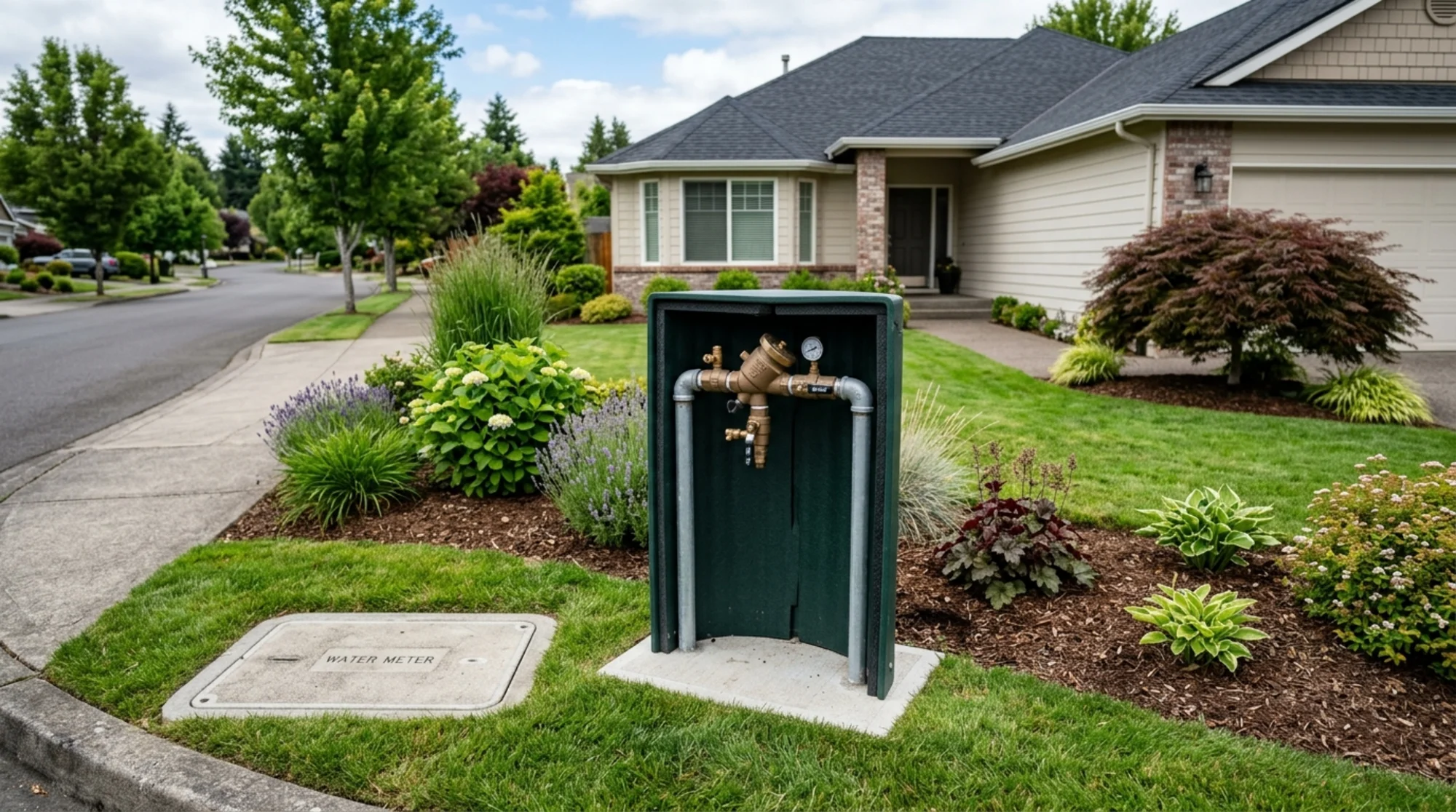 Wide realistic photo of a residential lawn irrigation backflow prevention assembly installed just beyond the water meter near a landscaped yard, natural daylight, clean suburban setting, no logos or text
Why irrigation systems are considered a real backflow risk
The issue is not that every sprinkler system is dangerous all the time. The issue is that irrigation piping regularly comes into contact with things the drinking-water system is supposed to stay separated from.
Common examples include:
- sprinkler heads sitting in soil or muddy planting beds
- fertilizer or chemical injection on irrigation lines
- standing water around low spots, valve boxes, or broken heads
- hoses used to fill ponds, pools, or decorative water features
- pressure changes caused by main breaks, firefighting demand, or utility work
Portland Water Bureau specifically notes that residential irrigation systems commonly use testable assemblies and also warns homeowners to keep hose ends out of pools so chlorinated pool water cannot enter the drinking-water system during a backflow condition. Philadelphia Water Department makes the same larger point in its homeowner cross-connection guidance: bad habits around hoses, unsafe water, and chemicals can allow contamination to get sucked into the drinking-water system.
In plain English, your irrigation system may look like a landscaping feature, but water utilities treat it like a potential contamination pathway.
If you are still sorting out the terminology, our related article on what is a testable backflow preventer is a useful companion.
Which backflow devices are commonly used on irrigation systems
The exact assembly depends on your utility, local code, hazard level, and installation conditions. That part matters, because there is no single universal "sprinkler backflow valve" that fits every property.
Portland Water Bureau says the assemblies most commonly installed on residential irrigation systems are the double check valve assembly (DCVA) and the pressure vacuum breaker assembly (PVBA). It also notes that a DCVA may be installed in a below-grade vault, while a PVBA must be installed at least 12 inches above finished grade.
That does not mean every city treats those assemblies the same way. Some jurisdictions are more restrictive. Portland, for example, says it does not allow AVBs or PVBAs for certain broader Water Bureau backflow protection uses, which is a good reminder that assembly approval depends on the application and local program, not just the device name.
In practical terms, irrigation systems most often involve one of these categories:
DCVA
A double check valve assembly is commonly used where the utility considers the hazard lower and allows that level of protection. It protects against backpressure and backsiphonage and is often used on irrigation systems without higher-risk additives.
PVBA or PVB
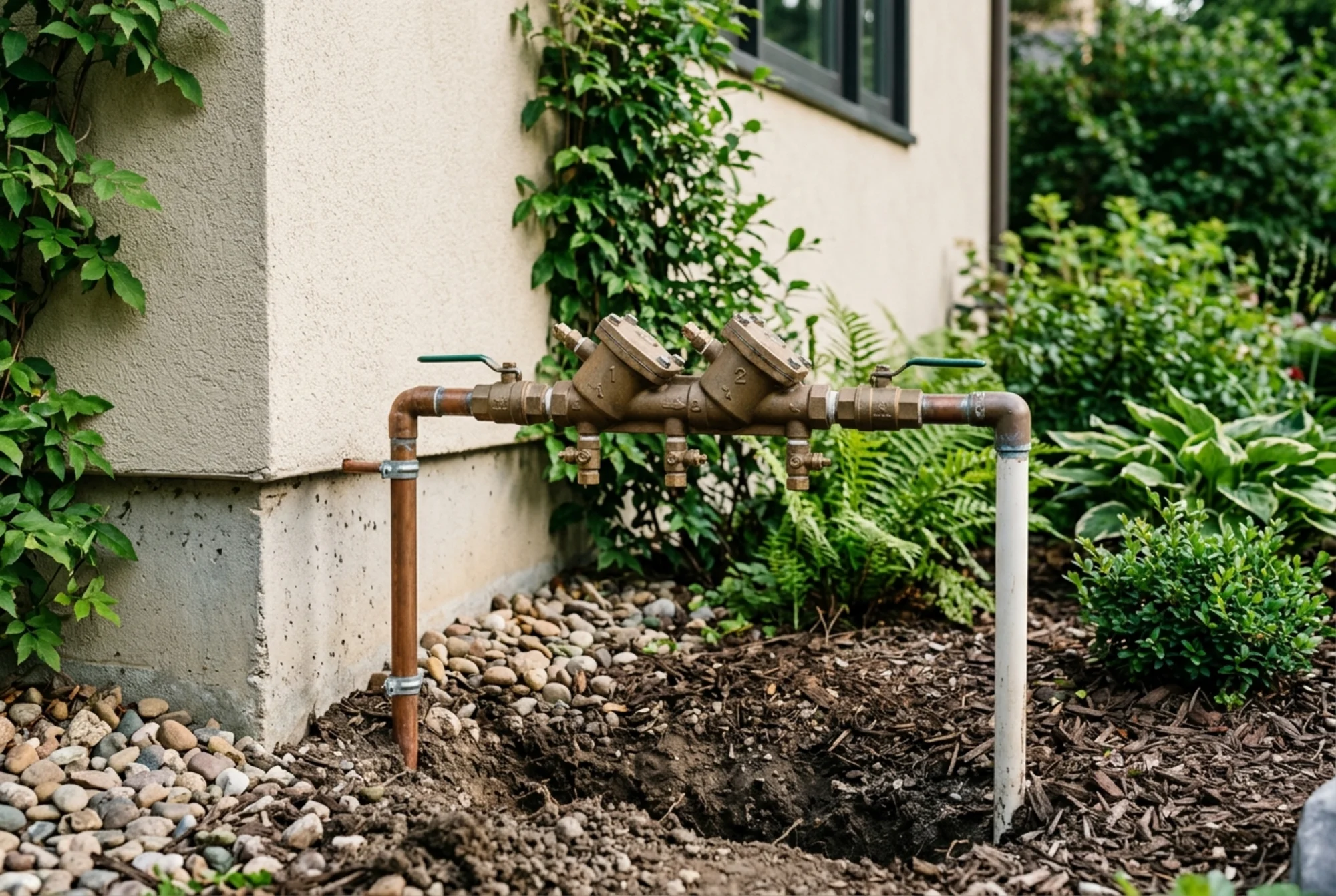
A pressure vacuum breaker assembly is common on irrigation systems where the main concern is backsiphonage. Because it has to be installed above grade and remain accessible, owners often recognize this device as the assembly sticking up near the side yard or meter area.
RP or RPZ assembly
Where the hazard is considered higher, such as systems with chemical injection or other elevated contamination concerns, some programs require a reduced pressure assembly instead. These are more protective, but they also need drainage and more careful installation because normal pressure changes can cause discharge.
If your property manager, irrigation contractor, and plumber are all using different terms, the safest move is to confirm the required assembly with the local utility before replacing anything.
Realistic close-up photo of an above-ground pressure vacuum breaker or double check valve assembly serving a residential lawn sprinkler system beside a house, accessible clearance, natural lighting, no brand names
Does every lawn sprinkler system need annual testing?
Not every device tied to outdoor watering is treated the same. A basic hose bib vacuum breaker is not the same thing as a testable assembly installed on a dedicated irrigation line.
But when a property has a testable backflow assembly on the irrigation service, annual testing is very common. Seattle Public Utilities says clearly that annual testing is the only way to ensure assemblies are functioning properly, and that testing must be done by a State of Washington Certified Backflow Assembly Tester. Washington Department of Health also publishes tester duties, field test report content requirements, and approved-assembly resources for public-water protection programs.
That pattern shows up in many utilities even when the exact forms and deadlines differ:
- the utility or program tracks the installed assembly,
- a certified tester performs the annual field test,
- the report must be completed correctly and submitted, and
- failed assemblies must be repaired or replaced and then re-tested.
For property owners, the important takeaway is simple: do not assume your irrigation contractor automatically handled the compliance side. The mechanical work and the official test paperwork are related, but they are not always the same job.
If you have an upcoming appointment, our post on how to prepare your property for a backflow test covers the practical prep steps.
What homeowners and property managers should check each season
The easiest irrigation compliance problems to avoid are the basic ones.
Before heavy watering season starts, check these items:
- Know where the assembly is. It may be near the meter, at the property line, or along a side yard.
- Keep it accessible. Do not bury it in plants, fencing, mulch, or stored equipment.
- Look for visible damage or leaking. Cracks, corrosion, or steady discharge need professional attention.
- Protect it from freeze damage where relevant. Outdoor irrigation assemblies are especially vulnerable in colder climates.
- Do not bypass or modify it casually. A small landscaping shortcut can turn into a compliance problem.
- Be careful with hoses and chemical attachments. Keep hose ends out of pools or containers, and do not create improvised cross-connections.
These checks do not replace professional testing, but they do reduce the chance that your annual test turns into a failed visit, emergency repair, or missed deadline.
Common irrigation situations that change the risk level
This is where owners get tripped up. Two sprinkler systems can look similar from the sidewalk and still have different compliance requirements.
Risk tends to go up when the irrigation setup includes:
- fertilizer or chemical injection equipment
- reclaimed or auxiliary water sources
- booster pumps or unusual pressure conditions
- combined commercial, multi-family, or mixed-use sites
- shared systems serving HOAs, apartments, or common areas
- direct connections near ponds, pools, or decorative water features
That is one reason utilities focus on hazard classification, not just whether a property has grass. A small single-family system may have one requirement, while a commercial site with irrigation, fire service, and treatment equipment may need a much more protective setup. If you manage a larger property, our guide on backflow testing requirements for commercial properties adds the broader context.
What to ask before you repair or replace an irrigation assembly
Before spending money, ask a qualified tester, plumber, or utility program representative these questions:
- What assembly type is installed now?
- Is that assembly still approved for this application in my utility program?
- Does the hazard level change because of fertilizer injection, reclaimed water, or shared use?
- Who submits the annual test report, and how do I confirm it was received?
- If the device fails, can the same company handle repair and retest?
Those questions save a lot of guesswork, especially if you just moved into the property or inherited an older irrigation system.
If you are comparing local provider options, start with cities like Austin, Texas, Charlotte, North Carolina, or Philadelphia, Pennsylvania, then review utility-specific guidance such as our Austin Water program page. For quick baseline answers, the FAQs page is also helpful.
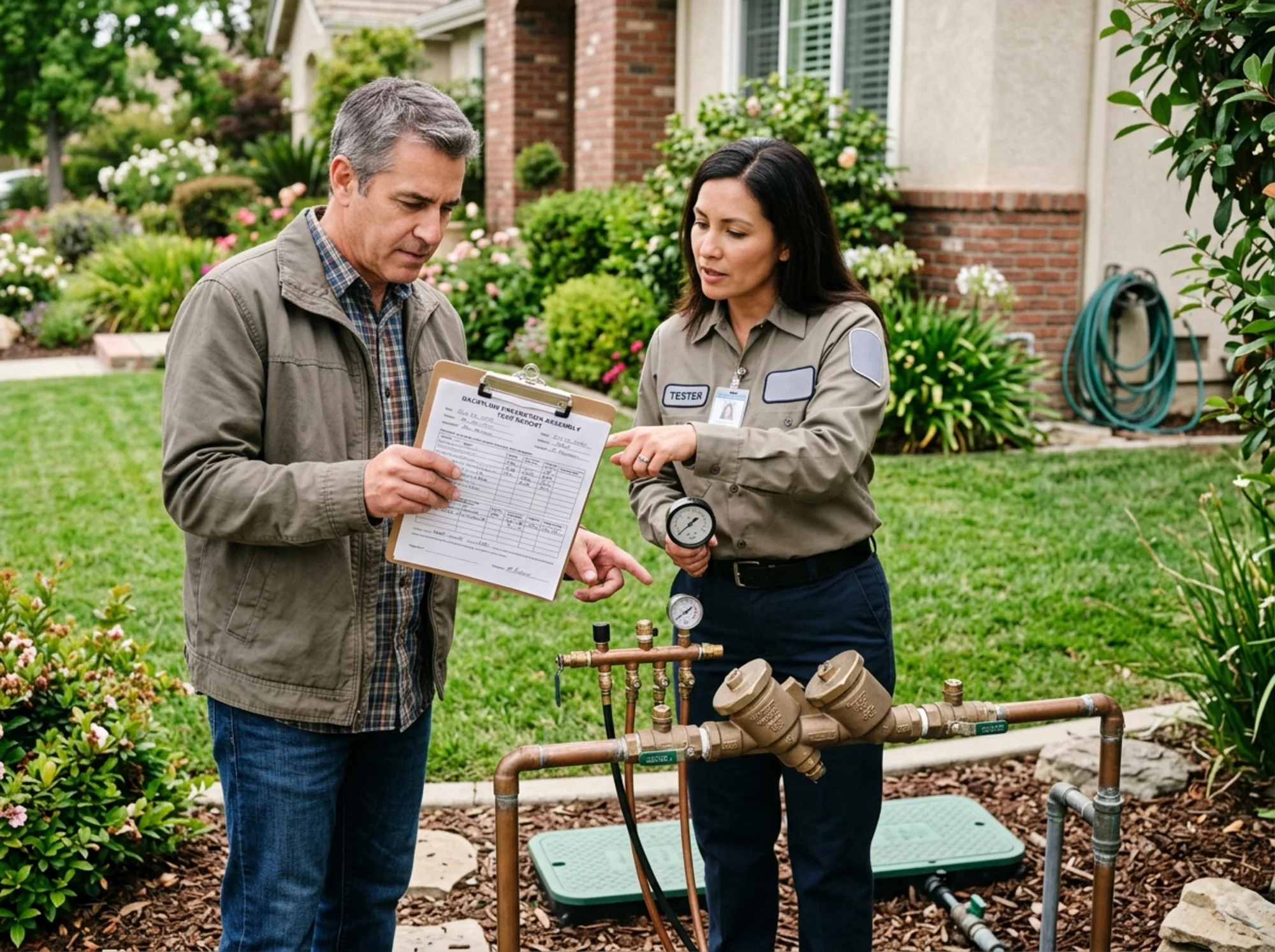 Documentary-style realistic photo of a homeowner or property manager reviewing an irrigation backflow test report with a certified tester beside a sprinkler-system assembly and landscaped yard, natural light, no visible logos
Bottom line
Irrigation and lawn sprinkler systems are one of the most common reasons properties end up needing backflow protection. The reason is straightforward: once the water line is connected to soil, chemicals, standing water, or outdoor equipment, the risk of contamination during a pressure change becomes real enough that utilities want protection in place.
The practical rule is simple even when local requirements vary: know what assembly is installed, keep it accessible, use a qualified tester where annual testing applies, and confirm the paperwork actually gets submitted.
If you need help now, start by finding a certified backflow tester near you.
Sources
This article references guidance and regulations from authoritative sources including:
- U.S. Environmental Protection Agency (EPA) - Safe Drinking Water Act overview
- Centers for Disease Control and Prevention (CDC) - Preventing drinking water-related illnesses
- Portland Water Bureau - How to choose and install a backflow prevention assembly
- Philadelphia Water Department - Cross-Connection & Backflow Compliance
- Washington State Department of Health - Cross-Connection Control and Backflow Prevention
- Seattle Public Utilities - Backflow Assembly Testing
- American Water Works Association (AWWA) - Cross-Connection Control and Backflow Prevention Resources
Last updated: April 22, 2026