When to Replace a Backflow Preventer vs When to Repair It
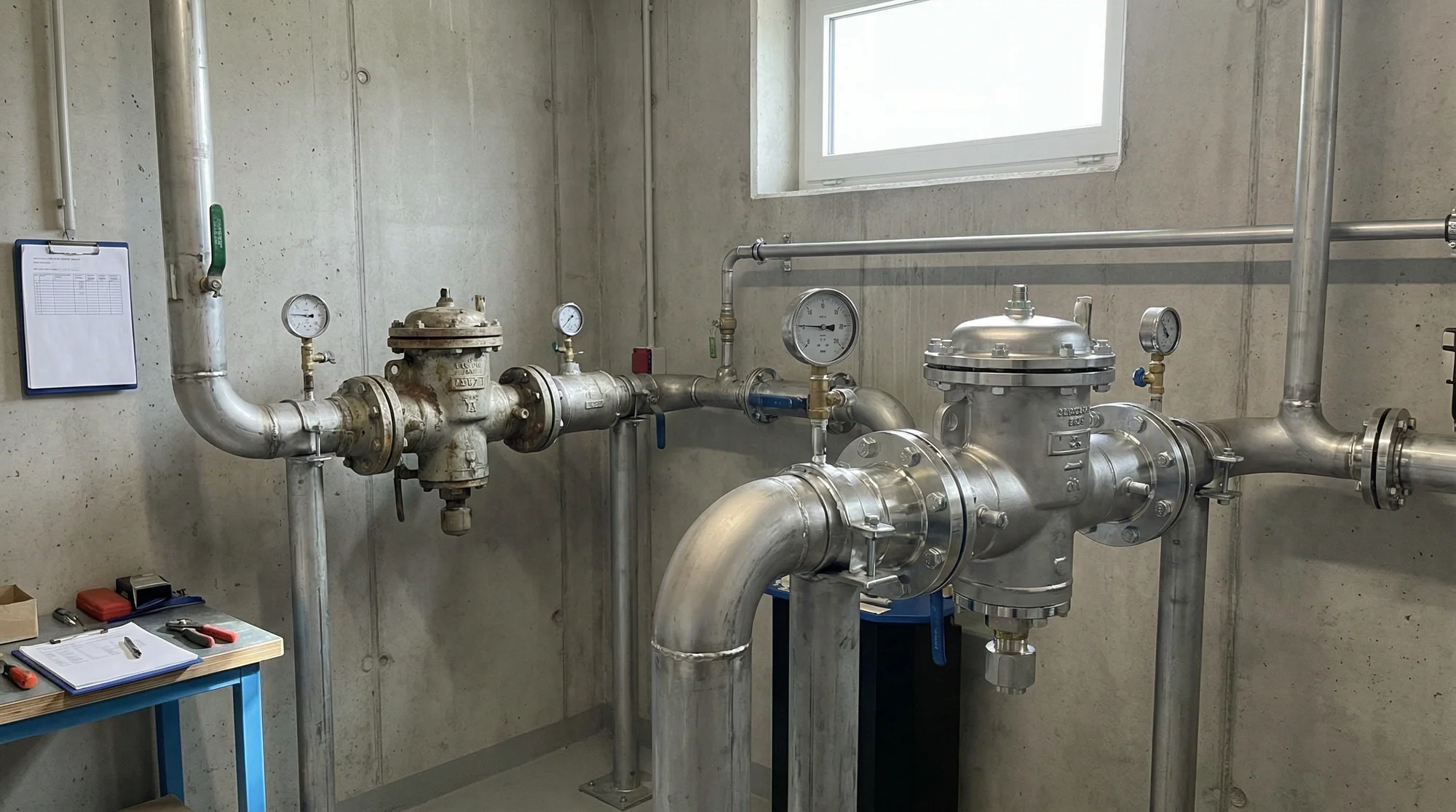
Your backflow preventer is one of those devices you probably don't think about — until something goes wrong. Maybe your annual test came back with a failure, or you've noticed a persistent drip near the assembly. The question becomes: is this a quick fix, or is it time for a new unit?
The answer depends on a few factors — the age of your device, the type of failure, repair costs, and how often problems keep coming back. This guide walks you through how to make that decision with confidence.
How Long Do Backflow Preventers Last?
Before deciding between repair and replacement, it helps to know what kind of lifespan you're working with. Not all backflow preventers age the same way.
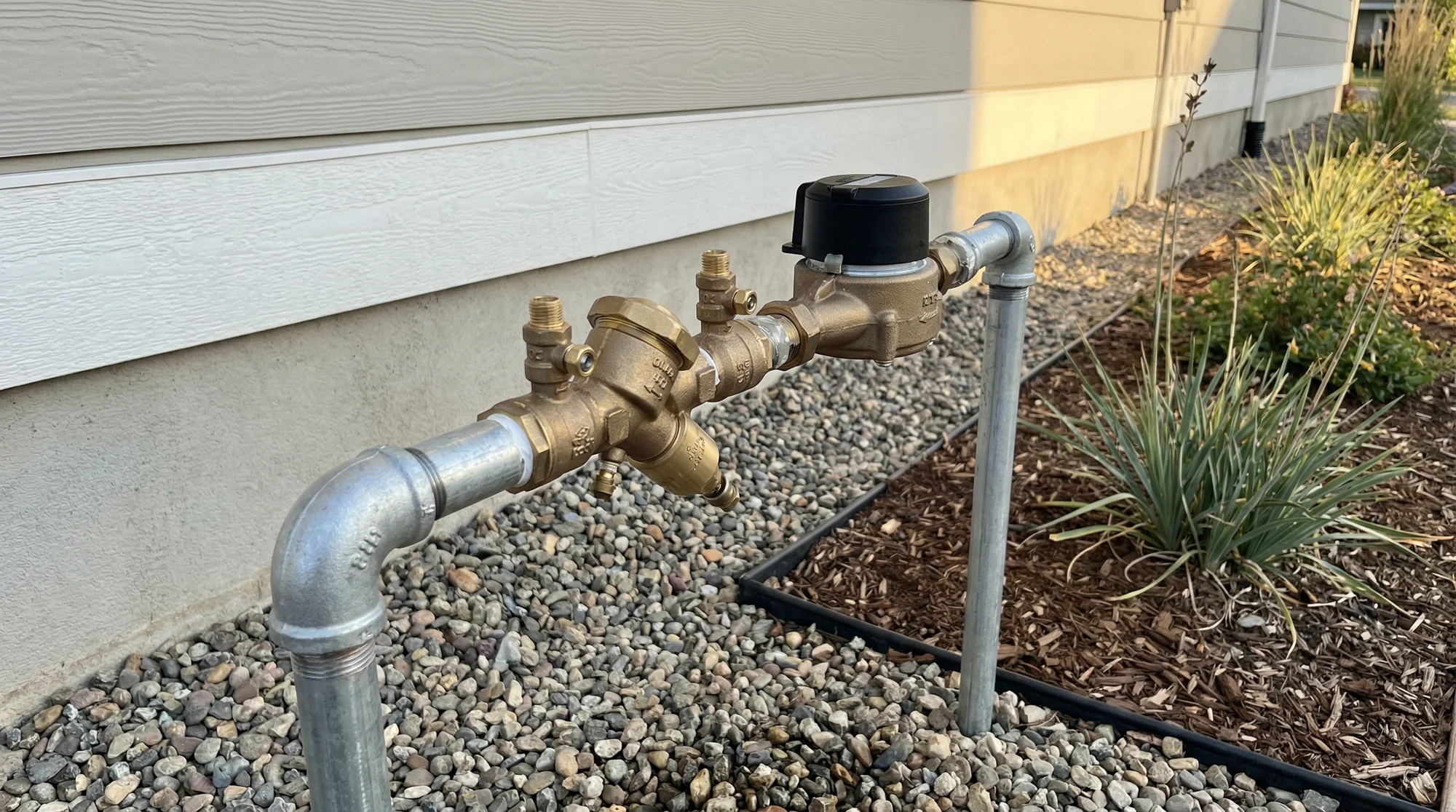 A typical outdoor backflow prevention installation connected to the main water supply line.
Here's a general breakdown by device type:
- Reduced Pressure Zone (RPZ) assemblies: 5–7 years before major internal components need rebuilding, though the housing can last much longer with proper maintenance.
- Pressure Vacuum Breakers (PVB): 6–9 years of reliable service life.
- Double Check Valve Assemblies (DCVA): 8–10 years on average.
With quality materials and consistent annual maintenance, some backflow preventers can last 15–25 years. But that doesn't mean they should run that long without serious evaluation. Water quality, climate, and installation conditions all play a role.
Hard water areas tend to cause mineral buildup inside check valves and seals, accelerating wear. Outdoor installations exposed to freezing temperatures or direct sunlight also degrade faster than protected indoor units.
Signs Your Backflow Preventer Needs Attention
Whether it ends up being a repair or replacement, these warning signs mean it's time to call a certified backflow tester:
Visible Leaks or Constant Dripping
A small amount of discharge from an RPZ relief valve can be normal — it means the device is doing its job by releasing pressure. But persistent dripping, pooling water around the assembly, or leaks from pipe connections indicate worn seals, damaged check valves, or cracked housings.
Repeated Test Failures
If your backflow preventer fails its annual test more than once in a row, the internal components are likely too worn for a simple repair kit to solve the problem.
Changes in Water Quality
Discolored, cloudy, or odd-tasting water downstream of the backflow preventer can signal that the device is no longer preventing reverse flow effectively. This is a serious health concern — backflow contamination events have caused real illness outbreaks.
Noticeable Drop in Water Pressure
A sudden or gradual loss of water pressure throughout the building can indicate clogged or stuck check valves inside the assembly. While sometimes cleanable, this often points to internal corrosion.
Visible Corrosion or Physical Damage
Rust, pitting, cracks, or heavy discoloration on the exterior housing usually means the interior is in worse shape. Once corrosion compromises the structural integrity of the body, repair isn't a safe option.
When Repair Makes Sense
Not every problem calls for a full replacement. Here's when repair is the right move:
- The device is less than 5–7 years old and has a good maintenance history.
- The failure is isolated — a single worn rubber disc, O-ring, or spring rather than multiple components.
- Repair parts are readily available for your specific make and model.
- The repair cost is well under 50% of what a new unit plus installation would run.
- The device passes its test after the repair with no lingering issues.
Typical repairs include replacing internal rubber kits (check valve discs, seats, and springs), cleaning mineral deposits from valve bodies, and replacing relief valve components on RPZ assemblies.
A standard repair by a certified technician usually costs between $100 and $400 depending on the device type and parts needed.
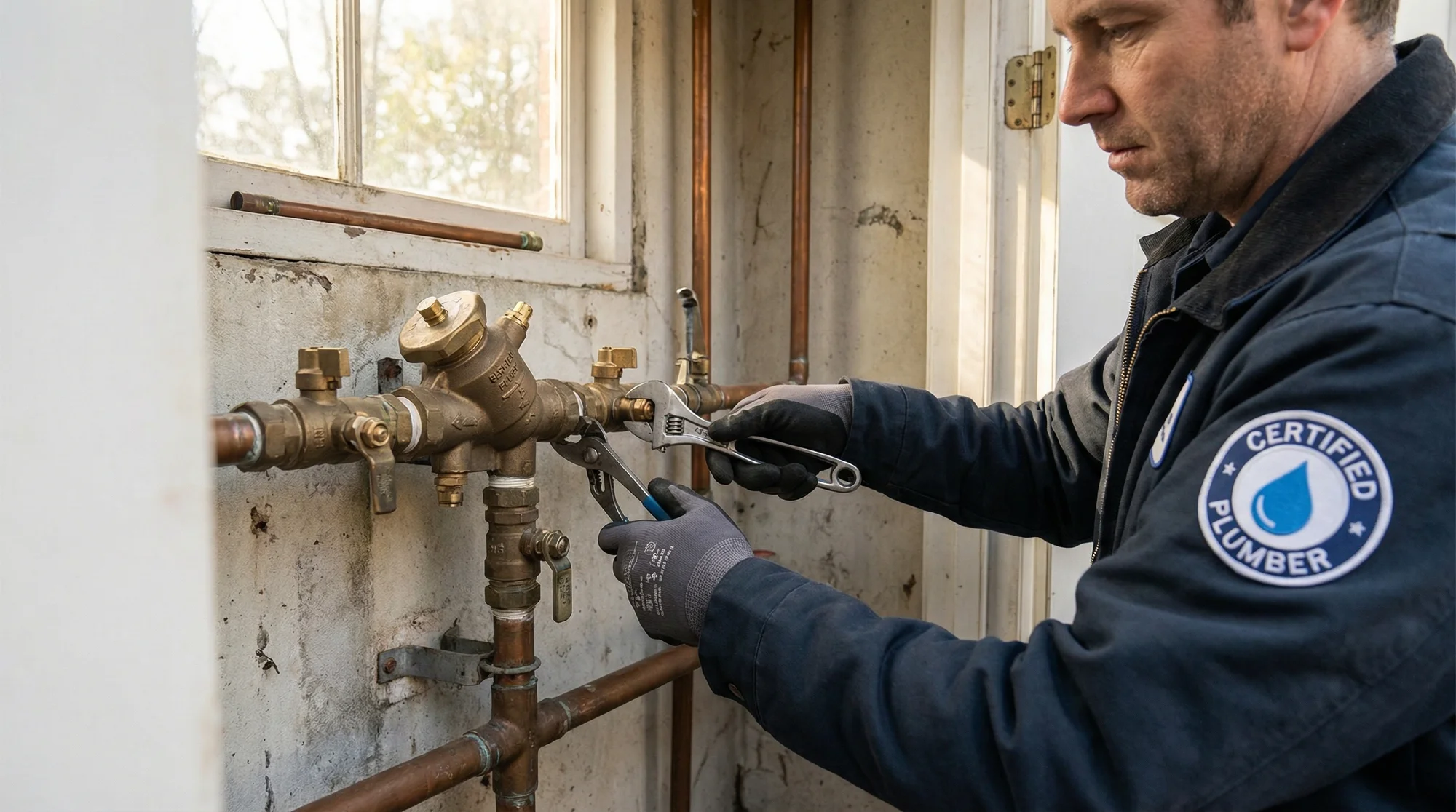 A certified technician inspecting and servicing a backflow prevention assembly.
When Replacement Is the Better Choice
Replacement makes more sense when:
- The device is over 10–15 years old, even if it's still technically passing tests. Older units have higher failure risk and may not meet current code requirements.
- Repair costs approach or exceed 50% of a new installation. At that point, you're better off with a fresh unit and a full warranty.
- Parts are discontinued or hard to source. Older models from manufacturers that have changed product lines often become impossible to maintain.
- The device has failed multiple tests within a 2–3 year period, even after repairs.
- There's significant corrosion on the body, bonnet, or test cocks.
- Local code has changed and your existing device type no longer meets the required level of protection for your hazard classification.
Replacement Cost Ranges
Here's what you can generally expect to pay for a full replacement (device plus professional installation):
| Device Type | Typical Installed Cost |
|---|---|
| Residential dual check valve | $300 – $700 |
| Pressure Vacuum Breaker (PVB) | $500 – $1,200 |
| Double Check Valve Assembly (DCVA) | $600 – $1,500 |
| Reduced Pressure Zone (RPZ) | $1,000 – $3,500 |
Commercial installations typically run $1,000–$5,000+ depending on pipe size and complexity. Don't forget to budget for the permit ($20–$100) and the mandatory post-installation test ($50–$150).
The 50% Rule of Thumb
Many plumbing professionals use a simple guideline: if the repair cost exceeds 50% of the replacement cost, replace it. This is especially true for units that are already past the midpoint of their expected lifespan.
For smaller residential assemblies (1" or ¾" devices), replacement is often cheaper than repair because the labor to diagnose, disassemble, rebuild, and retest can exceed the cost of simply swapping in a new unit.
For larger commercial assemblies (2" and above), repair usually makes more economic sense because the device cost is significantly higher.
What the Regulations Say
Backflow prevention isn't optional — it's mandated by federal guidelines and enforced at the state and local level.
The EPA's Safe Drinking Water Act requires public water systems to maintain cross-connection control programs that include backflow prevention. While the EPA sets the baseline, your local water utility determines the specific testing schedule, approved device types, and compliance deadlines.
The American Water Works Association (AWWA) publishes Manual M14, the industry standard reference for backflow prevention program administration. AWWA also maintains device standards — ANSI/AWWA C510 for double check assemblies and ANSI/AWWA C511 for RPZ assemblies — that define minimum performance requirements.
Key regulatory points to keep in mind:
- Annual testing is required in most jurisdictions. Check your state's requirements for specifics.
- Only certified testers can perform tests, repairs, and replacements. Your water utility maintains a list of approved professionals.
- Failed tests require corrective action within a set timeframe (often 30–60 days). Ignoring a test notice from your utility can result in fines or water shutoff.
- RPZ devices require periodic rebuilding (typically every 5 years) regardless of test results, per many local codes.
Making the Decision: A Quick Checklist
Use this checklist to help guide your repair vs. replace decision:
- How old is the device? Under 7 years → lean toward repair. Over 12 years → lean toward replacement.
- How many times has it failed testing recently? Once → repair is fine. Two or more consecutive failures → consider replacement.
- What's the repair estimate vs. new unit cost? Under 50% → repair. Over 50% → replace.
- Are replacement parts available? Yes → repair is viable. No → must replace.
- Is there visible corrosion or physical damage? Minor surface rust → repair may work. Structural damage → replace.
- Has local code changed? If your device type is no longer approved for your hazard level → replace with compliant model.
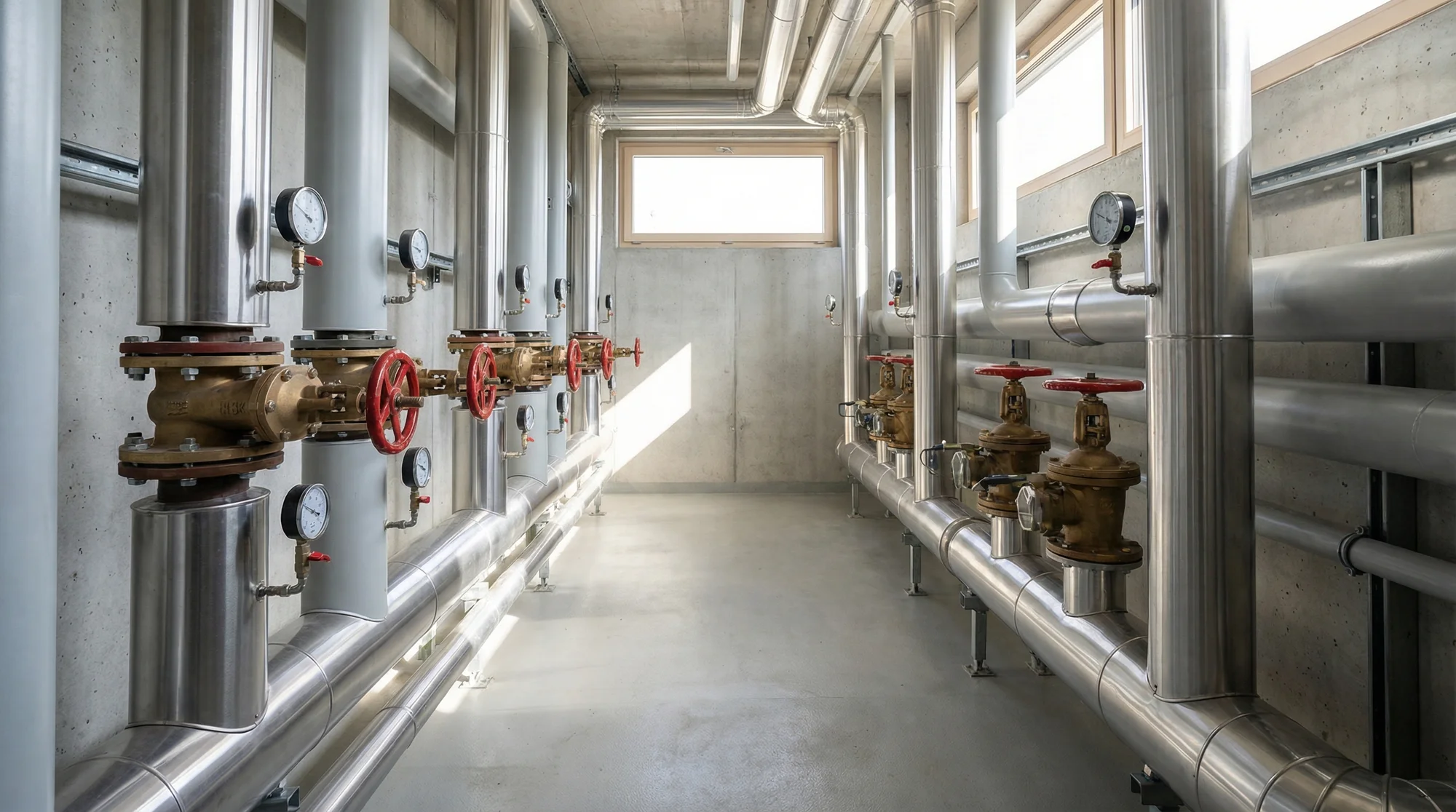 Keeping backflow prevention devices in good working order protects the entire water distribution system.
Finding a Certified Professional
Whether you're repairing or replacing, the work needs to be done by someone with proper certification. Most states require backflow testers to hold a specific license and use calibrated test equipment.
You can search for certified backflow testers near you on FindBackflowTesters.com. We verify credentials so you can be confident you're hiring a qualified professional who can handle the job right — and file the paperwork with your water utility.
Don't wait for a compliance notice to turn into a water shutoff. If your backflow preventer is showing any of the signs above, get it inspected and make the call before your next testing deadline.
Sources
This article references guidance and regulations from authoritative sources including:
- U.S. Environmental Protection Agency — Cross-Connection Control and Backflow Prevention Fact Sheet
- U.S. EPA — Cross-Connection Control Manual
- American Water Works Association — Cross-Connection Control Policy Statement
- AWWA — Manual M14: Backflow Prevention and Cross-Connection Control
- ANSI/AWWA C510 — Double Check-Valve Backflow Prevention Assembly Standard
- ANSI/AWWA C511 — Reduced-Pressure Principle Backflow Prevention Assembly Standard
Last updated: April 5, 2026