Pressure Vacuum Breaker vs Atmospheric Vacuum Breaker: What's the Difference?
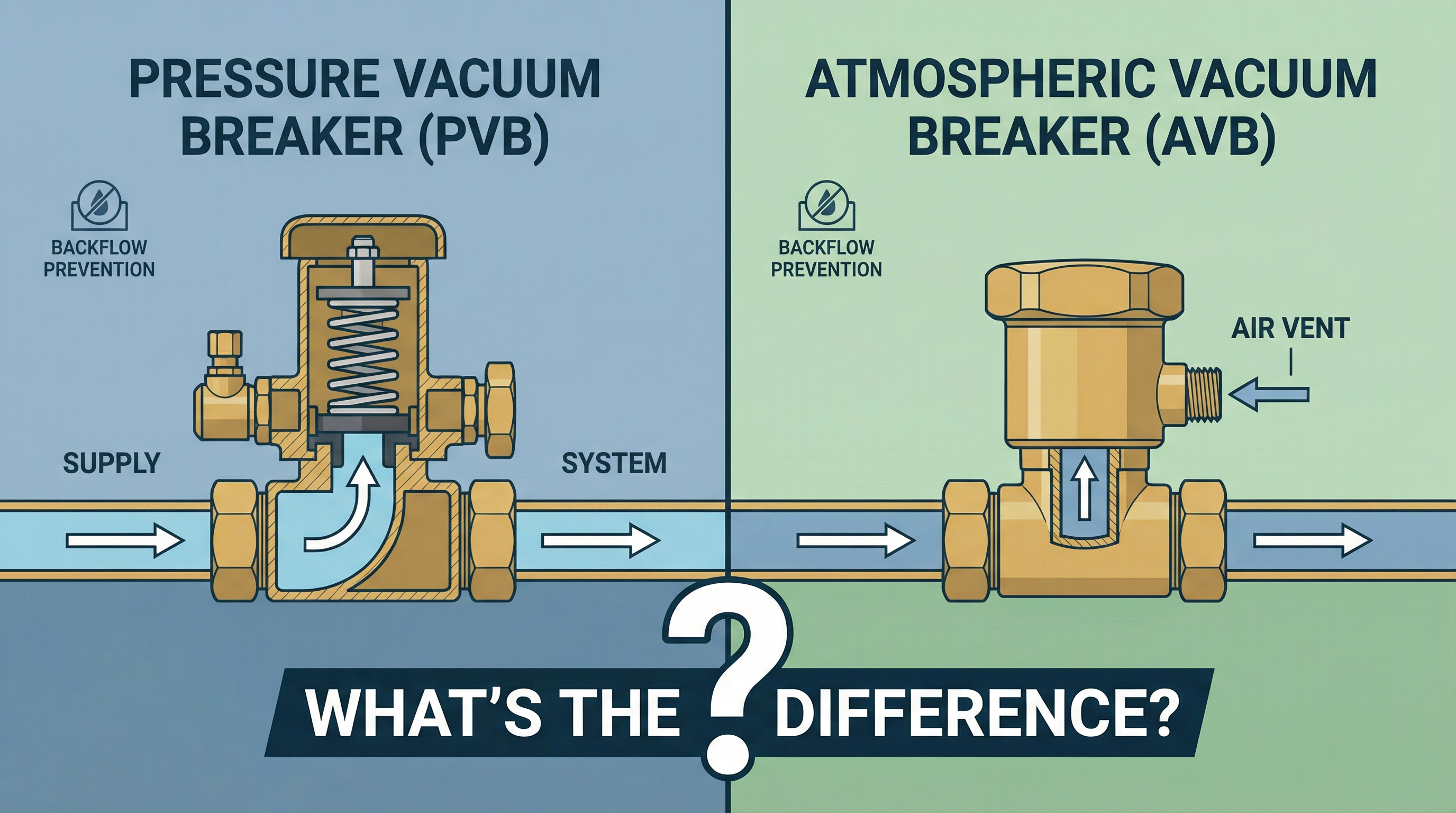
If you've been told you need a backflow preventer, you've probably come across two terms that sound almost identical: Pressure Vacuum Breaker (PVB) and Atmospheric Vacuum Breaker (AVB). Both devices protect your drinking water from backsiphonage — but they work differently, cost different amounts, and are suited for different situations.
This guide breaks down the key differences so you can understand what your plumber or water utility is recommending — and why.
What Do PVBs and AVBs Actually Do?
Both PVBs and AVBs are backsiphonage prevention devices. Backsiphonage happens when a sudden drop in water pressure (from a water main break, for example) creates a vacuum that can pull contaminated water backward into the clean water supply.
Neither device protects against backpressure — that's the job of more heavy-duty assemblies like Reduced Pressure Zone (RPZ) devices or Double Check Valve Assemblies (DCVAs). If your situation involves pumps, boilers, or elevated tanks that could create downstream pressure, you'll need one of those instead.
How an Atmospheric Vacuum Breaker Works
An AVB is the simpler of the two devices. It contains a poppet valve (a small disc-float) that stays open during normal water flow. When the water stops or pressure drops, the poppet falls down by gravity, opening an air inlet that breaks the vacuum and prevents contaminated water from being sucked backward.
Think of it like a one-way air vent: the moment pressure disappears, air rushes in and stops the siphon.

Key AVB Characteristics
- Protection: Backsiphonage only (no backpressure protection)
- Continuous pressure: Cannot handle continuous pressure for more than 12 hours — the internal valve can stick and fail
- Downstream valves: No shutoff valves allowed downstream
- Installation height: Must be installed at least 6 inches above the highest downstream outlet
- Testing: Generally not testable — relies on visual inspection
- Cost: Lower cost, simpler design
- Common uses: Hose bibs, service sinks, toilet fill valves, individual sprinkler zones
How a Pressure Vacuum Breaker Works
A PVB is a more engineered assembly. It uses a spring-loaded check valve and a spring-loaded air inlet valve that operate independently. The spring mechanism means the device doesn't rely on gravity alone — it actively closes and opens under pressure changes.
PVBs also include shutoff valves on both the inlet and outlet sides, plus test cocks that allow a certified tester to verify the device is working correctly.
For a deeper dive into PVB mechanics, see our complete guide to how PVBs work.
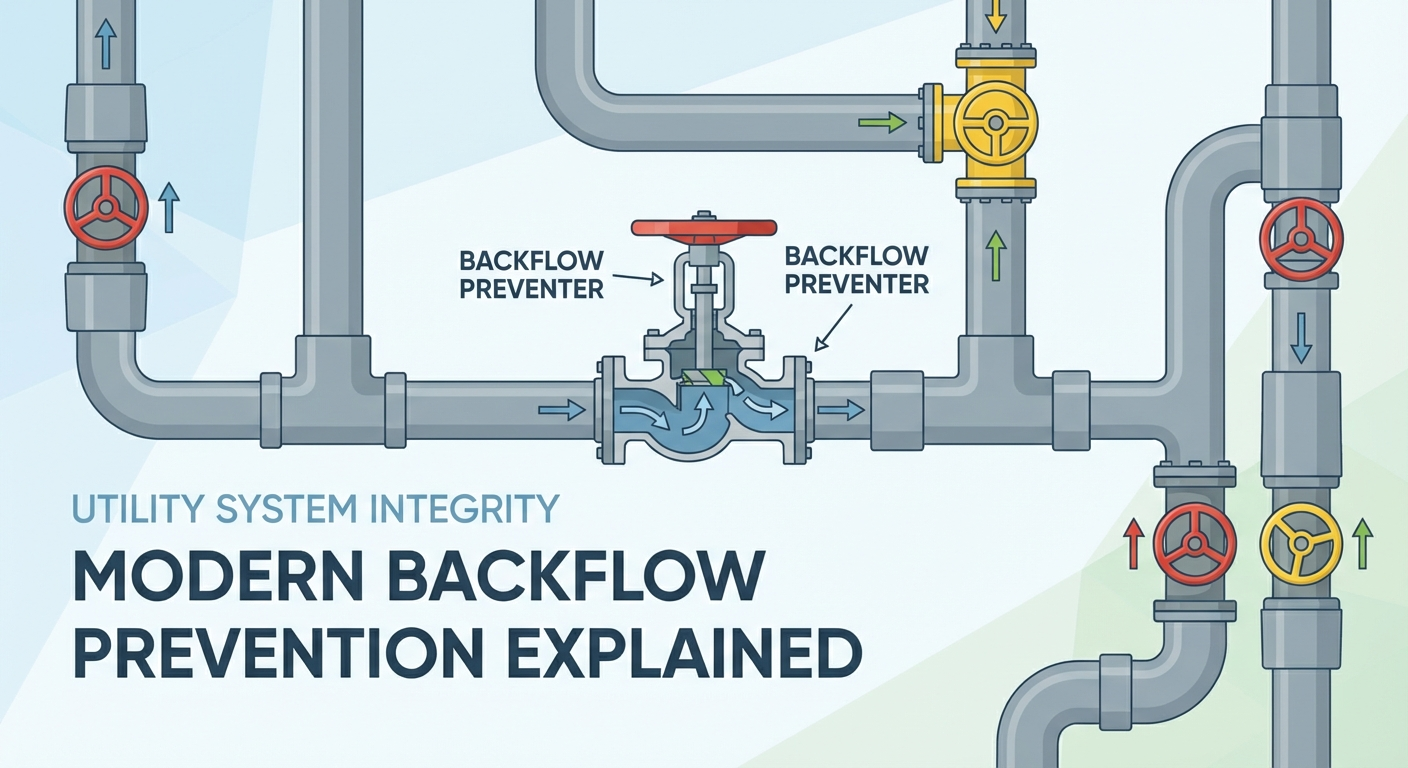 PVBs are spring-loaded assemblies designed for continuous-pressure applications like irrigation systems.
Key PVB Characteristics
- Protection: Backsiphonage only (no backpressure protection)
- Continuous pressure: Designed to handle continuous supply pressure
- Downstream valves: Shutoff valves are allowed downstream
- Installation height: Must be installed at least 12 inches above the highest downstream outlet
- Testing: Testable — annual testing required by a certified backflow technician in most jurisdictions
- Cost: Higher cost due to more complex assembly
- Common uses: Residential and commercial irrigation systems, outdoor water connections, agricultural systems
- Standards: Must meet ASSE 1020 certification
Side-by-Side Comparison
| Feature | AVB | PVB |
|---|---|---|
| Backsiphonage protection | Yes | Yes |
| Backpressure protection | No | No |
| Continuous pressure | No (max 12 hours) | Yes |
| Minimum install height | 6 inches above highest outlet | 12 inches above highest outlet |
| Downstream shutoff valves | Not allowed | Allowed |
| Annual testing required | No (visual inspection only) | Yes (certified tester) |
| Testable | No | Yes (has test cocks) |
| Typical cost | $15–$60 | $75–$300+ |
| Best for | Single-zone, non-pressurized | Multi-zone irrigation, continuous use |
Which One Do You Need?
The choice usually comes down to your application and local code requirements:
Choose an AVB if:
- You have a single irrigation zone with no downstream shutoff valves
- The application is low-risk (like a garden hose or utility sink)
- You want a budget-friendly, simple solution
- Your local code permits it for your specific use case
Choose a PVB if:
- You have a full irrigation system with multiple zones and control valves
- The water line will be under continuous pressure
- Your water utility or local plumbing code requires a testable device
- You need downstream shutoff valves
Important: Many water utilities and state regulations have moved toward requiring testable assemblies (PVBs or RPZs) for irrigation systems. Even if an AVB might technically work, your local utility may not accept it. Always check with your water provider before installing.
 For homes with irrigation systems, most water utilities now require a PVB or higher-level assembly.
Installation Mistakes to Avoid
Whether you're going with a PVB or AVB, improper installation is the most common reason these devices fail. Here are the big ones:
Installing below the required height — An AVB installed less than 6 inches above the highest outlet, or a PVB less than 12 inches above, won't protect against backsiphonage reliably.
Putting shutoff valves downstream of an AVB — This creates continuous pressure on the device, which will cause it to fail. This is one of the most common backflow prevention mistakes.
Skipping annual testing on a PVB — PVBs have internal springs and seals that wear out. Without annual testing, a failed device can go undetected for years. Learn more about what happens when you get a test notice.
Installing in a pit or vault — AVBs need open air to function. Enclosing them can block the air inlet and render the device useless.
What About Other Device Types?
PVBs and AVBs are just two of the four main types of backflow prevention devices. If your situation involves backpressure (not just backsiphonage), you'll need an RPZ or DCVA instead. Your certified backflow tester can help you determine the right device — find one near you.
The Bottom Line
AVBs are cheap, simple, and work fine for basic, low-risk applications where continuous pressure isn't a factor. PVBs are more robust, testable, and suitable for irrigation systems and any setup that needs to handle ongoing water pressure. When in doubt, a PVB is the safer choice — and it's what most water utilities prefer.
The most important thing? Make sure whatever device you have is properly installed and maintained. A backflow preventer that's installed wrong or never tested is barely better than having none at all.
Sources
This article references guidance and regulations from authoritative sources including:
- EPA Cross-Connection Control Manual — Cross-Connection Control and Backflow Prevention
- AWWA (American Water Works Association) — Backflow Prevention and Cross-Connection Control
- Montana DEQ — Atmospheric Vacuum Breaker Guidelines (PDF)
- Montana DEQ — Pressure Vacuum Breaker Guidelines (PDF)
- Ohio EPA — Backflow Prevention Manual (PDF)
- Southern Nevada Health District — Types of Backflow Devices
- Colorado State University Extension — Home Sprinkler Systems: Backflow Prevention Devices
- Municipality of Anchorage — Atmospheric Vacuum Breakers (PDF)
Last updated: April 3, 2026