How a Reduced Pressure Zone (RPZ) Assembly Works
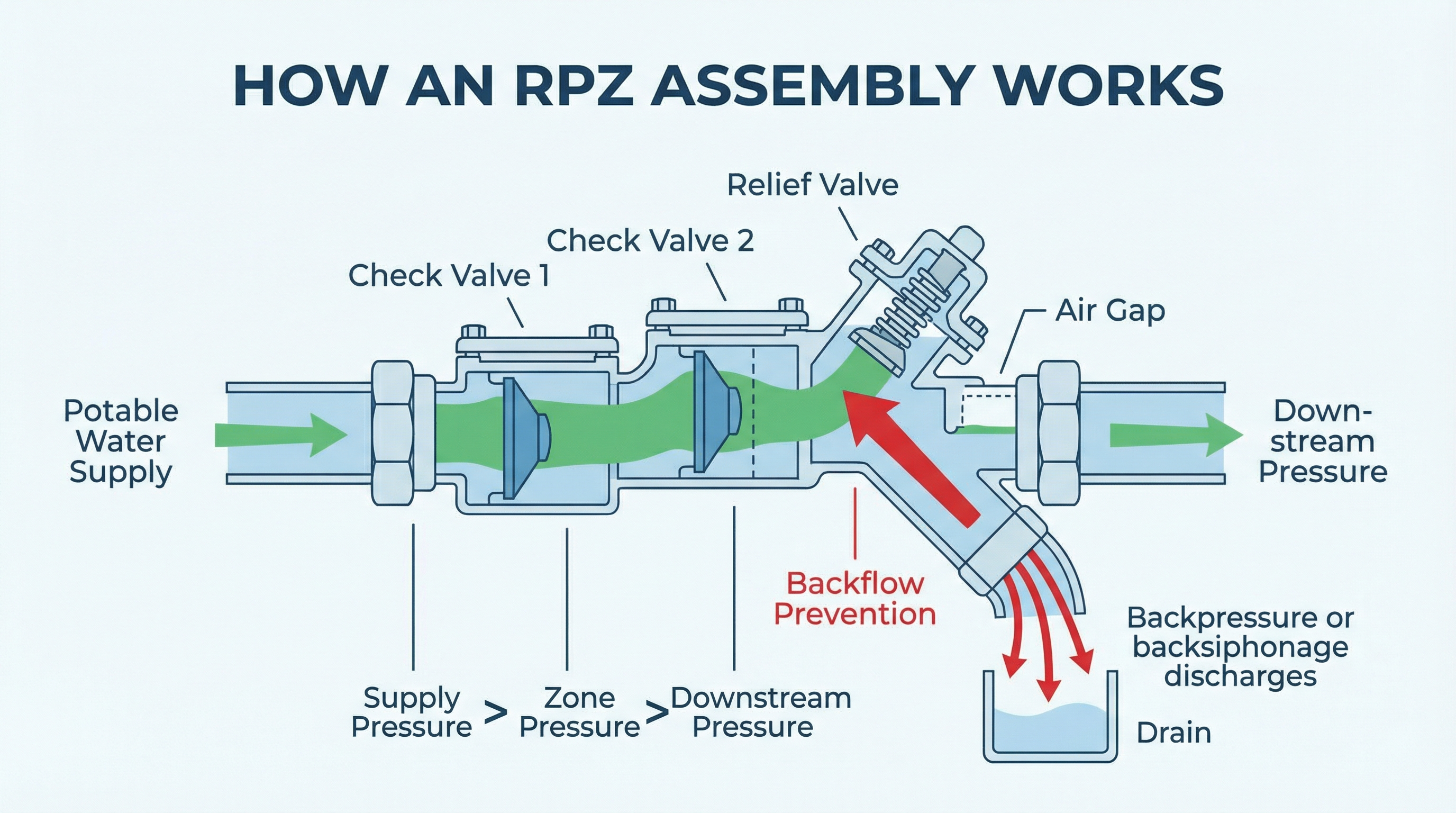
If you've received a notice from your water utility about installing or testing a backflow preventer, you may have encountered the term "RPZ" — short for Reduced Pressure Zone assembly. It's the most robust type of mechanical backflow preventer available, and it's the device most water utilities require for high-hazard connections.
But how does it actually work? In this guide, we'll break down the components, the operating principle, and why this particular assembly is the gold standard for protecting drinking water.
What Is an RPZ Assembly?
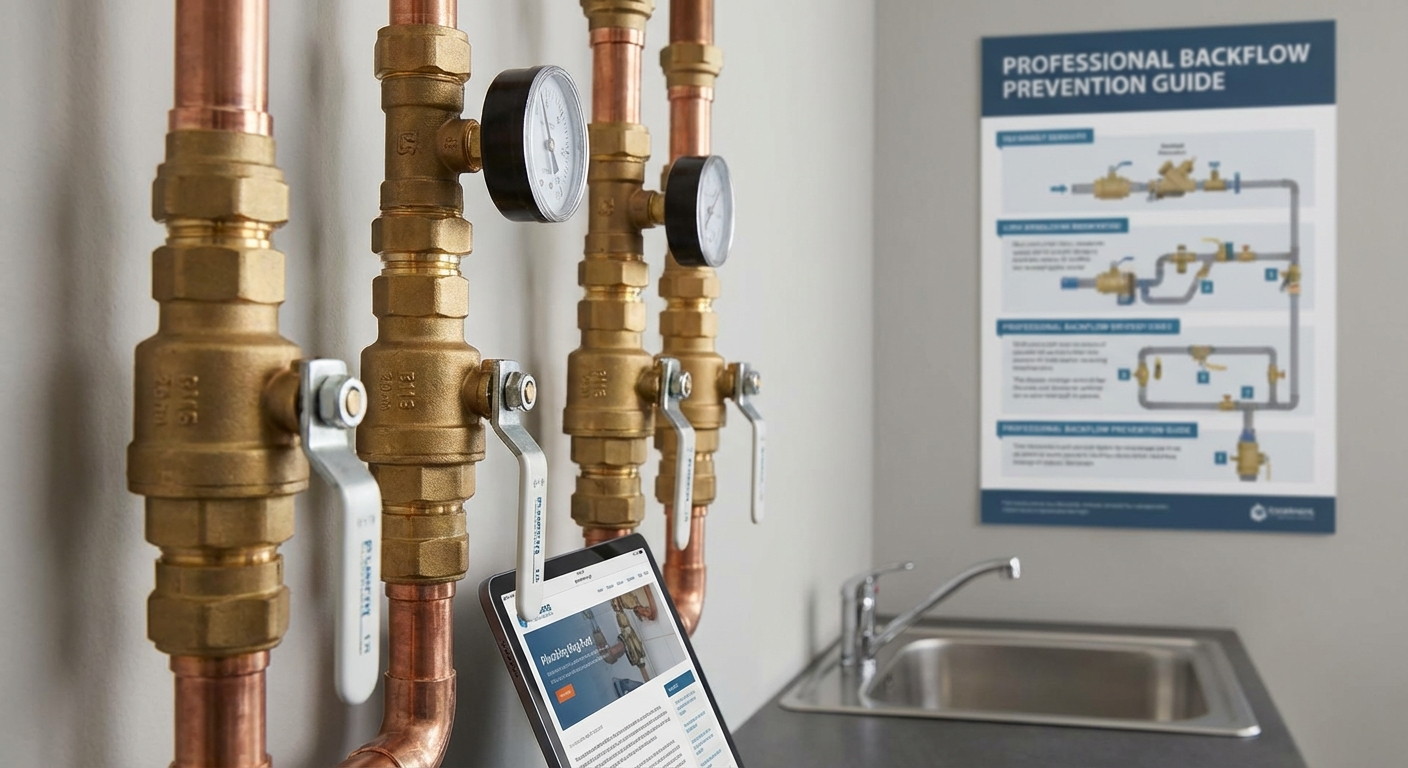 Brass valves and pipe fittings similar to those found in backflow prevention assemblies.
A Reduced Pressure Zone assembly — also called an RP assembly or RPZ valve — is a backflow prevention device designed to stop contaminated water from flowing backward into the public water supply. It provides protection against both backpressure (when downstream pressure exceeds supply pressure) and back-siphonage (when a vacuum pulls water backward through the system).
RPZ assemblies are classified as the highest level of mechanical backflow protection. That's why they're required in situations where contamination could pose a serious health risk — think chemical processing facilities, irrigation systems connected to municipal water, fire sprinkler systems with antifreeze, and medical or laboratory buildings.
For a broader comparison of backflow devices, see our guide on types of backflow prevention devices explained.
The Three Key Components
Every RPZ assembly contains three critical working parts, all housed within a single body:
1. First Check Valve (Upstream)
The first independently operating, spring-loaded check valve sits on the supply side. It opens under normal water pressure to allow flow downstream and closes when pressure reverses or drops. This is your first line of defense.
2. Differential Pressure Relief Valve
Located between the two check valves in what's called the "reduced pressure zone," this relief valve is the component that makes an RPZ fundamentally different from a double check valve assembly (DCVA). The relief valve constantly monitors the pressure differential across the first check valve. If that differential drops below a safe threshold (typically around 2 PSI), the relief valve opens and dumps water to the atmosphere.
This is intentional. The relief valve would rather discharge water onto the ground than allow any contaminated water to reach the supply side. If you've ever seen water pouring from a backflow preventer, this is usually why — and it means something needs attention.
3. Second Check Valve (Downstream)
The second check valve provides an additional barrier against backflow from the downstream side. Together with the first check valve and the relief valve, the RPZ creates a triple-layer protection system.
In addition to these three components, every RPZ assembly includes four test cocks and two shutoff (isolation) valves that allow certified testers to measure pressure differentials and verify each component is functioning correctly.
How It Works: Normal Flow
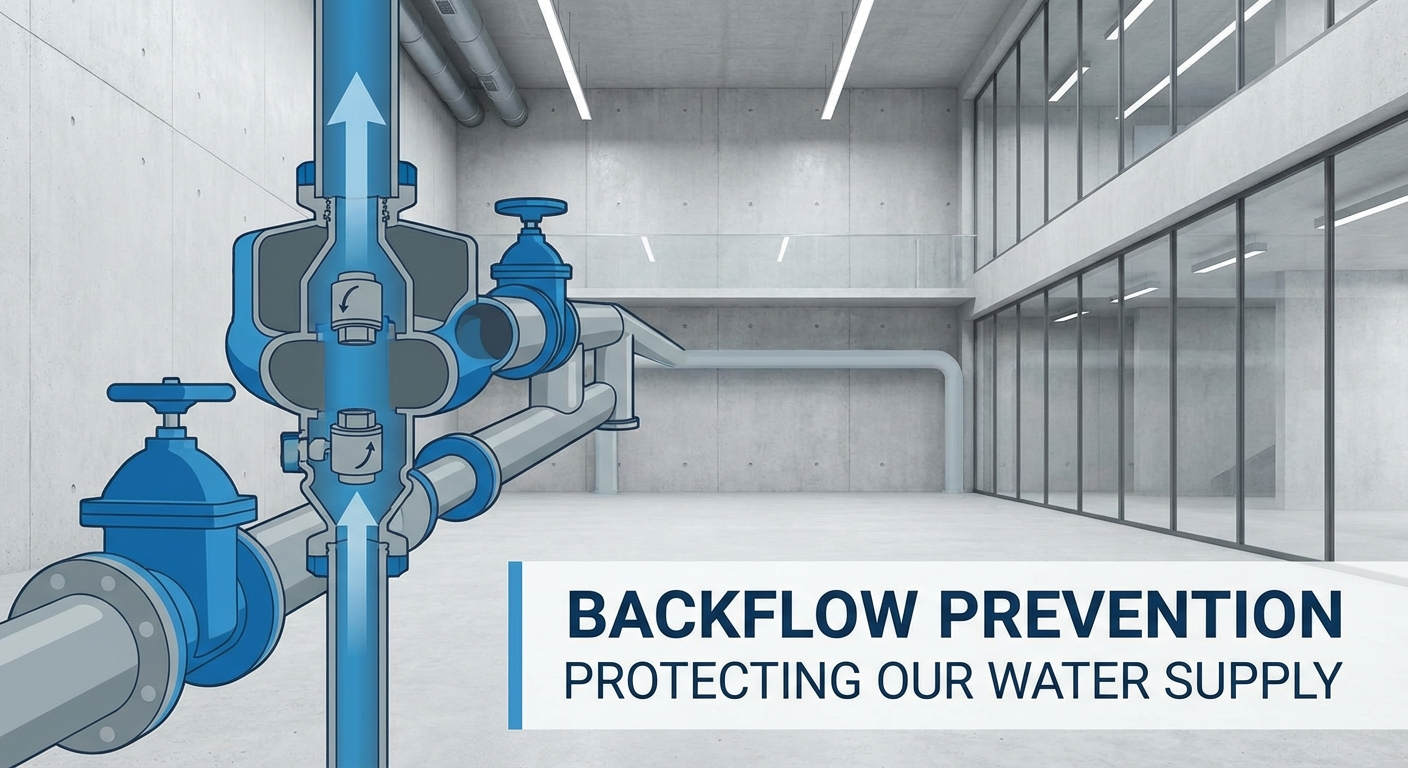 Under normal conditions, water flows through the RPZ assembly without interruption.
Under normal operating conditions, water enters from the supply side and pushes open the first check valve. As it passes through, the first check valve creates a small but consistent pressure drop — typically 3 to 5 PSI. This means the pressure in the zone between the two check valves is always lower than the supply pressure.
Because the zone pressure is safely below the supply pressure, the relief valve stays closed. Water continues through the second check valve and flows downstream to the building's plumbing system. From the outside, the assembly is quiet, dry, and unremarkable.
How It Works: During a Backflow Event
This is where the RPZ earns its reputation. When conditions change — a water main break causes a sudden pressure drop, or a booster pump pushes downstream pressure above supply pressure — the assembly responds automatically:
The check valves close. Both check valves are spring-loaded and designed to seal tightly against reverse flow. This alone stops most backflow.
The relief valve monitors pressure. If the first check valve leaks even slightly — allowing the zone pressure to rise close to supply pressure — the relief valve detects the shrinking differential.
The relief valve opens. Once the pressure differential drops below approximately 2 PSI, the relief valve opens to atmosphere. Any water in the zone (which could be contaminated) is discharged safely rather than being allowed to reach the supply.
This "fail-safe to atmosphere" design is what makes RPZ assemblies suitable for high-hazard applications. Even if one or both check valves fail, the relief valve ensures contaminated water is dumped rather than allowed into the drinking water supply.
For context on what can go wrong during backflow events, read about how backflow contamination events actually happen.
Where RPZ Assemblies Are Required
Water utilities and state regulators typically require RPZ assemblies for connections classified as high-hazard. Common examples include:
- Commercial irrigation systems connected to municipal water
- Fire sprinkler systems using chemical additives or antifreeze
- Hospitals, laboratories, and dental offices where chemicals or biological materials could contact water lines
- Industrial and manufacturing facilities with process water connections
- Car washes, laundromats, and food processing plants
- Any connection where a contaminant could cause illness or death if it entered the water supply
Some jurisdictions also require RPZ assemblies for all commercial connections regardless of hazard level, and a growing number require them for residential irrigation systems. Check your local state backflow testing requirements for specifics.
To understand why your city may require this, see what is a cross-connection control program.
RPZ vs. DCVA: What's the Difference?
A Double Check Valve Assembly (DCVA) also uses two check valves in series. However, it lacks the differential pressure relief valve. Without that fail-safe mechanism, a DCVA cannot protect against contamination in a worst-case scenario where both check valves fail.
That's why DCVAs are approved only for low-hazard connections (pollutants that may affect taste, odor, or appearance but don't pose a health risk), while RPZ assemblies are required for high-hazard connections (contaminants that could cause illness or death).
Our RPZ vs DCVA vs PVB comparison guide covers this in detail.
Annual Testing Is Required

RPZ assemblies must be tested at least once per year by a certified backflow prevention assembly tester. During testing, the technician connects a differential pressure gauge kit to the four test cocks and verifies:
- The first check valve holds adequate pressure (typically 1 PSI minimum)
- The second check valve holds adequate pressure
- The relief valve opens at the correct differential (typically when the zone pressure is within 2 PSI of supply pressure)
- No components are leaking or stuck
If any component fails, the assembly must be repaired and retested before it's considered compliant. Missing your testing deadline can result in fines, violation notices, or even water service shutoff — see what happens when you miss your testing deadline.
Need to understand your test report? We have a guide on how to read a backflow test report.
Common Signs Your RPZ Needs Attention
Between annual tests, watch for these warning signs:
- Continuous water discharge from the relief valve — This means the first check valve is leaking and the relief valve is doing its job. It needs repair promptly.
- Reduced water pressure downstream — Could indicate debris or mineral buildup inside the assembly.
- Visible corrosion or damage to the body, test cocks, or isolation valves.
- Noisy operation — Chattering or hammering sounds can indicate pressure fluctuations or failing springs.
If you notice any of these, don't wait for your next scheduled test. Contact a certified backflow tester near you to inspect and repair the assembly. For more on test failures, see common reasons backflow tests fail.
The Bottom Line
An RPZ assembly is engineered to do one thing extremely well: prevent contaminated water from reaching the public drinking water supply, even when other components fail. Its dual check valves and fail-safe relief valve make it the most reliable mechanical backflow preventer available.
If your water utility has required one for your property, it's because the connection you have poses a real risk. Getting it installed correctly and tested annually isn't just about compliance — it's about protecting the water your community drinks.
Ready to find a certified tester? Search for backflow testers in your area on FindBackflowTesters.com.
Sources
This article references guidance and regulations from authoritative sources including:
- EPA - Cross-Connection Control and Backflow Prevention Fact Sheet
- EPA - Cross-Connection Control Manual
- AWWA - Cross-Connection Control Policy Statement
- AWWA - M14 Manual: Backflow Prevention and Cross-Connection Control
- ASSE International - ASSE 1013: Reduced Pressure Principle Backflow Preventers
- New York State Department of Health - Cross-Connection Control Guide
- Illinois EPA - Cross-Connection Control Program
Last updated: March 29, 2026