Backflow Testing Requirements for Commercial Properties
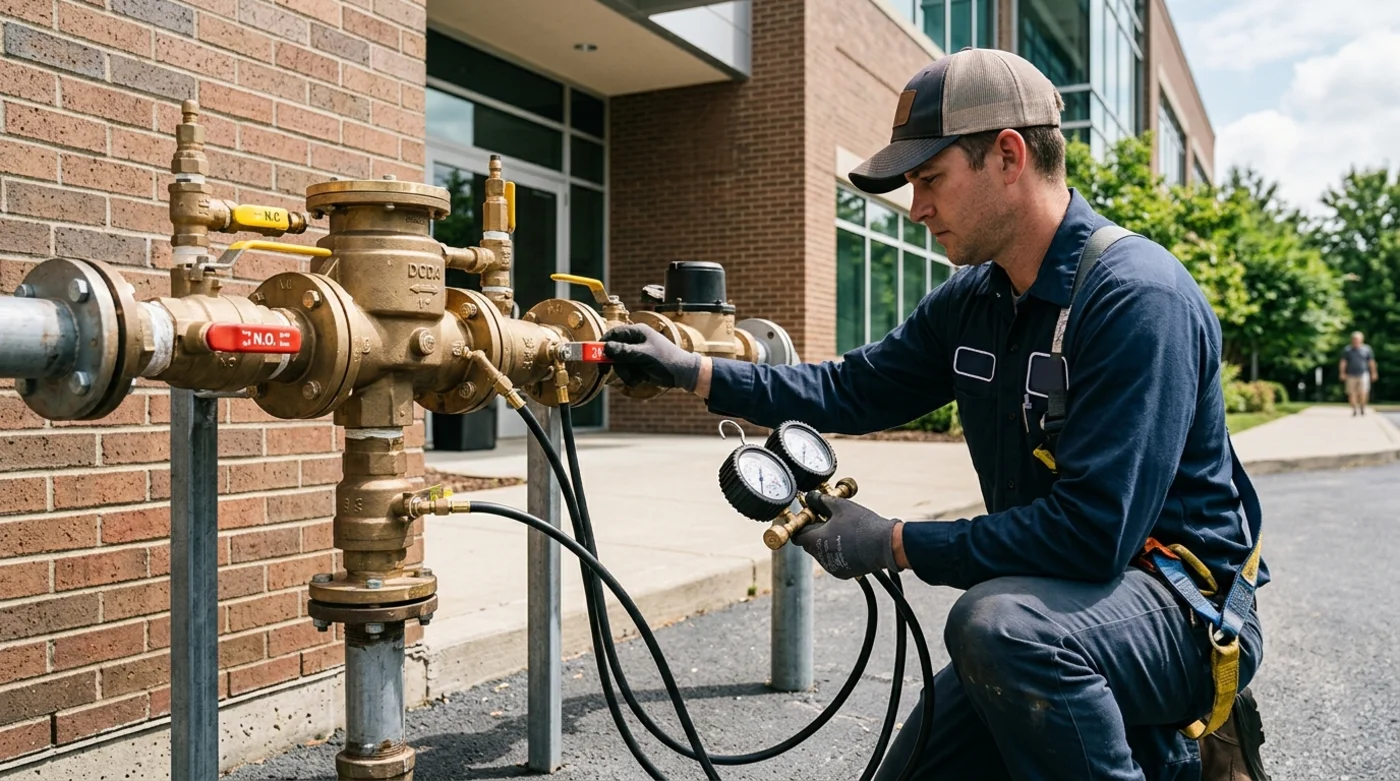
Commercial properties get more backflow scrutiny than most homes, and for good reason. Office buildings, restaurants, medical suites, warehouses, retail centers, apartment complexes, and industrial sites are more likely to have fire lines, irrigation, boilers, chemical feeds, commercial kitchens, or other plumbing connections that can create a cross-connection hazard.
That does not mean every commercial property follows one identical rulebook. The exact requirement depends on your local water utility, plumbing code, the hazard level of your operations, and the type of backflow prevention assembly installed on the service line. But across major utilities, the pattern is consistent: if your commercial property has a testable backflow assembly, annual testing is usually mandatory, repairs must be handled quickly, and missed deadlines can escalate into fees or shutoff risk.
The short answer
For most commercial properties, backflow testing is required when the property has a testable backflow prevention assembly installed on a domestic, irrigation, or fire protection connection. Utilities commonly require annual testing for assemblies such as:
- RPZ assemblies for higher-hazard commercial uses
- Double check valve assemblies (DCVA) on many low or moderate hazard commercial lines
- Pressure vacuum breakers (PVB) on irrigation systems
If your site has one of those assemblies, assume you need a certified tester and a report on file every year unless your utility says otherwise. If you are unsure what is installed, start with your utility's program page, your last test report, or your building plans.
Commercial operators in cities like Houston and Philadelphia can also review our local utility guides for Houston Public Works and the Philadelphia Water Department.
Which commercial properties are most likely to need testing
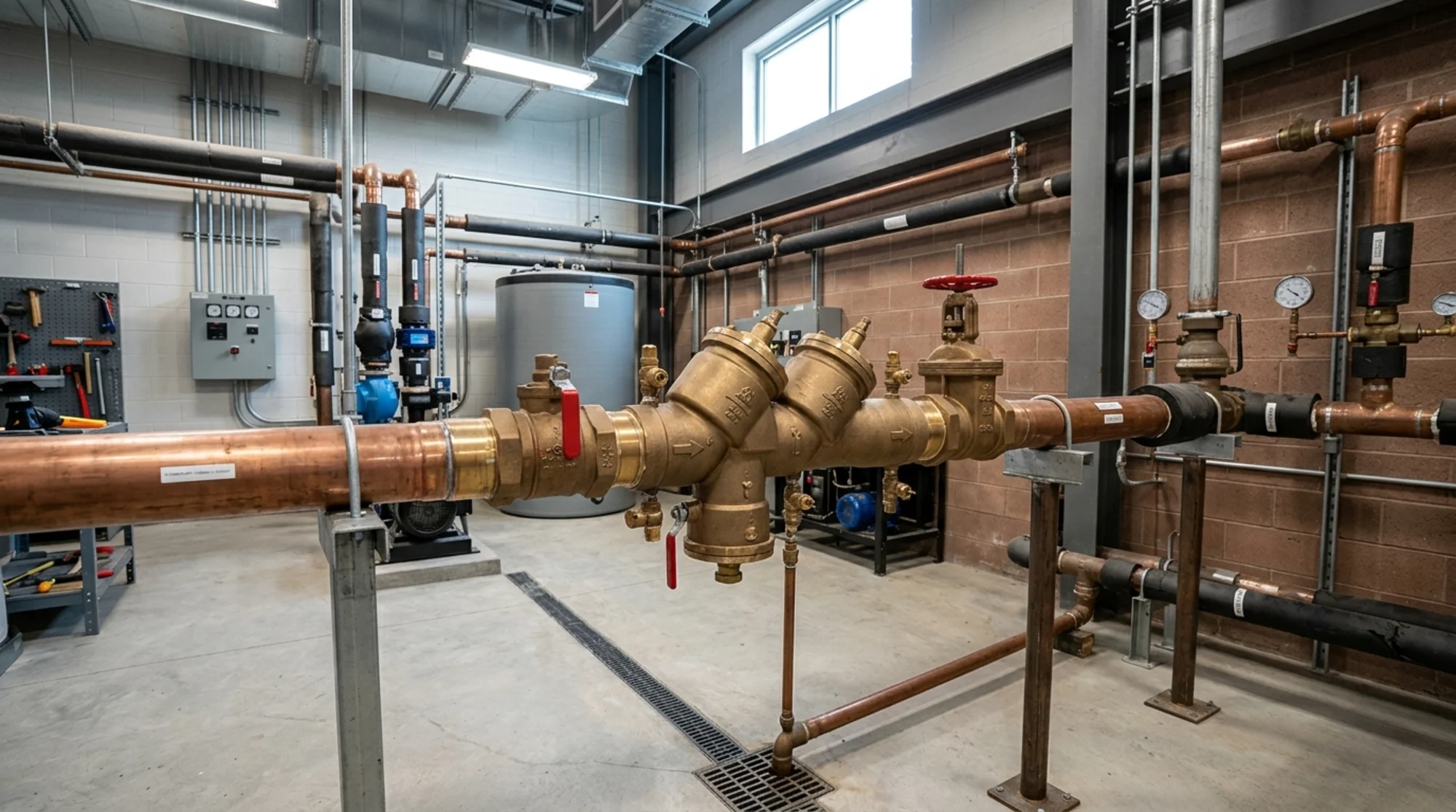 Commercial properties often have larger and more complex water connections than single-family homes, which is why testable backflow assemblies are so common on these sites.
Utilities do not usually write their rules around business type alone. They care about the hazard created by the plumbing connection. In practice, though, certain commercial property types show up again and again in utility programs:
- Restaurants, bars, breweries, and commercial kitchens
- Medical, dental, laboratory, and veterinary facilities
- Multi-tenant office and retail buildings
- Industrial and manufacturing sites
- Warehouses with process water or chemical use
- Apartment, condominium, and mixed-use properties with shared systems
- Sites with dedicated fire sprinkler service lines
- Properties with landscape irrigation, reclaimed water, or auxiliary water sources
Austin Water, Houston Public Works, Philadelphia Water Department, and SFPUC all describe annual testing requirements for commercial properties with installed assemblies, especially where the property includes irrigation, boilers, fire suppression, process water, or identified cross-connection hazards.
A simple office suite may still need testing if the building has a fire line backflow assembly or a shared irrigation device. A restaurant may need stronger protection because of chemical dispensers, carbonators, mop sinks, and food-prep plumbing. A medical building may face even stricter protection standards because of higher health hazard potential.
What usually triggers the requirement
The most common triggers are not mysterious. Utilities and inspectors are looking for plumbing situations where contaminated water could move back toward the public supply during backpressure or backsiphonage. Typical commercial triggers include:
- Fire sprinkler systems
- Boilers and hydronic systems
- Irrigation and lawn sprinkler systems
- Commercial kitchens and food service equipment
- Chemical feed or treatment systems
- Cooling towers
- Auxiliary water supplies, including wells or rainwater systems
- Reclaimed water connections
- Process water used in manufacturing or washdown operations
That is why two neighboring commercial buildings can have different requirements. One might only need a double check on a low-hazard connection. The other may need an RPZ because the utility classifies the site as a health hazard.
If you want a clearer device-level explanation, our related guides on what a backflow prevention assembly is and how often a backflow preventer needs to be tested are a good next stop.
Which device you may be required to maintain
Commercial properties commonly deal with three categories of testable devices:
RPZ
An RPZ, or reduced pressure zone assembly, is usually required where the hazard is considered high. These are common on medical, industrial, chemical, and some restaurant or mixed-use applications. They are more protective, more expensive, and more likely to need careful maintenance.
DCVA
A double check valve assembly is common on lower-hazard commercial connections, including many fire lines and standard commercial water services, depending on local rules.
PVB
A pressure vacuum breaker is often used on irrigation systems where the primary concern is backsiphonage rather than backpressure.
The important point for owners and property managers is this: the utility or code authority usually decides what level of protection is required. Do not buy a replacement assembly based only on price or what another property uses. Confirm the approved type first.
Annual testing, repairs, and report submission
A commercial backflow test is not a casual visual check. A certified tester uses calibrated gauges and files a formal report that the utility can track against your property account.
On most commercial properties, the annual compliance cycle looks like this:
- The utility tracks the device by address, account, or assembly serial number.
- A reminder notice is sent before the due date.
- A certified tester performs the annual test.
- The test report is submitted to the utility, often through an online portal.
- If the device fails, it must be repaired or replaced and then re-tested.
The certification rules vary by state. In Texas, testers generally need a TCEQ Backflow Prevention Assembly Tester license. Philadelphia accepts recognized certifications such as ASSE, ABPA, AWWA, and other Pennsylvania-recognized programs. San Francisco recognizes certifications accepted by SFPUC. In all of these systems, gauge calibration matters too.
Deadlines after a failed test also matter. Austin, Houston, Philadelphia, and SFPUC program guidance all point to a fast repair-and-retest expectation, commonly within 30 days. On a busy commercial property, that is not much time. If a device fails, get the repair scheduled immediately and confirm the passing report actually reaches the utility.
If you manage several assemblies across one site, or a portfolio across multiple cities, it helps to keep a device register with:
- Device type and size
- Location on site
- Serial number
- Last passing test date
- Next due date
- Assigned tester or vendor
- Report submission confirmation
What happens if you ignore the notice
Commercial enforcement tends to move faster than people expect. Utilities may start with reminders, but they usually have stronger tools available when a property stays out of compliance.
Austin Water describes a second notice and additional extension window before administrative action. Houston Public Works notes that administrative penalties and water service discontinuation can follow continued non-compliance. Philadelphia Water Department says overdue properties can move from reminders to formal compliance notices, violation notices, fines, and potential shutoff coordination.
That matters even more for commercial operators because the consequences are bigger:
- Tenant disruption
- Delayed openings or inspections
- Fire line compliance problems
- Failed internal audits
- Water shutoff risk
- Extra fees for reconnection or emergency service
If you already received a deadline letter, do not wait for the next one. Our guide to what happens after you get a backflow test notice covers the enforcement path in more detail.
How commercial properties stay compliant without chaos
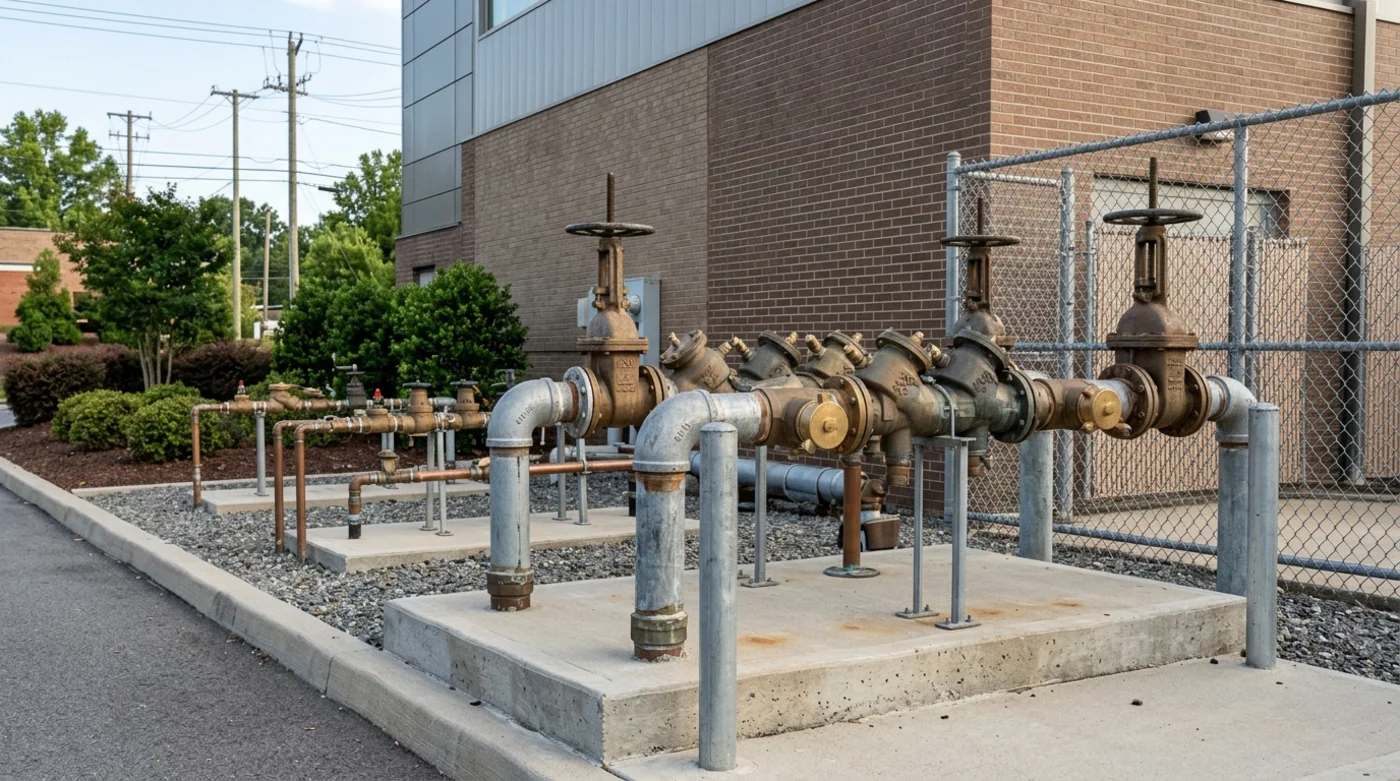 The easiest commercial compliance plan is boring and systematic: know every assembly, know every deadline, and keep every passing report in one place.
The best commercial compliance systems are simple:
- Inventory every assembly on domestic, irrigation, and fire connections
- Assign one responsible contact internally or through your property manager
- Book testing before peak season, especially for irrigation-heavy sites
- Keep digital copies of every passing and failed report
- Track repairs separately so failed devices do not get lost in email
- Confirm submission, do not just assume the tester filed it
- Review requirements by city, because multi-city portfolios rarely share identical rules
If you need help finding a local provider, start with our tester directory by state or browse utility-specific program pages before you schedule. For quick baseline answers, our FAQ page is also useful for owners and managers dealing with common compliance questions.
Bottom line
Commercial properties are far more likely than single-family homes to have the kinds of plumbing connections that trigger backflow testing requirements. If your building has a testable assembly on a domestic, irrigation, or fire line, annual testing is usually part of the cost of staying open and compliant.
The safest approach is to treat backflow testing like any other recurring life-safety or building-compliance task: know what you have, know when it is due, use a properly certified tester, and follow through until the passing report is on file.
If you need to schedule service now, find a certified backflow tester in your area.
Sources
This article references guidance and regulations from authoritative sources including:
- U.S. Environmental Protection Agency (EPA) - Safe Drinking Water Act overview
- American Water Works Association (AWWA) - Cross-Connection Control & Backflow Prevention resources
- Centers for Disease Control and Prevention (CDC) - Drinking Water
- Philadelphia Water Department - Cross-Connection & Backflow Compliance
- Pennsylvania Department of Environmental Protection - Bureau of Safe Drinking Water
Last updated: April 19, 2026