Inline vs Bypass Backflow Preventer Installations: What Property Owners Should Know

Installing a backflow preventer is not just about choosing the right device. The layout matters too. One of the most common points of confusion is whether an assembly should be installed inline or as part of a bypass arrangement.
For most homeowners, the answer is simple: the assembly is installed inline, directly in the line it protects. But once you get into larger commercial properties, dedicated fire services, or facilities that cannot easily shut water down for maintenance, bypass layouts start entering the conversation.
This guide explains the practical difference between inline and bypass backflow installations, what each one is trying to solve, and what property owners should confirm before work begins.
What “Inline” Means
An inline installation means the backflow prevention assembly sits directly in the main water line being protected. Every bit of water flowing to the protected system passes through that assembly.
That is the setup most property owners picture when they think of a backflow preventer:
- an irrigation assembly installed on the irrigation supply line
- a domestic water assembly installed at the building service entrance
- a fire-line assembly installed directly on the fire service connection
In other words, the assembly is the primary path. There is no alternate route around it.
For many properties, this is the cleanest and most appropriate design. It is easier to understand, easier to inspect visually, and usually less expensive than a more elaborate layout.
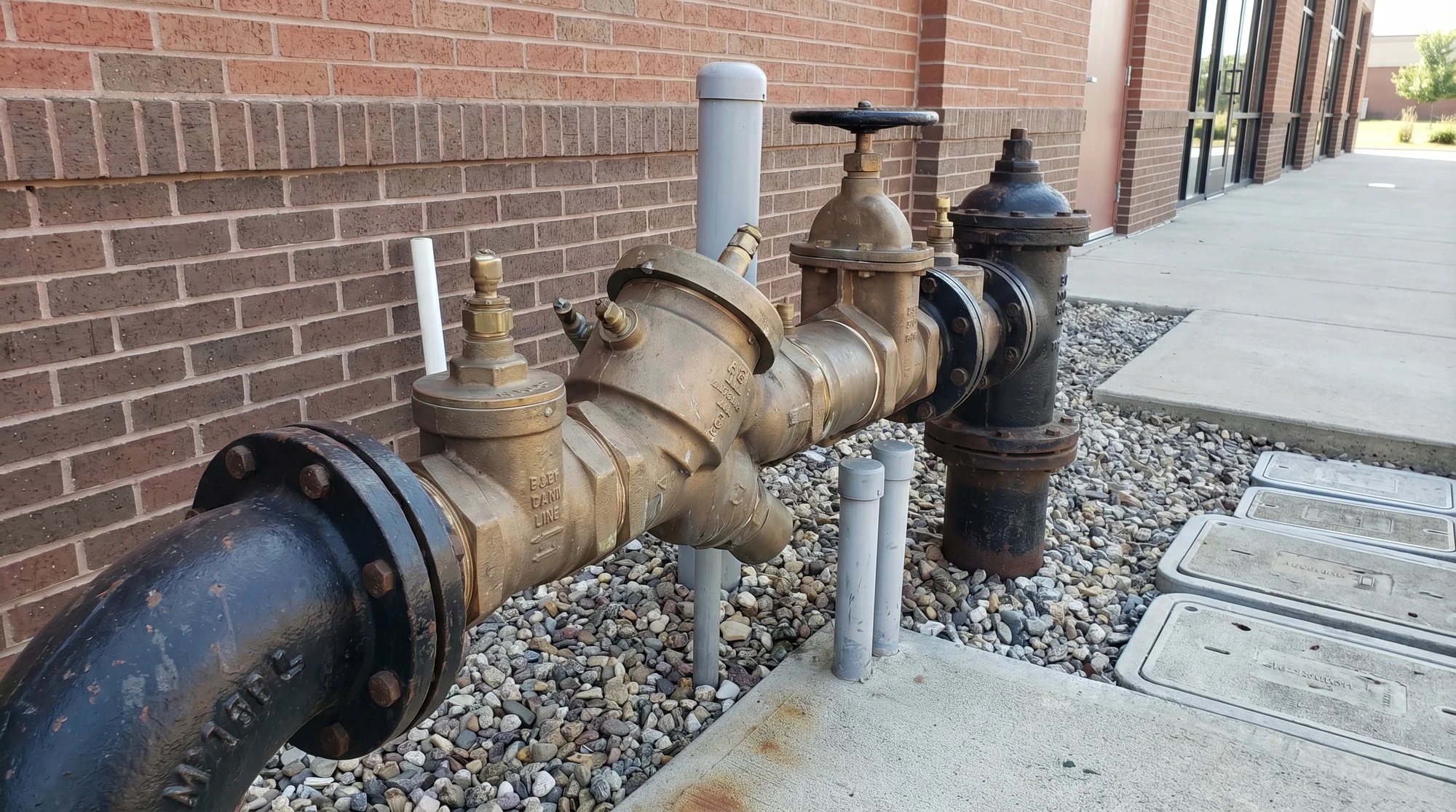 An inline installation places the backflow assembly directly in the protected line so all normal flow passes through it.
What “Bypass” Means
A bypass installation uses an additional path around part of the primary assembly arrangement. In plain English, there is a second route that water can move through under specific design conditions.
That does not mean water is allowed to sneak around backflow protection. If a bypass is permitted, it also has to be protected in a way the utility or authority having jurisdiction accepts. On larger systems, that can mean a separate bypass assembly, a detector assembly, or another approved protection method designed for that exact service.
The point of a bypass layout is not to weaken protection. It is to solve an operational problem, such as:
- maintaining service continuity during testing or maintenance
- handling specialized fire protection layouts
- dealing with large services where shutoff is disruptive or costly
- allowing metering or low-flow detection on lines that otherwise would not register small unauthorized flows
That is why bypass conversations show up more often on commercial, industrial, campus, and fire service projects than on small residential jobs.
Why Most Small Properties Use Inline Installations
For a typical homeowner or small property, inline is usually the right answer because it keeps the system straightforward.
A single inline assembly usually means:
- fewer components to install and maintain
- fewer shutoff valves and connections that can leak or fail
- simpler annual testing
- lower installation cost
- easier communication with plumbers, testers, and utility staff
This is especially common on irrigation systems, where a PVB, DCVA, or RPZ is typically installed directly on the line that feeds the sprinklers. Portland Water Bureau, for example, notes that residential irrigation systems commonly use a DCVA or PVBA and describes installation expectations for each type.
If you are a homeowner trying to understand what is already on your property, our guides on backflow preventer installation requirements and why backflow testing is required are good next reads.
Where Bypass Installations Usually Make More Sense
Bypass layouts are more common where the consequences of a full shutdown are bigger.
Examples include:
1. Large commercial buildings
A hotel, hospital, manufacturing site, or multi-building campus may not want every maintenance event to mean a total loss of service to the protected line.
2. Fire protection services
Some fire service configurations use detector-style arrangements or bypass components so low-volume or unauthorized water use can still be identified while the main fire line remains configured for emergency demand.
3. Complex premises isolation setups
On larger properties, the utility or engineer may need more flexibility around testing, service transitions, and specialty use cases than a single inline assembly provides.
4. Older systems being upgraded in phases
Sometimes a bypass arrangement appears during retrofit work where the site cannot tolerate long outages or where the service layout makes a direct one-for-one replacement impractical.
A bypass layout is typically used to solve an operations problem, not to avoid backflow protection. The bypass path must still be protected in an approved way.
The Biggest Mistake to Avoid
The biggest mistake is assuming a bypass is just “a line around the backflow preventer.”
That is exactly the kind of shortcut utilities are trying to prevent.
The EPA’s cross-connection control guidance and state programs such as Florida DEP’s backflow prevention materials make the same core point: the public water system has to be protected wherever a significant hazard exists. If there is an alternate flow path, that alternate path has to be addressed.
So if someone says, “We’ll just add a bypass so the building can stay online,” the next question should be:
How is that bypass being protected, approved, and tested?
If there is no clear answer, stop there and get clarification from the engineer, plumber, tester, or utility program.
Inline vs Bypass: Practical Tradeoffs
Here is the real-world comparison.
Inline installation advantages
- Simpler layout
- Lower cost in many cases
- Fewer parts to maintain
- Easier annual testing and documentation
- Often ideal for residential and light commercial properties
Inline installation drawbacks
- Maintenance or replacement can require a complete shutdown of the protected line
- Less operational flexibility on critical services
Bypass installation advantages
- More flexibility for larger or mission-critical systems
- Can support specialized fire or detector arrangements
- May reduce disruption during service work when designed correctly
Bypass installation drawbacks
- More expensive
- More complex to design and approve
- More components to inspect, repair, and test
- Greater risk of confusion if records are poor or the installation is not labeled clearly
For property owners, that last point matters a lot. A complex system that nobody understands is not an upgrade. It is future confusion baked into your plumbing.
Questions to Ask Before Approving Either Layout
Whether you are installing a new assembly or replacing an existing one, ask these questions first:
- What hazard is this assembly protecting against?
- Why is inline sufficient here, or why is a bypass needed?
- Does the local water utility or authority having jurisdiction approve this exact layout?
- If there is a bypass path, how is that path protected?
- How will annual testing work in practice?
- What kind of outage is required for maintenance, rebuild, or replacement?
- Will the final layout be easy for the next tester or plumber to understand?
Those answers matter as much as the assembly brand or model number.
If you are comparing local requirements, it also helps to review utility-specific information and local provider options. FindBackflowTesters has program pages for Austin Water and other utilities, plus local directories such as Austin, TX and Charlotte, NC. Those pages can help you understand who works in your market and what local compliance workflows may look like.
What This Means for Testing and Compliance
From a compliance standpoint, more complexity usually means more room for mistakes.
An inline assembly is usually straightforward to test, identify, and document. A bypass installation may involve:
- additional shutoff valves
- multiple assemblies or a detector configuration
- more detailed records
- stricter labeling needs
- more chances for a future technician to misunderstand what is in service
That does not make bypass bad. It just means the documentation needs to be better.
If your property has a more complex installation, keep copies of:
- approved plans or sketches
- assembly model and serial numbers
- previous test reports
- utility approval emails or letters
- notes on which valves should normally be open or closed
That paperwork can save a lot of time the next time a tester shows up or a compliance notice lands in your mailbox. Our article on how utilities track backflow test compliance explains why clean records matter so much.
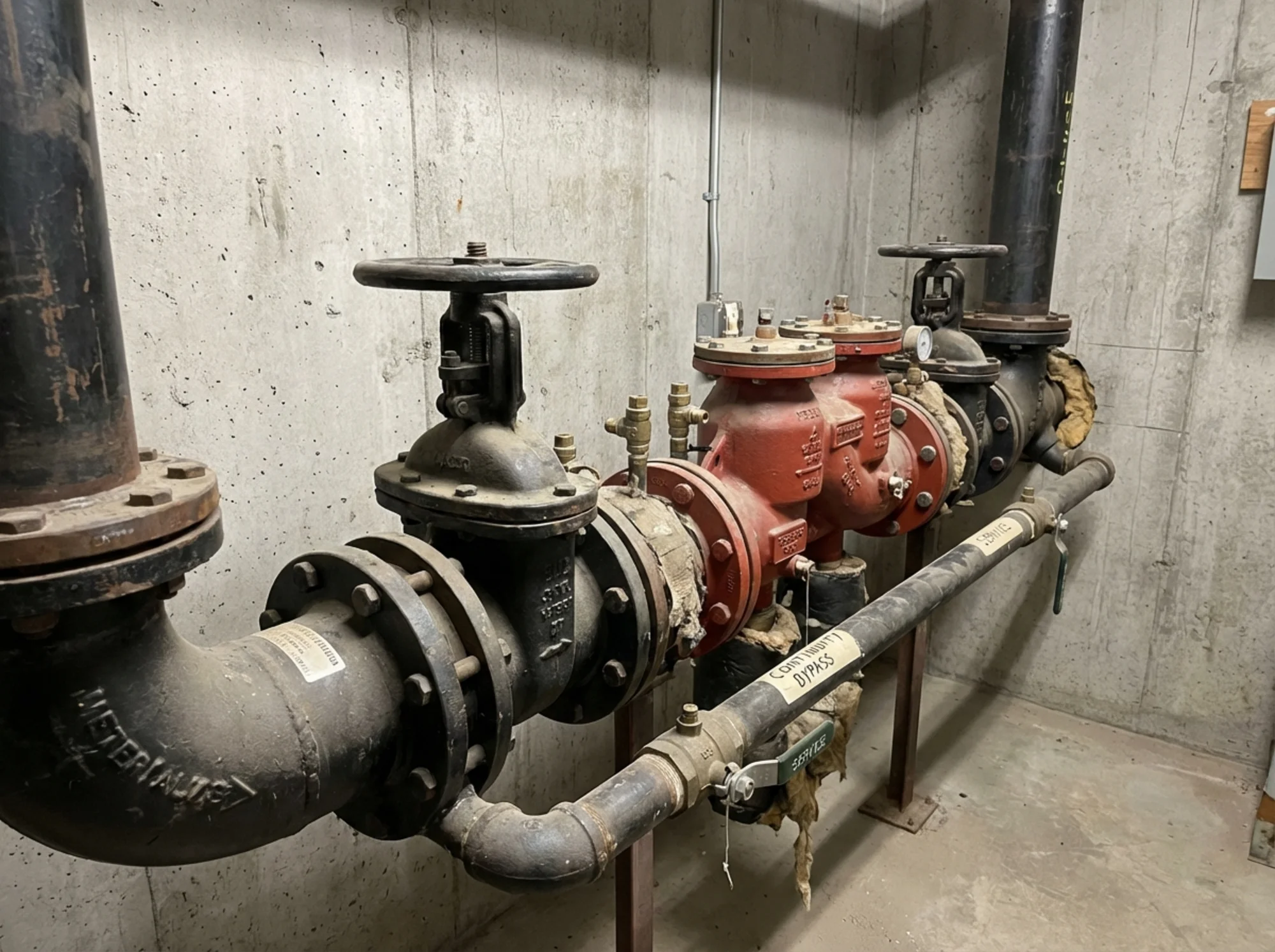 The more elaborate the installation, the more important clear labeling, approved plans, and accessible testing points become.
The Bottom Line
An inline backflow installation puts the assembly directly in the protected line and is the most common setup for residential, irrigation, and many standard commercial applications.
A bypass installation adds complexity to solve a real operational need, usually on larger or more specialized systems. When designed correctly, it is still fully protected. When done casually or without utility approval, it can create serious compliance and water-quality risk.
If you are evaluating a proposal, the safest approach is simple: do not focus only on whether a bypass is convenient. Focus on whether the entire layout is approved, testable, understandable, and appropriate for the hazard being protected.
Sources
This article references guidance and regulations from authoritative sources including:
- U.S. Environmental Protection Agency (EPA) - Cross-Connection Control and Backflow Prevention Fact Sheet
- American Water Works Association (AWWA) - Cross-Connection Control and Backflow Prevention Resources
- Florida Department of Environmental Protection - Cross Connection Control and Backflow Prevention Program
- Portland Water Bureau - How to choose and install a backflow prevention assembly
- Philadelphia Water Department - Backflow Prevention Program
- Centers for Disease Control and Prevention (CDC) - Preventing Drinking Water-Related Illnesses
Last updated: April 11, 2026