What to Do If Your Utility Requires the Backflow Test Report on Its Own Form
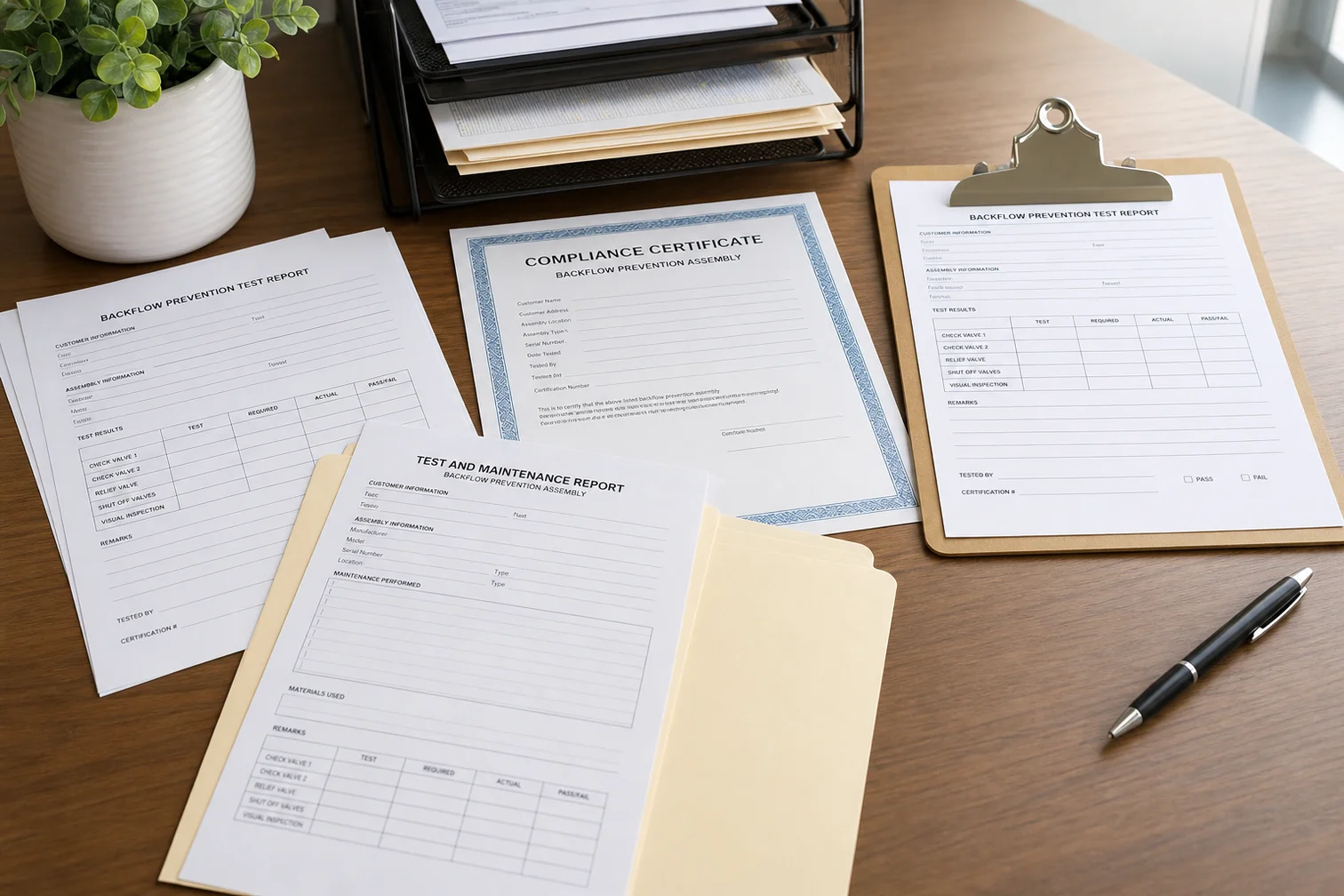
If your backflow test is already complete, it is frustrating to hear that the utility still will not accept the paperwork. One of the most common reasons is simple: the tester used a generic report, an out-of-town form, or the wrong submission path, while your utility requires its own form, portal, or reporting workflow.
That does not always mean the test itself was bad. It usually means the utility cannot close the compliance record until the report arrives in the format its cross-connection program uses.
Utilities are not being picky for sport. EPA says the Safe Drinking Water Act protects public health by regulating public drinking water systems, and AWWA says utilities need ongoing backflow prevention and cross-connection control programs to protect the system from actual or potential hazards on customer premises. In practice, that means the paperwork has to match the utility's tracking system.
If you already know the issue is a filing problem, this guide will help you fix it fast.
A passing test does not automatically equal an acceptable report
Property owners often assume any signed test sheet should count as proof. Many utilities disagree.
They want a report that fits their own compliance workflow, because the form is how they connect the test to the right property, assembly, tester, and deadline. If the format is wrong, key fields may be missing, attachments may not be traceable, or the report may never reach the right staff inbox or portal queue.
Seattle Public Utilities is explicit that test reports must be completed according to its guidelines, include the information required by Washington Administrative Code 246-292-036, and be submitted through its stated reporting channel. Austin Water is just as specific: every Backflow Prevention Assembly Tester must submit a complete and legible Test and Maintenance Report within five calendar days, and all TMRs must go through the WEIRS database rather than paper. Philadelphia publishes its own Form 79-770 for the same reason.
So if the utility tells you, "We need our form," take that literally. A vendor invoice, a handwritten field sheet, or a form from another city often will not close the record.
What "our own form" actually means in real utility programs
The phrase sounds vague, but official programs usually mean one of four things.
1. The utility requires a specific test record
Philadelphia's published resources include Form 79-770 - Backflow Prevention Assembly Test and Maintenance Record. The form itself says it must be completed by a city-certified technician and sent to PWD's Industrial Waste and Backflow Compliance unit.
Austin Water likewise uses its own Test and Maintenance Report workflow and says paper copies are no longer accepted unless specifically approved.
2. The utility requires a specific submission channel
Seattle separates report submission from general compliance questions. Its backflow testing page tells testers where to send test reports and certification documents, and it directs non-report compliance questions to a different email address.
Denver Water says annual Denver Water Test Report Forms may be emailed to CrossConnectionControl@denverwater.org or mailed to its cross-connection office, while installation test reports must be sent after installation.
3. The utility requires utility-specific tester credentials on file
Seattle says test reports cannot be submitted unless the tester's current state certification and test equipment calibration information are already in its system.
Austin requires testers to be licensed by TCEQ and registered with Austin Water. If the form is right but the tester is not properly registered for that utility, the submission can still stall.
4. The utility may require related forms beyond the test itself
Philadelphia's backflow page does not just publish the test record. It also publishes a facility update form, an installation permit form, and a technician registration form. If your assembly was replaced, relocated, or tied to a facility update, the test form alone may not be enough.
The fastest way to figure out what the utility really wants
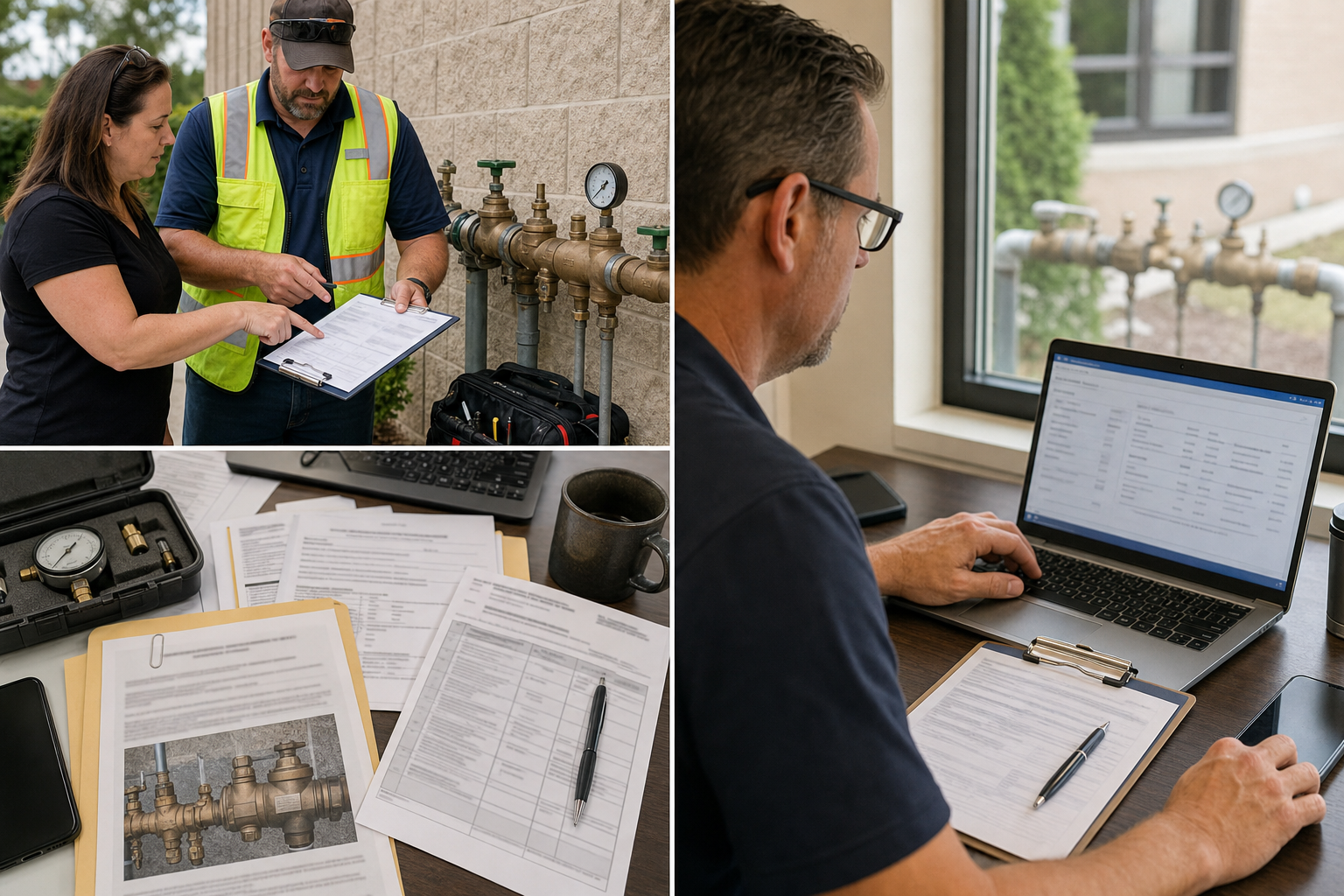 Gathering the right documents before calling the utility saves time.
Do not guess from memory or from what your tester usually does in another jurisdiction.
Use this short checklist:
Step 1: Ask for the exact rejected item
Get the utility to say whether the problem is:
- wrong form
- wrong portal or email
- generic form instead of utility form
- missing tester registration or calibration support
- missing owner, assembly, or serial fields
- missing signature
- report sent to the wrong department
That tells you whether you need a corrected report, a re-submission, or a full re-test.
Step 2: Pull the official utility page, not a third-party summary
Look for the current official form, submission address, and deadline on the utility's own site. Good examples:
- Austin Water says TMRs must be submitted through WEIRS and identifies other water protection forms separately.
- Seattle Public Utilities lists where to send test reports and certification documents.
- Denver Water identifies the annual Denver Water Test Report Form submission path.
- Philadelphia Water Department publishes Form 79-770 and the cross-connection FAQ explaining its turnaround rules.
If you need a utility-specific landing page first, our pages for Austin Water backflow testing and Philadelphia Water Department backflow testing can help you start in the right place.
Step 3: Compare the completed report against minimum required content
Washington's WAC 246-292-036 is useful even outside Washington because it shows how detailed a complete field test record can be. It requires facility information, service address, assembly type, manufacturer, model, serial number, size, test results, maintenance and repair information when applicable, field test kit details, tester identification, dates, and certification statements.
That is why utilities reject forms that feel "close enough."
Step 4: Confirm who submits it
Do not assume the tester always submits it or that the owner always does. Seattle says the tester will submit the report directly to SPU. Denver's public guidance places responsibility on the customer to hire a certified tester and submit the annual form to Denver Water. Philadelphia's manual says the technician sends the original completed form to IWBC and provides a copy to the customer.
If you are unclear on ownership, read who submits the backflow test report: property owner or tester?.
Official examples show why generic paperwork gets rejected
Utilities build their forms around how they enforce compliance.
Austin Water requires a detailed TMR that covers the address, on-site location, cause requiring protection, device identifiers, operational results, repair details when applicable, owner information, tester information, gauge serial number, and test date. Seattle says reports must follow its guidelines and cannot be submitted if tester certification and calibration documents are missing from its system. Philadelphia requires Form 79-770, and Denver Water uses its own annual test report path. One city's habits do not automatically transfer to another.
If your utility says it never got the right paperwork, pair this guide with what to do if your utility says they never received your backflow test report and why your backflow test report was rejected.
What to ask your tester before you pay for another trip
Before scheduling a second visit, ask these questions directly:
- Did you use the utility's current form or a generic report?
- Did you submit through the utility's required portal, email, or mailing path?
- Do you have proof of submission?
- Can you issue a corrected utility-specific report without re-testing?
Often the fix is paperwork, not fieldwork. If the device already passed and the utility only needs the right form or delivery method, paying for a second site visit may be unnecessary.
If the tester cannot produce the right form, proof of submission, or required local credential support, it may be faster to use a different provider who already works in that utility's system. Our guide on how to choose a qualified backflow tester can help if you need to switch.
How to close the record once the corrected form is sent
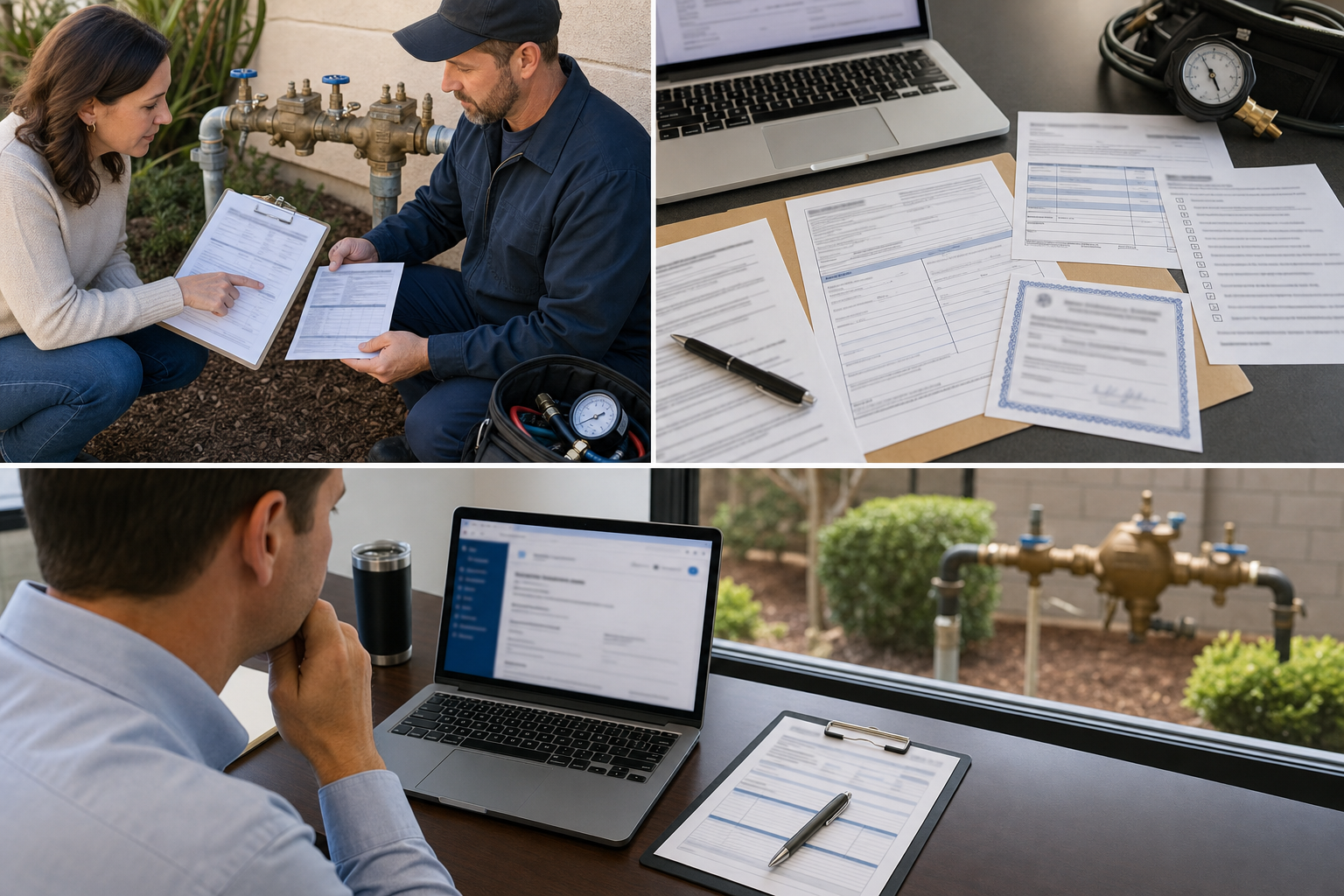 Keep a digital copy of your submission confirmation until the utility record shows compliant.
- save the final signed utility-specific form
- save proof of portal upload, email send, or delivery
- save calibration or certification attachments if the utility requires them
- ask the utility when the account should show compliant status
- follow up until the property record is actually updated
This matters because CDC notes that drinking water can still become contaminated with harmful germs or chemicals, and utilities are trying to prevent that kind of failure from slipping through an administrative gap.
If you manage several properties, add the accepted form and confirmation date to your own compliance log. That makes the next annual cycle much easier and reduces repeat filing problems.
The bottom line
If your utility requires the backflow test report on its own form, do not argue from the idea that "a pass is a pass." In real utility programs, the accepted form, submission path, tester credentials, and timing rules are part of the compliance result.
Get the exact requirement from the utility, pull the official form, compare the record against required fields, confirm who must submit it, and keep proof until the record is closed.
Most of these problems are fixable. The slow part is usually not the plumbing. It is getting the paperwork into the utility's system the way that utility expects to receive it.
Sources
This article references guidance and regulations from authoritative sources including:
- U.S. Environmental Protection Agency (EPA) - Overview of the Safe Drinking Water Act
- American Water Works Association (AWWA) - Policy Statement: Cross Connection
- Washington State Legislature - WAC 246-292-036: Backflow preventer inspection and field test report content
- Washington State Department of Health - Cross-Connection Control and Backflow Prevention
- Austin Water - Backflow Prevention Assembly Tester Information
- Austin Water - Water Protection Forms, Applications and Reports
- Seattle Public Utilities - Backflow Assembly Testing
- Denver Water - Cross-Connection Control Survey
- Philadelphia Water Department - Cross-Connection & Backflow Compliance
- Philadelphia Water Department - Cross-Connection Control FAQ (PDF)
- Philadelphia Water Department - Cross-Connection Control Manual (PDF)
- Centers for Disease Control and Prevention (CDC) - Drinking Water
Last updated: June 12, 2026
Need a compliance test filed?
Tell us your service type and property details so we can help route the request to backflow testers near you.