Understanding Backflow Preventer Installation Requirements
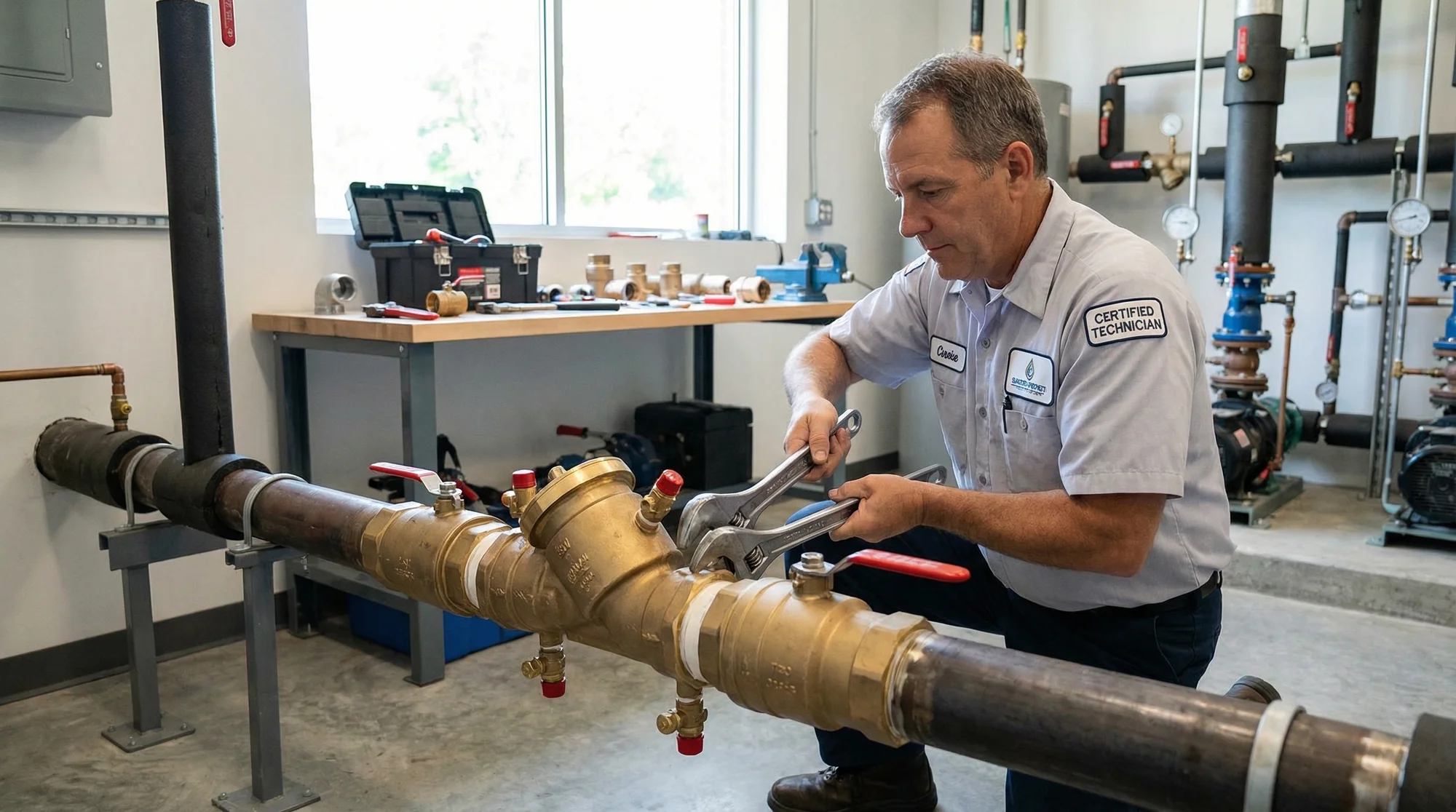
Installing a backflow preventer is not as simple as picking up a device and connecting it to a water line. Backflow prevention assemblies protect the public water supply by keeping contaminated or polluted water from flowing backward into the distribution system. Because of that responsibility, most water utilities and local codes have specific requirements for how these assemblies must be selected, installed, and maintained.
If you are a homeowner with an irrigation system, a property manager overseeing multiple buildings, or a light commercial property owner, understanding these requirements before installation begins can save you from failed inspections, costly rework, and compliance headaches. The good news is that the core concepts are consistent across most jurisdictions, even though the specific rules vary from one place to the next.
This guide walks through the most common installation requirements you are likely to encounter. It is not a substitute for your local code or your water utility's backflow prevention program, but it will give you a solid foundation for understanding what is involved and why each step matters.
Hazard Assessment Comes First
Before any assembly is selected or installed, the first step is almost always a hazard assessment. This is the process of evaluating the type of connection and the potential risk it poses to the public water supply.
Hazard levels are generally categorized as either a health hazard (high hazard) or a non-health hazard (low hazard). A high hazard connection involves substances that could cause illness or death if they entered the drinking water supply, such as chemicals used in a boiler system, lawn treatment chemicals in an irrigation system, or medical waste from a healthcare facility. A low hazard connection involves substances that might affect the taste, odor, or appearance of water but would not pose a direct health risk.
The hazard level determines the type of backflow preventer required. A reduced pressure zone (RPZ) assembly is typically required for high hazard situations, while a double check valve assembly (DC or DCVA) may be acceptable for low hazard connections. Your water utility or the local authority having jurisdiction makes the final determination. Getting this wrong means installing an assembly that does not meet code, which will need to be replaced.
Understanding why backflow testing is required provides helpful context on the health risks that drive these classifications.
Proper installation starts with selecting the right type of assembly for the hazard level, then following local code for placement, clearance, and drainage.
Selecting an Approved Assembly
Not every backflow preventer on the market is acceptable for every jurisdiction. Most water utilities and state plumbing codes require that assemblies appear on an approved list. The most widely referenced approval list is maintained by the USC Foundation for Cross-Connection Control and Hydraulic Research (FCCCHR), which publishes a list of approved assemblies that have been tested and certified to meet performance standards.
Some states and utilities maintain their own approved lists or accept assemblies approved by other recognized testing laboratories. Before purchasing an assembly, confirm with your water utility or local plumbing authority which devices are accepted in your area. Installing an assembly that is not on the approved list for your jurisdiction can result in a failed inspection and a requirement to replace the unit entirely.
Size matters as well. The assembly must be sized to match the water service or the specific connection it protects. An undersized assembly can restrict water flow, while an oversized one may not function properly at low flow rates.
Location, Accessibility, and Clearance
Where the assembly is installed is just as important as which assembly is installed. Most jurisdictions have requirements governing the location and accessibility of backflow prevention assemblies, though the specifics vary.
General Location Principles
- Downstream of the meter, upstream of the first branch. For premises isolation, the assembly is typically installed on the main service line after the water meter and before the water reaches any branch lines or connections on the property.
- Above ground when possible. Many utilities now require or strongly prefer above-ground installations, especially for RPZ assemblies. RPZ assemblies discharge water from a relief valve during certain conditions, and underground vault installations can submerge the relief port, defeating its purpose.
- Accessible for testing and maintenance. The assembly must be reachable by a certified tester with test equipment. If a tester cannot connect gauges, operate test cocks, and manipulate shutoff valves, the assembly cannot be tested and you may fall out of compliance. Learn more about how utilities track backflow test compliance.
Clearance Requirements
Most codes and utility programs specify minimum clearance distances around the assembly. These vary, but the general intent is the same: leave enough room for a certified tester to safely connect differential pressure gauges, open test cocks, and operate shutoff valves without obstruction.
Clearance requirements typically apply to the sides, top, and front of the assembly. Do not install an assembly tight against a wall, inside a cramped utility closet, behind landscaping, or in any location where future access will be difficult. If the installation makes testing impractical, you may be required to relocate the assembly at your expense.
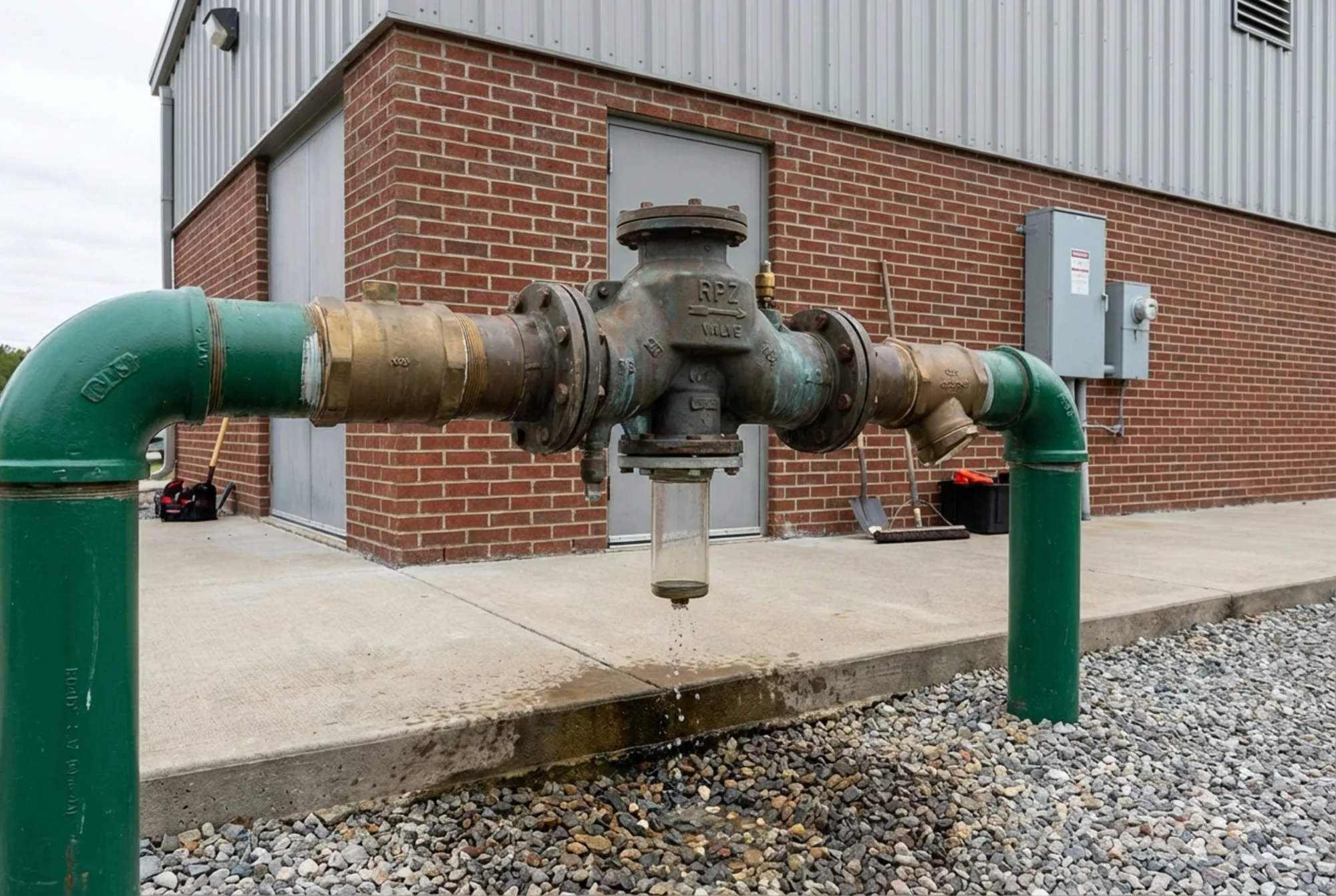 An RPZ assembly installed above ground with adequate clearance, proper drainage for the relief valve, and accessible shutoff valves and test cocks.
Drainage for RPZ Relief Valves
If your installation requires a reduced pressure zone assembly, drainage is a critical consideration that is easy to overlook. RPZ assemblies have a relief valve between the two check valves. This valve is designed to open and discharge water when the assembly detects a backpressure or backsiphonage condition, and it can also discharge during normal operation.
The discharge can be significant, sometimes producing a continuous stream of water. The installation must include adequate drainage to handle this discharge without creating flooding, erosion, standing water, or a pathway for the discharged water to re-enter the assembly.
Many utilities require an air gap between the relief valve discharge and the drainage point. This means the relief valve outlet must be above the flood rim of whatever drain or surface it discharges to, with a visible gap. A direct connection to a sewer or storm drain is generally not acceptable.
Failure to plan for drainage is one of the common reasons backflow tests fail, and it is also one of the most common reasons installations are rejected during inspection.
Freeze and Weather Protection
Backflow assemblies installed outdoors or in unheated spaces need protection from freezing. Water trapped inside the assembly can freeze, expand, and crack the body, damage internal components, and compromise shutoff valves and test cocks. Freeze damage is often not visible from the outside and may only be discovered during the next annual test.
Protection methods vary by climate and installation type:
- Insulated enclosures designed specifically for backflow assemblies are available for many common sizes. These should be breathable, not sealed plastic, to prevent moisture buildup.
- Heat trace cable may be needed in areas with prolonged or severe freezes, especially for assemblies that must remain in service year-round.
- Seasonal shutdown and draining is appropriate for assemblies on irrigation-only lines that are not used during winter months.
The right approach depends on your climate, the type of assembly, and whether the protected line is seasonal or year-round. Your local utility or backflow program may have specific guidance.
Permits, Inspections, and Approved Installers
In many jurisdictions, installing a backflow prevention assembly requires a plumbing permit and an inspection by the local building department or the water utility. Some programs require that the installation be performed by a licensed plumber or a contractor who holds specific backflow-related credentials.
What to Expect
- Permit application. You may need to submit a permit application that describes the assembly type, size, location, and the connection it protects.
- Plan review. Some utilities or building departments review installation plans before work begins, especially for commercial or fire protection installations.
- Inspection. After installation, an inspector may verify that the assembly is the correct type, is on the approved list, is installed in the correct location, has proper drainage and clearance, and meets all applicable code requirements.
- Initial test. Most programs require that a newly installed assembly be tested immediately after installation by a certified backflow tester. This initial test confirms that the assembly is functioning correctly and establishes a baseline for future annual testing.
Programs like the Austin Water backflow program and the Philadelphia Water Department backflow program each have their own procedures for new installations. Philadelphia's program provides detailed guidance on what is required for new and existing installations within its service area.
If you are not sure what is required in your area, your water utility's cross-connection control office is the best starting point.
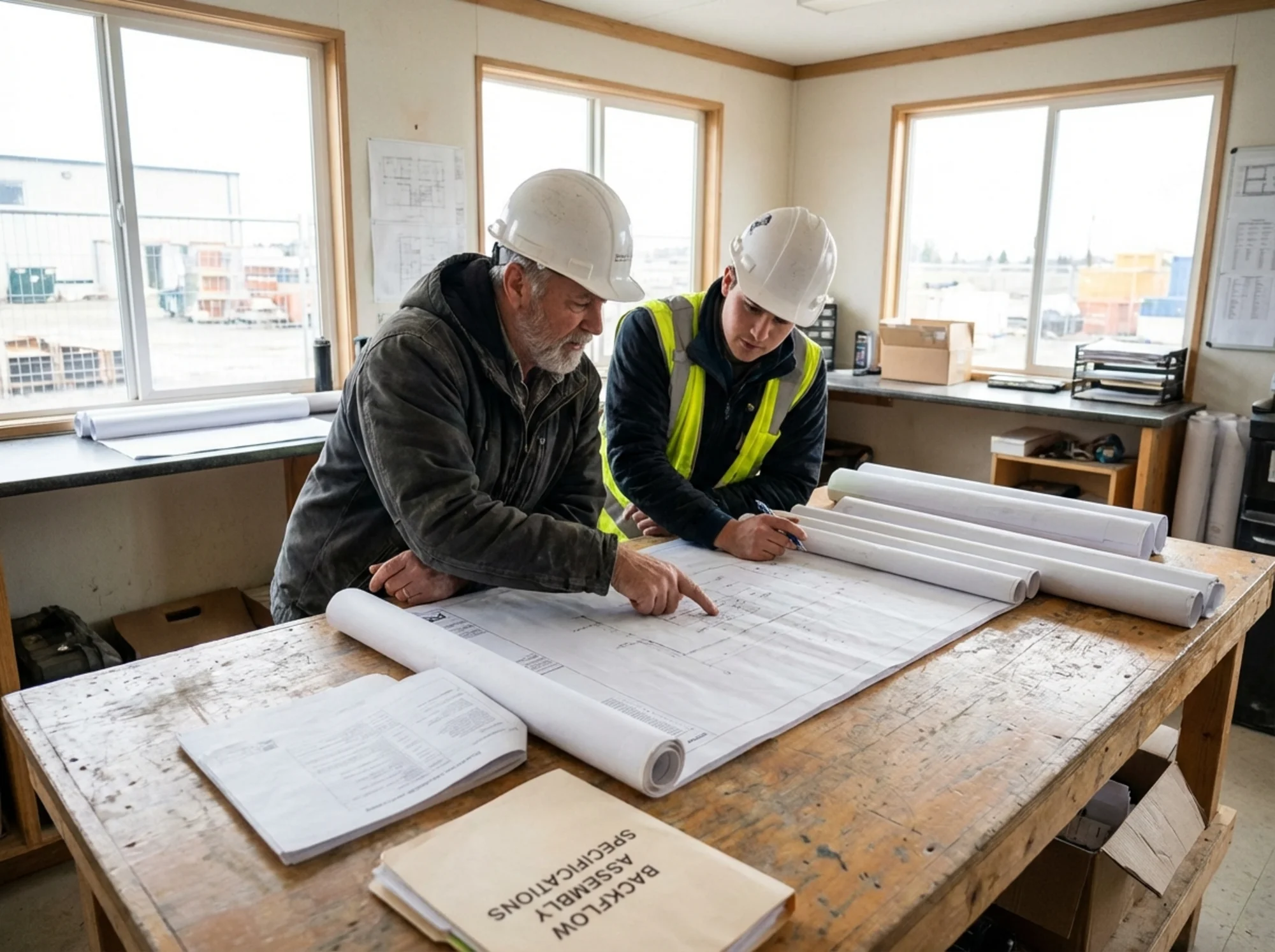 Before installation, confirm permit requirements, approved device lists, and the credentials required for the installer and tester in your jurisdiction.
Certified Testers and Ongoing Compliance
Installation is not the end of the process. Once a backflow assembly is in place, it must be tested on a regular basis, typically annually, by a certified backflow assembly tester. The tester must hold a valid certification recognized by your state or local program. In Texas, for example, testers are licensed through the Texas Commission on Environmental Quality (TCEQ). Oregon's cross-connection control program has its own requirements. Each state and sometimes each utility has different rules about who can perform tests.
Test results are submitted to the water utility or local authority, which tracks compliance and follows up on overdue or failed tests. If an assembly fails its test, it must be repaired or replaced and retested before it is considered compliant. For more on what happens during that process, see our guide on deciding whether to repair or replace a backflow preventer.
Staying current on annual testing is one of the most important things you can do as a property owner. Letting compliance lapse can result in notices, fees, or in some cases, water service interruption.
Finding the Right Help
Whether you need an installer, a tester, or someone who can evaluate an existing assembly, working with qualified professionals is essential. Choosing the right provider matters because the person installing or testing your assembly needs to understand local code requirements, approved device lists, and the specific expectations of your water utility's program.
You can search for certified testers near you on FindBackflowTesters.com. Browse by location to find providers in your area, such as Austin, TX or Charlotte, NC, or visit our FAQs if you have questions about the process.
Getting installation right from the start means fewer surprises during annual testing, fewer repair bills, and confidence that your property is protecting the public water supply the way it is supposed to.
Sources
This article references guidance and regulations from authoritative sources including:
- U.S. EPA Safe Drinking Water Act - Overview of the Safe Drinking Water Act
- AWWA Cross-Connection Control Resources - Cross-Connection Control and Backflow Prevention
- USC Foundation for Cross-Connection Control and Hydraulic Research - Approved Backflow Prevention Assemblies
- Philadelphia Water Department - Backflow Prevention Program
- Texas Commission on Environmental Quality - Backflow Prevention Assembly Tester Licensing
- Oregon Health Authority - Cross-Connection Control Program
- CDC Drinking Water Prevention Guidance - Drinking Water Prevention Resources
Last updated: April 6, 2026