The True Cost of Backflow Preventer Replacement
The True Cost of Backflow Preventer Replacement
When a backflow preventer needs to be replaced, most owners start with the obvious question: how much does the device cost?
That is understandable, but it is usually the wrong starting point.
The assembly itself is only one part of the bill. The total replacement cost can also include hazard review, approved-device requirements, permit paperwork, installation labor, drainage or clearance corrections, initial testing, report submission, and sometimes a follow-up annual compliance cycle that starts immediately after installation.
That larger context matters because backflow work is not just ordinary plumbing. EPA explains that the Safe Drinking Water Act protects public health by regulating the nation’s public drinking water supply, and local utilities use cross-connection control programs to keep contamination from moving back into the water system. If you want the public-health background first, start with why backflow testing is required.
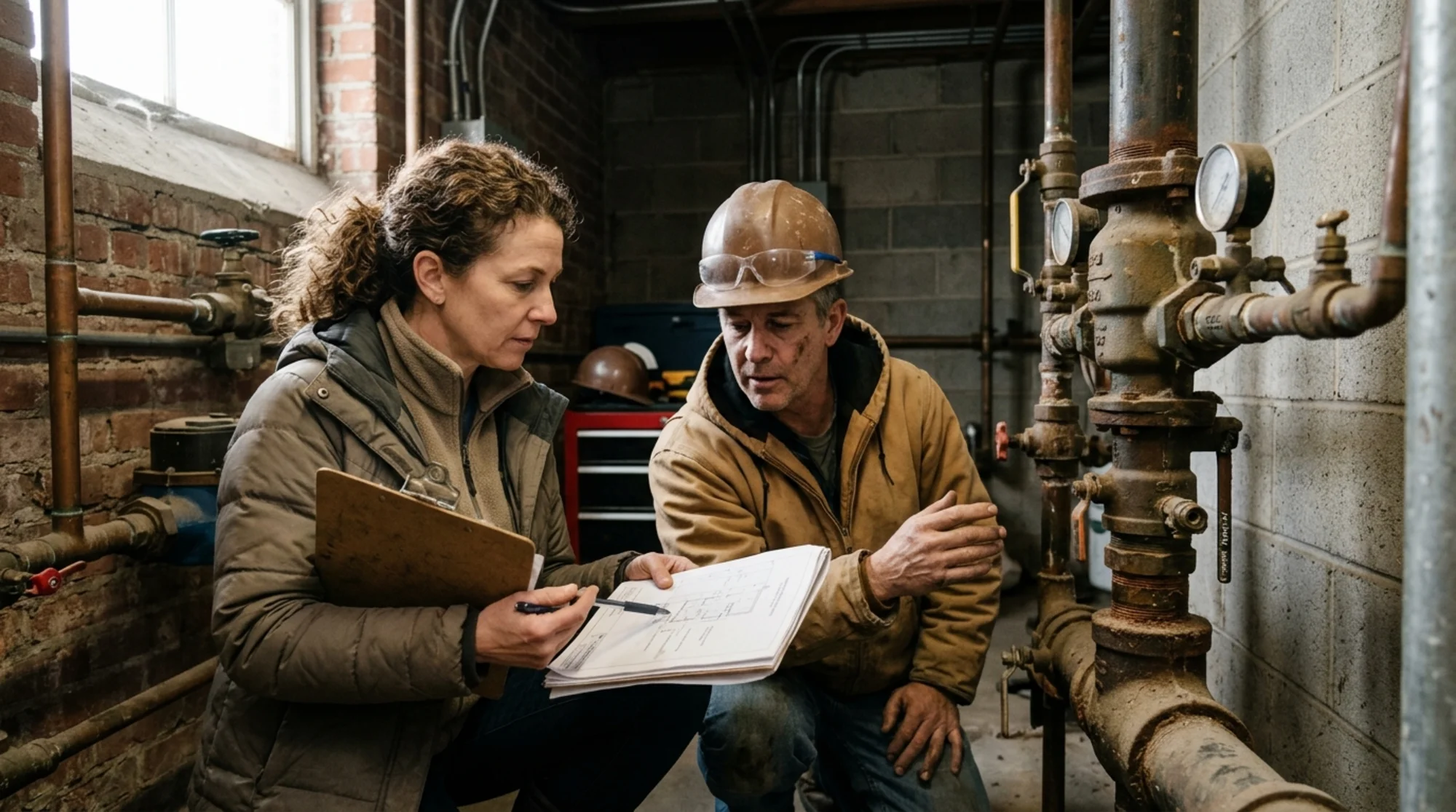
A property manager and licensed plumbing contractor reviewing an aging commercial backflow preventer assembly and a replacement scope at a building water service entrance, natural daylight, no logos or text overlay
The device price is only the first line item
One of the biggest replacement-cost mistakes is assuming every backflow assembly is interchangeable.
Portland Water Bureau says the location of the assembly, service size, and hazard level of the connection determine which assembly should be used. That means the replacement cost often changes before any wrench turns, because the right device depends on the actual hazard and installation conditions, not just what looks closest to the old one.
A lower-hazard connection may use a different assembly than a higher-hazard site. A domestic line, irrigation line, and fire-related line can also live in different cost buckets. If the property has changed over time, the replacement may need to match current program expectations rather than the assumptions that existed when the older assembly went in.
That is one reason a quote for a simple like-for-like replacement can look very different from a quote that includes a different assembly type, new shutoff work, or relocation.
If you are trying to compare how requirements vary by market, look at city pages like Austin, TX, Seattle, WA, and Philadelphia, PA. The local compliance environment often shapes the total cost as much as the metal body of the device.
Permits, plans, and approvals can be part of the replacement cost
For some properties, replacement is not just "remove old device, install new device."
New York City DEP lays out one of the clearest examples of how structured this process can be. To install a backflow prevention device, DEP says the owner must hire a Professional Engineer or Registered Architect to prepare the plan, DEP must approve the plan, and then a Licensed Master Plumber installs the device. After installation, the device must be tested and the signed form submitted.
Philadelphia’s backflow program also shows how much documentation can sit around replacement work. The department publishes a backflow installation permit application, an approved-assembly list, technician resources, and an official test and maintenance record.
Those examples show why two replacement jobs that sound similar can have very different total costs:
- one job may be a straightforward field replacement on an already-approved setup,
- another may involve plan review or permit handling,
- and a third may reveal that the existing assembly was never documented cleanly.
If you only compare the sticker price of the new assembly, you miss the part of the bill that usually surprises owners later.
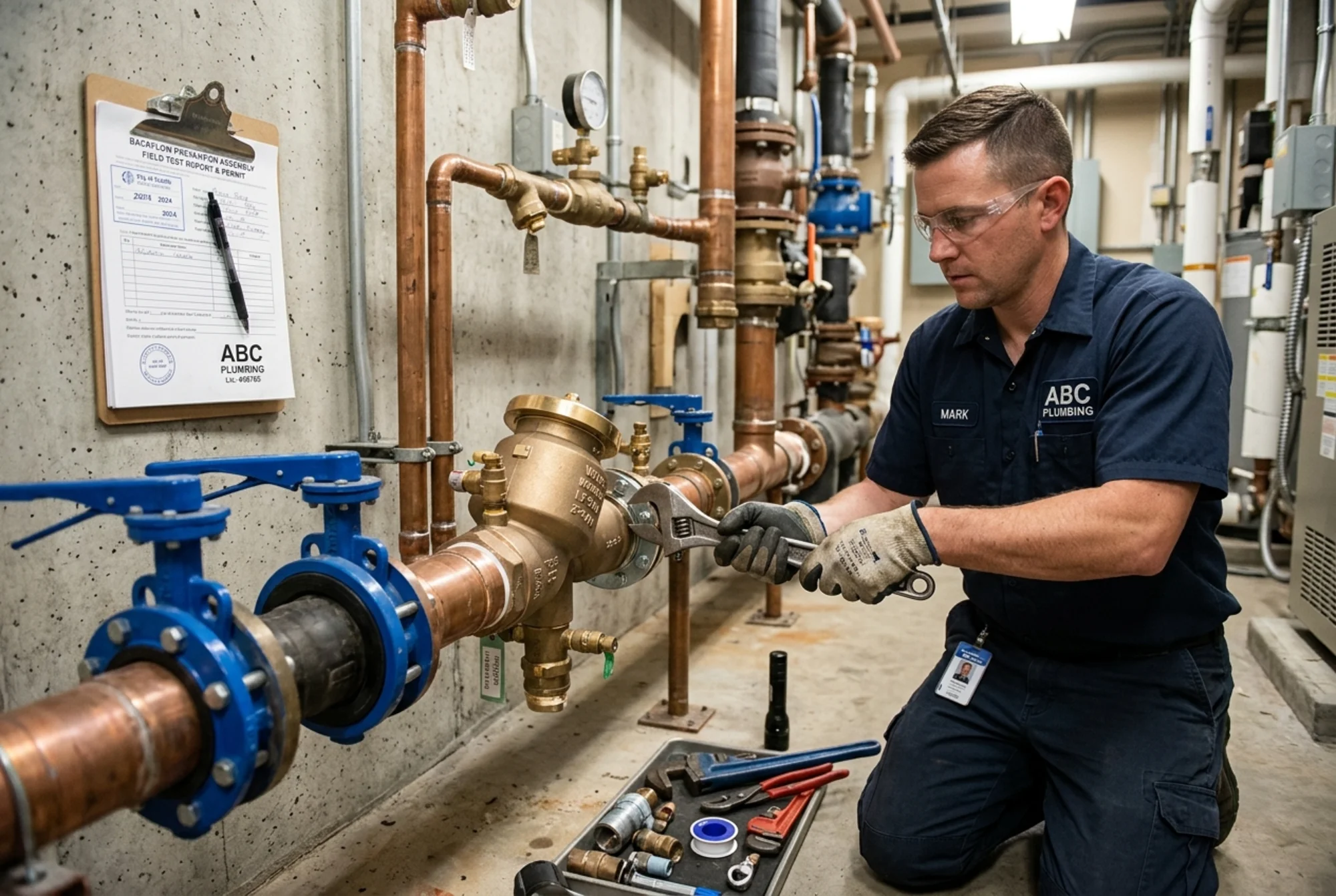 A licensed plumber replacing a commercial backflow prevention assembly in an accessible mechanical room, with shutoff valves, fittings, and permit paperwork on a clipboard nearby, natural indoor lighting, no text overlay
Installation conditions change labor more than most owners expect
Labor is where replacement costs spread out.
A device that is easy to reach, isolate, and reconnect is very different from one in a cramped vault, crowded mechanical room, landscaped exterior pit, or location that needs shutdown coordination with tenants or operations.
Portland’s guidance is useful here too. It notes that reduced pressure backflow assemblies need proper drainage and can periodically discharge water during normal operation. If a replacement project has to correct drainage, reposition the assembly, or improve access so the relief valve can function safely, the work is no longer just a swap.
Costs can also rise when replacement involves:
- corroded or seized shutoff valves,
- broken unions or fittings,
- excavation or concrete work,
- wall or enclosure modifications,
- drainage corrections,
- freeze-protection improvements,
- or coordination around business hours and water shutdowns.
In other words, the hardest part of the bill is often not the assembly. It is everything around the assembly.
If you are already weighing whether the old device really needs full replacement, our guide on repair vs. replacement is a good companion.
Initial testing and report submission are part of the real replacement bill
A replacement is not finished when the new device is bolted in place.
NYC DEP says a newly installed device must be tested by a certified tester, and that signed forms must be submitted after installation. Once the installation is finalized, DEP also requires annual testing every 12 months.
Seattle Public Utilities shows the same idea from the compliance side. It says annual testing is the only way to ensure assemblies are functioning properly, all assemblies must be tested by a State of Washington Certified Backflow Assembly Tester, and reports must be completed with the required certification and calibration documentation in place.
Washington’s Department of Health adds another layer by publishing tester duties and minimum field-test-report content requirements. That is a good reminder that acceptable paperwork is part of the job, not extra admin after the fact.
So when you compare replacement quotes, ask whether the price includes:
- the new assembly,
- installation labor,
- any necessary valves or fittings,
- initial testing,
- retesting if something needs adjustment,
- and report submission or documentation.
If those items are vague, you may not be looking at the full cost yet.
If you want utility-program examples before booking service, our Austin Water backflow testing page and Philadelphia Water Department backflow testing page are good places to start.
What actually pushes a replacement from reasonable to expensive
Most high replacement bills come from one of a few predictable drivers.
1. The wrong replacement scope
If the property needs a different assembly type, better drainage, or a more accessible location, the job grows beyond a basic one-for-one swap.
2. Hidden site conditions
Old fittings, valve problems, rusted hardware, buried enclosures, and bad access can all turn a small replacement into a bigger plumbing project.
3. Compliance corrections
If the existing setup was poorly documented or no longer matches program expectations, replacement may bring permit, approval, or paperwork cleanup with it.
4. Shutdown and scheduling complexity
A retail center, clinic, restaurant, or multi-tenant building may need water interruption planning that a simple house-side installation does not.
5. Last-minute emergency timing
Emergency replacement usually shrinks your options and can turn a careful scope into rushed decision-making. If the device is still functioning but aging, it is often cheaper to plan than to wait for a hard failure. Our related post on how long a backflow preventer lasts helps with that planning side.
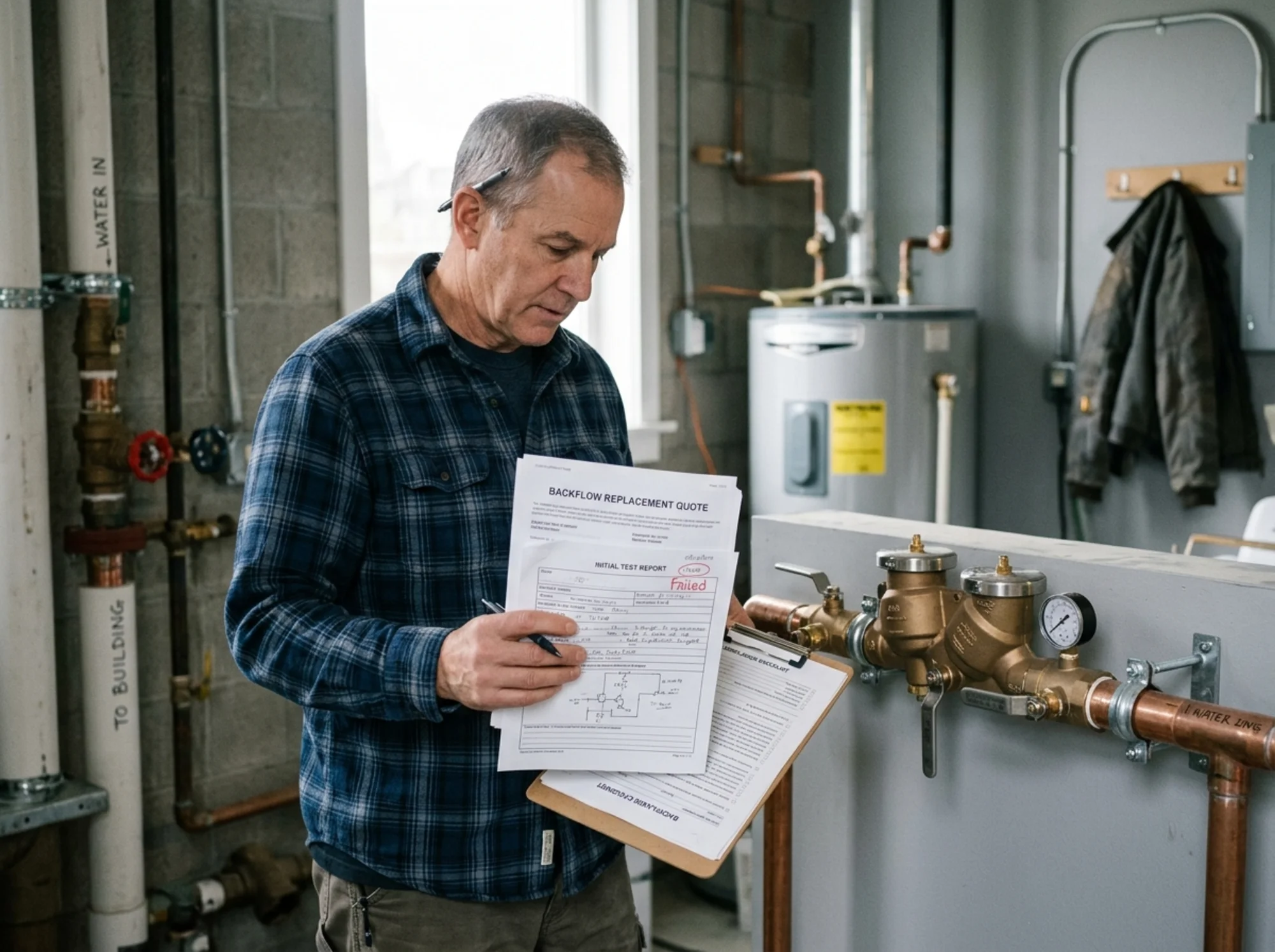 A property owner reviewing a detailed backflow replacement quote, initial test report, and compliance checklist beside a newly installed assembly, natural office lighting, no logos or text
How to compare replacement quotes without getting fooled
A low quote is not automatically a low total cost.
Ask each provider these direct questions:
- What assembly type and size are you quoting, and why?
- Does the quote include shutoff valves, unions, and related fittings if they need replacement?
- Does it include permit or utility paperwork help where required?
- Does it include the initial test and final report?
- If the installation needs drainage, clearance, or freeze-protection correction, is that included or excluded?
- If the old assembly fails because the body is cracked, are there likely site repairs beyond the device itself?
- Who confirms the new report is actually accepted by the utility?
That kind of quote review usually tells you more than the headline number.
For broader baseline questions, our FAQs and how to choose a qualified backflow tester can help you screen providers.
When replacement is worth it, and when repair may still be smarter
Not every failed or leaking assembly should be replaced immediately.
Sometimes the cheaper total answer is a rebuild, repair, and retest. Other times replacement is the smarter move because the body is cracked, the device is heavily corroded, parts are obsolete, or the assembly no longer fits the hazard or utility requirement.
The practical question is not, "What is the cheapest thing I can do today?" It is, "What path gets me to an approved, testable, documented setup with the fewest repeat costs?"
That is why good providers explain both the mechanical reason and the compliance reason behind a replacement recommendation.
Bottom line
The true cost of backflow preventer replacement is usually the total cost of getting from an aging or failed assembly to a compliant, documented, testable installation, not just the price of the device itself.
Assembly type, permits, labor conditions, drainage, access, initial testing, and report handling all shape the final bill. Owners who understand those cost drivers usually make better decisions and avoid the most frustrating kind of surprise, the one that shows up after the "replacement price" was supposed to be settled.
If you are ready to compare local options, start by finding a backflow tester near you and reviewing the local market or utility program before you approve the work.
Sources
This article references guidance and regulations from authoritative sources including:
- U.S. Environmental Protection Agency (EPA) - Overview of the Safe Drinking Water Act
- American Water Works Association (AWWA) - Cross-Connection Control and Backflow Prevention resources
- Centers for Disease Control and Prevention (CDC) - Preventing Drinking Water-Related Illnesses
- New York City Department of Environmental Protection - Backflow Prevention Devices
- Philadelphia Water Department - Cross-Connection & Backflow Compliance
- Portland Water Bureau - How to choose and install a backflow prevention assembly
- Washington State Department of Health - Cross-Connection Control and Backflow Prevention
- Seattle Public Utilities - Backflow Assembly Testing
Last updated: May 3, 2026