New Homeowner Guide to Backflow Prevention Requirements
New Homeowner Guide to Backflow Prevention Requirements
A lot of homeowners do not think about backflow prevention until they buy a property with an irrigation system, a pool, a mysterious brass assembly near the meter, or a notice from the water utility. That is normal. Backflow rules are usually local, technical, and easy to miss during closing.
The good news is that the first-year homeowner playbook is straightforward. You do not need to memorize plumbing code. You need to confirm whether your property has a real cross-connection risk, whether a testable assembly is already installed, and which utility or local program is tracking it.
EPA guidance on the Safe Drinking Water Act explains the public-health reason behind these programs: public water systems are expected to protect drinking water from contamination. State regulators and local utilities turn that broad duty into practical rules about assemblies, testing, notices, and recordkeeping. For homeowners, that means one important truth: not every home has the same backflow obligations, but every home with a utility-tracked assembly should get organized early.
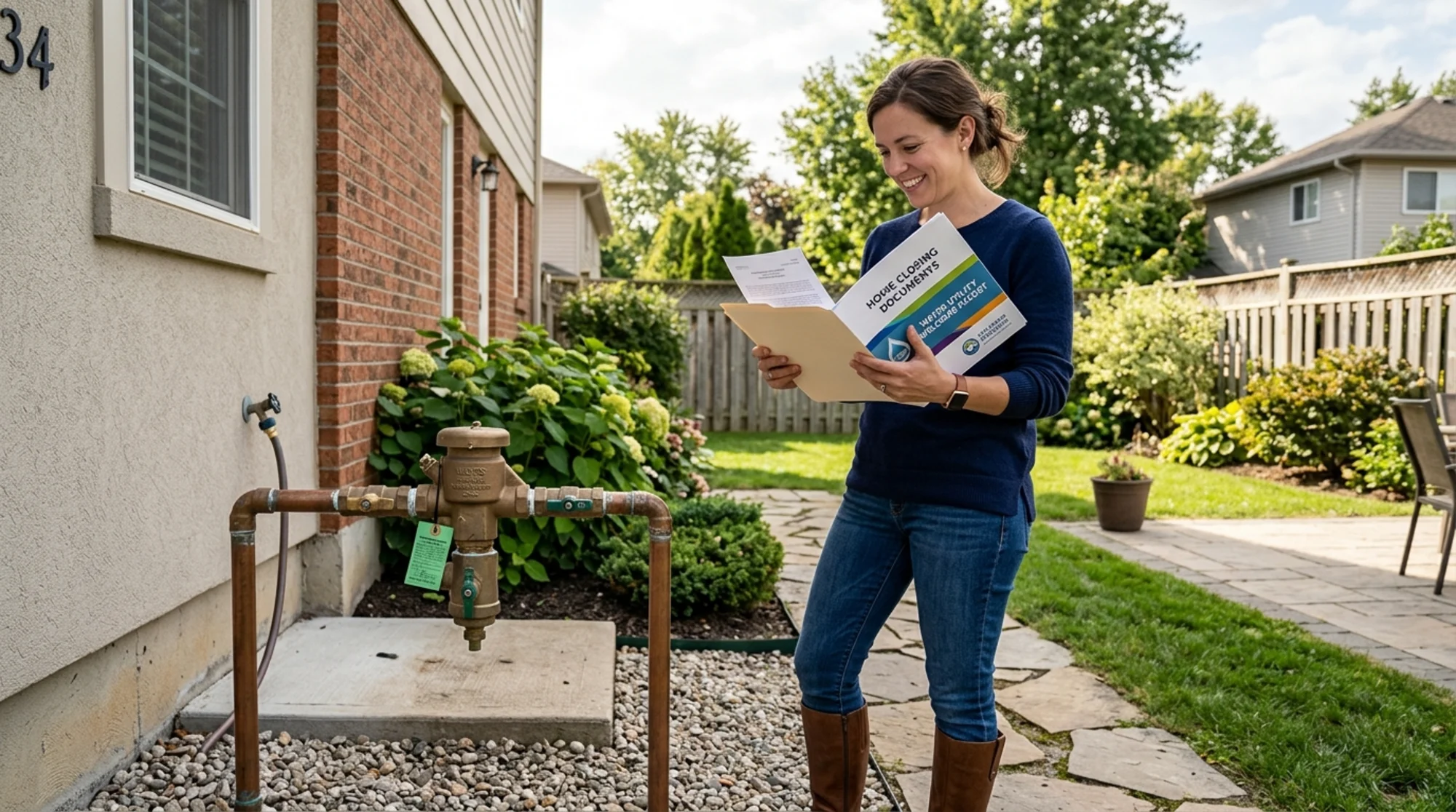
New homeowner standing beside an outdoor residential backflow preventer while reviewing closing documents and a water utility welcome packet
Start with the property records and utility account
Your first backflow clues are usually already in the paperwork.
Check these places before you call anyone:
- the home inspection report
- seller disclosures
- irrigation or pool permit documents
- past water utility notices left in the closing packet
- maintenance invoices for sprinkler or plumbing work
- tags or stickers attached to a backflow assembly near the meter, side yard, or mechanical room
If you find a device with test cocks and shutoff valves, that is often a sign you have a testable assembly, not just a simple hose bib vacuum breaker. If you find prior annual test reports, that is even better because it tells you the property may already be in a utility compliance database.
This is also the moment to log into your utility account or call the cross-connection or backflow office. Ask a direct question: “Do you have a backflow device on file for my address, and is any testing currently due?” That one call can save you weeks of guessing.
If you want local context while you sort that out, our city pages for Austin, Texas, Seattle, Washington, and Charlotte, North Carolina are a useful starting point, and our FAQs page covers the common owner questions that come up right after move-in.
Know which residential features often trigger backflow requirements
Many single-family homes never have a testable assembly. Others absolutely do. The difference is usually the plumbing setup and the local utility program.
Official utility guidance shows a few repeat triggers:
- Irrigation systems. Charlotte Water says homes with irrigation systems are required to have a backflow prevention assembly.
- Pools, spas, and water features. Austin Water specifically notes that extra protection may be needed for landscape irrigation systems, spas, and swimming pools.
- Auxiliary or alternate water sources. Wells, reclaimed water, rainwater systems, or other alternate supplies can create cross-connection concerns that utilities treat seriously.
- Fire sprinklers or special plumbing systems. Some larger homes, mixed-use properties, or higher-risk installations may need specific protection based on hazard level.
- Chemical injection or treatment equipment. Fertigation, boiler treatment, and similar setups can increase the degree of hazard.
Seattle Public Utilities takes a broad but useful approach: any actual or potential cross-connection must either be eliminated or properly protected. That is a helpful way for a homeowner to think about the issue. The question is not “Do I own a fancy valve?” The question is “Can anything on my property create a path for non-potable water to flow backward into the drinking water line?”
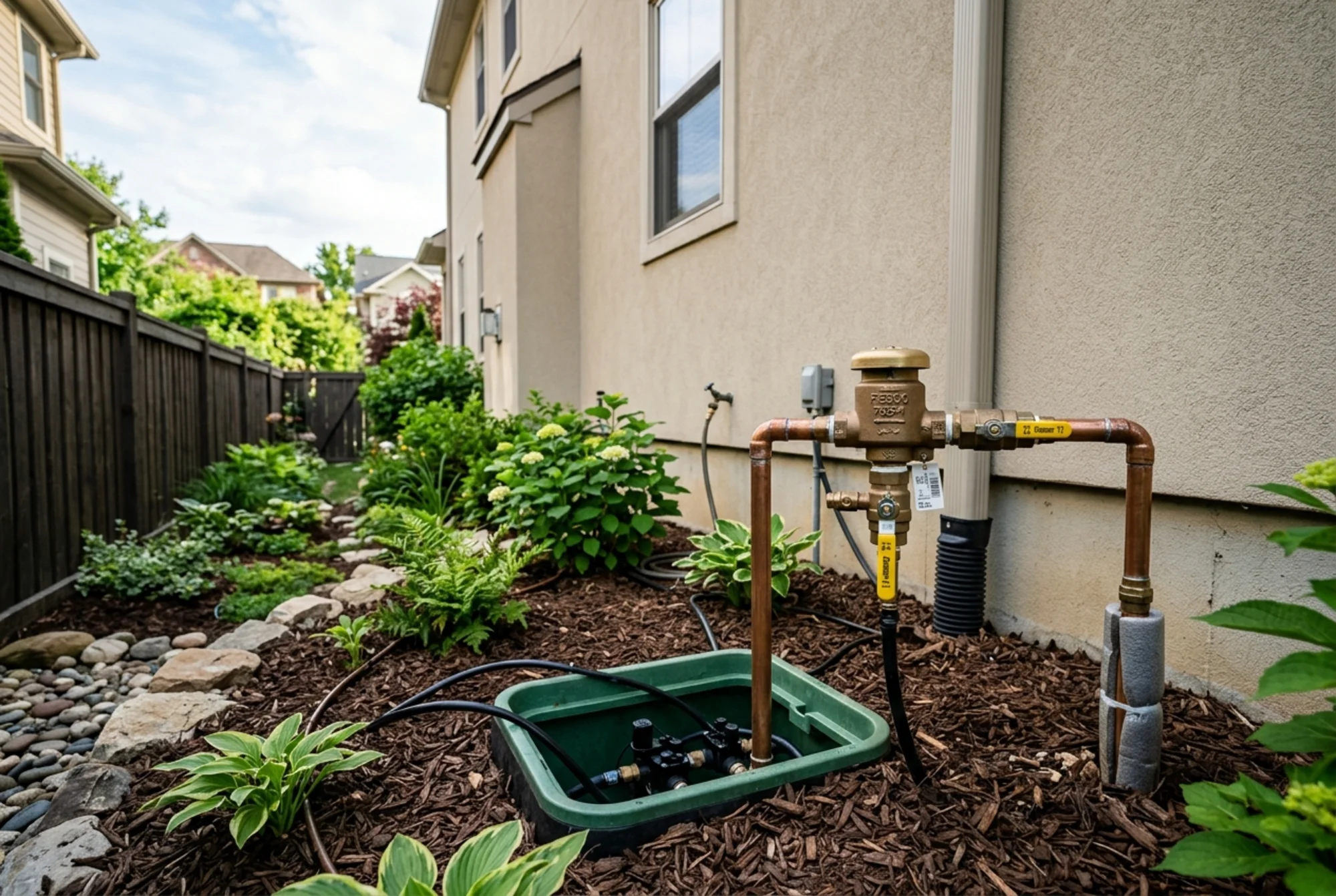 Residential irrigation system with a clearly visible backflow preventer near the water service line in a landscaped side yard
Figure out whether you have a testable assembly or basic fixture protection
This is where a lot of new owners get confused.
A home can have basic backflow protection without having a utility-tracked assembly. For example, hose bib vacuum breakers and built-in appliance protections are common and usually do not create an annual testing obligation on their own.
A testable assembly is different. These are the devices utilities and testers usually care about for annual compliance. They are mechanical assemblies such as RP, DCVA, or PVB-style devices installed to protect a water service, irrigation system, or other hazard. They are typically larger, easier to spot, and built to be field-tested.
If you are unsure what you are looking at:
- Photograph the device from several angles.
- Capture any serial number, make, model, and nearby tags.
- Ask the utility whether that exact device is on file for your address.
- If needed, ask a certified tester to confirm the assembly type before your due date gets close.
Our guide on what a backflow prevention assembly is explains the device basics, and do residential properties need backflow testing goes deeper on the yes-or-no question for single-family homes.
Understand the two dates that matter: the test deadline and the paperwork deadline
Once a utility has a device on file for your address, the next risk is usually not installation. It is missed administration.
Utilities often track two separate events:
- when the assembly must be tested
- when the completed report must be submitted or received
Washington State Department of Health materials emphasize field test report content and tester responsibilities. Seattle requires annual testing after the initial installation and testing of a new backflow preventer. Charlotte Water says all backflow prevention devices must be tested by an approved tester. Austin Water ties the program to registered testers and formal reporting.
In plain English: do not assume “the tester handled it” until you confirm it was actually accepted.
A safe homeowner workflow looks like this:
- book the test early
- ask the tester who submits the report
- request a copy for your records the same day
- confirm with the utility a few business days later that the report posted correctly
- save everything in a folder tied to the property address
If you have never seen the process before, our step-by-step guide on what happens during a backflow test can make the appointment feel a lot less opaque.
What to do in your first 30 days as the new owner
The fastest way to stay out of trouble is to turn this into a short checklist.
Week 1
- identify whether the property is on public water
- locate any visible backflow assembly
- collect old reports or notices from the seller packet
Week 2
- call the utility and ask whether a device is on file for the address
- ask whether testing is annual, upon installation, or tied to another event
- ask whether the utility keeps an approved tester list
Week 3
- schedule testing if the property is due or overdue
- review any nearby irrigation, pool, or alternate-water features that may affect requirements
- compare local program pages like Austin Water and Charlotte Water if you want an example of how utilities communicate homeowner obligations
Week 4
- confirm the report was accepted
- store the paperwork with appliance manuals, warranties, and permit documents
- set a calendar reminder 60 to 90 days before the next expected deadline
If you are still missing pieces, start with why backflow testing is required, review common homeowner mistakes, and then find a local tester before a notice turns into a scramble.
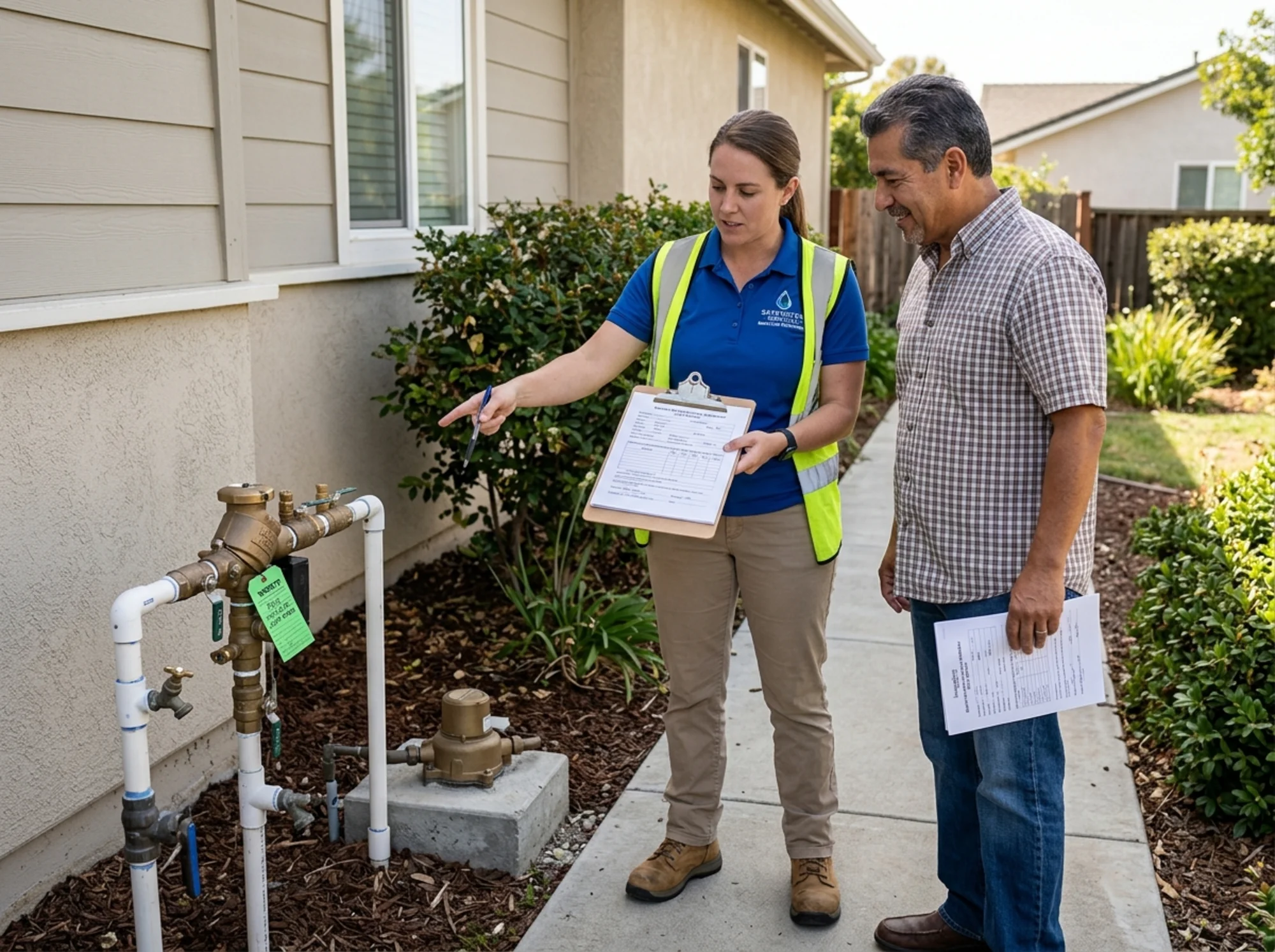 Homeowner and certified tester reviewing a completed backflow test report beside a residential water meter and assembly after a successful inspection
A practical mindset for new homeowners
Backflow compliance is easier when you treat it like a property recordkeeping task, not a plumbing emergency.
The CDC's drinking water advisory guidance is a good reminder of the bigger picture: utilities issue advisories and contamination warnings because water safety failures have real health consequences. Backflow programs exist to prevent those problems upstream. You do not need to become a cross-connection expert, but you do need a basic system for identifying devices, tracking dates, and keeping reports.
If your home has no testable assembly, great — confirm that once and keep the note. If it does, get ahead of the schedule early and the yearly compliance burden usually becomes pretty manageable.
The bottom line
For a new homeowner, the smartest first move is not buying parts or guessing from a photo online. It is confirming whether your address has a utility-tracked backflow assembly and whether anything on the property — especially irrigation, pools, or alternate water connections — creates a testing obligation.
Once you know that, the rest is just process: identify the device, schedule the right tester, confirm the report was accepted, and keep your records clean. That is how you stay compliant without overthinking it.
Sources
This article references guidance and regulations from authoritative sources including:
- U.S. Environmental Protection Agency (EPA) - Overview of the Safe Drinking Water Act
- U.S. Environmental Protection Agency (EPA) - Cross-Connection Control Fact Sheet (PDF)
- American Water Works Association (AWWA) - Cross-Connection Control & Backflow Prevention resources
- Washington State Department of Health - Cross-Connection Control and Backflow Prevention
- Austin Water - Backflow Prevention Overview
- Seattle Public Utilities - Requirements & Types of Backflow Prevention
- Charlotte Water - Backflow
- Centers for Disease Control and Prevention (CDC) - Drinking Water Advisories: An Overview
Last updated: May 26, 2026