How to Reduce Backflow Testing Costs Without Cutting Corners
How to Reduce Backflow Testing Costs Without Cutting Corners
Backflow testing is one of those expenses that feels simple until it starts creating extra work. The test itself is only part of the total cost. The real money leaks usually come from rushed scheduling, duplicate site visits, missing paperwork, avoidable repairs, or using the wrong person for the job.
That is the good news here. If you want to spend less on backflow compliance, the safest way is usually not to hunt for the absolute cheapest quote. It is to make the test easier to perform, easier to document, and less likely to turn into a second trip.
EPA explains that the Safe Drinking Water Act protects public health by regulating the nation’s public drinking water supply, and state agencies, utilities, and water systems work together to make those protections real. Backflow testing sits inside that bigger public-health system. If you want the wider compliance background first, start with why backflow testing is required.
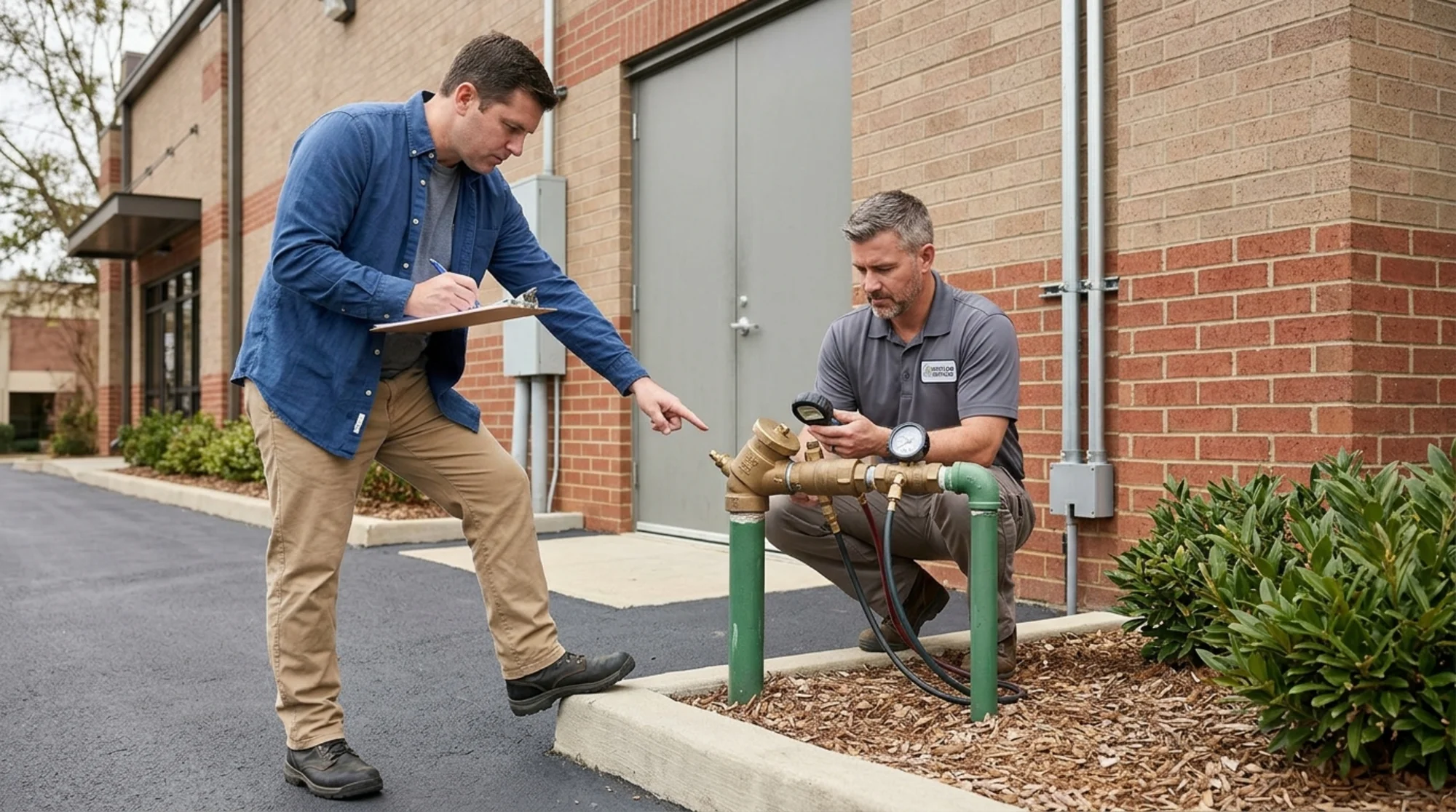
A property manager and certified backflow tester reviewing a commercial backflow assembly near a building water service entrance before a scheduled annual test, natural daylight, organized site conditions, no logos or text overlay
Where backflow costs usually get inflated
Most owners do not overspend because the test itself is unusually complicated. They overspend because the process gets sloppy.
Seattle Public Utilities says annual testing is required to make sure assemblies are functioning properly, and that it is still the water service owner’s responsibility to ensure testing is completed on time. That matters because late scheduling tends to create the most avoidable cost pressure. Once the deadline is close, you have less choice on vendor timing, less room to combine work, and more risk that a paperwork issue turns into a compliance problem.
Philadelphia Water Department is a good reminder that compliance is not just about a technician showing up. Its backflow resources include approved assemblies, certified technicians, and official forms. In practice, that means cost goes up when any of these pieces are missing:
- no clear record of what assembly is installed,
- no recent test form on hand,
- poor access to the device,
- uncertainty about who submits the report,
- or a tester who is not recognized by the relevant program.
New York City DEP also makes the stakes obvious. It says required devices must be tested every 12 months, and failure to perform the annual test can lead to fines or water-service disconnection. Even if your city does not use New York’s exact process, the pattern is familiar: delay creates leverage for nobody except the calendar.
The cheapest option is not always the lowest quote
There is a difference between a lower total cost and a lower line-item price.
A cheaper quote can become expensive if it leads to a failed appointment, incomplete report, unclear repair recommendation, or a retest that could have been avoided with better preparation. Washington’s Department of Health publishes duties for certified backflow assembly testers and minimum field-test-report content, which is a good signal that the paperwork standard matters as much as the gauge work.
The better question to ask is not only, “What do you charge for a test?” It is:
- Will the tester be accepted by my utility or state program?
- Who submits the report?
- What happens if the assembly fails?
- Can repair and retest be coordinated without a long delay?
- What do you need from me before the appointment?
If those answers are fuzzy, the “cheap” quote may only be cheap on paper.
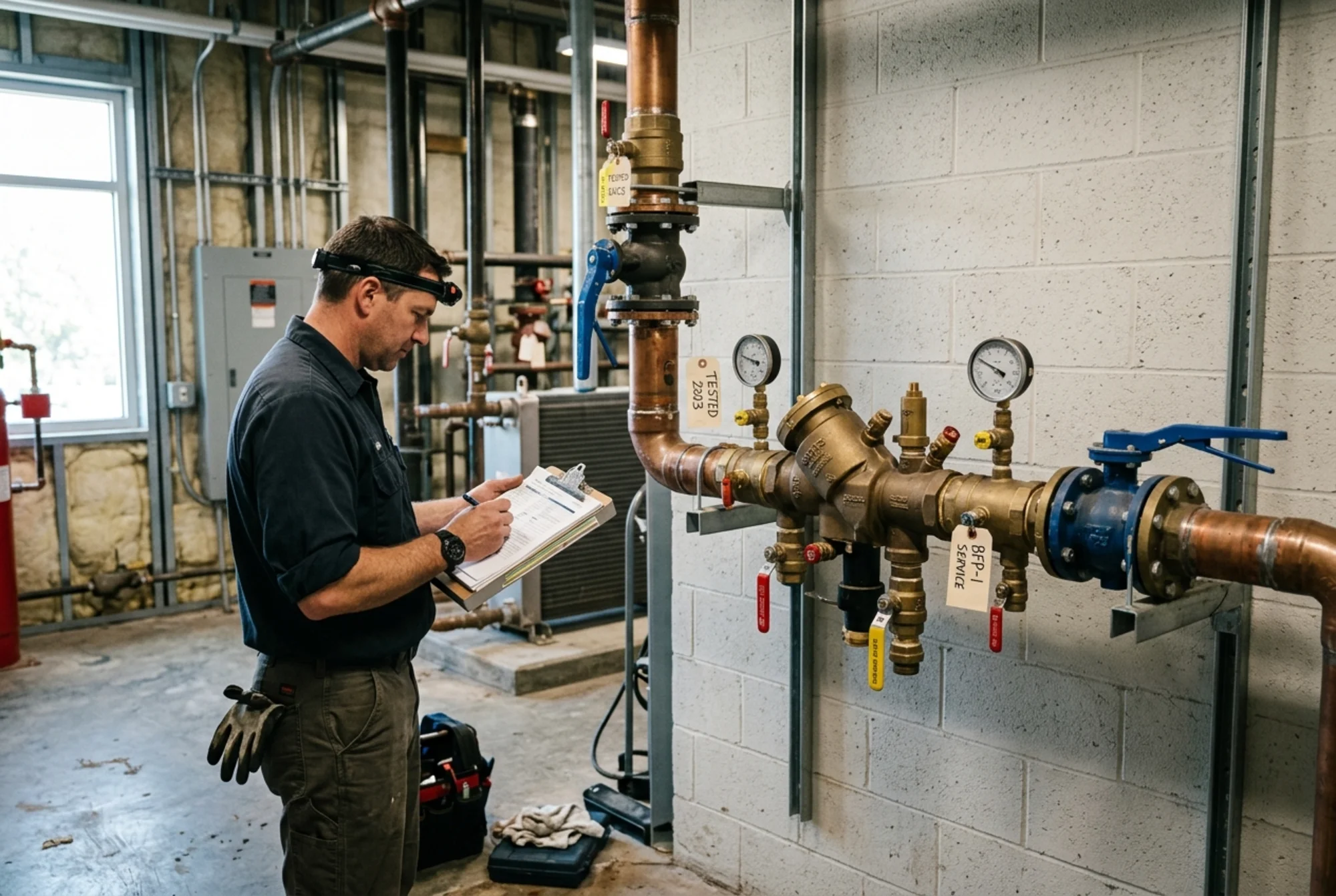 Realistic commercial mechanical room with visible backflow assembly, shutoff valves, and clear working access while a technician checks model details and prior test paperwork on a clipboard, natural indoor lighting, no logos or text overlay
Six practical ways to reduce cost without increasing risk
1. Schedule earlier than you think you need to
The easiest savings usually come from avoiding rush conditions. Once you receive a utility notice, or once you know your normal annual test month, book early enough that you still have options if the first date slips or the device needs follow-up work.
Early scheduling helps you avoid three common problems at once:
- limited appointment choices,
- emergency or priority dispatch situations,
- and compliance stress that turns small issues into expensive ones.
For owners managing several properties, this is the difference between a planned maintenance task and a recurring fire drill. If you need a framework for the calendar side, how to budget for annual backflow testing as a property manager pairs well with this guide.
2. Keep one clean assembly record for every device
A tester should not have to piece together your system history from memory, old emails, and half-legible tags.
For each assembly, keep a simple record with:
- location,
- assembly type,
- size and serial number if available,
- last passing test date,
- prior repair notes,
- utility account or facility identifier,
- and a copy of the last accepted report.
Philadelphia’s forms-based workflow and Washington’s report-content rules both point to the same operating truth: better records reduce friction. Good records also help you avoid paying for time spent re-identifying devices or re-creating missing details.
3. Make the device easy to reach and easy to test
This sounds basic, but it saves real money.
If the technician loses time waiting for access, moving stored items, locating shutoffs, or figuring out which device belongs to which tenant or suite, you are paying for confusion. Before the appointment:
- confirm building access,
- unlock cages or mechanical spaces,
- clear storage away from the assembly,
- flag the correct device if multiple assemblies exist,
- and make sure the responsible contact can answer questions.
That kind of site prep is often cheaper than negotiating over hourly billing after a difficult visit.
4. Batch work when you manage multiple devices or properties
If you oversee several assemblies, one-by-one scheduling can quietly raise the cost of compliance.
You may be able to reduce total spend by grouping tests by property, neighborhood, or due month so the same vendor can handle multiple assemblies in a tighter window. This does not change the technical requirement, but it can cut back on travel time, administrative touchpoints, and repeat coordination.
It also makes your internal tracking cleaner. Compare your local market pages, like Philadelphia, PA and Austin, TX, if you are standardizing vendors or planning coverage across more than one metro.
5. Use the right tester and the right assembly assumptions the first time
Portland Water Bureau says the location of the assembly, service size, and hazard level of the connection determine which assembly should be used. That is a useful reminder not to reduce this process to “just install any backflow device and test it annually.”
Wrong assumptions create expensive loops. If the installed assembly is a poor fit for the actual hazard, or if the tester is not the right fit for the governing program, you can end up paying for extra visits, additional review, or corrective work that should have been scoped properly earlier.
This is also why it is worth checking utility-specific guidance pages like Philadelphia Water Department backflow testing and Austin Water backflow testing before the appointment, especially for commercial properties.
6. Treat small repair signals early
A leaking relief valve, damaged shutoff, unreadable tag, or known intermittent issue rarely gets cheaper by waiting until the deadline week.
If your tester flagged a likely repair last year, do not treat that note as optional trivia. Use it to plan. A small repair addressed on your timeline is usually easier to coordinate than a failure discovered when you are already out of calendar room.
The goal is not to replace parts unnecessarily. The goal is to avoid paying for a predictable failure twice, once in disruption and again in retesting.
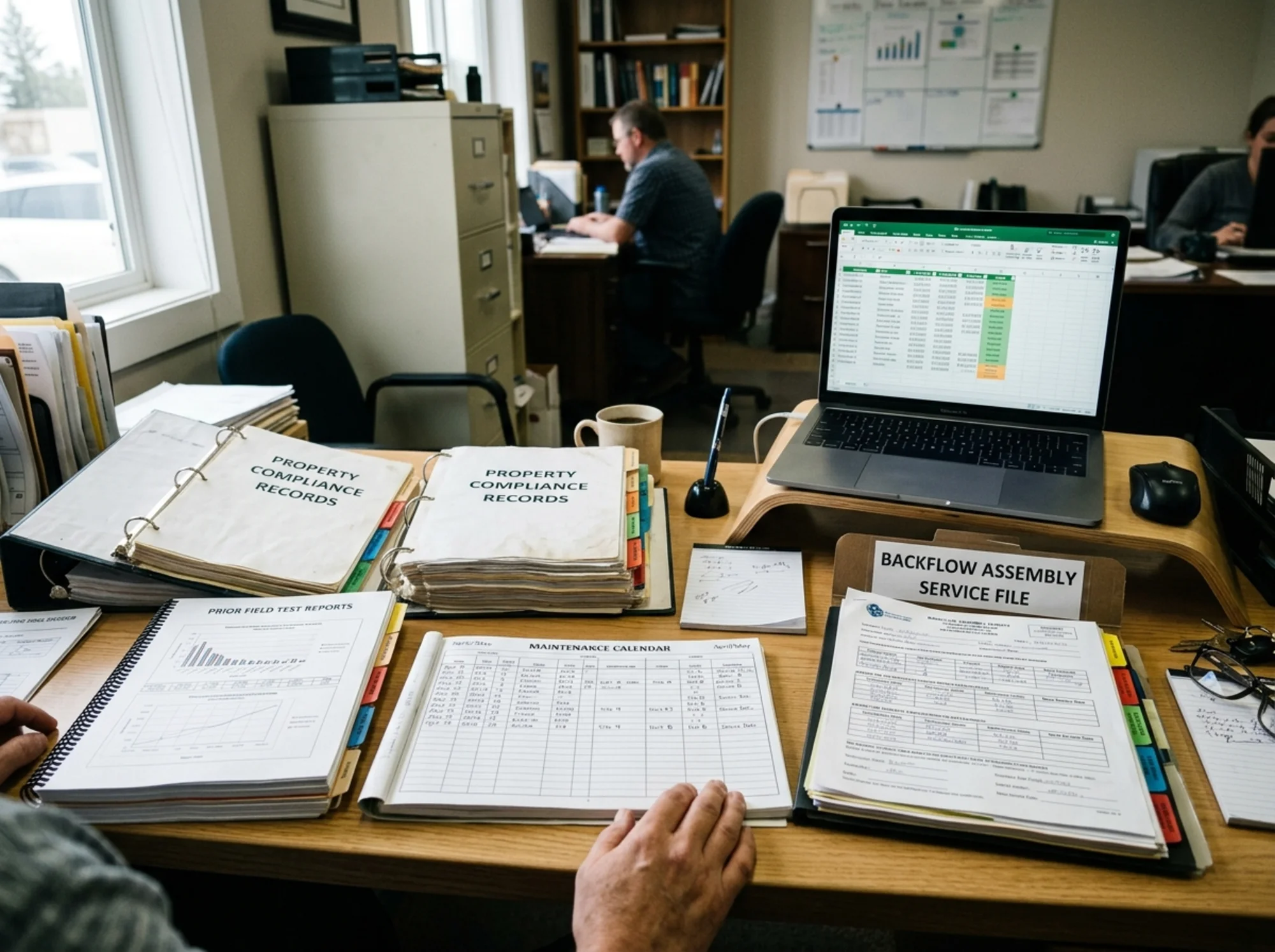 Organized property compliance records, prior field test reports, and a maintenance calendar beside a laptop and backflow assembly service file for a multi-property manager, natural office lighting, no logos or text
When cutting corners actually costs more
If you are tempted to save money by delaying the test, skipping documentation, or hiring someone before confirming they fit the program, that usually is not cost control. It is cost deferral with extra risk attached.
CDC’s drinking water guidance says that if you are concerned about your tap water, you should contact your utility or health department. That same mindset works here. When the requirement or assembly type is unclear, ask instead of guessing. A short clarification call is cheaper than an avoidable violation, rejected report, or unnecessary reinstall.
A reasonable cost-saving plan should make compliance more predictable, not more fragile.
Bottom line
The lowest-risk way to reduce backflow testing costs is to reduce wasted effort around the test.
Book early. Keep better assembly records. Prepare the site. Batch work when you can. Confirm the tester and paperwork path in advance. Act on known repair issues before they turn into deadline-week problems.
That is how most owners lower the real cost of compliance without gambling on water quality, rejected reports, or enforcement headaches.
If you are ready to line up the next test, find a backflow tester near you. If you want help sorting out the basics first, our FAQs and how utilities track backflow test compliance are good next reads.
Sources
This article references guidance and regulations from authoritative sources including:
- U.S. Environmental Protection Agency (EPA) - Overview of the Safe Drinking Water Act
- American Water Works Association (AWWA) - Cross-Connection Control / Backflow Prevention resources
- Centers for Disease Control and Prevention (CDC) - Preventing Drinking Water-Related Illnesses
- Seattle Public Utilities - Backflow Assembly Testing
- Philadelphia Water Department - Cross-Connection & Backflow Compliance
- New York City Department of Environmental Protection - Backflow Prevention Devices
- Washington State Department of Health - Cross-Connection Control and Backflow Prevention
- Portland Water Bureau - How to choose and install a backflow prevention assembly
Last updated: May 3, 2026