How Often Does a Backflow Preventer Need to Be Tested

The question comes up every time a backflow test notice arrives: does this really need to happen every year? The short answer is yes — virtually every water utility in the United States requires annual testing of backflow prevention devices. But understanding why helps explain the reasoning behind the requirement and when you might need to test more often.
The Standard: Annual Testing
The overwhelming majority of water utilities require backflow prevention devices to be tested once per year by a certified tester. This annual requirement applies to all testable backflow devices:
- RPZ assemblies (Reduced Pressure Zone)
- DCVA (Double Check Valve Assemblies)
- PVB (Pressure Vacuum Breakers)
- SVB (Spill-Resistant Vacuum Breakers)
- RPDA (Reduced Pressure Detector Assemblies — fire service connections)
The annual testing requirement is established by state drinking water regulations and local cross-connection control ordinances, which are themselves grounded in the Safe Drinking Water Act and industry standards from the American Water Works Association (AWWA).
Why Annual?
Backflow prevention devices are mechanical assemblies with moving parts — check valves, relief valves, springs, rubber seals, and metal seats. These components are subject to:
- Wear and degradation from continuous water pressure and flow
- Mineral deposits and scale buildup from water quality
- Corrosion from water chemistry and environmental exposure
- Debris fouling from particles in the water supply
- Freeze damage in cold climates
- Biological growth in stagnant water areas
A device that passes its test today may develop a component failure at any point during the following year. Annual testing catches these failures before they create a real public health risk.
The one-year interval represents a balance between the statistical likelihood of component failure and the practical burden on property owners. Research by the USC Foundation for Cross-Connection Control and Hydraulic Research has shown that annual testing catches the vast majority of failures before they result in contamination events.
When Testing Is Required More Frequently
Some situations call for testing more often than once a year:
After Installation
Most jurisdictions require a backflow device to be tested immediately after installation — before the water service is connected or the device is put into service. This initial test confirms the device was installed correctly and is functioning properly.
After Repair
When a backflow device is repaired (check valve replacement, relief valve servicing, etc.), a retest is required to verify the repairs were successful. This applies regardless of when the last annual test was performed.
After Relocation
If a device is moved to a different location on the property (even if just shifted for construction access), it must be retested.
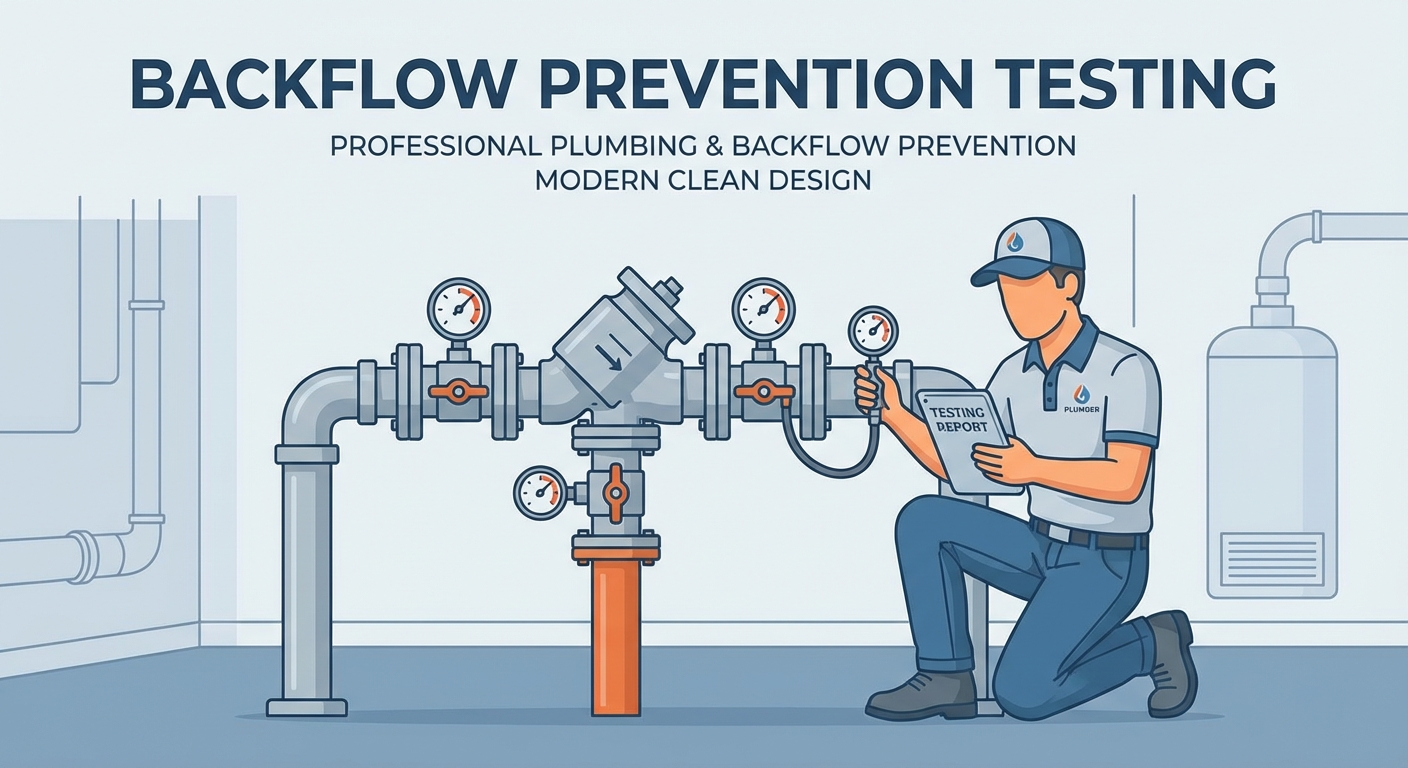 Testing after any repair, relocation, or installation ensures the device is functioning correctly before it's relied upon for protection.
High-Hazard Connections
Some utilities require more frequent testing for properties with high-hazard cross-connections. Medical facilities, chemical plants, and properties with documented contamination history may be required to test semi-annually (every 6 months) rather than annually.
Device-Specific Requirements
Some devices, particularly those protecting fire sprinkler systems (RPDA assemblies), may have additional testing requirements from the fire marshal's office in addition to the utility's annual test.
After a Backflow Event
If a backflow event is detected or suspected on your property, the utility will likely require immediate testing of all devices on the premises.
Testing Frequency by Device Type
While all testable devices require annual testing, the practical implications vary by device type:
| Device Type | Annual Test | Typical Issues Found | Average Test Cost |
|---|---|---|---|
| RPZ | Required | Relief valve fouling, check valve wear | $125 - $250 |
| DCVA | Required | Check valve wear, seat damage | $100 - $175 |
| PVB | Required | Air inlet valve sticking, check valve wear | $75 - $125 |
| SVB | Required | Similar to PVB | $75 - $125 |
| RPDA (Fire) | Required | Detector bypass valve issues, check wear | $150 - $300 |
RPZ assemblies tend to have the highest failure rates at annual testing because they have more mechanical components (two check valves plus a relief valve) and the relief valve is particularly sensitive to debris and scale.
What About Non-Testable Devices?
Some backflow protection devices are classified as "non-testable" — they don't have test ports and can't be evaluated with a differential pressure gauge. These include:
- Atmospheric Vacuum Breakers (AVB) — simple devices used on faucets and hose bibbs
- Hose Bibb Vacuum Breakers — the small attachment you put on an outdoor faucet
- Dual Check Valves — small inline devices without test ports
Non-testable devices don't require annual testing because there's no way to test them. Instead, they're typically replaced on a regular schedule (every 3-5 years) or inspected visually for damage. Your utility's cross-connection control program will specify the maintenance requirements for non-testable devices on your property.
How the Testing Schedule Works
Most utilities track testing on a rolling 12-month cycle for each device. Here's how it typically works:
- Your device is tested and the report is submitted to the utility
- The utility logs the test date and calculates the next due date (12 months later)
- 30-90 days before the due date, the utility sends you a testing notice
- You schedule and complete the test before the deadline
- The cycle repeats
Some utilities use a fixed calendar window instead of a rolling date. Under this model, all devices in a zone or district are due during the same calendar period (e.g., April through June each year). You'll receive a notice at the start of the window regardless of when your last test was.
Tips for Staying on Schedule
- Set a recurring calendar reminder 60 days before your typical test date
- Build a relationship with a tester who can schedule your test automatically each year
- Request the same testing period each year for consistency
- Keep records — if you can show your utility a consistent testing history, it builds goodwill during any compliance questions
- Don't wait for the notice — if you know your device needs annual testing, be proactive. You can test anytime; you don't have to wait for a notice.
For details on what happens during the test, read our guide to understanding your backflow test report.
The Bottom Line
Backflow preventers need to be tested once per year in virtually every jurisdiction in the U.S. Additional testing is required after installation, repair, or relocation. High-hazard connections may require semi-annual testing.
The annual requirement exists because mechanical devices fail over time, and the consequences of an undetected failure — contaminated drinking water — are too serious to leave to chance.
Stay ahead of your testing schedule by finding a certified tester in your area and building it into your annual property maintenance routine.
Sources
This article references guidance and regulations from authoritative sources including:
- U.S. Environmental Protection Agency (EPA) - Safe Drinking Water Act — Federal authority requiring water system quality protection measures
- American Water Works Association (AWWA) - Manual M14: Backflow Prevention and Cross-Connection Control — Industry standard recommending annual testing intervals
- USC Foundation for Cross-Connection Control and Hydraulic Research - Manual of Cross-Connection Control — Research supporting annual testing frequency and failure rate data
- American Society of Sanitary Engineering (ASSE) - Standard 5110 — Tester qualification standards and equipment calibration requirements
Last updated: March 8, 2026