Backflow Prevention for HOAs and Condo Associations
Backflow Prevention for HOAs and Condo Associations
HOAs and condo associations run into backflow questions more often than many boards expect because shared communities usually manage more than one private water line. They often have irrigation, pools or spas, fire protection, booster systems, and other common-area piping that serve multiple residents at once.
That mix creates more opportunities for a cross-connection, which Florida DEP defines as any temporary or permanent connection between potable water and a nonpotable source or substance. When pressure changes, water can move the wrong direction. That is backflow, and it is exactly what utilities are trying to prevent.
For an HOA board or condo manager, the practical question is whether the community has the right assemblies, whether they are being tested and documented, and whether someone is clearly responsible for the work.
If you want the broad public-health background first, our Learning Center guide on why backflow testing is required is a good place to start.
Why shared communities get flagged more often
A single-family home may only have a hose bib vacuum breaker or one irrigation assembly. A condo complex or HOA-managed community often has several systems that can create a backflow concern at the same property.
Common examples include:
- irrigation systems serving lawns, medians, or entry landscaping
- pools, spas, and water features
- dedicated fire sprinkler or fire-service lines
- shared domestic water service for multiple units or buildings
- taller buildings with pumps or pressure zones
- auxiliary or reclaimed water systems in larger communities
Florida DEP specifically notes that significant-hazard premises often include dedicated fire protection systems, irrigation piping systems, auxiliary or reclaimed water systems, and tall buildings. That list overlaps with the exact kinds of systems many HOA and condo properties manage.
Portland Water Bureau also points to two common residential-style risks that matter in shared communities: irrigation systems commonly use testable assemblies such as DCVAs and PVBAs, and hose ends should be kept out of pools because pool water can enter the drinking water system during a backflow condition.
 Wide realistic photo of a condo or townhouse community common area with landscaped irrigation and a shared above-ground backflow prevention assembly near the service line, natural daylight, no logos or text
Which systems usually matter most
Not every community has the same setup, but these are the areas that most often drive testing and compliance.
Irrigation systems
This is one of the most common HOA backflow issues. Landscaped entries, perimeter plantings, courtyards, and common green space usually mean irrigation lines. Utilities often require testable backflow protection on these systems because irrigation water can be exposed to fertilizer, soil, standing water, or treatment chemicals.
If your community has multiple irrigation zones, a separate meter, or older underground vault installations, it is worth confirming exactly what device is installed and when it was last tested.
Pools, spas, and water features
Pools, hot tubs, decorative fountains, and splash features create another classic cross-connection concern. The principle is simple: potable water and treated or stagnant water must stay separated.
Fire protection lines
Philadelphia Water Department’s backflow program includes resources for both domestic water systems and fire sprinkler systems, which is a useful reminder that fire service is often its own compliance category. In many condo buildings, that line is one of the most important assemblies on the property.
Shared domestic water service and tall buildings
In multi-unit buildings, the main domestic water service may serve many homes through one shared infrastructure setup. Florida DEP specifically calls out tall buildings as premises that often warrant backflow protection because pressure conditions and system complexity can increase risk.
Who usually ends up responsible
Utilities usually care about the water service owner or controlling property entity, not which vendor, committee, or resident thought someone else was handling it. Seattle Public Utilities says clearly that timely testing is the water service owner’s responsibility.
In practice, that usually means:
- the HOA or condo association handles assemblies serving common areas or shared systems
- the property manager coordinates testing, repairs, and report follow-up on the association’s behalf
- an individual unit owner may only be responsible when there is a dedicated private assembly serving that owner’s unit or lot alone
But that split is not universal. It can vary based on:
- how the utility account is structured
- whether the assembly protects a common-area or private service
- how the governing documents assign maintenance duties
- whether the property is a condo tower, townhouse HOA, or master-planned association
The safest assumption is not “the landscaper probably handles it” or “the fire contractor probably filed it.” The safest assumption is that the board or manager should know which assemblies exist, who owns each one, and where the proof of compliance lives.
If you are comparing local provider options, it can help to look at markets like Austin, Texas, Charlotte, North Carolina, or Philadelphia, Pennsylvania, then review utility-specific pages such as our Austin Water program guide and Philadelphia Water Department guide.
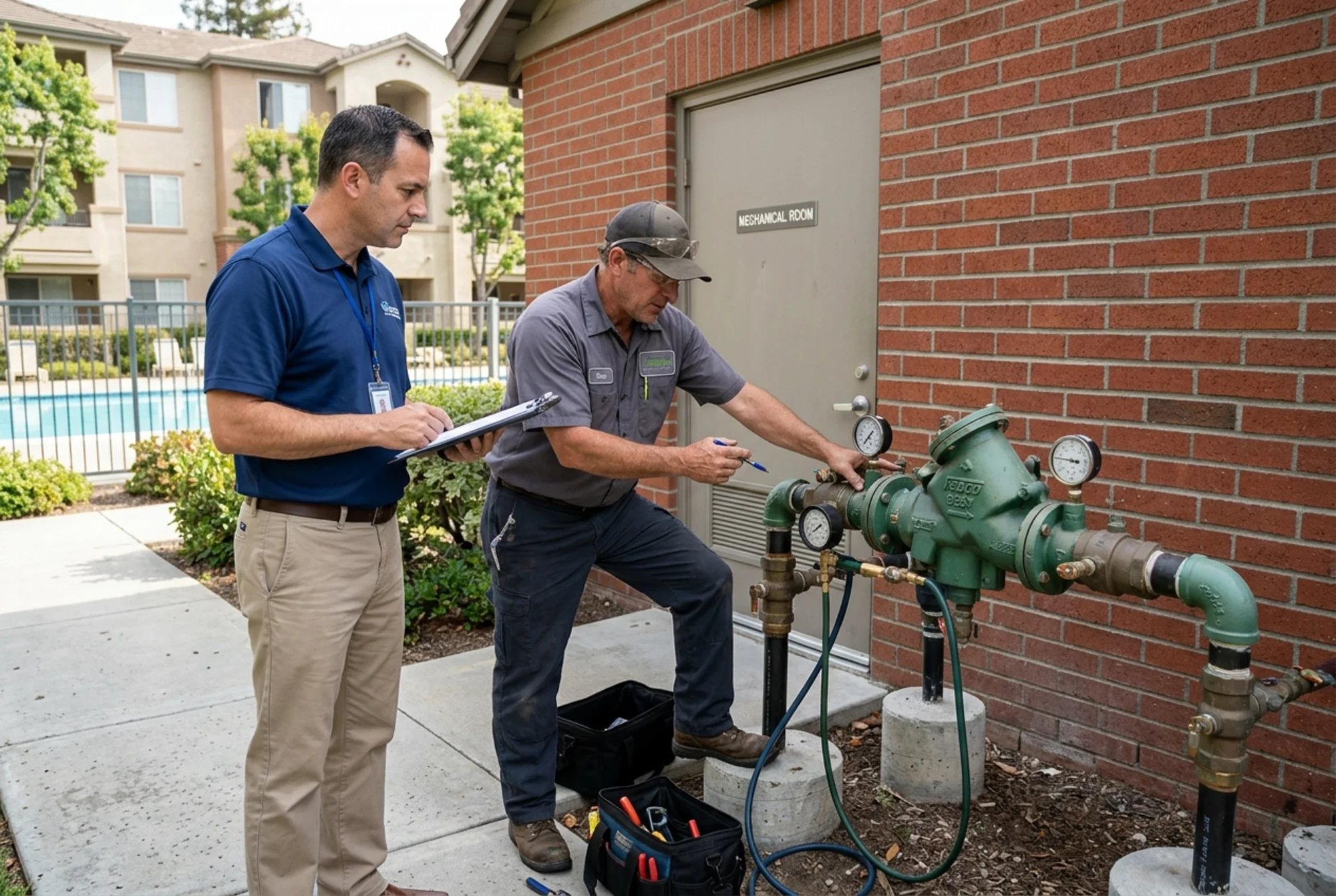
Realistic photo of a condo association property manager reviewing a shared backflow assembly with a certified tester near a pool equipment area or clubhouse mechanical room, natural lighting, no visible brand names
Why testing and paperwork matter so much
A working assembly is important, but utilities do not rely on guesswork. They rely on approved assemblies, certified testers where required, and completed records.
Philadelphia’s program is a good example. The city publishes:
- approved backflow assemblies
- technician guides for domestic and fire sprinkler systems
- installation and maintenance forms
- official test and maintenance records
Washington’s Department of Health also sets out backflow assembly tester duties and field test report requirements. Seattle says annual testing is the only way to ensure assemblies are functioning properly and requires the work to be done by a state-certified tester.
For HOAs and condo associations, that means the compliance job is usually bigger than just booking a plumber. You need to make sure:
- the correct assembly is installed,
- the tester is qualified for your jurisdiction,
- the report is complete,
- any failed assembly is repaired or replaced quickly, and
- the final paperwork actually reaches the utility.
If your board has ever received a notice and wondered what happens next, our related article on how utilities track backflow test compliance is worth reading.
Mistakes HOA boards and condo managers make
The patterns are pretty consistent.
Assuming vendors are coordinating with each other
The landscaper may know irrigation. The pool company may know the pool room. The fire contractor may know the sprinkler line. That does not mean anyone is managing the overall backflow compliance picture.
Treating all devices like they are the same
A hose bib vacuum breaker, a pool fill protection setup, a domestic RPZ, and a fire-line assembly do not all follow the same testing rules.
Losing records during board or manager transitions
This is common in associations. A board turns over, a management company changes, and nobody knows where the last passing report went.
A practical system that works
The easiest HOA or condo compliance system is not complicated. It is just organized.
Keep a simple register for every shared assembly with:
- device type and size
- exact location on the property
- what system it protects
- serial number, if available
- last passing test date
- next due date
- testing company contact
- utility submission confirmation
Then assign one person, usually the property manager or facilities lead, to own the process from start to finish.
If an assembly fails, if a utility notice arrives, or if nobody can confirm what is installed, bring in a qualified backflow professional early. The CDC’s general drinking-water prevention guidance also points people back to their water utility or health department when they have concerns about drinking-water safety.
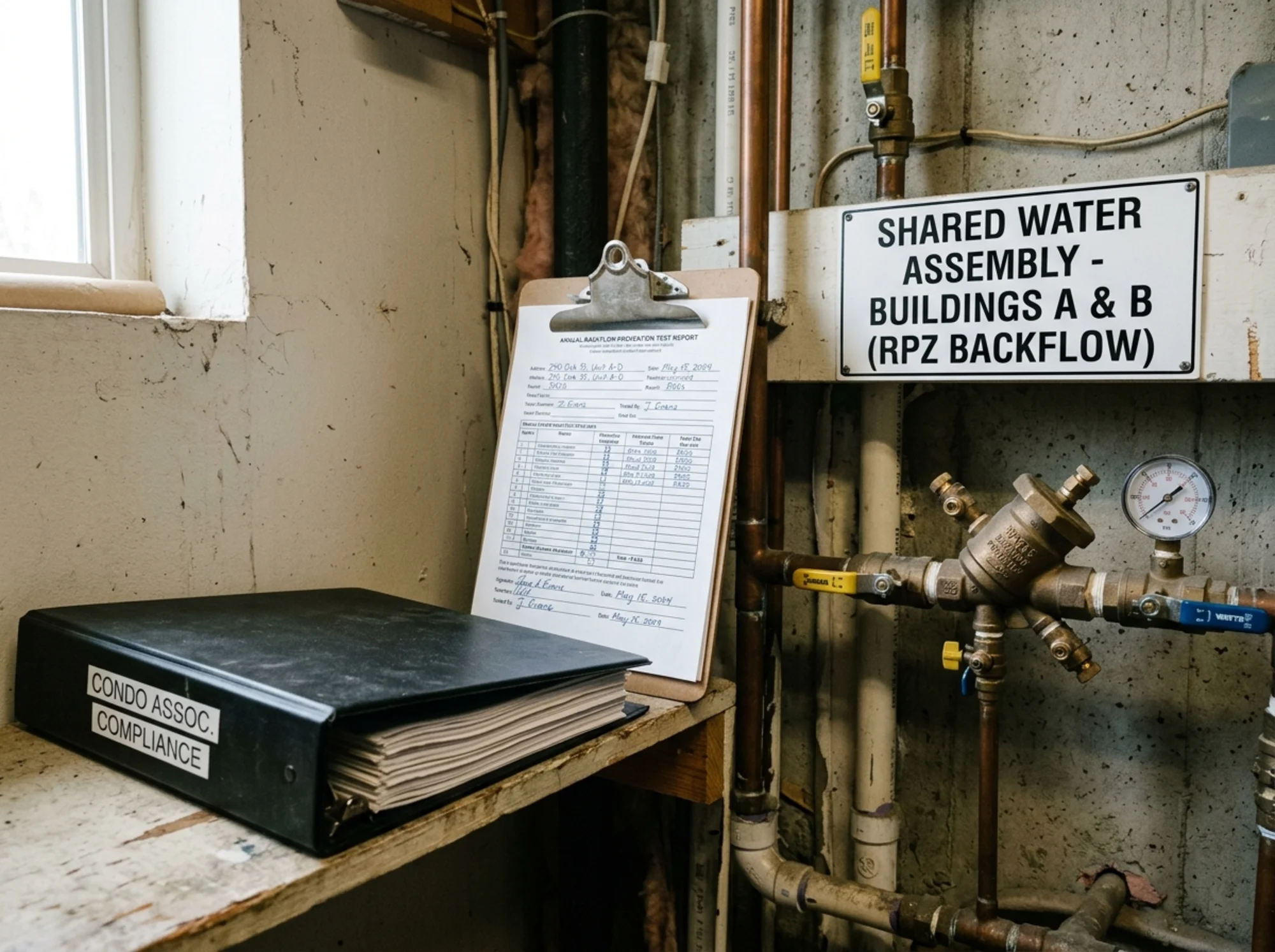 Close-up realistic photo of a condo association compliance binder or clipboard with a backflow test report beside a labeled shared water assembly, documentary style, no text overlay
What to ask before your next annual test
Before the next testing cycle, an HOA board or condo manager should be able to answer these questions:
- How many shared backflow assemblies do we have?
- Which systems do they protect?
- Who is responsible for each one under our utility account and governing documents?
- When was each assembly last tested, and where is the report?
- Does our tester also handle repairs and retesting if something fails?
If the answer to several of those is “I’m not sure,” this is a good time to fix that.
For more baseline answers, visit our FAQs, or compare this topic with our guide to backflow testing requirements for commercial properties. And if you are ready to schedule service, start by finding a backflow tester near you.
Bottom line
HOAs and condo associations tend to face backflow issues because they manage the exact kinds of shared systems utilities worry about most: irrigation, pools, fire lines, and multi-building or multi-story water service.
The core rule is simple even when the property is not: know what assemblies are on site, know who is responsible for them, test them on time, and keep the paperwork organized.
That turns backflow prevention from a surprise board problem into a routine part of community operations.
Sources
This article references guidance and regulations from authoritative sources including:
- U.S. Environmental Protection Agency (EPA) - Safe Drinking Water Act overview
- American Water Works Association (AWWA) - Cross-Connection Control and Backflow Prevention resources
- Florida Department of Environmental Protection - Cross-Connection Control and Backflow Prevention Program
- Portland Water Bureau - How to choose and install a backflow prevention assembly
- Philadelphia Water Department - Cross-Connection & Backflow Compliance
- Washington State Department of Health - Cross-Connection Control and Backflow Prevention
- Seattle Public Utilities - Backflow Assembly Testing
- Centers for Disease Control and Prevention (CDC) - Preventing Drinking Water-Related Illnesses
Last updated: April 21, 2026