Backflow Preventer Enclosures: Protection from Weather and Tampering
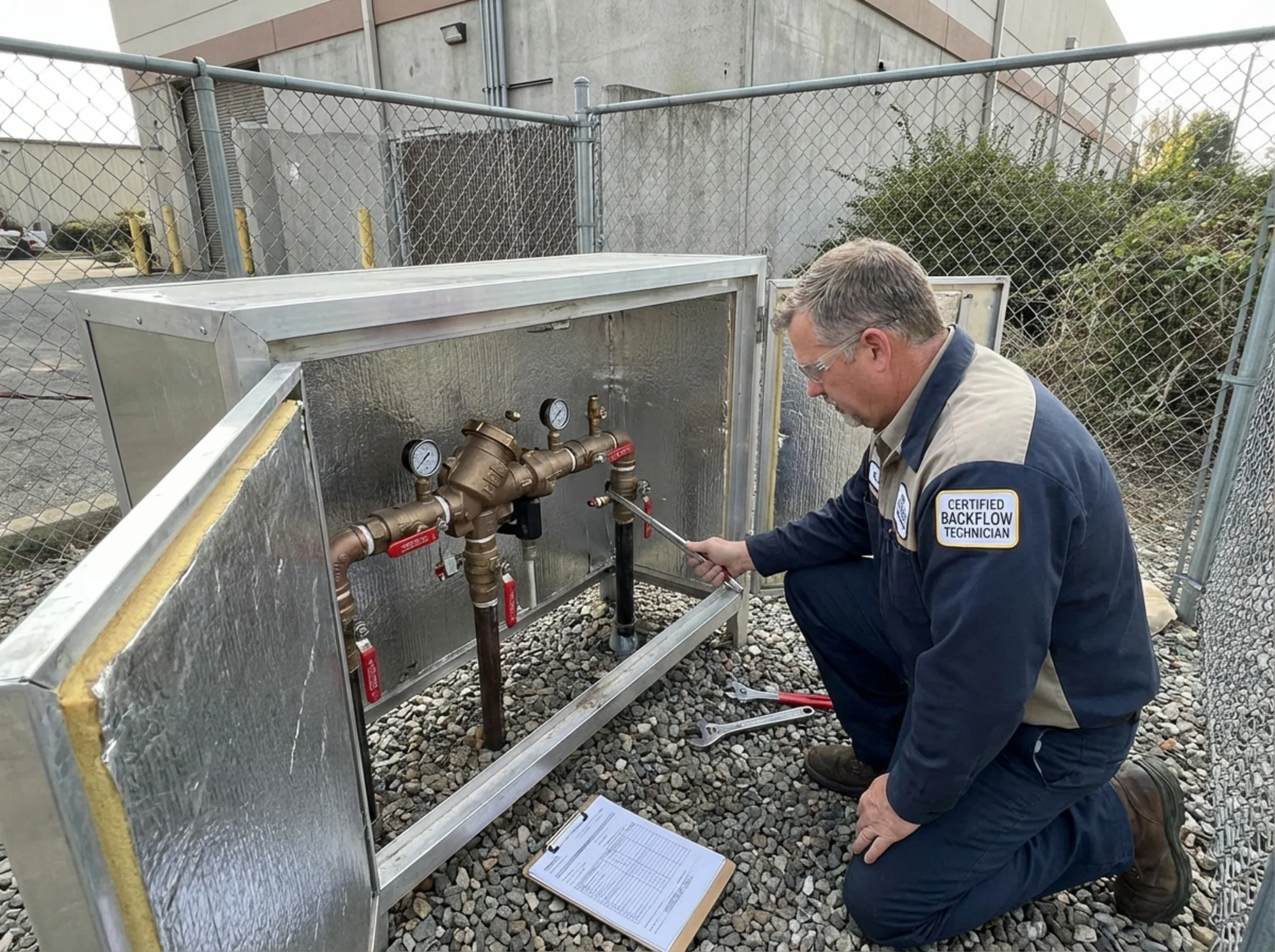
A backflow preventer enclosure does not make an assembly optional, and it does not replace testing. What it does, when chosen well, is protect a critical water-safety device from weather exposure, accidental damage, and casual tampering while still keeping it accessible for inspection and annual testing.
That balance matters more than many property owners realize. A box that hides the assembly but blocks the test cocks, traps moisture, or prevents relief-valve drainage can create a new compliance problem instead of solving one.
This guide explains what an enclosure is supposed to do, where owners go wrong, and what to confirm before you buy or build one.
Why Enclosures Matter in the First Place
Backflow prevention assemblies protect the public drinking water supply from contamination caused by cross-connections and reverse flow. That public-health purpose is why utilities and regulators take installation and maintenance so seriously. The EPA describes the Safe Drinking Water Act as the federal framework for protecting public drinking water, and state backflow programs build on that responsibility at the property level.
In real life, though, these assemblies are often installed outdoors, near service lines, along building exteriors, or in exposed utility areas. That leaves them vulnerable to:
- freezing temperatures and wind
- rain, sun, and repeated heat cycling
- impact from landscaping equipment or vehicles
- unauthorized valve turning or casual vandalism
- debris buildup that makes testing and maintenance harder
If you already read our guides on understanding backflow preventer installation requirements or backflow preventer winterization, you know that exposure is not just cosmetic. Freeze damage can crack the body, damage shutoff valves, and ruin internal components that may not visibly fail until the next test.
What a Good Backflow Enclosure Is Actually Supposed to Do
A good enclosure is there to protect the assembly without interfering with its function.
That usually means four things at once:
- Weather protection. The enclosure helps reduce exposure to cold wind, precipitation, and direct sun.
- Physical protection. It adds a barrier against accidental bumps, lawn equipment, and foot traffic.
- Tamper resistance. On exposed outdoor assemblies, it can reduce the chance that someone opens, closes, or damages valves without authorization.
- Service access. It still allows testers, plumbers, and utility inspectors to reach the shutoff valves, test cocks, and body of the assembly.
That last point is where bad enclosure choices usually fail. Portland Water Bureau's installation requirements specifically say backflow prevention assemblies must be protected from severe environmental conditions, but they also require access for inspections. Portland further notes that only commercially manufactured, prefabricated, insulated outdoor enclosures are approved for freeze protection there, and that exposed piping inside the enclosure must be insulated or provided with a heat source.
That does not mean every utility uses Portland's exact rule set. It does show the larger principle: protection is acceptable only when it does not undermine access, visibility, or safe operation.
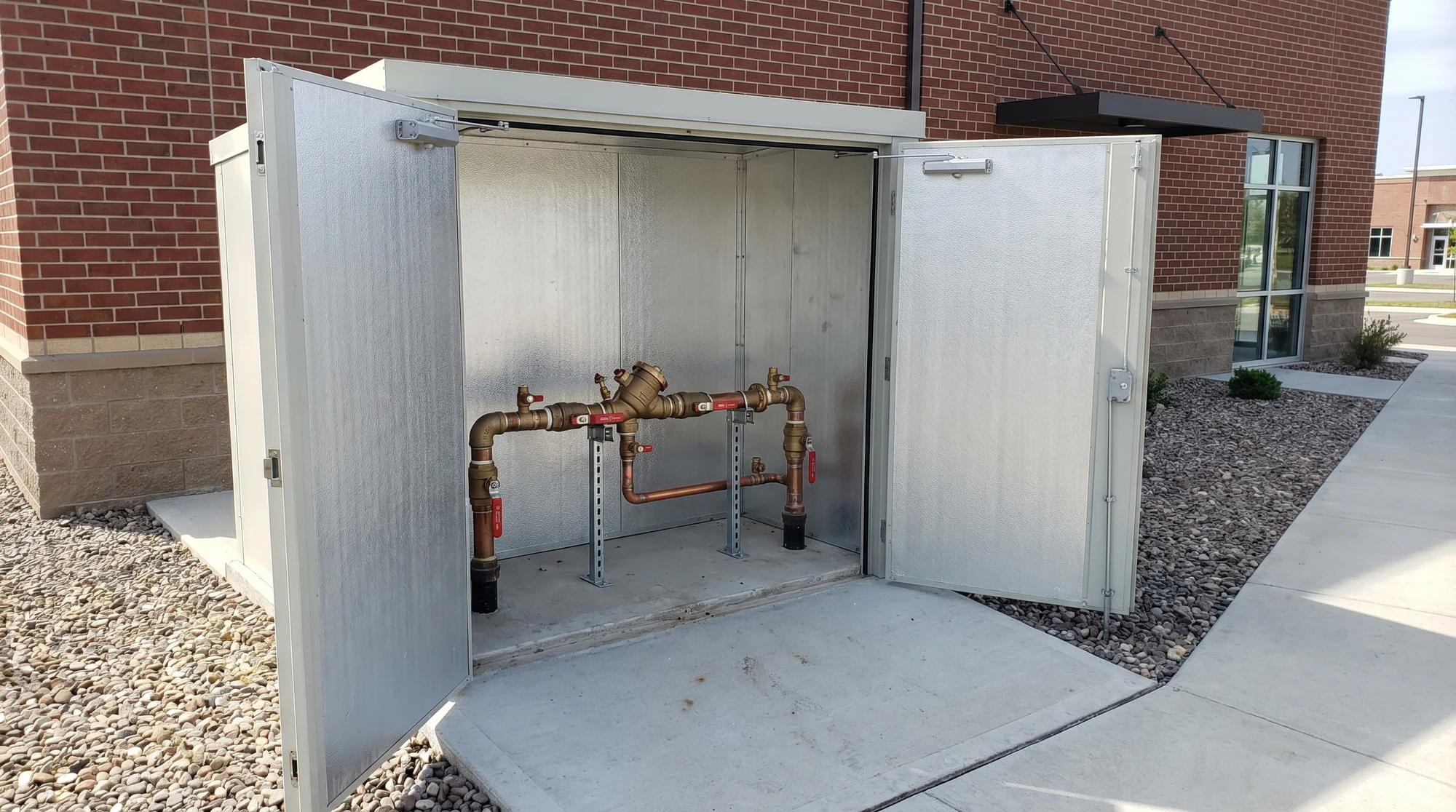 An enclosure should protect the assembly from weather and casual tampering without blocking shutoff valves, test cocks, or service access.
Weather Protection: What Owners Should Look For
If your assembly is outdoors, weather protection should be practical, not improvised.
A few basics matter:
Use an enclosure made for backflow assemblies
Homemade plywood boxes and plastic storage bins may look like a cheap fix, but they often age badly, trap moisture, and make access worse. Some utilities explicitly prefer or require commercially manufactured insulated enclosures instead of improvised covers.
Think beyond the device body
The assembly is not the only thing exposed. Upstream and downstream piping, shutoff valves, and test cocks are also vulnerable. If an enclosure protects the center body but leaves nearby piping exposed to freezing air, you may still end up with cracks or leaks.
Remember drainage, especially for RPZ assemblies
Reduced pressure assemblies can discharge water through the relief valve during operation or when something is wrong. An enclosure must not create a situation where water pools around the relief area, hides discharge, or leads to water damage. If you own an RPZ, pair enclosure planning with the same drainage logic discussed in our common reasons backflow tests fail article.
Do not trap moisture
Sealed plastic wraps, tarps, and non-breathable covers can create condensation inside the enclosure. That is one reason a proper enclosure is usually better than an improvised wrap job. Moisture buildup can speed corrosion and make cold-weather problems worse, not better.
Tampering Protection Without Creating an Access Problem
The word "tampering" covers a few different risks.
Sometimes it means obvious vandalism. More often, it is smaller and more annoying than that: someone turns a shutoff valve, opens a cover, stores materials against the assembly, or treats the area like spare yard space. A lockable or tamper-resistant enclosure can help reduce those problems on exposed assemblies near sidewalks, parking lots, alleys, or shared service areas.
But tamper resistance should never mean making the assembly effectively unreachable.
A good setup still lets an authorized person:
- open the enclosure quickly
- identify the assembly type and condition
- reach the shutoff valves safely
- connect test equipment to the test cocks
- inspect for leaks, corrosion, or relief-valve discharge
If you manage a property in a utility-run compliance program, accessibility matters just as much as protection. Utility pages like Austin Water's program page and Philadelphia Water Department's program page are a useful reminder that annual testing and documentation are part of the job, not an optional extra.
Common Enclosure Mistakes
Most enclosure problems come from treating the assembly like outdoor clutter that should be hidden instead of like a safety device that needs service access.
Here are the mistakes that show up over and over.
1. Hiding the assembly behind landscaping
Bushes, decorative fencing, mulch buildup, and planter boxes may make the area look better, but they can also block access and hide leaks. A tester should not have to fight through shrubs just to find the shutoff valves.
2. Using a cover that has to be dismantled every year
If annual testing requires tools, partial demolition, or removing a bunch of stored items first, the enclosure design is not doing its job. Protection needs to work with maintenance, not against it.
3. Ignoring freeze protection for exposed piping
A sturdy enclosure around the body does not solve much if adjacent pipe runs are still exposed. Freeze failures often show up at fittings, elbows, shutoff valves, and smaller appurtenances first.
4. Blocking drainage or hiding discharge
An enclosure should not turn normal warning signs into hidden problems. If an RPZ starts discharging, you want that condition noticed quickly, not concealed inside a box that nobody opens until the next test.
5. Treating the enclosure as a substitute for maintenance
An enclosure can extend the life of an exposed installation, but it does not replace annual testing, repairs, or good records. If the assembly is already leaking, corroded, or failing tests, boxing it up is not a fix.
The enclosure should open cleanly for inspection so testers can evaluate valves, piping, and any signs of leakage or freeze damage.
When an Enclosure Makes the Most Sense
Not every assembly needs one, but enclosures are especially worth considering when:
- the assembly is outdoors year-round
- the installation is exposed to freezing weather or strong wind
- the device sits in a high-traffic or publicly visible area
- you have already had issues with damage, corrosion, or unauthorized access
- the utility allows above-ground outdoor protection and the assembly must remain accessible
They are often most helpful for owners of irrigation systems, commercial buildings, multi-tenant properties, and facilities with exposed service lines near parking or pedestrian areas.
If you are not sure what your local rules allow, start with your utility or state program, not a product catalog. The Oregon Health Authority cross-connection program and the Portland Water Bureau installation requirements are strong examples of the kind of official guidance worth checking before installation.
A Simple Buyer and Owner Checklist
Before you install or replace an enclosure, confirm:
- Is the enclosure intended for backflow assemblies, not general outdoor storage?
- Will shutoff valves, test cocks, and the assembly body remain accessible?
- Is there a plan for protecting exposed piping inside or near the enclosure?
- If this is an RPZ, is drainage and discharge visibility still adequate?
- Will the enclosure reduce casual tampering without blocking authorized access?
- Does your utility or local authority have any specific enclosure or freeze-protection requirements?
That checklist alone can prevent most expensive mistakes.
The Bottom Line
A backflow preventer enclosure is helpful when it does three jobs well: protect the assembly from weather, reduce avoidable physical or casual tampering risk, and preserve full access for testing and maintenance.
The wrong enclosure does the opposite. It hides problems, traps moisture, blocks service, and turns a protective device into a future headache.
If you are planning an upgrade, think like a tester and a utility inspector, not just a property owner trying to tidy up the yard. And if you need help evaluating your current setup, start with a qualified tester in your area. You can compare local options through pages like Austin, Texas and Philadelphia, Pennsylvania, then use our FAQs and related guides to understand what questions to ask.
Sources
This article references guidance and regulations from authoritative sources including:
- U.S. Environmental Protection Agency (EPA) - Safe Drinking Water Act (SDWA)
- American Water Works Association (AWWA) - Cross-Connection Control and Backflow Prevention resources
- Oregon Health Authority - Cross Connection and Backflow Prevention Program
- Portland Water Bureau - Backflow assembly installation requirements
- Portland Water Bureau - How to choose and install a backflow prevention assembly
- Philadelphia Water Department - Cross-Connection & Backflow Compliance
- Centers for Disease Control and Prevention (CDC) - Preventing drinking water-related illnesses
Last updated: April 13, 2026