Why Choosing a Certified Backflow Tester Matters for Safety
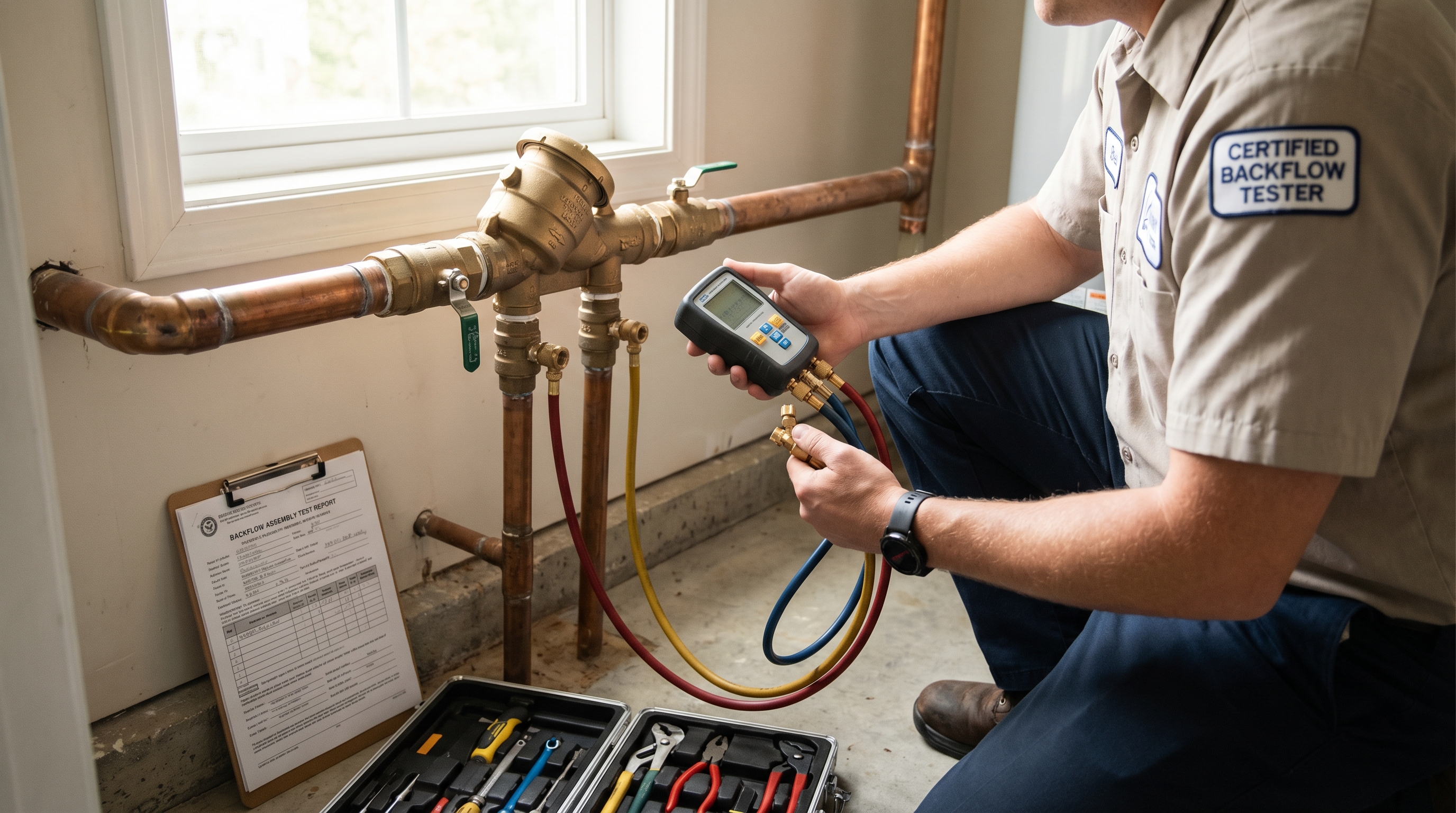
Why Choosing a Certified Backflow Tester Matters
Backflow prevention is a critical aspect of water safety that often goes unnoticed until something goes wrong. When contaminated water flows backward into your clean water supply, it can pose serious health risks to your family, employees, or tenants. That's why selecting a qualified, certified backflow tester isn't just a regulatory requirement—it's an essential step in protecting your property and the people who depend on its water supply.
Understanding Backflow Testing Certification Requirements
Before you start searching for a backflow tester, it's important to understand what certifications actually mean. Each state has specific requirements for backflow prevention assembly testers, but most follow similar patterns.
A certified backflow tester must complete an approved training program, typically lasting 32-40 hours, covering hydraulics, cross-connection control, and testing procedures. They must pass both written and hands-on performance exams to demonstrate their competency. Most states require recertification every 2-3 years to ensure testers stay current with evolving standards and techniques.
Beyond state certification, many testers pursue additional credentials from organizations like the American Backflow Prevention Association (ABPA) or the American Water Works Association (AWWA). These voluntary certifications often indicate a higher level of expertise and commitment to the profession.
Key Qualifications to Look for in a Backflow Tester
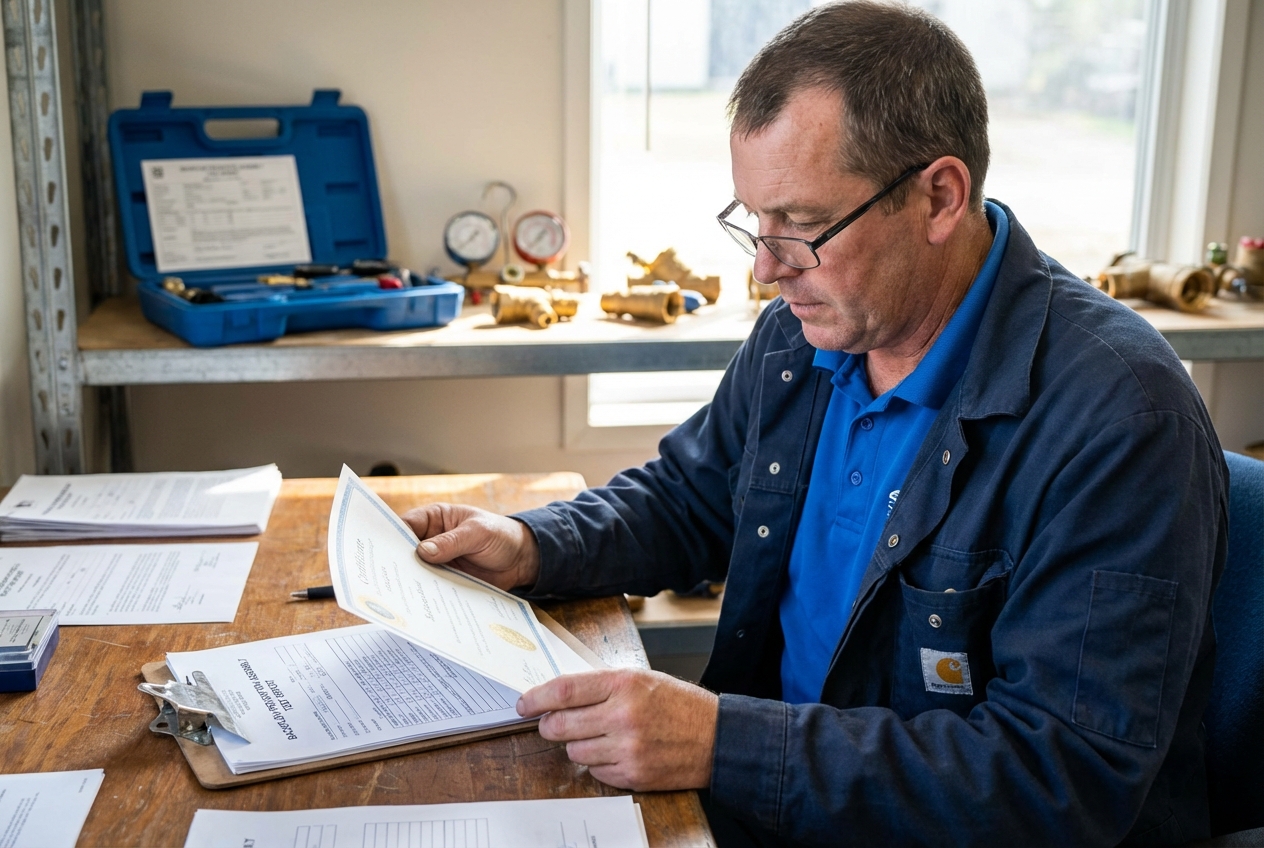 Professional backflow tester examining certification documents at a desk with testing equipment visible in background
When evaluating potential backflow testers, several qualifications separate the professionals from the amateurs:
Current State Certification: Always verify that your tester holds an active certification in your state. Most states maintain online databases where you can confirm certification status by entering the tester's name or certification number.
Proper Insurance Coverage: A professional backflow tester should carry both general liability and errors and omissions insurance. This protects you if something goes wrong during testing or if the tester makes an error that leads to contamination or property damage.
Calibrated Testing Equipment: Backflow test gauges must be calibrated annually to ensure accurate results. Ask to see calibration certificates for their testing equipment. Professional testers will have these readily available and won't hesitate to show them.
Business License: Many municipalities require backflow testers to hold local business licenses. This requirement helps ensure testers are accountable and operating legally in your area.
Experience with Your Device Type: Different properties have different types of backflow prevention assemblies. A tester experienced with residential double-check valves might not be the best choice for testing a large reduced pressure zone assembly at an industrial facility.
Questions to Ask Before Hiring a Backflow Tester
Don't hesitate to interview potential testers before making your decision. Here are essential questions that will help you make an informed choice:
"Can you provide your certification number and expiration date?" Any legitimate tester will readily share this information. You can then verify it through your state's certification database.
"What's included in your testing fee?" Understand exactly what you're paying for. Does the price include the test report submission to the water authority? Are repairs included, or will those be additional charges?
"How long will the test take?" A thorough test typically takes 15-30 minutes per device, depending on the type and condition. Be wary of testers who claim they can test multiple devices in just a few minutes.
"What happens if my device fails the test?" Know upfront whether the tester can perform repairs and what those might cost. Some testers only test, while others are also certified to repair or replace faulty devices.
"Do you submit test reports directly to the water authority?" Many jurisdictions require electronic submission of test results. A tester who handles this submission can save you time and ensure compliance.
"Can you provide references from similar properties?" Whether you manage an apartment complex, own a restaurant, or maintain an irrigation system, references from similar clients can provide valuable insights.
Red Flags to Avoid When Selecting a Tester
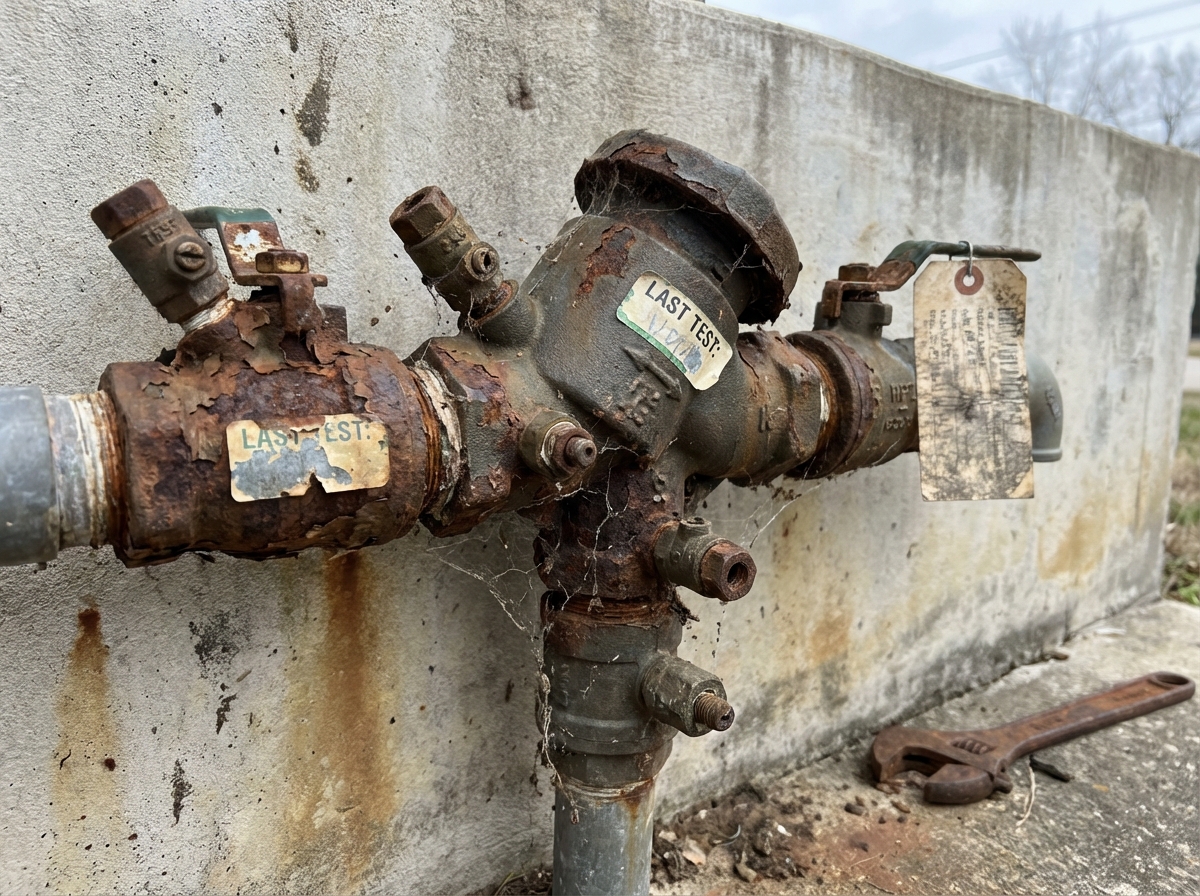 Backflow prevention device with visible rust and poor maintenance, showing signs of improper testing or neglect
Several warning signs should make you think twice about hiring a particular tester:
Unusually Low Prices: If a quote seems too good to be true, it probably is. Extremely low prices often indicate cut corners, inadequate insurance, or lack of proper certification.
Pressure Tactics: Legitimate testers won't pressure you to make immediate decisions or claim that emergency testing is needed without clear justification.
Reluctance to Provide Documentation: Any hesitation to share certification, insurance, or calibration documents is a major red flag.
Offers to "Pass" Your Device: Ethical testers report accurate results, whether pass or fail. Anyone who guarantees your device will pass before testing it is likely falsifying results.
No Written Estimates: Professional testers provide written estimates and clear pricing. Avoid those who only give verbal quotes or seem evasive about costs.
Claims of Lifetime Certification: Backflow prevention certifications expire and must be renewed. Anyone claiming to have a "lifetime" certification is either misinformed or dishonest.
Finding Certified Testers in Your Area
Start your search by contacting your local water utility. Many maintain lists of certified testers authorized to work in their jurisdiction. These lists are often available on the utility's website or by calling their cross-connection control department.
State certification agencies also typically provide online databases of certified testers. Search by your zip code or city to find testers near you. These databases usually show certification status, expiration dates, and contact information.
Professional associations offer member directories that can help you find qualified testers. The American Backflow Prevention Association and regional backflow prevention associations maintain searchable databases of their members.
Online platforms like FindBackflowTesters.com aggregate certified testers by location and allow you to compare qualifications, read reviews, and request quotes from multiple professionals simultaneously.
Don't overlook word-of-mouth recommendations. Ask neighboring businesses, your property management company, or local plumbers for referrals to reliable backflow testers they've worked with.
Understanding Testing Costs and Frequency
Backflow testing costs vary significantly based on several factors:
Device Type and Quantity: Residential tests typically range from $75-$150 per device, while commercial and industrial devices may cost $100-$300 or more. Multiple devices on the same property often qualify for discounted rates.
Location: Urban areas with many certified testers tend to have more competitive pricing than rural areas where testers must travel farther between jobs.
Additional Services: If repairs are needed, costs can increase substantially. Minor repairs might add $50-$200, while device replacement can cost $300-$2000 or more, depending on the type and size.
Most water authorities require annual testing of backflow prevention devices. Some high-hazard facilities may require semi-annual or quarterly testing. Fire suppression systems typically require annual testing as well, though this is often handled by specialized fire system contractors.
The Testing Process: What to Expect
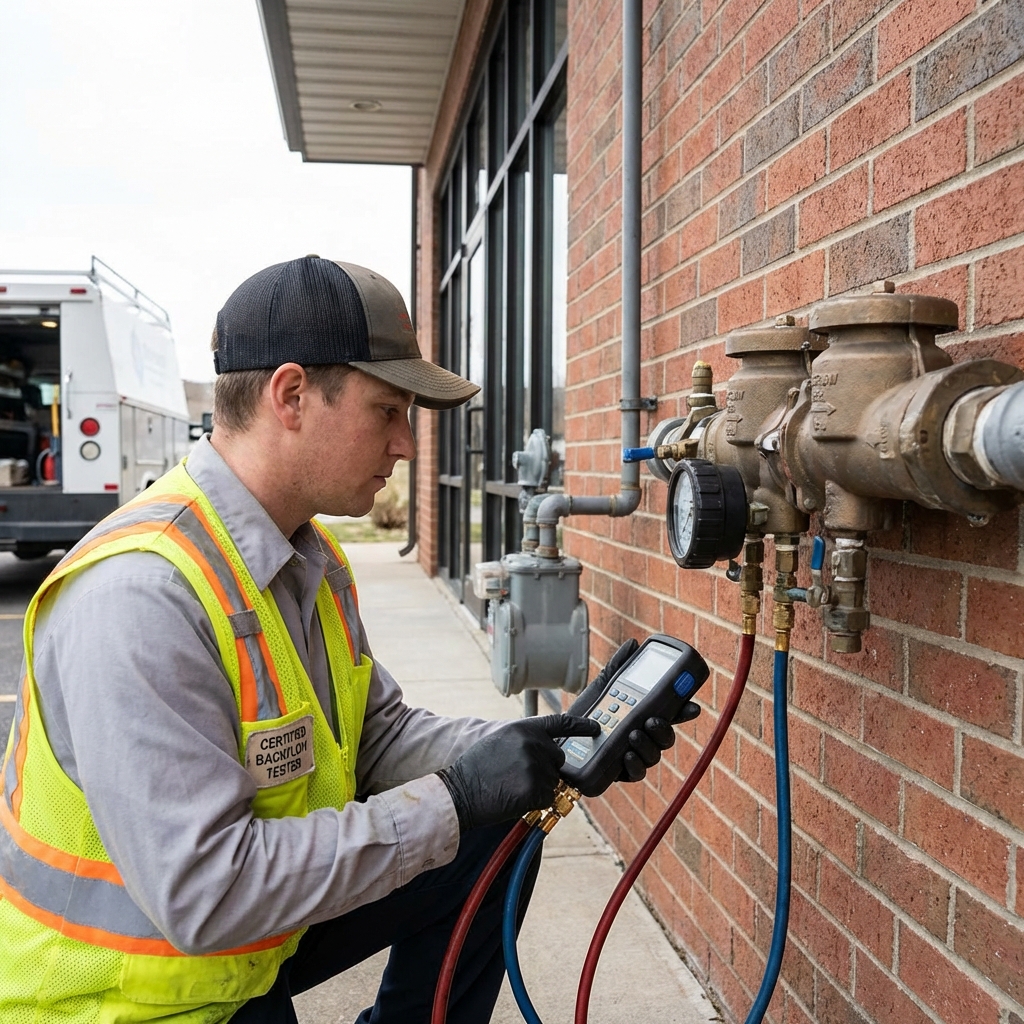 Certified tester using digital gauge equipment to test a commercial backflow preventer mounted on building exterior
Understanding the testing process helps ensure you're getting proper service. A professional test follows these general steps:
The tester will first verify the device's make, model, size, and serial number, comparing this information to previous test records. They'll perform a visual inspection, checking for damage, improper installation, or unauthorized modifications.
Using certified test equipment, they'll conduct a series of pressure tests specific to your device type. These tests verify that check valves hold tight, relief valves open at proper pressures, and all components function correctly.
The tester records all results on official forms, noting whether the device passes or fails each test. If the device fails, they should explain what's wrong and provide repair options.
After testing, the tester submits results to the appropriate water authority, usually within 10 business days. You should receive copies of all test reports for your records.
Maintaining Your Backflow Prevention System
Regular testing is just one aspect of backflow prevention. Between tests, property owners should:
Keep the area around devices clear and accessible. Testers need adequate space to work, and emergency access might be needed if problems arise.
Protect devices from freezing temperatures. In cold climates, proper insulation or heated enclosures prevent damage that could compromise protection and require expensive repairs.
Watch for signs of problems like dripping relief valves, visible damage, or water pressure changes. Early detection can prevent failures and reduce repair costs.
Maintain accurate records of all testing, repairs, and device replacements. This documentation proves compliance and helps track device performance over time.
Taking Action: Your Next Steps
Now that you understand how to choose a certified backflow tester, it's time to take action:
First, determine your testing requirements. Check with your water utility to confirm testing frequency and any specific local requirements.
Gather information about your backflow prevention devices, including locations, types, and previous test dates. This helps testers provide accurate quotes and ensures you don't miss any devices.
Research and contact at least three certified testers in your area. Compare their qualifications, pricing, and availability to make an informed decision.
Schedule testing well before your deadline. Many water authorities issue fines for late testing, and testers get busy during peak seasons.
After selecting a tester, add testing dates to your calendar and set reminders for future years. Consider establishing an ongoing relationship with a reliable tester who can handle all your backflow prevention needs.
Remember, choosing the right certified backflow tester protects more than just your compliance status—it safeguards the health and safety of everyone who depends on your water system. Take the time to select a qualified professional who will provide accurate testing and reliable service year after year.