Why Your Annual Backflow Test Matters and How to Prepare
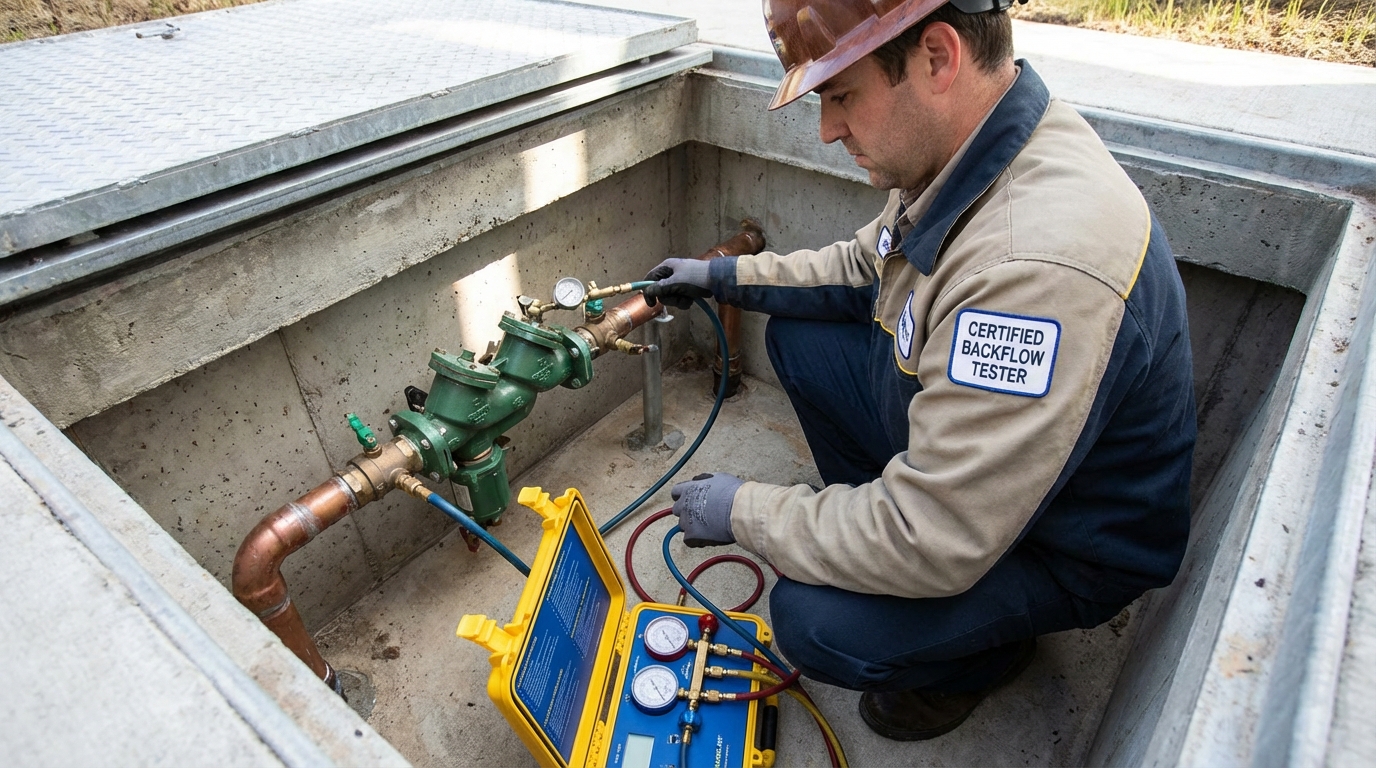
Why Your Annual Backflow Test Matters
Every year, thousands of property owners across the United States receive a notice from their water utility or local municipality: it's time for your annual backflow preventer test. If you've gotten one of these letters, you might be wondering what exactly you need to do — and what happens if you ignore it.
Backflow preventers keep contaminated water from flowing backward into the public drinking water supply. They're installed on irrigation systems, fire sprinkler lines, boiler feeds, and anywhere else a cross-connection exists between your plumbing and the municipal water system. Most jurisdictions require these devices to be tested once a year by a certified backflow tester. Fail to comply, and you could face fines, water shutoff, or both.
The good news: preparing for your annual test is straightforward. A little advance work on your part means the tester can get in, do the job, and get out — often in under 30 minutes. Here's how to make that happen.
Know Your Deadline
The single most important thing you can do is know when your test is due. Depending on where you live, your deadline might be tied to:
- A fixed calendar date — Many cities set a universal deadline, such as June 30 or December 31, by which all backflow tests must be completed and reported.
- Your installation anniversary — Some jurisdictions require testing within 12 months of the previous test or the original installation date.
- Your water utility's billing cycle — A few utilities tie compliance windows to your account renewal.
Check the notice you received carefully. If you didn't get one, contact your water provider or local plumbing authority. Don't assume no notice means no requirement — many jurisdictions will fine you regardless of whether you received a reminder.
Pro tip: Schedule your test at least 4 to 6 weeks before the deadline. Certified testers get booked up fast as deadlines approach, and you'll want a buffer in case repairs are needed.
Locate All Your Backflow Preventers
Before the tester arrives, you need to know where every device on your property is installed. This sounds obvious, but it trips people up more often than you'd think — especially on commercial properties or older buildings where devices were installed years ago by a different owner or contractor.
Common locations include:
- Near the water meter — Residential reduced pressure zone (RPZ) assemblies and double check valve assemblies (DCVAs) are often installed just downstream of the meter, sometimes in a below-grade vault or box.
- Along irrigation lines — Pressure vacuum breakers (PVBs) and anti-siphon valves are typically mounted above ground near the irrigation system's point of connection.
- Mechanical rooms — Commercial buildings often have backflow preventers on fire sprinkler feeds, boiler makeup water lines, and cooling tower connections.
- Near commercial equipment — Restaurants, medical facilities, and car washes frequently have devices protecting specific equipment connections.
Walk your property and confirm you can physically access each device. If a device is buried under landscaping, hidden behind stored equipment, or locked in a room you don't have a key to, sort that out now — not when the tester is standing there billing you by the hour.
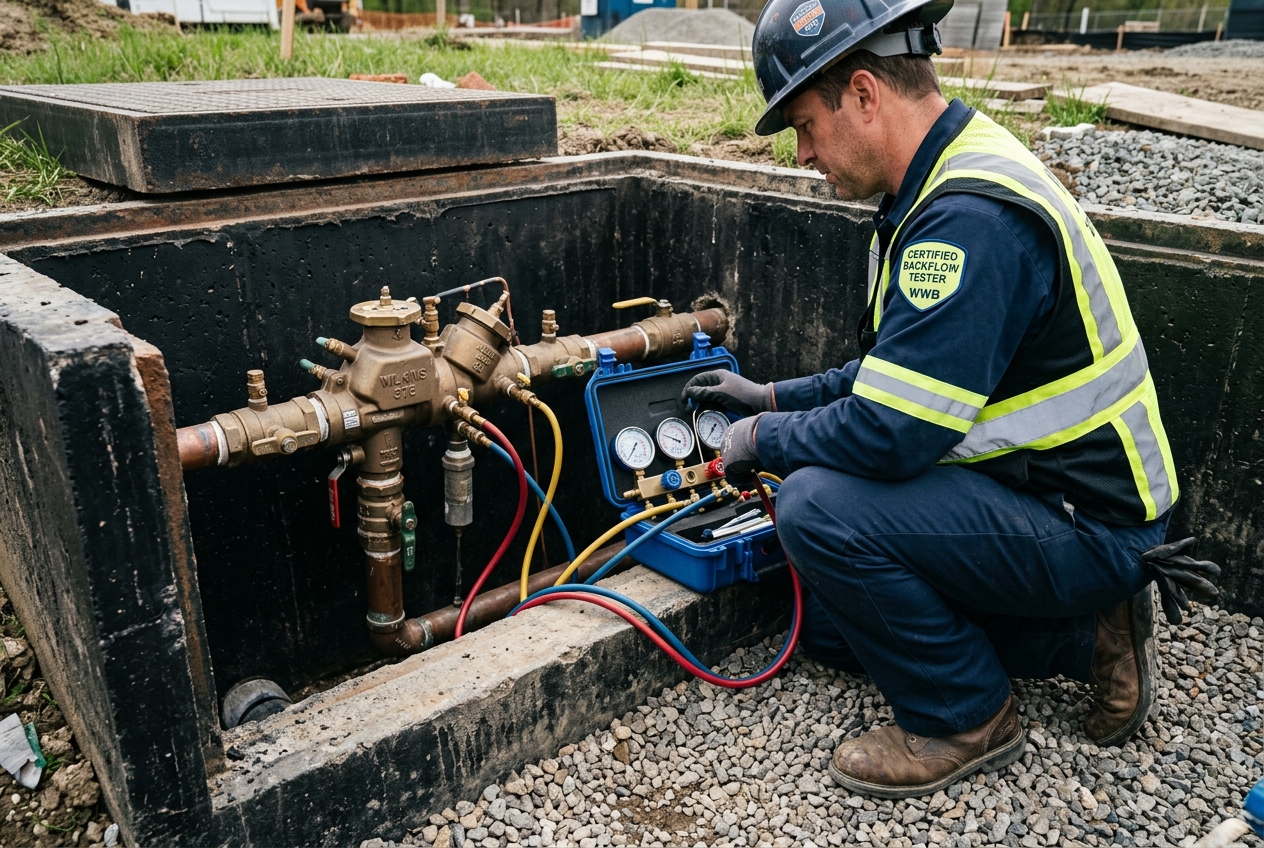 A certified tester crouching beside an RPZ backflow preventer installed in an underground vault box, test kit gauges attached
Clear the Access Path
This is where preparation pays off the most. A tester who can walk straight to your device, hook up their test kit, and start working will finish quickly and charge you less. A tester who has to wait while you move a pallet of supplies, trim back overgrown shrubs, or track down a building manager with a key is going to cost you more time and money.
Here's your access checklist:
- Remove obstructions — Move boxes, pallets, vehicles, trash cans, garden tools, or anything else blocking a clear path to the device.
- Trim vegetation — If bushes, vines, or ground cover have grown over or around the device, cut them back so the tester has room to work. They need space to attach test gauges and manipulate test cocks.
- Unlock gates and doors — If the device is behind a locked gate, inside a fenced area, or in a locked mechanical room, make sure the tester can get access. Either be present to let them in or arrange for a key or code.
- Mark hard-to-find devices — If your device is in a below-grade vault that's hard to spot, place a visible marker (a cone, flag, or even a piece of tape on the ground) so the tester doesn't waste time searching.
- Ensure adequate lighting — For devices in basements, mechanical rooms, or enclosed vaults, make sure there's enough light for the tester to see what they're doing and read their gauges accurately.
For commercial properties with multiple devices, consider walking the route beforehand and confirming every device is accessible. It's not uncommon for a tester to arrive at a large commercial site only to find that two out of five devices are blocked, turning a one-hour appointment into a return visit.
Understand What the Test Involves
Knowing what the tester will actually do helps you prepare and sets realistic expectations. Here's the basic process:
- Visual inspection — The tester examines the device for physical damage, corrosion, leaks, and proper installation. They check that test cocks are functional and shutoff valves operate correctly.
- Gauge testing — Using a calibrated differential pressure test kit, the tester connects hoses to the device's test cocks and measures pressure readings across each check valve and the relief valve (on RPZ assemblies). These readings tell them whether each internal component is holding properly.
- Pass or fail — If all readings fall within the acceptable range specified by the device manufacturer and local code, the device passes. The tester records the results and submits a test report to your water utility or municipality.
- Repair if needed — If the device fails, the tester will typically explain which component failed and what repair is needed. Some testers carry common repair parts and can fix issues on the spot. Others may need to schedule a return visit.
The entire test usually takes 10 to 20 minutes per device when everything goes smoothly. Budget more time if you have multiple devices or if they're in difficult-to-access locations.
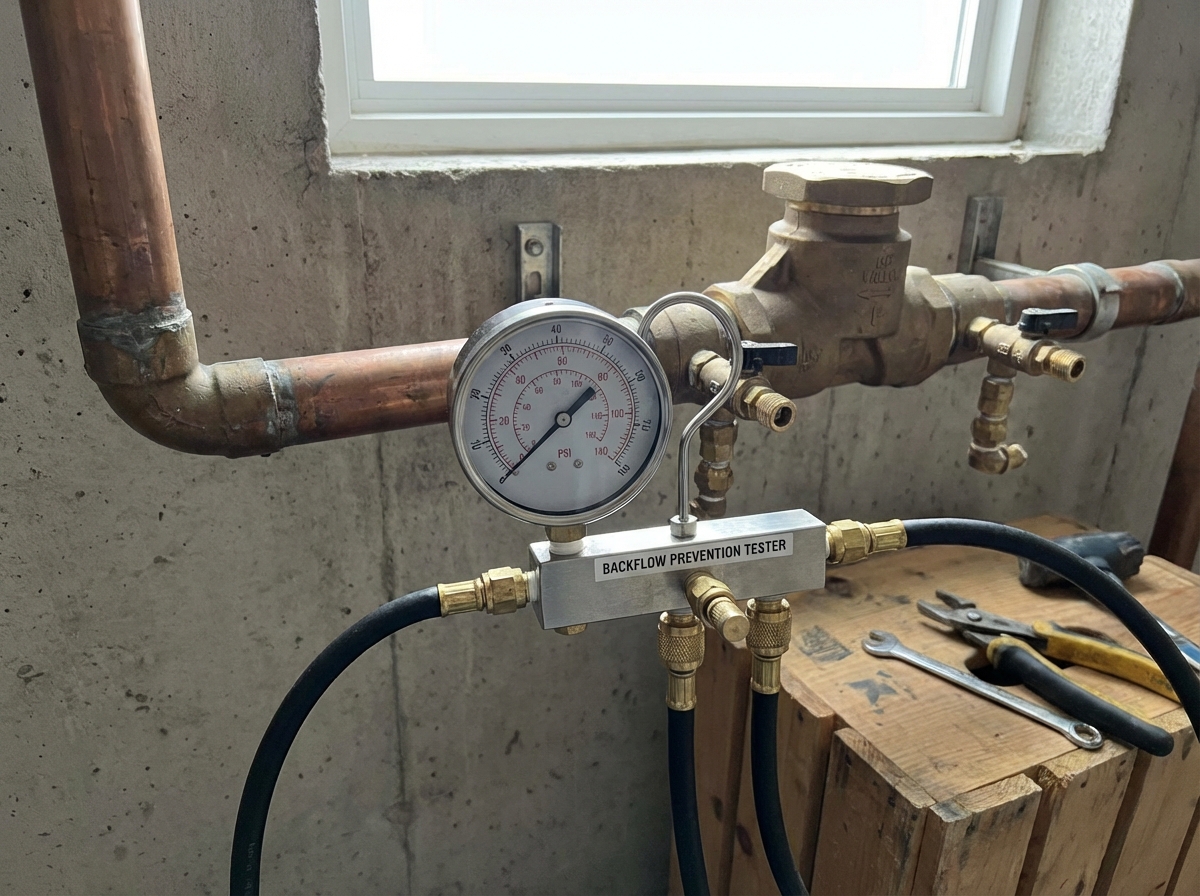 Close-up of a differential pressure test gauge kit connected to the test cocks on a double check valve assembly mounted on a wall
What to Do if Your Device Fails
A failed test doesn't mean you're in immediate trouble, but it does mean you need to act. Here's how to handle it:
Don't panic. Failed tests are common, especially on older devices. Internal rubber components — check valve seats, O-rings, and relief valve diaphragms — wear out over time. This is normal maintenance, not a catastrophe.
Get a repair estimate. Your tester should be able to tell you exactly what failed and provide an estimate for repairs. Common repairs include replacing check valve rubber kits, cleaning debris from seats, or replacing a relief valve disc. Most repairs on residential devices cost between $75 and $250 for parts and labor, depending on the device type and what failed.
Understand repair timelines. Most jurisdictions give you a window — typically 14 to 30 days — to complete repairs and submit a passing retest. Ask your tester or water utility what your specific window is.
Consider device age. If your backflow preventer is more than 15 to 20 years old and failing repeatedly, full replacement may be more cost-effective than continued repairs. A new RPZ assembly for a residential application typically runs $300 to $800 installed, depending on size and local labor rates.
Keep the paperwork. Save your test reports, repair invoices, and any correspondence with your water utility. If there's ever a dispute about compliance, documentation is your best defense.
Choosing a Certified Tester
Not just anyone can test your backflow preventer. Testers must hold a valid certification, and requirements vary by state and municipality. Here's what to look for:
- Current certification — Ask to see their certification card or license number. Most states require testers to pass an exam administered by an approved organization (such as ABPA, ASSE, or a state-specific program) and renew every one to three years.
- Calibrated test equipment — Test kits must be calibrated annually by an approved facility. A reputable tester will have a current calibration sticker on their kit and can provide documentation if asked.
- Familiarity with local reporting — Your tester should know how to submit results to your specific water utility or municipality. Some jurisdictions use online portals, others accept paper forms, and a few require results to be submitted by the tester directly.
- Insurance and reputation — Especially for commercial work, verify the tester carries liability insurance. Check reviews, ask for references, or look for testers listed on your water utility's approved tester registry.
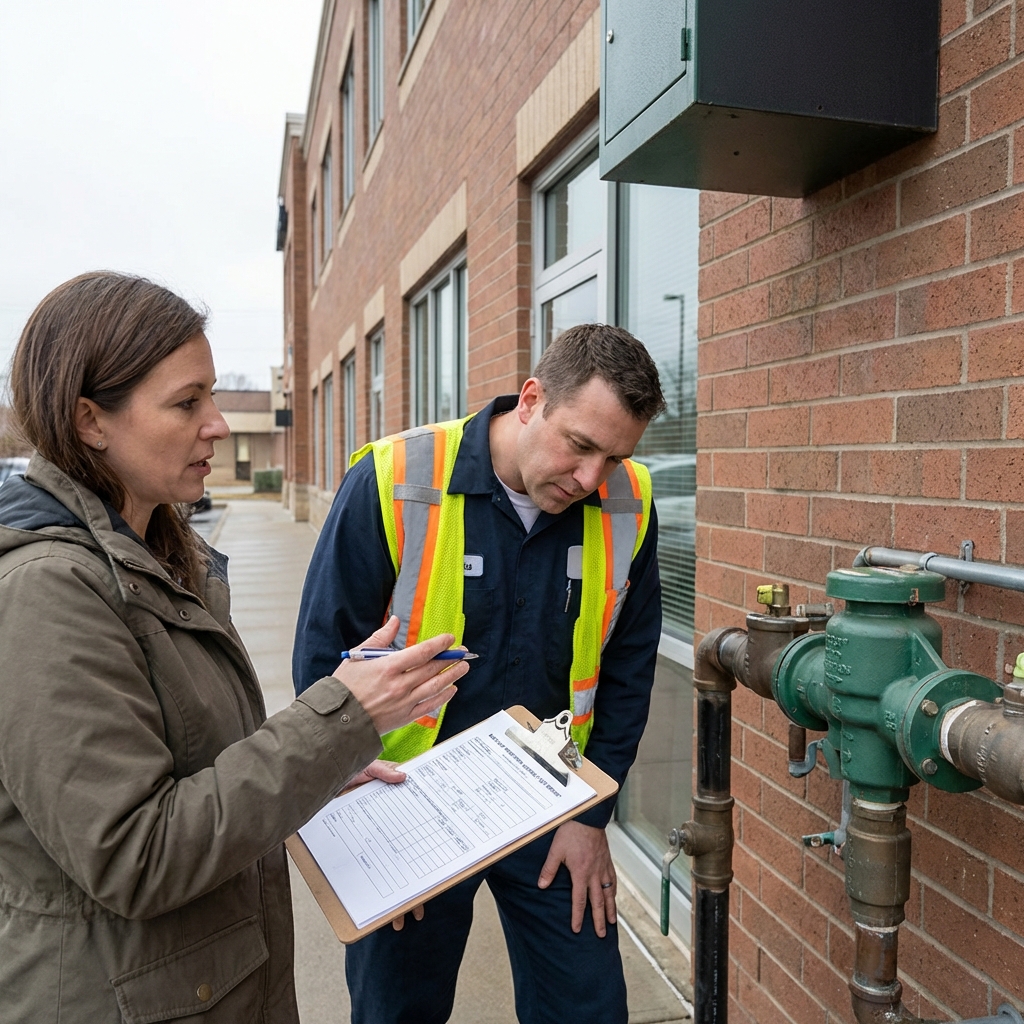 A property manager reviewing a completed backflow test report on a clipboard with the tester outside a commercial building
Preparing for Commercial and Multi-Device Properties
If you manage a commercial building, HOA, or multi-unit property, preparation takes a bit more coordination:
- Inventory all devices. Maintain an updated list of every backflow preventer on the property, including location, device type, size, serial number, and the date it was last tested. Share this list with your tester before the appointment.
- Coordinate water shutoffs. Some tests require briefly shutting off water to the device. On commercial properties, this can affect tenants or operations. Notify affected parties in advance and schedule testing during low-impact hours when possible.
- Budget for repairs. If you have 10 or more devices, statistically some will fail. Build repair costs into your annual maintenance budget so a few failures don't catch you off guard.
- Designate a point of contact. Have someone available on-site who can unlock doors, answer questions, and make decisions about repairs on the spot. This prevents the tester from having to leave and come back, which often means additional service call charges.
Seasonal Timing Considerations
When you schedule your test can affect both cost and convenience:
- Spring and early summer are peak testing season in most regions because many compliance deadlines fall in mid-year. Expect higher demand and potentially longer wait times for appointments.
- Fall and winter are often slower periods for testers, which can mean easier scheduling, faster response times, and occasionally lower rates.
- After a hard freeze, inspect your devices visually before calling for a test. Freeze damage can crack valve bodies and housings. If you see visible damage or leaks, call a plumber or certified tester for repair before scheduling your annual test — there's no point paying for a test on a device that obviously needs work.
Your Preparation Checklist
Use this quick-reference list in the days before your scheduled test:
- Confirm the test date and time with your tester
- Locate all backflow preventers on the property
- Clear access paths to every device
- Trim vegetation around above-ground devices
- Unlock gates, doors, and vault covers
- Ensure adequate lighting for indoor or underground devices
- Have your previous test reports available for reference
- Notify tenants or building occupants of any planned water shutoffs
- Budget for potential repair costs
- Know your compliance deadline and retest window
Next Steps
If your annual test is coming up and you haven't scheduled it yet, don't wait. Use FindBackflowTesters.com to locate a certified backflow tester in your area. You can search by zip code, compare testers, and book an appointment — often within the same week.
If your device failed its last test and you're unsure whether to repair or replace, a certified tester can evaluate the device's condition and help you make the right call. Either way, staying compliant protects your property, your water supply, and your wallet.