What Are Backflow Preventers and Why Do They Matter?
What Are Backflow Preventers and Why Do They Matter?
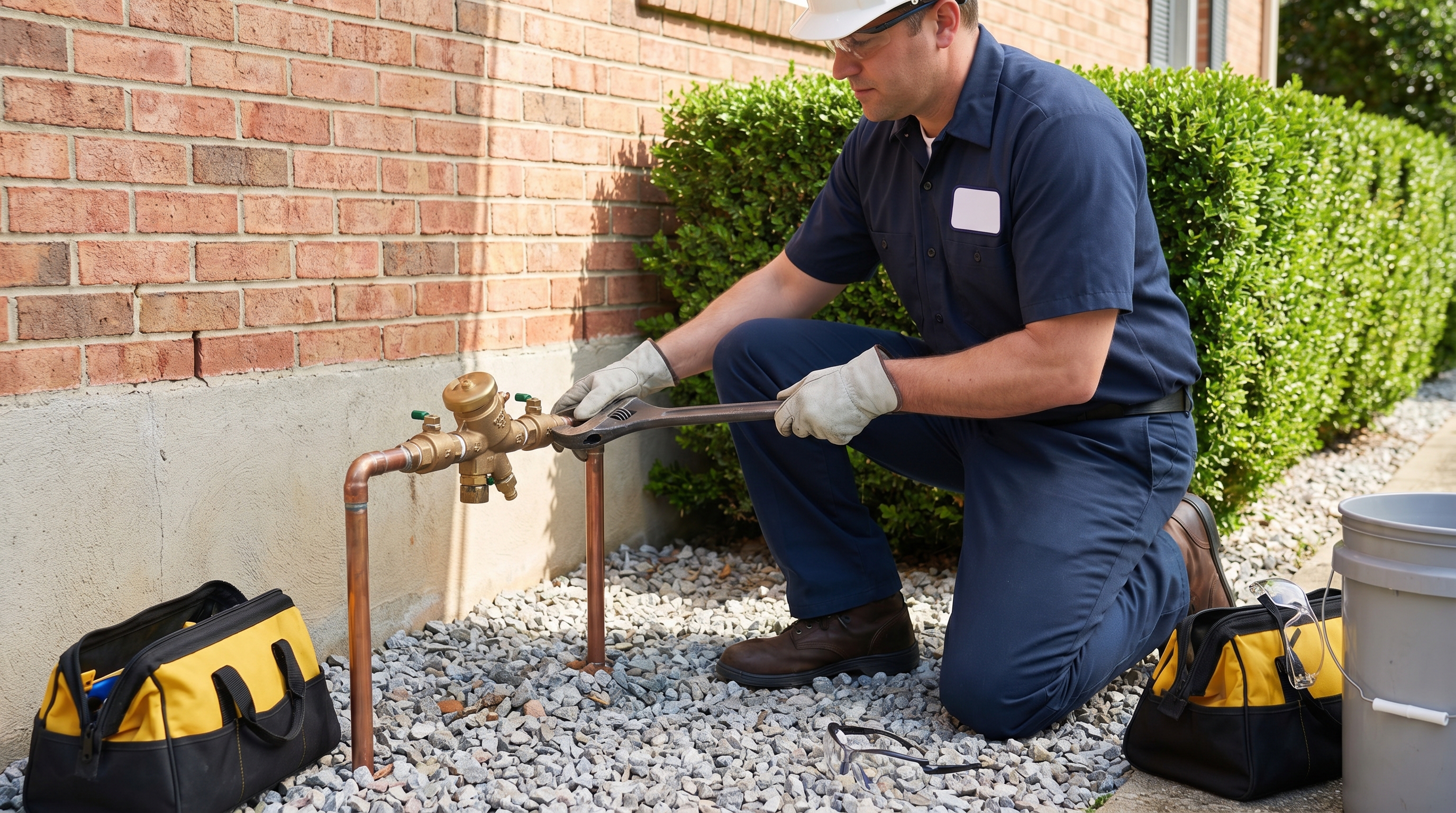
Backflow preventers are mechanical devices that protect your drinking water from contamination by preventing water from flowing backward through your plumbing system. When water pressure drops or reverses direction, contaminants from irrigation systems, pools, or industrial equipment can enter your clean water supply without these critical safety devices.
Every property owner should understand backflow prevention because contaminated water poses serious health risks. From lawn chemicals to bacteria-laden pool water, the substances that can flow backward into your drinking water range from unpleasant to deadly.
The Five Main Types of Backflow Preventers
1. Atmospheric Vacuum Breaker (AVB)
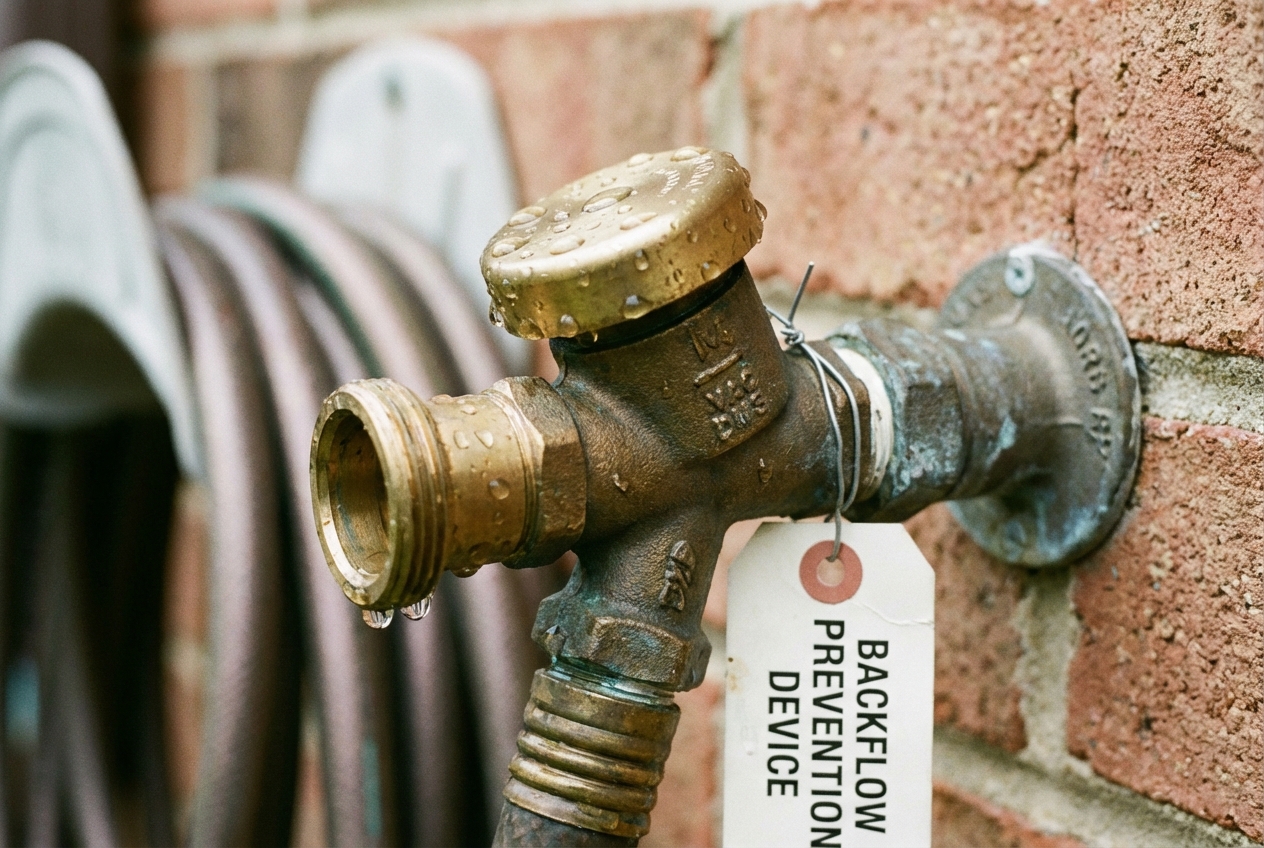
The atmospheric vacuum breaker is the simplest and most affordable backflow prevention device. It works by allowing air to enter the water line when pressure drops, breaking the vacuum that could pull contaminated water backward.
 Close-up view of a brass atmospheric vacuum breaker installed on an outdoor hose bib with water droplets visible
How it works: When water flows normally, the internal float disc seals against the air inlet. If backflow occurs, the disc drops, opening the air inlet and preventing contamination from being drawn back into the supply line.
Best uses:
- Irrigation systems without continuous pressure
- Individual outdoor faucets
- Laboratory equipment connections
Limitations:
- Cannot be installed where back pressure might occur
- Must be installed at least 6 inches above the highest point of use
- Cannot have shut-off valves downstream
- Not suitable for continuous pressure applications
Typical cost: $20-$100 for the device, $150-$300 installed
2. Pressure Vacuum Breaker (PVB)
The pressure vacuum breaker improves on the AVB design by adding a spring-loaded check valve, allowing it to handle continuous pressure situations. This makes PVBs the most common choice for residential irrigation systems.
How it works: The PVB contains a spring-loaded poppet and an air inlet valve. Under normal flow, water pressure keeps the poppet open and the air inlet closed. During backflow conditions, the poppet closes and the air inlet opens, preventing contamination.
Best uses:
- Residential lawn sprinkler systems
- Greenhouse irrigation
- Car wash systems
- Industrial cooling systems
Limitations:
- Still cannot handle back pressure
- Must be installed 12 inches above the highest sprinkler head
- Requires winterization in freezing climates
- Can leak from the air relief valve during normal operation
Typical cost: $50-$200 for the device, $300-$600 installed
3. Double Check Valve Assembly (DCVA)
The double check valve assembly provides reliable protection through two independently operating check valves. If one valve fails, the second provides backup protection. This redundancy makes DCVAs suitable for many commercial applications.
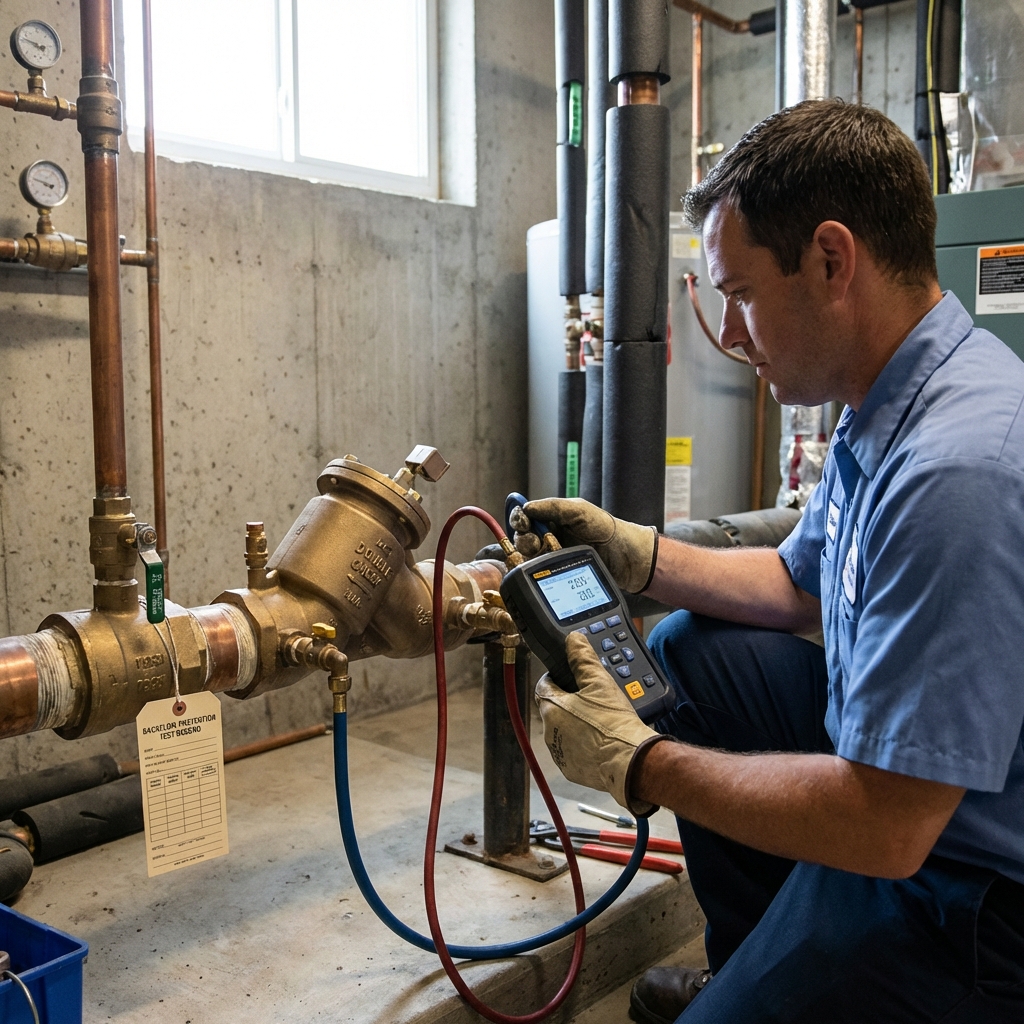
How it works: Water flows through two spring-loaded check valves in series. Each valve independently prevents reverse flow. Test cocks between and on either side of the valves allow for annual testing without system shutdown.
Best uses:
- Fire sprinkler systems (without chemical additives)
- Commercial irrigation systems
- Decorative fountains
- Food processing equipment
- Boiler feed lines
Limitations:
- Does not protect against back-siphonage as effectively as vacuum breakers
- More expensive than AVB or PVB options
- Requires annual testing by certified professionals
- Takes up more space than simpler devices
Typical cost: $150-$500 for the device, $500-$1,200 installed
4. Reduced Pressure Zone Assembly (RPZ)
 Large industrial RPZ backflow preventer with pressure gauges and test ports mounted on concrete wall
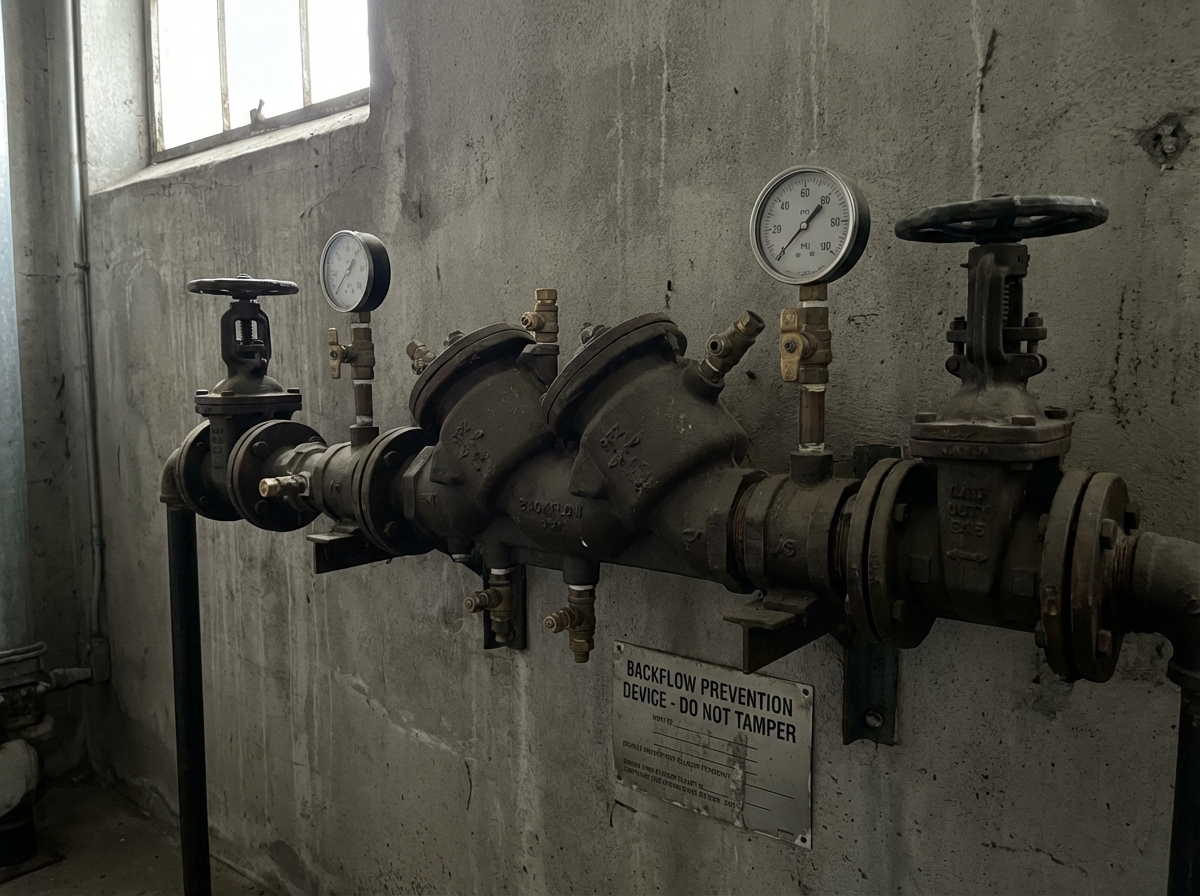
The reduced pressure zone assembly offers the highest level of backflow protection available. RPZs can handle both back-siphonage and back pressure, making them the gold standard for high-hazard applications.
How it works: An RPZ uses two check valves separated by a pressure-monitored relief valve zone. If either check valve fails, the relief valve opens, dumping water and maintaining a pressure differential that prevents contamination.
Best uses:
- Medical facilities and laboratories
- Chemical processing plants
- Car washes with chemical injection
- Boiler systems with chemical treatment
- Underground irrigation systems
- Any high-hazard cross-connection
Limitations:
- Most expensive option
- Continuous discharge from relief valve wastes water
- Requires drainage for relief valve discharge
- Creates significant pressure loss (10-15 PSI)
- Needs heated enclosure in freezing climates
Typical cost: $300-$1,500 for the device, $1,000-$3,000 installed
5. Spill-Resistant Vacuum Breaker (SVB)
The spill-resistant vacuum breaker combines features of the PVB with improved design elements that minimize water spillage during startup and shutdown. This makes SVBs ideal for indoor applications where water discharge would cause problems.
How it works: Similar to a PVB but with an additional diaphragm seal that prevents water from escaping through the air inlet during normal operation. The air inlet only opens during actual backflow conditions.
Best uses:
- Indoor irrigation systems
- Rooftop equipment
- Laboratory installations
- Commercial kitchen equipment
- Any location where water spillage is problematic
Limitations:
- Cannot handle back pressure
- More expensive than standard PVBs
- Still requires elevation above highest outlet
- Limited availability compared to other types
Typical cost: $75-$250 for the device, $400-$800 installed
How to Choose the Right Backflow Preventer
Assess Your Hazard Level
Low hazard applications involve substances that might affect water taste or odor but pose no health threat:
- Residential irrigation without fertilizer injection
- Decorative fountains
- Fire sprinkler systems without antifreeze
High hazard applications involve substances that could cause illness or death:
- Chemical injection systems
- Medical equipment
- Industrial processes
- Sewage pumps
- Pool filling lines
Consider Installation Requirements
Elevation requirements: AVBs and PVBs must be installed above the highest point of use. If you cannot meet elevation requirements, you'll need a DCVA or RPZ.
Space constraints: RPZ assemblies require significant space and proper drainage. In tight spaces, a DCVA might work better.
Indoor vs. outdoor: For indoor installations, consider spill-resistant models or devices that won't discharge water during normal operation.
Climate considerations: In freezing climates, outdoor devices need insulated enclosures or seasonal removal. Indoor installation might be more practical.
Evaluate Pressure Conditions
Back-siphonage only: If your application only faces back-siphonage risk (no possibility of downstream pressure exceeding supply pressure), an AVB or PVB provides adequate, cost-effective protection.
Back pressure possible: Applications with pumps, elevated piping, or pressure vessels require DCVA or RPZ protection.
 Professional plumber testing a double check valve assembly with electronic test equipment in mechanical room
Factor in Long-term Costs
Initial installation: While AVBs cost less upfront, improper selection could mean replacing the device later.
Annual testing: Most jurisdictions require annual testing for testable devices (PVB, DCVA, RPZ). Budget $75-$200 per device annually.
Maintenance needs: RPZs require more frequent maintenance due to their complexity. Simple devices like AVBs rarely need service beyond winterization.
Water loss: RPZ assemblies waste water through relief valve discharge. In areas with high water costs, this ongoing expense adds up.
Common Installation Mistakes to Avoid
Wrong Device for the Application
Installing an AVB where back pressure exists guarantees failure. Similarly, using a DCVA for high-hazard applications violates code and endangers health.
Improper Elevation
Installing vacuum breakers too low renders them useless. Always verify elevation requirements before installation.
Missing Thermal Protection
Freezing destroys backflow preventers. Install devices in heated spaces or provide adequate insulated enclosures.
Inadequate Drainage
RPZ relief valves can discharge significant water volumes. Without proper drainage, water damage becomes likely.
Incorrect Sizing
Undersized devices cause pressure loss and system performance issues. Oversized devices may not function properly at low flow rates.
Maintenance and Testing Requirements
Annual Testing
Most jurisdictions require annual testing by certified backflow prevention testers for:
- Pressure vacuum breakers
- Double check valve assemblies
- Reduced pressure zone assemblies
Testing involves using specialized equipment to verify that check valves hold required pressure differentials and relief valves function properly.
Seasonal Maintenance
In cold climates, backflow preventers need winterization:
- Shut off water supply
- Drain all water from device
- Remove or insulate outdoor devices
- Open test cocks to prevent freeze damage
Regular Inspections
Property owners should visually inspect devices monthly for:
- Visible damage or corrosion
- Water leaking from relief valves
- Proper drainage around RPZ assemblies
- Clear access for testing and maintenance
Next Steps for Property Owners
1. Identify Your Cross-Connections
Walk your property and list all connections between potable water and potential contamination sources:
- Irrigation systems
- Pool fill lines
- Boiler makeup water
- Equipment connections
- Hose connections
2. Consult Local Codes
Contact your water utility or building department to understand:
- Required backflow prevention for your applications
- Testing and reporting requirements
- Approved device models
- Certified tester requirements
3. Get Professional Assessment
Hire a certified backflow prevention specialist to:
- Evaluate your cross-connections
- Recommend appropriate devices
- Provide installation quotes
- Explain ongoing maintenance needs
4. Budget for Protection
Plan for both initial and ongoing costs:
- Device purchase and installation
- Annual testing fees
- Potential water utility fees
- Maintenance and eventual replacement
5. Maintain Compliance
Once installed, maintain your backflow prevention system:
- Schedule annual tests before due dates
- Keep test reports for your records
- Address failures immediately
- Plan for device replacement every 10-15 years
Protecting Your Water Supply
Understanding backflow preventers helps you make informed decisions about protecting your water supply. Whether you manage a single-family home or a large commercial facility, selecting the right device prevents contamination while meeting regulatory requirements.
Remember that backflow prevention isn't just about compliance—it's about protecting health. The few hundred dollars spent on proper backflow prevention pale compared to the potential costs of waterborne illness or regulatory fines.
Take time to assess your needs, consult with professionals, and install appropriate protection. Your water system's safety depends on making the right choice today.