Washington Backflow Testing: Seattle, Tacoma & Spokane Rules
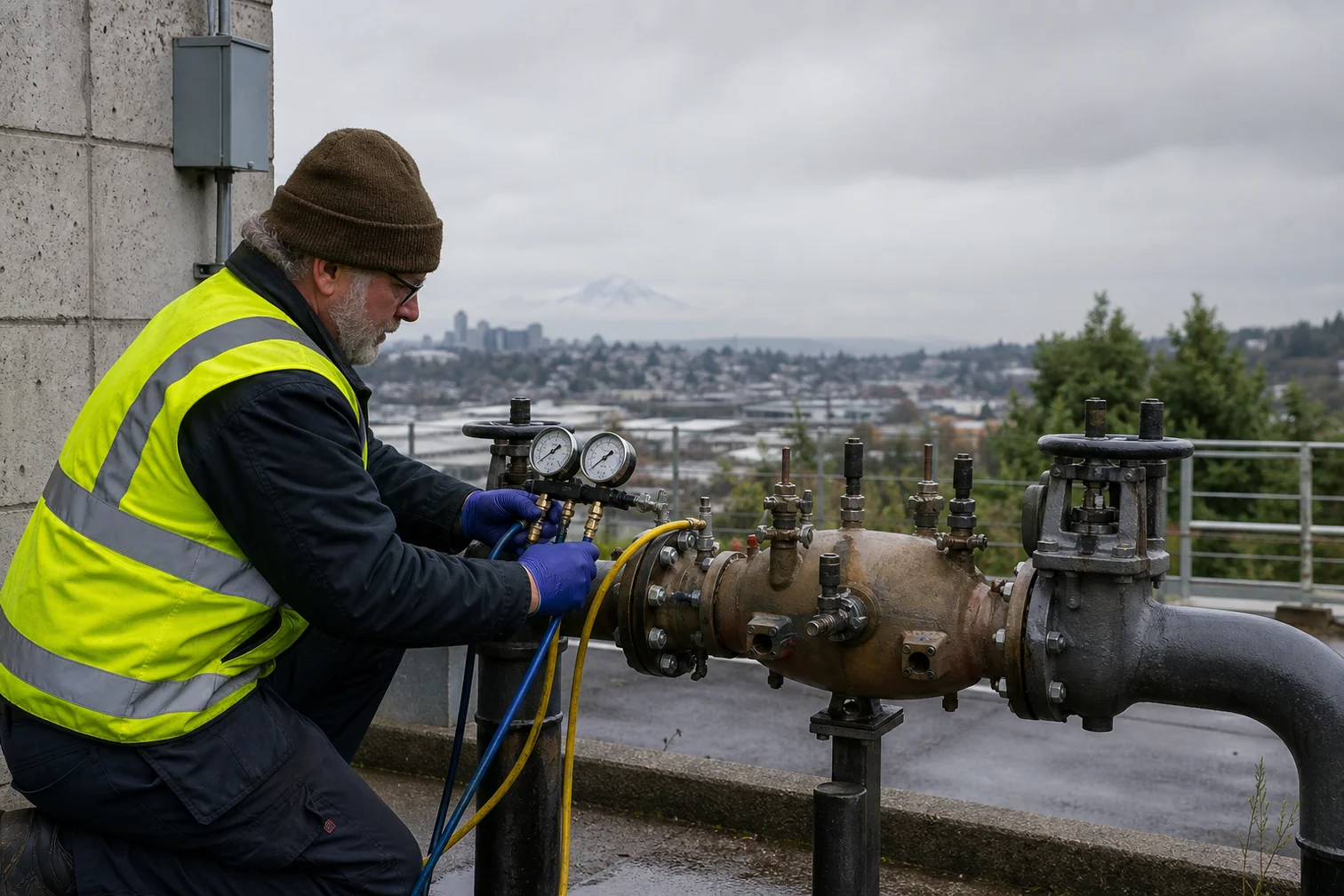
Washington State Backflow Prevention: Seattle, Tacoma, and Spokane Requirements
If you own a business, run an irrigation system, or manage any property connected to a public water main in Washington, there's a good chance you're on the hook for annual backflow testing. The rules aren't optional, and the deadlines are real. Miss them and you risk fines, a shutoff notice, or both.
The tricky part is that Washington runs cross-connection control through a mix of state law and local utility programs. The state sets the floor, then Seattle, Tacoma, Spokane, and every other water purveyor build their own program on top of it. So the testing requirement is the same statewide, but how you get reminded, who you hire, and where you send the paperwork changes depending on which utility serves your address.
Here's what you actually need to know to stay compliant.
What the State Requires (and Why)
Washington's cross-connection control rules live in the state's drinking water regulations, specifically WAC 246-290-490. The whole point is to keep contaminated water from flowing backward into the public drinking water system. That happens during a pressure drop, like when a water main breaks or a fire hydrant gets opened nearby. Without a backflow assembly in place, water from an irrigation line, a boiler, or a chemical tank can get siphoned back into the pipes everyone drinks from.
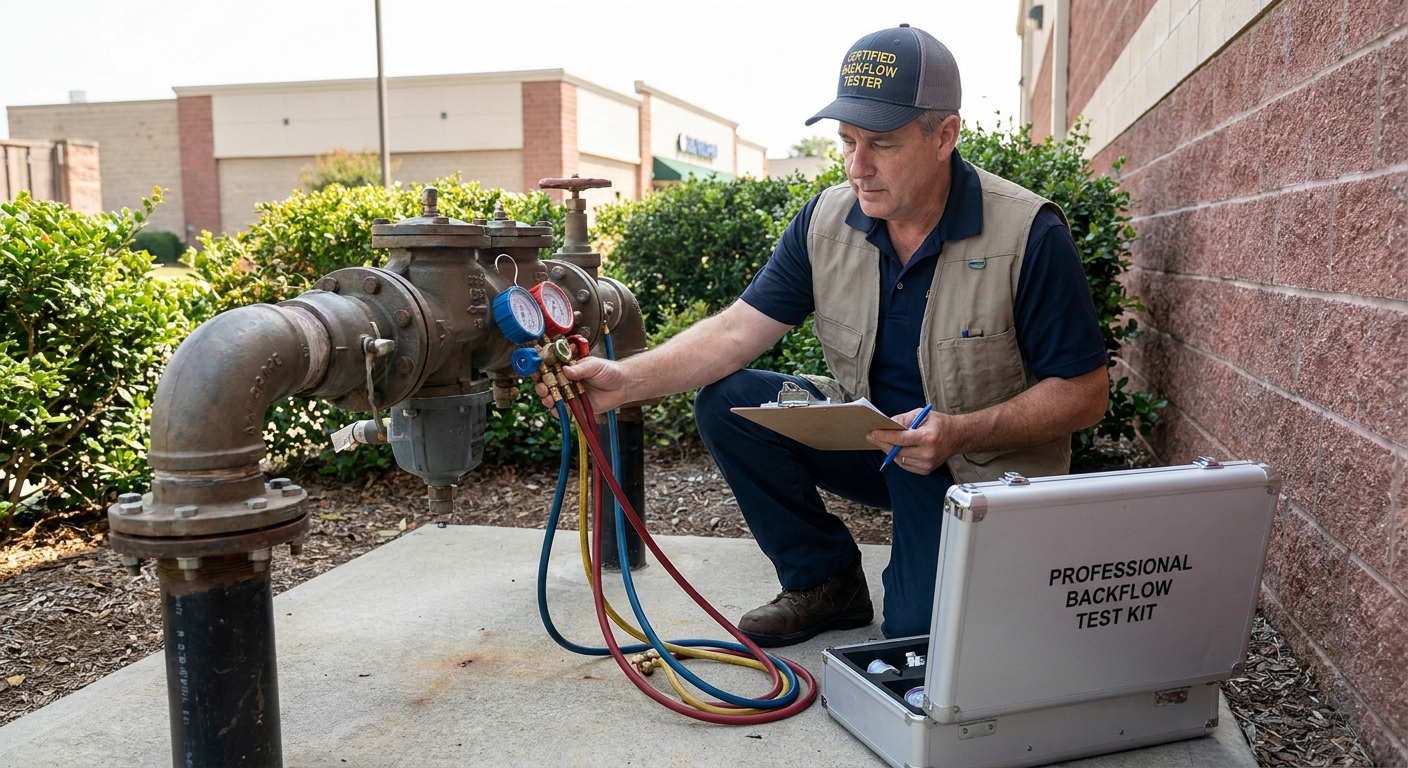 Backflow preventer assembly installed outside residential property
The state requires every public water system to run a cross-connection control program. That program has to:
- Identify properties with cross-connection hazards
- Require an approved backflow prevention assembly where the hazard calls for one
- Make sure those assemblies get tested when installed, repaired, relocated, and at least once every 12 months after that
That last point is the one that catches people. Testing is annual, every single year, for the life of the assembly. It's not a one-and-done inspection.
Who has to test? Generally anyone whose water use creates a contamination risk. That includes:
- Commercial and industrial buildings
- Irrigation and sprinkler systems
- Fire sprinkler systems (especially ones with chemical additives or antifreeze)
- Medical, dental, and lab facilities
- Restaurants and food processing
- Boilers and HVAC systems
- Properties with auxiliary water sources like wells
Single-family homes with a lawn irrigation system are very commonly required to test too, because irrigation lines sit in soil and can pull in fertilizer, pesticides, and bacteria.
Who Can Legally Test in Washington
You can't test your own assembly and call it good. Washington requires testing by a certified Backflow Assembly Tester, usually called a BAT. Certification in Washington runs through Washington Certification Services, working with the state Department of Health. A BAT has to pass a written and hands-on exam, use calibrated test equipment, and renew the certification on a set cycle.
When you hire a tester, ask for their BAT certification number before they show up. A legitimate tester will rattle it off without hesitation. The test report they fill out has a spot for that number, and the utility will check it. If the tester isn't certified, the report gets rejected and you're back to square one, often after the deadline has already passed.
The assembly itself also matters. Washington only accepts assemblies on the approved list maintained by the University of Southern California Foundation for Cross-Connection Control and Hydraulic Research (USC FCCCHR). If someone installed an off-brand or unlisted device, it'll fail review no matter how well it tests.
Seattle Requirements
Seattle Public Utilities (SPU) runs one of the larger cross-connection control programs in the state, and it also wholesales water to a number of nearby districts, so the reach is wide.
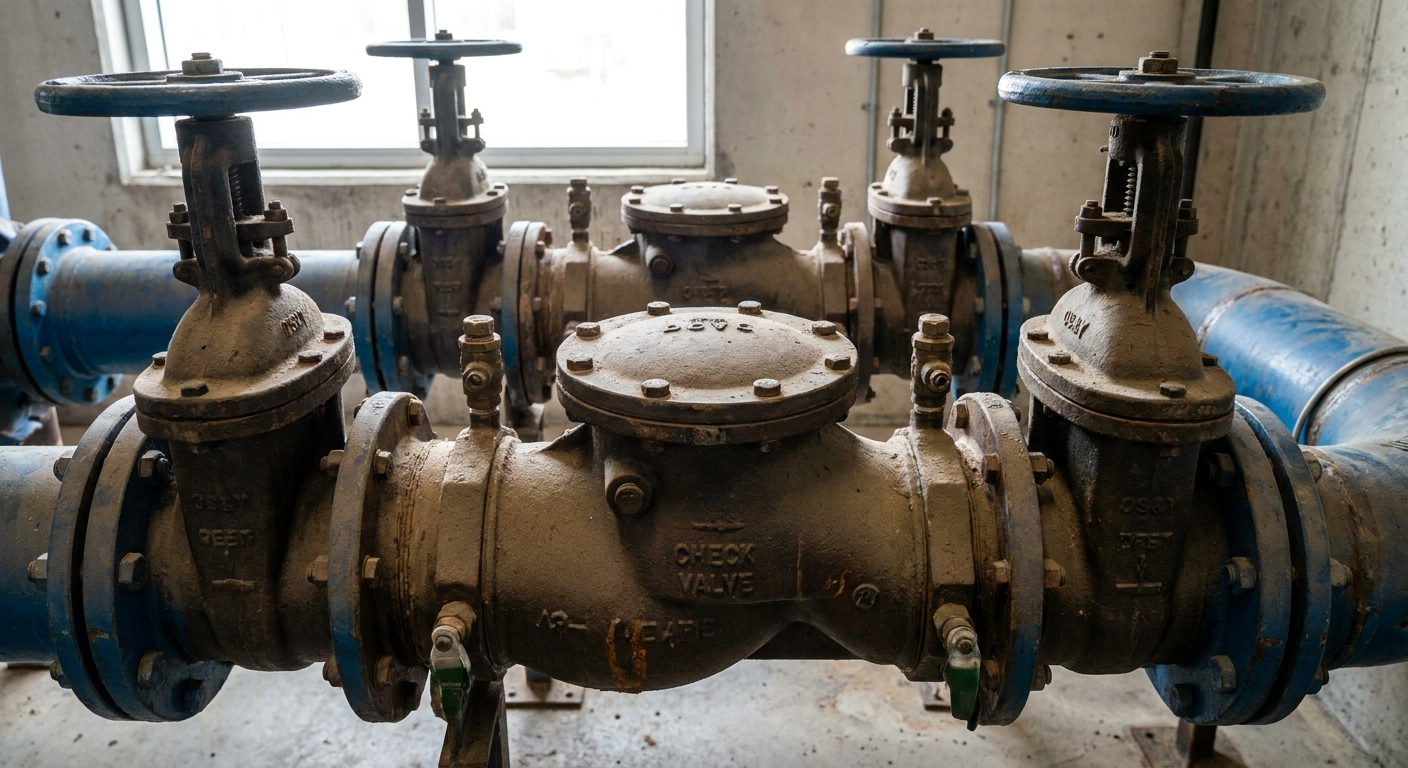 Certified tester inspecting backflow prevention device during annual test
If you own a property in Seattle with a required assembly, here's how it works:
- SPU sends an annual test notice to the property owner or responsible party
- You have to get the assembly tested by a certified BAT within the window on the notice, typically a set number of days
- The completed test report goes to SPU, not back to you to file away
SPU has moved much of its reporting online, and many testers submit results electronically on your behalf through the utility's tracking system. Ask your tester whether they'll handle the submission. Most established Seattle testers do it as part of the job, which saves you from chasing paperwork.
Premise isolation is a big deal in Seattle. For higher-hazard facilities, SPU often requires a reduced pressure backflow assembly (RPBA) right at the meter, protecting the public main from everything on your property. Irrigation systems frequently need either a double check valve assembly (DCVA) or an RPBA depending on what chemicals are present. If you're unsure which one your site needs, SPU's cross-connection control staff can tell you based on your hazard classification.
Miss the deadline and SPU can issue escalating notices and, ultimately, terminate water service until the assembly is tested and passing. They generally don't want to shut anyone off, but the authority is there and it does get used.
Tacoma Requirements
Tacoma Water serves Tacoma and a good chunk of Pierce County. Its cross-connection control program follows the same state framework, with its own notification and reporting process.
Key points for Tacoma Water customers:
- Tacoma Water mails annual test notifications to the account holder
- Testing must be done by a Washington-certified BAT within the stated period
- Test reports are submitted to Tacoma Water, often electronically through the tester
Tacoma Water keeps a database of assemblies on its system and tracks due dates by device. If you've got multiple assemblies on one property, say a domestic RPBA plus an irrigation DCVA, each one has its own annual clock and its own report. It's common for owners to forget the second device, so check your notice carefully to confirm how many assemblies are listed.
Tacoma also enforces installation standards. New assemblies need to be installed per the approved list and located where they can actually be tested and serviced. An assembly buried in a cramped box or installed backward will get flagged at the next test, and you'll pay twice: once for the failed test and again for the repair and retest.
For fire sprinkler systems, coordinate with both Tacoma Water and your fire protection contractor. Fire lines often need a double check detector assembly (DCDA) or reduced pressure detector assembly (RPDA), and the testing has to satisfy the water utility's cross-connection rules on top of any fire code inspection.
Spokane Requirements
On the east side of the state, the City of Spokane Water Department runs cross-connection control for properties inside city limits, while surrounding water districts in Spokane County each run their own programs. So step one in Spokane is figuring out who actually serves your address, because the City and a neighboring district may have slightly different submission processes even though the underlying state rule is identical.
For City of Spokane customers:
- The Water Department identifies properties needing backflow protection and sends annual test reminders
- Testing is done by a certified BAT, annually, same as the rest of the state
- Completed reports go back to the Water Department
Spokane's climate makes irrigation backflow assemblies especially common, since lawns and landscaping rely heavily on summer watering. A lot of Spokane-area homeowners are surprised to learn their sprinkler system needs an annual test. If you had an irrigation system installed, assume you have an assembly to test until you confirm otherwise.
Winterization is the other Spokane wrinkle. Crews routinely blow out irrigation lines before the first hard freeze, and an assembly that wasn't drained properly can crack. A cracked assembly fails its spring test, so plan for the test after the system is recharged in spring, not in the dead of winter when the line is dry and can't be tested at all.
If you're served by a Spokane County water district rather than the City, call your specific district to confirm where reports go and whether they accept electronic submission. Don't assume the City's process applies.
How to Stay Ahead of the Deadline
The compliance pattern is the same across Seattle, Tacoma, Spokane, and every other Washington utility, so a few habits keep you out of trouble:
- Know how many assemblies you have. Walk the property or check your last test report. Each device tests separately every year.
- Don't wait for the notice. Mail gets lost and email filters eat reminders. Mark your own calendar 11 months out from the last passing test.
- Hire a certified BAT and confirm the number up front. A rejected report from an uncertified tester wastes the whole cycle.
- Confirm who submits the report. Most good testers file it with the utility electronically. Get that in writing so nothing falls through the cracks.
- Budget for repairs. Assemblies fail. Internal seals and check valves wear out. If yours fails, you'll need a repair and a retest before the deadline, so leave yourself time.
- Keep your own copy. Even when the tester files it, save the report. If a utility's records and yours ever disagree, your paperwork settles it.
The cost of a single annual test is small next to a shutoff notice or a contamination event. Treat it like the routine maintenance it is, and it never becomes a crisis.
Sources
- Washington State Department of Health, Cross-Connection Control
- WAC 246-290-490, Cross-connection control
- Seattle Public Utilities, Backflow Prevention and Cross-Connection Control
- EPA, Cross-Connection Control Manual
- USC Foundation for Cross-Connection Control and Hydraulic Research
Ready to get your assembly tested before the deadline sneaks up? FindBackflowTesters.com connects you with certified Backflow Assembly Testers across Seattle, Tacoma, Spokane, and the rest of Washington. Search your city, compare local testers, and book someone who knows your utility's rules, so you stay compliant without the last-minute scramble.
Need backflow testing soon?
Send one qualified request with your service address, property type, and deadline so local testers have the context they need.