Texas Backflow Prevention Laws: City-by-City Compliance Guide for

Texas Backflow Prevention Laws: City-by-City Compliance Guide for 2026
If you own property in Texas, chances are you've got a backflow prevention assembly somewhere on your water line, and chances are the city wants proof it works. The problem is that Texas doesn't run backflow compliance as one neat statewide program. The state sets the floor, and then every water utility builds its own rules on top. What flies in Houston won't necessarily satisfy Austin, and the deadlines, fees, and paperwork shift from one city to the next.
This guide walks through the state law that ties it all together, then breaks down what the major Texas cities actually require in 2026. If you're trying to stay compliant, start here.
The State Rule Everyone Has to Follow
Texas backflow law starts with the Texas Commission on Environmental Quality (TCEQ) and its rules under Title 30 of the Texas Administrative Code, mainly Chapter 290. These are the public water system rules, and they push the compliance burden down to the local water utility.
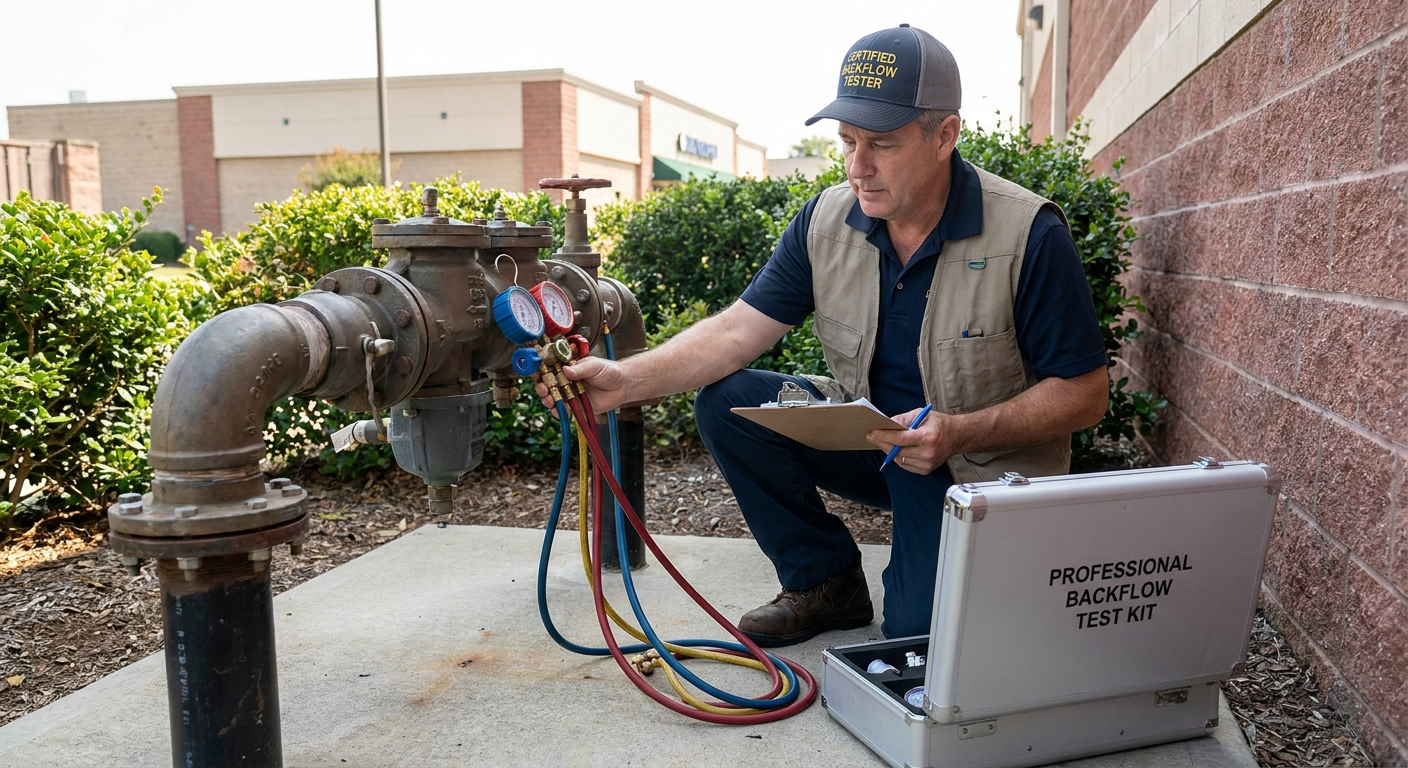 Backflow preventer assembly installed outside residential property
A few things in the state rule matter to almost everyone:
Annual testing is the baseline. TCEQ requires that backflow prevention assemblies used for health-hazard (high-hazard) cross-connections get tested when installed and then at least once a year after that. Most cities run on this annual cycle, though some require more frequent testing for certain setups like irrigation systems and fire lines.
Only licensed people can test. Texas requires a Backflow Prevention Assembly Tester (BPAT) license issued by TCEQ. A general plumber can't sign off on a backflow test unless they hold this specific license. When you hire someone, ask for their BPAT number. If they can't give it to you, find someone else.
The test report goes to the utility. After the test, the tester files a report. In most Texas cities that report has to land with the water utility, not just stay in your filing cabinet. Miss the filing and you're noncompliant even if the assembly passed.
Irrigation systems get extra attention. Texas rules require a backflow preventer on any lawn irrigation system connected to a public water supply, and licensed irrigators have their own obligations under TCEQ rules. If you put in a sprinkler system, you almost certainly triggered a backflow requirement.
That's the statewide skeleton. Now here's how it plays out city by city.
Houston
Houston runs its cross-connection control program through Houston Public Works. The city requires annual testing of backflow assemblies, and test reports must be submitted to the city. Houston has leaned hard into electronic reporting, so testers typically file through the city's online backflow reporting system rather than dropping off paper.
For commercial and irrigation customers, expect the city to send a notice when your annual test is due. If you don't respond, Houston can and does escalate, including water service interruption for chronic noncompliance. Commercial property managers in Houston should keep a running calendar because the city's notices don't always arrive with much lead time.
San Antonio
San Antonio is served mostly by San Antonio Water System (SAWS), and SAWS runs one of the more structured programs in the state. SAWS requires annual testing for backflow assemblies on commercial accounts, irrigation systems, and any connection it flags as a cross-connection hazard.
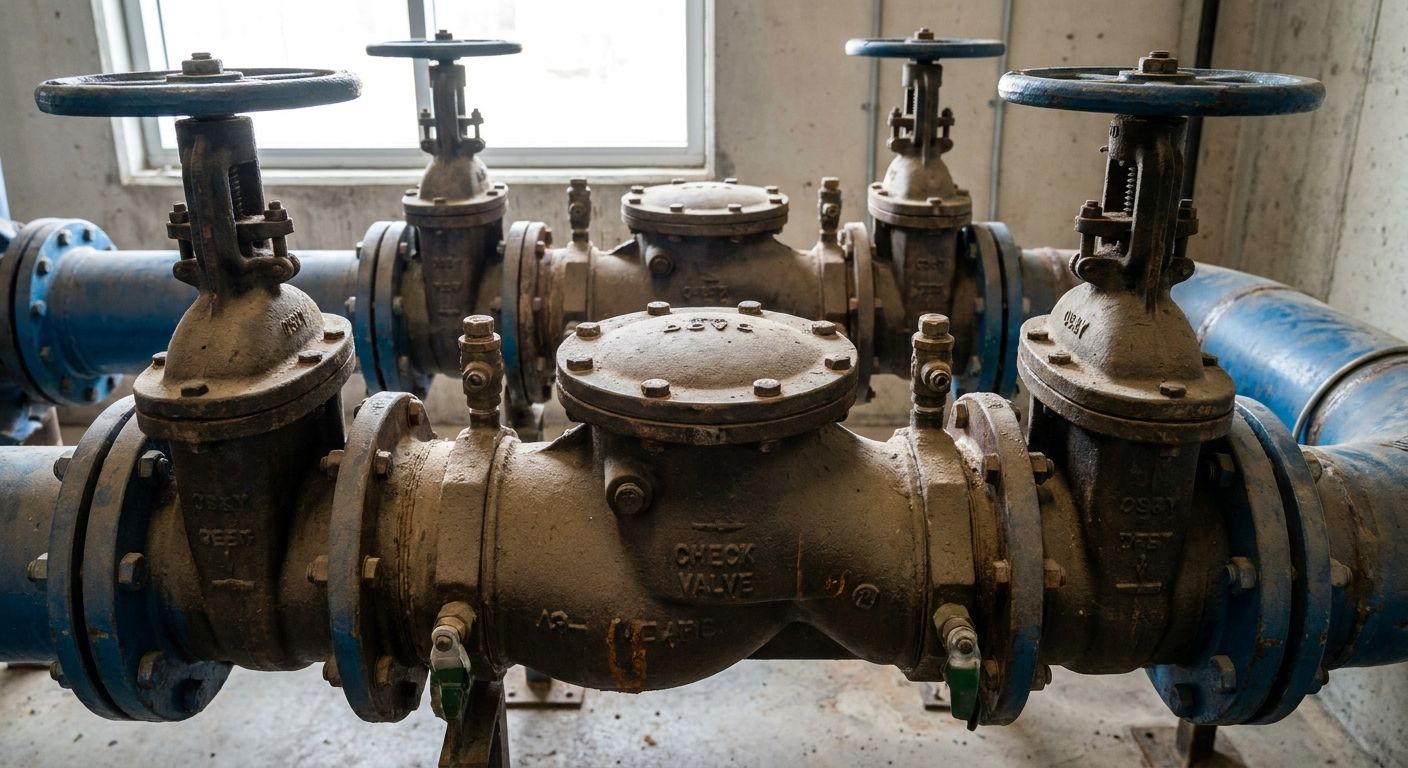 Certified tester inspecting backflow prevention device during annual test
SAWS sends an annual test notice and expects the completed report back within a set window, usually 30 days from the notice. Testers submit results to SAWS directly. If you miss the deadline, SAWS charges a noncompliance fee and, after repeated misses, can shut off service. SAWS also maintains a list of registered testers, and the tester has to be on file with the utility.
Dallas
Dallas Water Utilities handles backflow compliance for the city. Dallas requires annual testing on commercial, industrial, and irrigation connections, plus fire protection systems with certain assembly types. Reports are submitted to Dallas Water Utilities.
One Dallas-specific wrinkle: the city is strict about which assemblies are approved. Dallas, like much of Texas, leans on the University of Southern California Foundation for Cross-Connection Control (USC FCCCHR) approved assembly list. If your assembly isn't on an approved list, a passing test won't save you because the device itself isn't acceptable. Worth checking before you pay for a test on an old unit.
Austin
Austin Water runs the program in Austin, and it's one of the more aggressive cities on enforcement. Austin requires annual testing for commercial and irrigation backflow assemblies, and the city has been pushing electronic submittal of test reports.
Austin sends out test due notices and gives customers a deadline to get the test done and filed. Miss it and Austin applies a monthly noncompliance fee that keeps stacking until you fix it. For irrigation, remember that Austin also enforces watering schedules and irrigation rules, so a backflow violation can show up alongside other irrigation citations. If you run a property in Austin, treat the backflow notice as a hard deadline, not a suggestion.
Fort Worth
Fort Worth Water manages cross-connection control for the city. Fort Worth requires annual testing on commercial and irrigation assemblies, with reports submitted to the city's water department. Fort Worth has historically mailed notices and accepted reports from licensed testers, and it's been moving toward more digital submission over the past few years.
Fort Worth also enforces installation requirements when a new meter goes in for commercial or irrigation use, so new construction and tenant build-outs in Fort Worth usually trigger a backflow install and an initial test before the city signs off.
El Paso
El Paso Water runs the cross-connection program in El Paso. Because El Paso sits in a region with serious water-quality and supply concerns, the utility takes cross-connection control seriously. Annual testing is required for commercial and irrigation assemblies, and reports go to El Paso Water.
El Paso's program covers irrigation systems closely given how common dedicated irrigation meters are in the area. If you've got a separate irrigation meter, assume a backflow assembly and an annual test are part of the deal.
Arlington, Plano, and the Suburbs
The mid-size cities around Dallas-Fort Worth and the other metros each run their own programs, and they mostly mirror the big-city pattern: annual testing, licensed BPAT tester, report filed with the city. Arlington, Plano, Frisco, McKinney, Garland, and Irving all run cross-connection control programs through their water departments.
The differences are usually in the details: how they notify you, whether they accept email or require an online portal, the size of the late fee, and how fast they move to shut off water. Don't assume the suburb works like the big city next door. Check the specific water department's website or call them.
What Compliance Actually Looks Like Step by Step
No matter which Texas city you're in, the compliance process follows the same shape:
- Know your assemblies. Figure out how many backflow preventers you have and where. Common ones: the main domestic line, the irrigation system, and the fire line.
- Watch for the notice. Most cities send an annual test reminder. Don't rely on it alone; the obligation is yours whether or not the notice arrives.
- Hire a TCEQ-licensed BPAT tester. Confirm the license number. The tester should be registered with your specific utility if the city requires it.
- Get the test done and the report filed. The passing test isn't enough on its own; the report has to reach the utility by the deadline.
- Fix and retest if it fails. A failed assembly has to be repaired or replaced with an approved device, then retested.
- Keep your records. Hold onto reports for at least a few years in case the city audits or there's a dispute.
Common Ways People Get Caught Out
The most frequent compliance failure isn't a broken assembly, it's a missed report. The test got done but nobody filed it with the city, so the utility's records still show you as overdue.
The second most common problem is using an unlicensed tester or a device that isn't on an approved list. Both turn a "passing" test into a worthless piece of paper.
And the third is ignoring irrigation. Plenty of homeowners forget their sprinkler system has a backflow preventer that needs annual testing, right up until the city sends a noncompliance notice.
Staying Ahead of It
Texas backflow rules aren't complicated once you know your city's pattern, but the penalties for letting them slide are real: noncompliance fees that stack monthly and, eventually, water shutoff. The smart move is to build a simple annual reminder for each assembly you own and line up a licensed tester before the city's notice even shows up.
Sources
- Texas Commission on Environmental Quality - Public Water System Rules (30 TAC Chapter 290)
- TCEQ Backflow Prevention Assembly Tester Licensing
- U.S. EPA - Cross-Connection Control Manual
- San Antonio Water System - Backflow Prevention
- Houston Public Works - Cross-Connection Control
Staying compliant gets a lot easier when you've got a licensed tester you can trust. FindBackflowTesters.com is the most trusted directory of TCEQ-licensed backflow testers across Texas, so whether you're in Houston, Dallas, Austin, or a smaller suburb, you can find a qualified tester near you in minutes and beat your city's deadline. Search your city on FindBackflowTesters.com today and check backflow compliance off your list.
Need a compliance test filed?
Tell us your service type and property details so we can help route the request to backflow testers near you.