Why Your Swimming Pool Needs a Backflow Preventer Installed
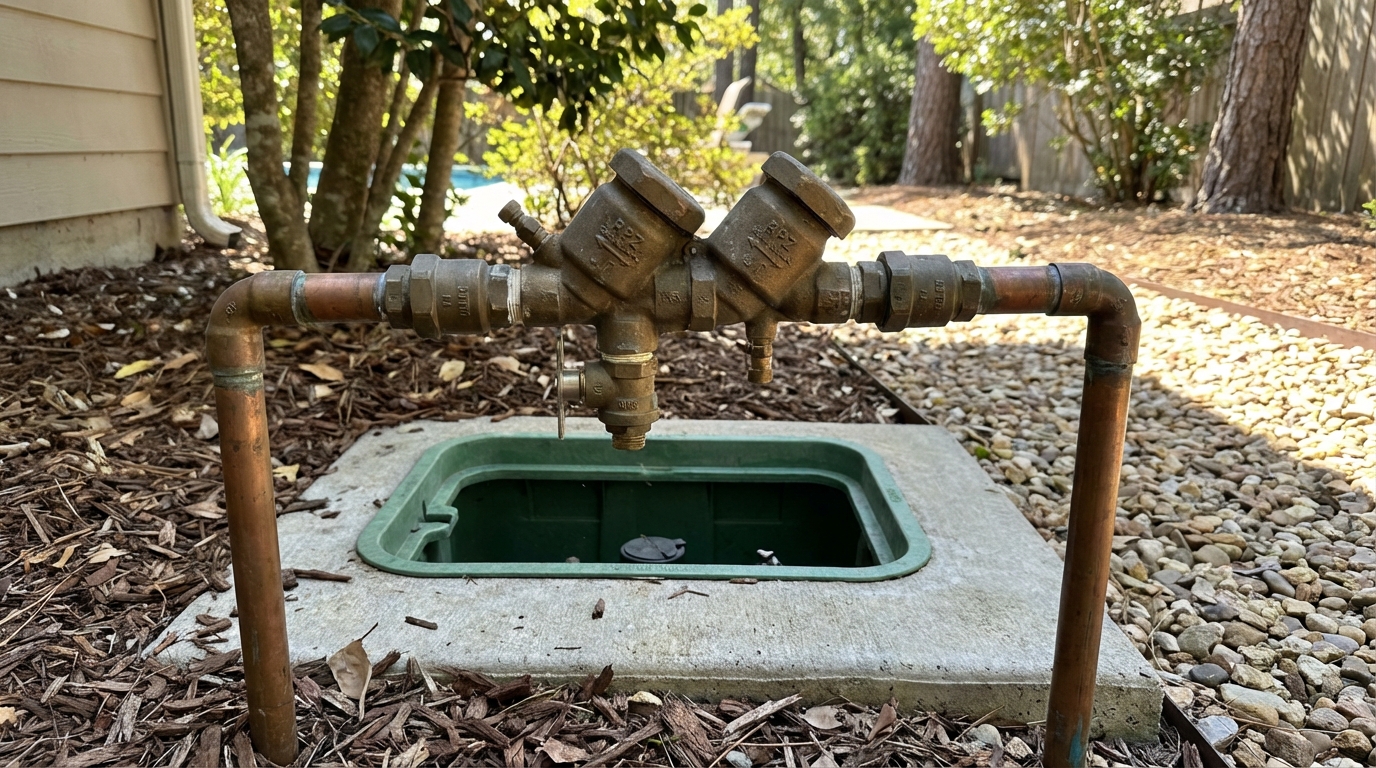
Why Your Swimming Pool Needs a Backflow Preventer
Every swimming pool connected to a municipal water supply creates a direct cross-connection — a physical link between treated drinking water and water that contains chlorine, algaecides, stabilizers, and whatever else ends up in the pool. Without a backflow preventer, a sudden drop in water main pressure can siphon that chemical cocktail straight back into the public water system.
This isn't a theoretical risk. Backflow incidents involving pools and spas have been documented in water quality reports across the country. The chemicals used to keep pool water safe for swimming are hazardous when they enter drinking water lines at concentrated levels. That's why most municipalities require backflow prevention devices on any fill line connected to a swimming pool, spa, or water feature.
How Backflow Happens With Pools
Backflow occurs through two mechanisms, and pools are vulnerable to both.
Backsiphonage happens when pressure in the water main drops below the pressure in your pool's fill system. A water main break three blocks away, a fire hydrant in use, or utility maintenance can all trigger this. If your pool fill line is submerged or connected below the waterline, negative pressure can pull pool water backward through the pipe and into the municipal supply.
Backpressure occurs when the pressure on the pool side exceeds supply pressure. This is less common with residential pools but happens with commercial installations that use booster pumps or elevated storage tanks feeding the pool system.
The fill line is the primary concern, but it's not the only one. Pools with automatic chemical feeders, attached spas with dedicated plumbing, and water features with recirculating pumps all create additional cross-connection points that need evaluation.
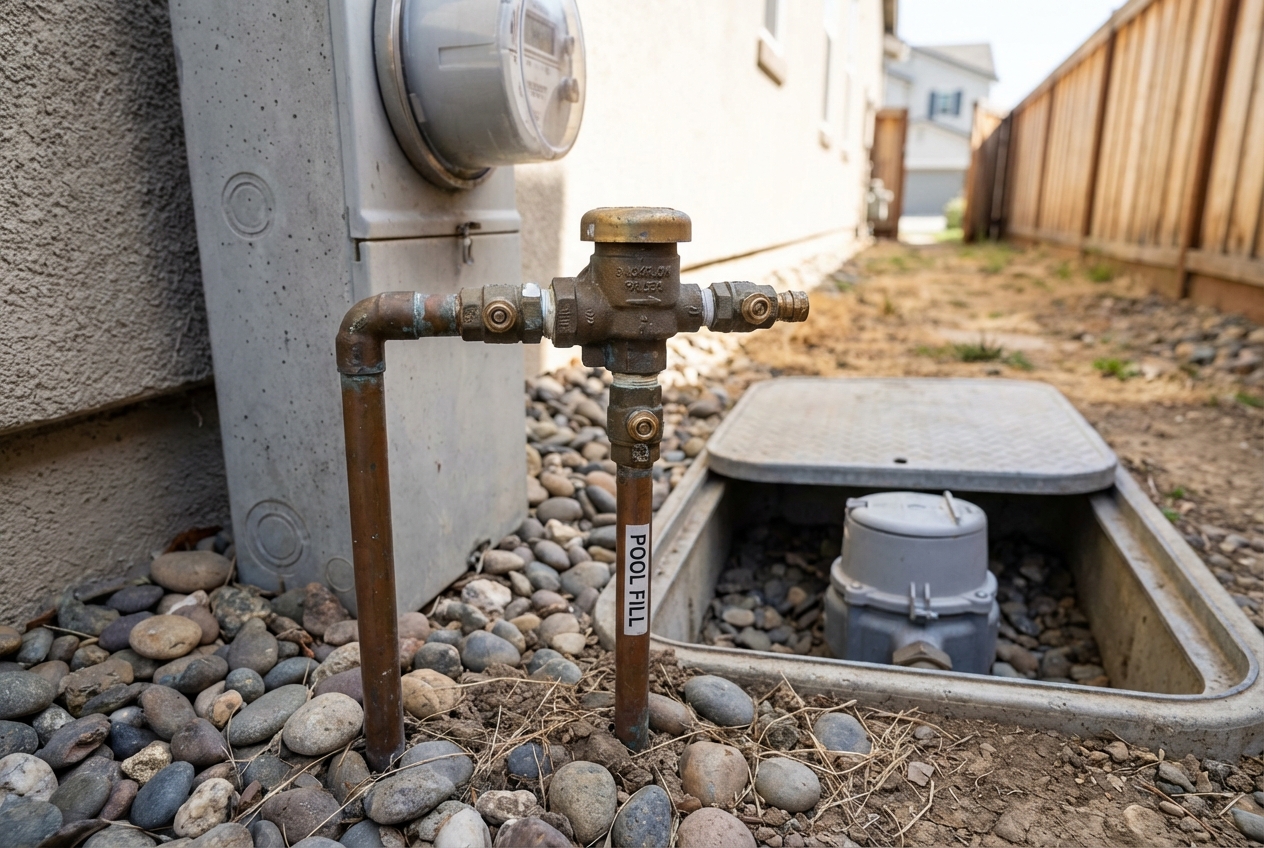 Residential pool fill line with brass backflow preventer installed on supply pipe near utility meter
What Type of Backflow Preventer Do You Need?
The required device depends on your local water authority's regulations and the degree of hazard your pool presents. Pools are almost universally classified as a high-hazard cross-connection because of the chemicals involved.
Residential Pools
Most residential pool fill lines need one of these devices:
Reduced Pressure Zone Assembly (RPZ): This is the gold standard for high-hazard connections. An RPZ uses two independent check valves with a relief valve between them. If either check valve fails, the relief valve opens and dumps water to the ground rather than allowing contaminated water into the supply. Many jurisdictions require RPZs for any pool with an automatic fill system or a submerged inlet.
Double Check Valve Assembly (DCVA): Some jurisdictions allow a DCVA for residential pools with hose-bib fill connections and no permanent plumbing tie-in. A DCVA has two check valves in series but no relief valve. It's rated for low-to-moderate hazard applications, and many water districts have moved away from accepting DCVAs for pools altogether.
Air Gap: The simplest and most reliable method. If you fill your pool with a hose that hangs over the edge and never touches the water, the physical air gap between the hose end and the waterline prevents any backflow. No device needed, no testing required. The catch: you can't automate this, and the air gap must be maintained at least twice the diameter of the supply pipe (minimum one inch) above the flood rim.
Commercial Pools
Commercial pools, public aquatic centers, and water parks almost always require an RPZ assembly. The device must be installed on the main fill line before any branch connections, and it must be testable and accessible. Many commercial operations need separate backflow protection on chemical feed lines, makeup water lines, and any connections to HVAC systems that share water with the pool plant.
If your commercial pool has a cooling tower, boiler tie-in, or fire suppression connection sharing the same water supply, each of those connections typically requires its own backflow preventer rated for the specific hazard level.
Installation Requirements
Proper installation matters as much as the device itself. A poorly installed backflow preventer can fail to protect the water supply and can create operational headaches.
Location: Install the device on the supply line before any branch or tee that feeds the pool system. For RPZs, you need adequate clearance — most codes require at least 12 inches of clearance below the device for the relief valve discharge, and the device must be installed between 12 and 60 inches above grade. Never install an RPZ in a pit or below-grade vault where the relief valve discharge could be submerged.
Orientation: RPZ and DCVA assemblies must be installed horizontally unless the manufacturer specifically approves vertical installation. Vertical installations are becoming more common with newer models, but check the device approval listing before assuming yours qualifies.
Accessibility: The device must be accessible for annual testing. If your pool equipment is behind a locked gate, your tester needs access. If the device is in a mechanical room, leave enough room to attach test equipment. A common frustration for testers is arriving to find the device boxed in by landscaping, pool equipment, or storage.
Drainage: RPZ assemblies discharge water during normal operation and dump significantly during a backflow event. The installation needs adequate drainage. Dumping chlorinated pool water onto a garden bed or into a storm drain may violate local discharge rules. Plan the drainage path during installation, not after your landscaping dies.
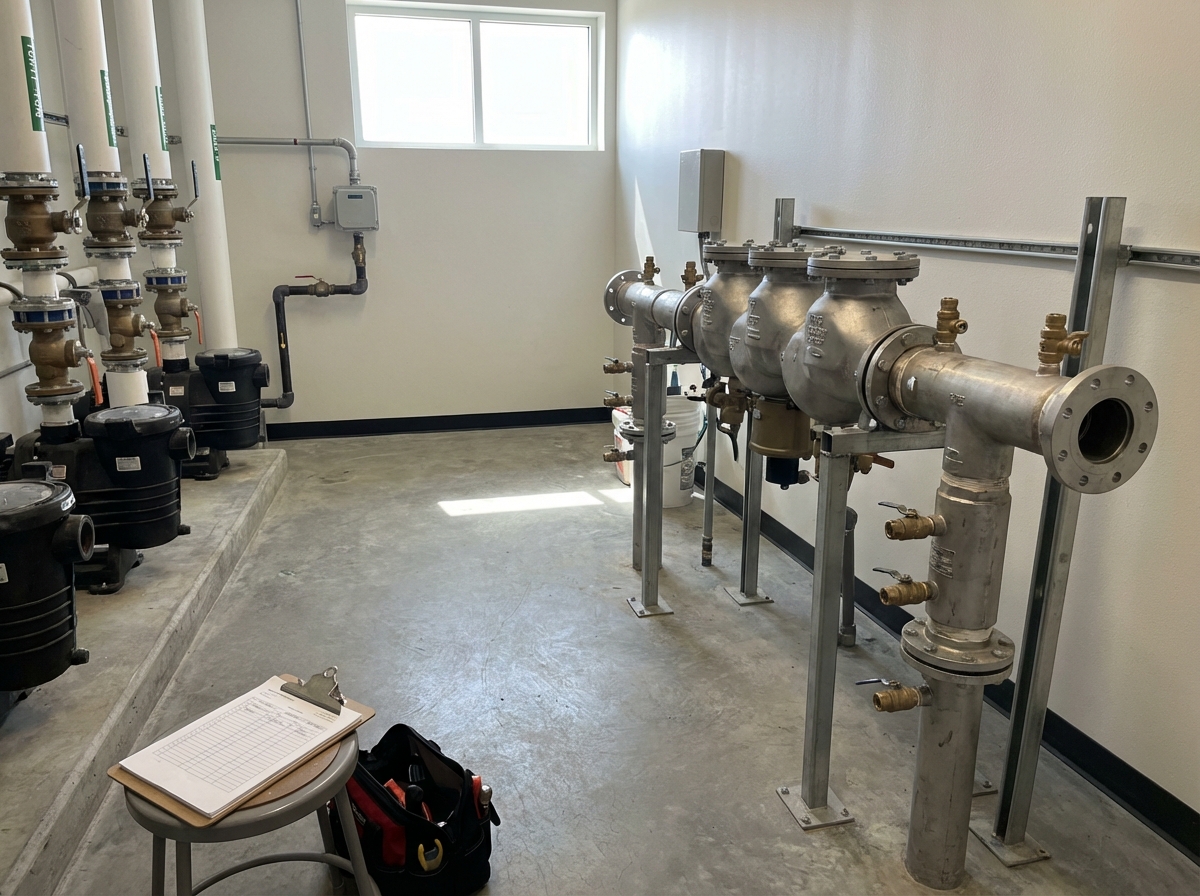 Commercial pool mechanical room showing RPZ assembly with test cocks and proper clearance for annual inspection
Annual Testing Is Not Optional
Every testable backflow prevention device installed on a pool fill line must be tested annually by a certified backflow tester. This isn't a suggestion — it's a requirement enforced by your local water purveyor, and failure to test can result in fines or water service disconnection.
During the test, a certified tester connects differential pressure gauges to the test cocks on your device and verifies that:
- The first check valve holds against backpressure
- The second check valve holds independently
- The relief valve (on RPZ assemblies) opens at the correct differential
- There are no leaks at the shutoff valves
The test takes 15 to 30 minutes for a straightforward installation. If a component fails, the device needs repair and retesting before it passes. Common failure points include worn check valve seats, debris lodged in the check disc, and relief valves that stick open or don't open at the correct pressure differential.
What Fails and Why
Pool fill lines are hard on backflow preventers. Here's what pool owners should know:
Chemical exposure: Even with proper installation, pool water chemistry can be aggressive. If any pool water reaches the backflow device — through a failed check valve or backflow event — the chlorine and low pH can accelerate corrosion of internal components. Bronze and stainless steel components hold up better than standard brass in pool environments.
Seasonal use: In cold climates, pools are winterized and the fill line may be shut down for months. When the water sits stagnant in the device over winter, mineral deposits can build up on check valve seats. Debris loosened during spring startup often causes first-season failures. Consider having your device tested shortly after spring startup, not six months later.
Infrequent use: Backflow preventers that sit without flow for extended periods are more likely to fail than devices with regular throughput. The rubber components can take a set, and sediment settles onto sealing surfaces. If your pool fill system only runs occasionally, running water through the device periodically helps keep components functioning.
Common Mistakes Pool Owners Make
Relying solely on a hose vacuum breaker. Those small plastic or brass devices that thread onto a hose bib are atmospheric vacuum breakers. They protect against backsiphonage only, they can't handle backpressure, and most jurisdictions don't accept them as adequate protection for a pool fill connection — especially permanent ones. They're fine for washing the car, but they're not a substitute for proper backflow protection on a pool line.
Forgetting about automatic fill valves. An auto-fill valve eliminates the air gap. The moment you install one, your pool has a direct cross-connection that requires a backflow preventer. Many pool builders install auto-fill systems without mentioning backflow prevention requirements to the homeowner.
Ignoring the spa connection. If your spa is plumbed to the same fill system as your pool, it needs the same protection. Spas often run at higher temperatures with higher chemical concentrations, making the cross-connection hazard arguably greater.
Not winterizing the backflow device. In freeze-prone areas, water trapped in the device can crack the body or damage internal components. Your winterization routine should include draining the backflow preventer. Open the test cocks and shutoff valves to allow water to drain completely.
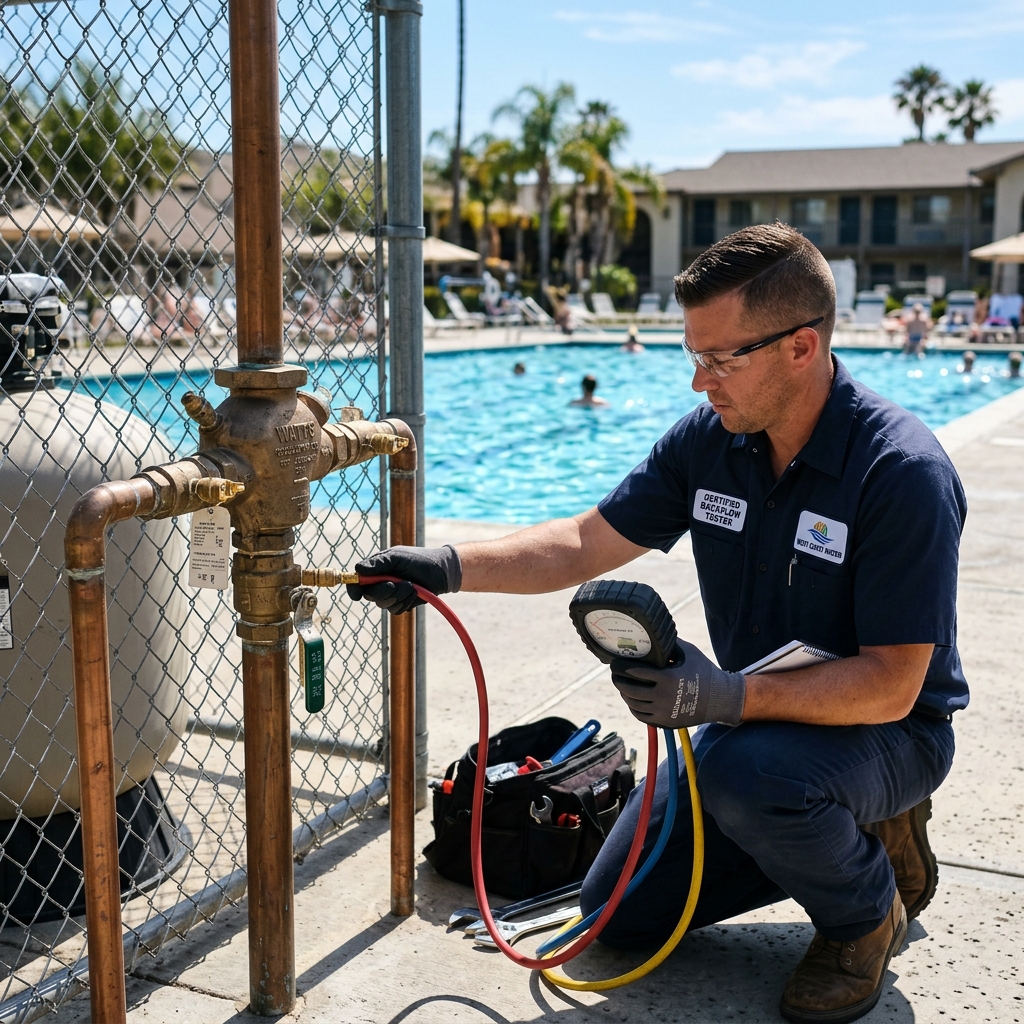 Certified backflow tester attaching differential pressure gauge to test cocks on poolside RPZ assembly
What It Costs
For a residential pool, expect to pay between $300 and $800 for the backflow prevention device itself, depending on size and type. A 3/4-inch or 1-inch RPZ for a typical residential fill line runs $250 to $500 for the device. Installation by a licensed plumber typically adds $200 to $500 depending on complexity and local labor rates.
Annual testing costs $75 to $150 in most markets. If your device fails testing, repair kits run $50 to $150 for parts, plus labor. Some testers carry common repair kits and can do the repair and retest on the same visit.
Commercial pool installations cost more. Larger devices (2-inch and above), more complex piping, and the need for dedicated drainage add up. Budget $1,500 to $5,000 for a commercial RPZ installation, with annual testing at $100 to $250 per device.
How to Stay Compliant
Check with your water district. Call your local water purveyor and ask what's required for your pool type. Requirements vary significantly between jurisdictions. Some require an RPZ on every pool fill line. Others accept a DCVA or even an air gap if conditions are met.
Hire a licensed plumber for installation. Backflow preventer installation on a pool fill line should be done by a licensed plumber who understands local cross-connection control requirements. A general pool contractor may not be familiar with your water district's specifications.
Schedule annual testing. Mark it on your calendar. Most water districts send reminders, but the responsibility is yours. A certified backflow tester can test your device and submit results directly to your water district.
Keep records. Save your test reports. If you sell the property, having a history of compliant testing adds value and avoids closing delays.
Replace aging devices. Backflow preventers don't last forever. Most manufacturers recommend replacement after 15 to 20 years of service, though devices in pool environments may need replacement sooner due to chemical exposure.
Find a Certified Tester Near You
If your pool's backflow preventer is due for testing — or you're not sure whether you have one — a certified tester can assess your setup and tell you exactly what's needed. They'll test existing devices, identify missing protection, and help you understand your local requirements.
Use our directory at FindBackflowTesters.com to search for certified backflow prevention testers in your area. Most testers can handle both the inspection and any needed repairs in a single visit, keeping your pool compliant and your water supply safe.