Nevada Backflow Prevention Requirements: Las Vegas & Henderson
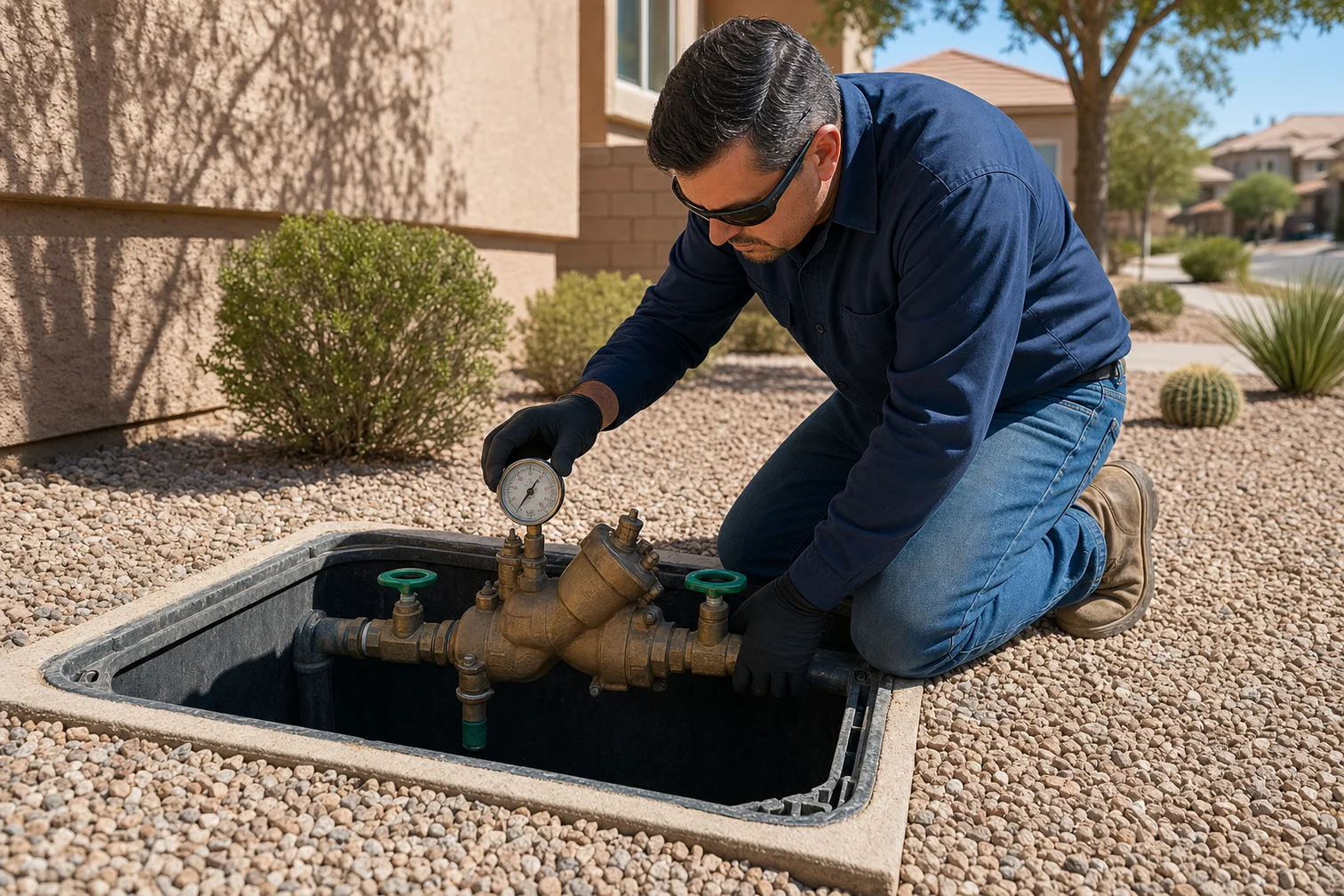
Nevada Backflow Prevention Requirements: Las Vegas and Henderson Property Rules
If you own a commercial building, run a business, or manage an irrigation system in Southern Nevada, there's a good chance you're required to have a backflow prevention assembly tested every year. A lot of property owners don't find out until they get a notice in the mail with a deadline on it. This guide walks you through what Nevada actually requires, how the rules work in Las Vegas and Henderson specifically, and what you need to do to stay compliant.
Let's start with the basics, then get into the local details.
What Backflow Prevention Actually Does
Backflow is exactly what it sounds like: water flowing backward through the pipes, in the wrong direction. Normally water moves from the public main into your property. But if pressure drops in the main (say, a water line breaks or a fire hydrant gets opened nearby) or pressure builds up on your side, water can get sucked or pushed back into the public supply.
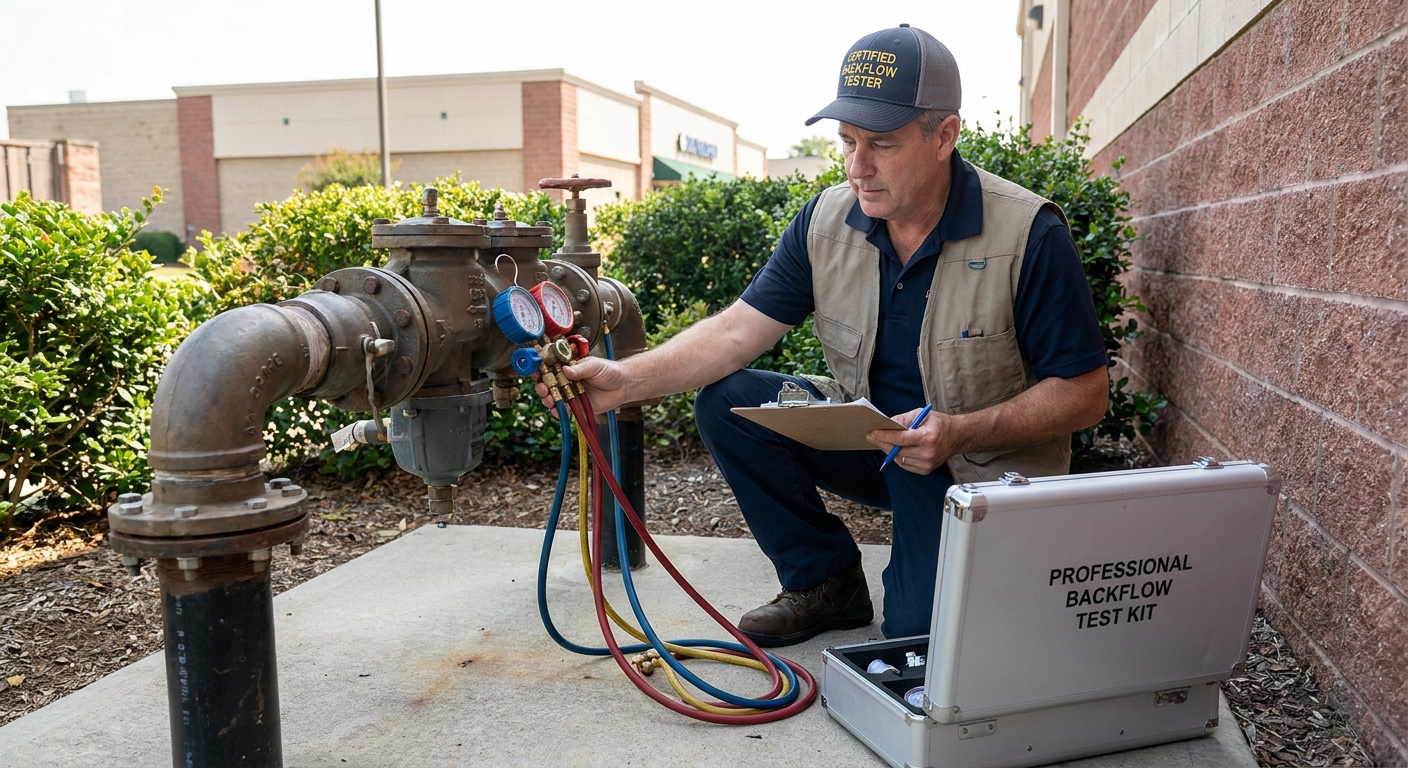 Backflow preventer assembly installed outside residential property
The problem is what that water carries with it. Irrigation water sitting around fertilizer and pesticides, chemicals from a commercial process, water from a boiler, soap from a car wash. None of that belongs in the drinking water system. A backflow prevention assembly is a mechanical device that stops the reverse flow and keeps contaminated water from reaching your neighbors' taps.
Because these are mechanical devices with internal springs, seals, and check valves, they wear out. That's why testing is required on a regular schedule, usually once a year. A device that passed last year can fail this year without anyone noticing until it's tested.
The Legal Foundation in Nevada
Nevada's drinking water rules sit under the Nevada Administrative Code (NAC) Chapter 445A, which mirrors the federal Safe Drinking Water Act administered by the EPA. The state requires public water systems to operate a cross-connection control program, and that responsibility gets pushed down to the local water purveyors.
In plain terms: the state tells the water utilities they have to protect the public supply from backflow. The utilities then write their own ordinances and enforcement rules, and those are the rules you actually deal with as a property owner. So while the requirement comes from the state, the specifics (who needs an assembly, what kind, when it's due, who you call) are set by your local water provider.
In Southern Nevada, the two big players are the Las Vegas Valley Water District and the City of Henderson Utility Services Department. They follow national standards from the American Water Works Association (AWWA) and recognize testers certified through programs like the University of Southern California Foundation for Cross-Connection Control and Hydraulic Research (USC FCCCHR) and the American Backflow Prevention Association (ABPA).
Las Vegas Rules: Las Vegas Valley Water District
The Las Vegas Valley Water District (LVVWD) serves most of the Las Vegas area, and it runs a formal cross-connection control program. If your property has a backflow assembly on an LVVWD service, you're responsible for keeping it tested and working.
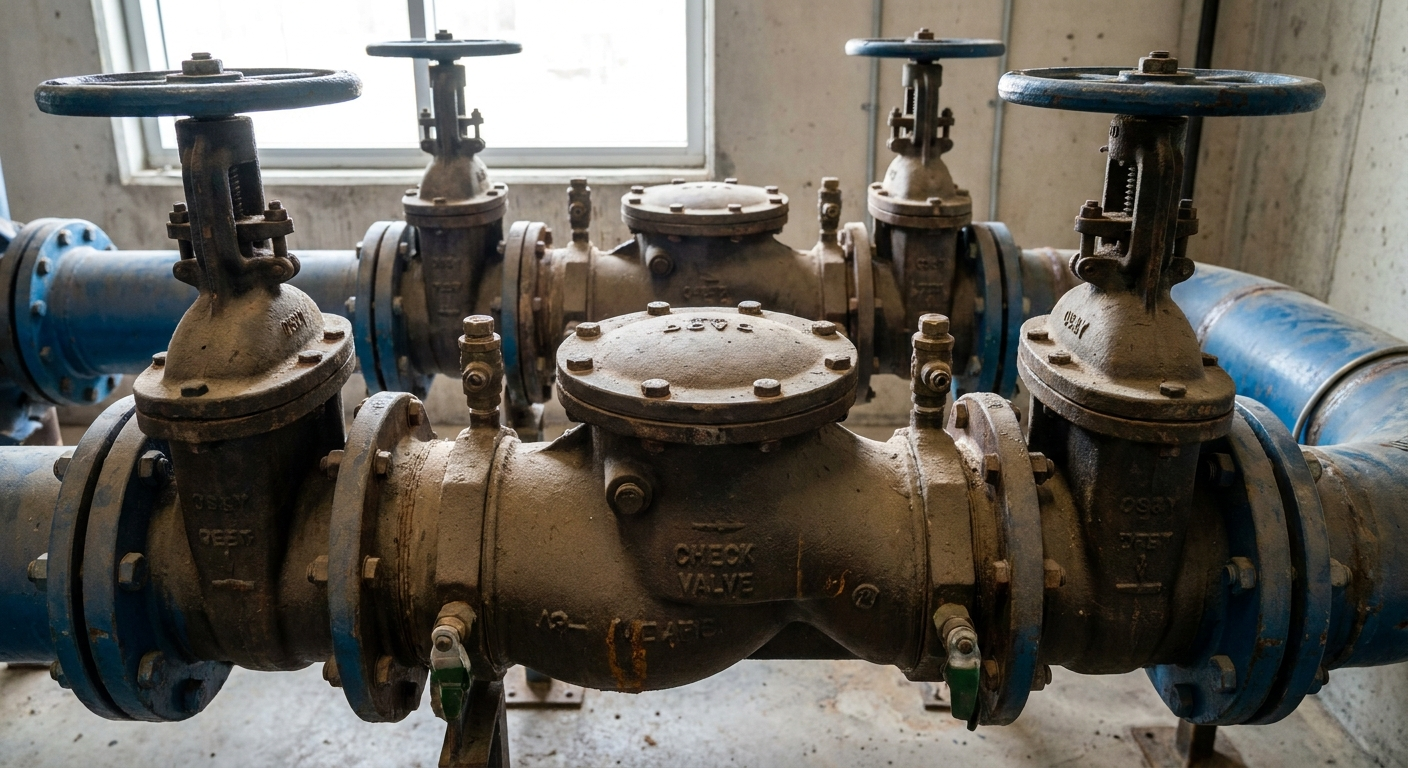 Certified tester inspecting backflow prevention device during annual test
Here's how it generally works:
Who needs one. Backflow assemblies are required on services where there's a real or potential cross-connection hazard. That covers most commercial and industrial properties, medical and dental offices, restaurants, car washes, properties with irrigation systems tied into the domestic supply, fire suppression systems, and any site using chemicals or processes that could contaminate the water. Single-family homes usually don't need one unless they have something like a separate irrigation meter, a private well connected to the city supply, or a pool auto-fill setup that creates a hazard.
Annual testing. Assemblies have to be tested at least once a year by a certified tester. The District tracks which properties have assemblies and sends notices when testing is due. You don't get to skip a year because nothing looked wrong.
Who can test. The test has to be done by a tester holding a current, recognized certification. The tester uses a calibrated test kit and files the results. If the assembly fails, it has to be repaired or replaced and retested.
What happens if you don't comply. This is where people get caught off guard. If you miss the deadline, the water purveyor has the authority to enforce. That can escalate to penalties and, in cases of an ongoing hazard, even water service termination. Utilities don't shut off water lightly, but the legal authority is there because the risk is to the entire public system, not just your building.
A practical tip for Las Vegas property owners: keep a copy of every passing test report. If you ever get a delinquent notice in error, that paperwork settles it fast.
Henderson Rules: City of Henderson Utility Services
The City of Henderson runs its own utility and its own cross-connection control program, separate from LVVWD. If your property is on Henderson water, you follow Henderson's rules, not the Water District's, even though the two cities sit right next to each other.
Henderson's program works on the same core principles:
Required assemblies. Commercial, industrial, irrigation, and fire-line services that pose a contamination risk need an approved backflow prevention assembly installed at the service connection.
Annual testing and reporting. Henderson requires assemblies to be tested annually by a certified tester, with results submitted to the city. The city maintains records and sends out test-due notifications.
Approved devices and installation. New assemblies have to be on the approved list and installed to meet city and plumbing code standards, including proper clearance and location so a tester can actually reach the device. If an assembly is buried, boxed in, or installed in a pit that's hard to access, you may be required to bring it up to standard.
Backflow on irrigation. Henderson, like most of the valley, has a lot of properties with dedicated landscape irrigation. Because irrigation water sits in pipes around soil, fertilizer, and pet waste, irrigation services are a common reason a property ends up needing an assembly and annual testing.
If you're not sure whether your property is served by Henderson or LVVWD, check your water bill. The provider name and account details on the bill tell you who you answer to for backflow compliance.
The Main Types of Assemblies You'll See
You don't need to be a plumber, but it helps to recognize what's on your property:
- Double Check Valve Assembly (DCVA). Common on irrigation and fire lines with a lower-level hazard. Two check valves in series.
- Reduced Pressure Principle Assembly (RPZ or RP). The highest level of protection, required where contamination could be toxic (chemicals, medical, industrial). It has a relief valve and will discharge water if it's working hard, which is normal.
- Pressure Vacuum Breaker (PVB). Often used on irrigation systems. Protects against back-siphonage.
- Atmospheric Vacuum Breaker (AVB). A simpler device, not testable, used in limited situations.
The type required depends on the hazard level at your property. A car wash or a dental office will usually need an RPZ, while a basic landscape irrigation system might use a PVB or DCVA. Your water provider or a certified tester can tell you what your situation calls for.
What a Backflow Test Actually Involves
A test is quick, usually 20 to 30 minutes per assembly. The tester shuts off the water briefly, attaches a calibrated gauge to the test ports on the assembly, and checks that the internal valves hold pressure and open and close correctly. They record the readings, mark the assembly as pass or fail, and submit the report to your water provider.
If it passes, you're done for the year. If it fails, you'll need repairs. Some assemblies just need a worn rubber part replaced; older ones sometimes need full replacement. After any repair, it gets retested to confirm it passes before the paperwork is filed.
Costs vary, but a routine test in the Las Vegas valley typically runs in the range of a service-call fee plus per-device pricing. Properties with multiple assemblies (a fire line, a domestic line, and irrigation, for example) pay per device but often get a better per-unit rate.
How to Stay Compliant Without Stress
Here's the short version of staying out of trouble:
- Know your provider. Check your bill: LVVWD or City of Henderson (or another local purveyor if you're outside those areas).
- Know what's on your property. Walk the site or ask a tester to identify every assembly. Missed devices are a common compliance gap.
- Test every year, on time. Don't wait for the notice. Put the due date on a calendar so a late notice never surprises you.
- Use a certified tester. The report only counts if the tester holds a recognized, current certification.
- Keep your records. Save every passing report. It's your proof if a dispute comes up.
- Fix failures fast. A failed assembly is an active hazard. Repair and retest right away.
The system is designed to be routine. Once you've got a tester you trust and a date on the calendar, annual backflow testing becomes a small line item rather than a scramble.
Sources
- U.S. EPA - Cross-Connection Control and Backflow Prevention
- Nevada Administrative Code Chapter 445A - Water Controls
- Las Vegas Valley Water District - Backflow and Cross-Connection Control
- City of Henderson - Utility Services
- American Water Works Association (AWWA) - Cross-Connection Control
Need to get your backflow assembly tested before the deadline? FindBackflowTesters.com connects you with certified backflow testers in Las Vegas, Henderson, and across Nevada who know the local rules and can file your report with the right utility. Search your city, compare local pros, and get your annual test handled without the guesswork.
Need a compliance test filed?
Tell us your service type and property details so we can help route the request to backflow testers near you.