Why Your Irrigation System Needs Backflow Prevention
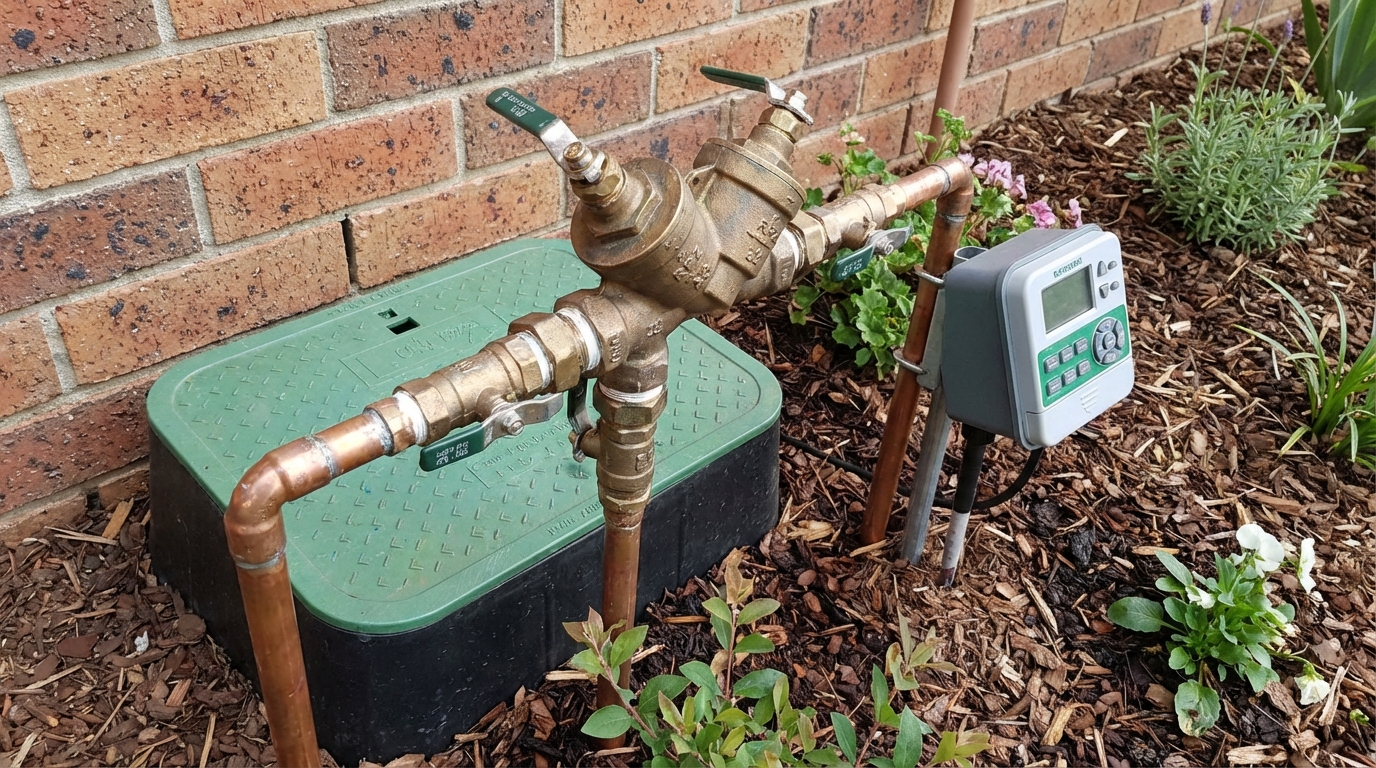
Why Your Irrigation System Needs Backflow Prevention
Every time your sprinkler system shuts off, water sitting in the pipes can reverse direction and flow back into your drinking water supply. That water has been in contact with soil, fertilizers, pesticides, and whatever else is on your lawn. Without a backflow preventer, those contaminants can end up in your tap.
This isn't a theoretical risk. Cross-connection incidents from irrigation systems are among the most commonly cited causes of backflow contamination in municipal water reports. In 2025 alone, several water utilities across the southern U.S. issued advisories tied directly to residential irrigation systems lacking proper backflow protection.
If you have an in-ground sprinkler system connected to your municipal water supply, you almost certainly need a backflow preventer — and in most jurisdictions, it's the law.
How Backflow Happens in Irrigation Systems
Backflow occurs through two mechanisms: backpressure and backsiphonage.
Backpressure happens when downstream pressure exceeds supply pressure. In irrigation systems, this can occur when a pump boosts pressure in the irrigation line or when the system sits at a higher elevation than the water main. The higher-pressure side pushes water backward toward the supply.
Backsiphonage is more common in residential irrigation. It happens when the supply side loses pressure — a water main break, heavy fire hydrant use, or a sudden demand spike in the neighborhood. The drop in pressure creates a vacuum effect that sucks irrigation water back through the connection point.
Your sprinkler heads sit at or below ground level. The zones they serve contain standing water mixed with soil, lawn chemicals, animal waste, and bacteria. During a backsiphonage event, all of that gets pulled directly into the potable water line that feeds your house and potentially your neighbors.
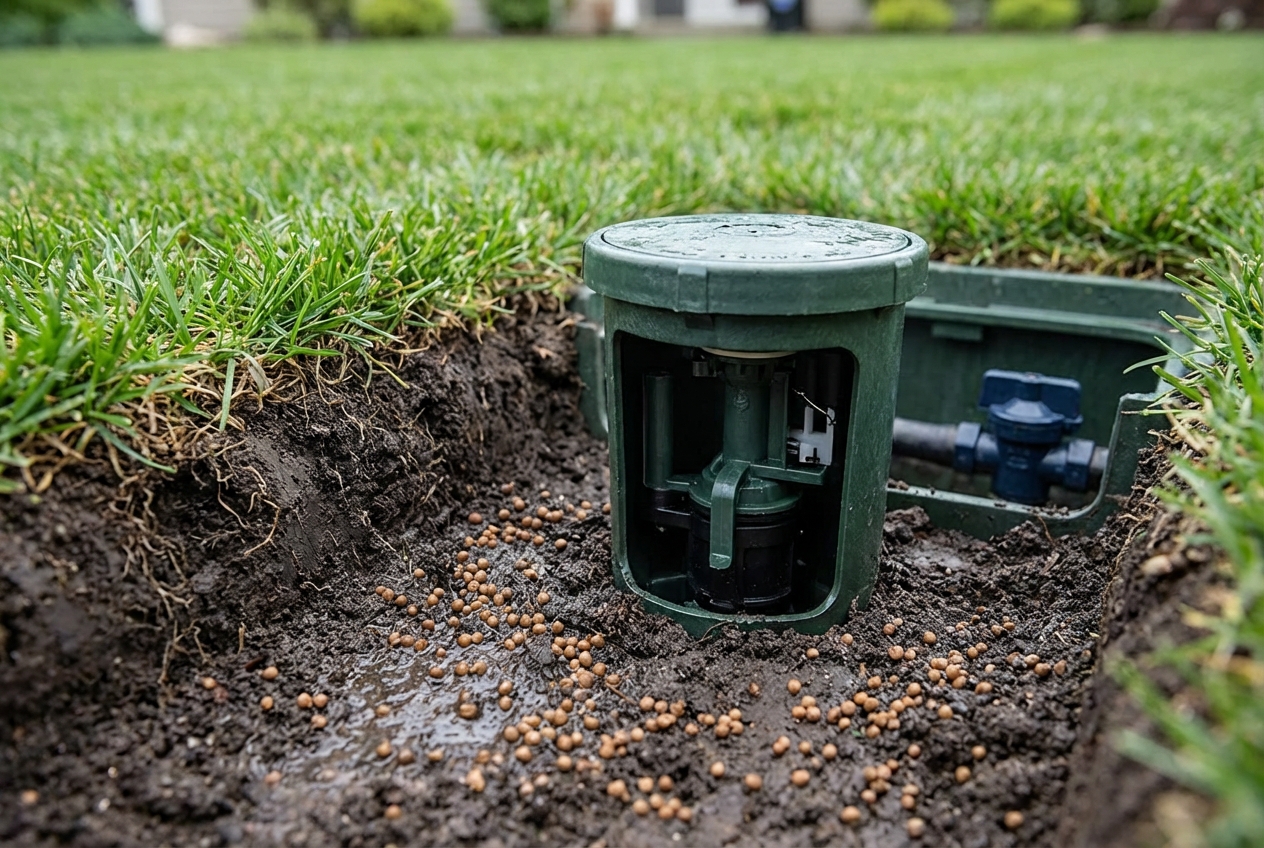 Cutaway view of an in-ground sprinkler head surrounded by wet soil and fertilizer granules near a residential lawn
Types of Backflow Preventers Used for Irrigation
Not all backflow preventers are interchangeable. The type you need depends on your system's hazard level, local code requirements, and installation conditions.
Pressure Vacuum Breaker (PVB)
The PVB is the most common backflow device on residential irrigation systems. It's relatively inexpensive, easy to install, and effective against backsiphonage. A PVB must be installed at least 12 inches above the highest sprinkler head in the system — this is a non-negotiable requirement that many installers get wrong.
Best for: Residential irrigation systems without backpressure risk, where the device can be mounted above grade at the required height.
Limitations: Does not protect against backpressure. Cannot be installed below ground or in a pit. If your system includes a booster pump or any zone higher than the PVB, it won't pass inspection.
Spill-Resistant Pressure Vacuum Breaker (SVB)
The SVB works like a PVB but includes a spring-loaded mechanism that prevents water from spilling during normal pressure fluctuations. It still requires installation above the highest downstream point and protects only against backsiphonage.
Best for: Residential systems where a PVB would work but nuisance spilling is a concern due to pressure variation in the supply.
Reduced Pressure Zone Assembly (RPZ)
The RPZ is the gold standard for irrigation backflow prevention. It protects against both backpressure and backsiphonage using two independently operating check valves separated by a relief valve. If either check fails, the relief valve opens and dumps water rather than allowing contamination.
Best for: Commercial irrigation, systems with chemical injection (fertigation), properties with booster pumps, and any situation where the local code classifies the irrigation system as a high hazard.
Limitations: More expensive than PVBs. Must be tested annually. The relief valve will discharge water during certain failure conditions, so it cannot be installed in a location where water damage would be a problem. Many codes prohibit RPZ installation in enclosed vaults for this reason.
Double Check Valve Assembly (DCVA)
The DCVA uses two check valves in series without a relief valve. It can be installed below ground in a vault, which makes it popular for aesthetic reasons. However, most water authorities classify irrigation as a high-hazard cross-connection, and DCVAs are only approved for low-to-moderate hazard applications.
Best for: Jurisdictions that classify your irrigation system as a moderate hazard (increasingly rare). Fire line connections. Some commercial applications where code specifically permits it.
Limitations: Not accepted for irrigation backflow prevention in many states and municipalities. Always confirm with your local water authority before installing a DCVA on an irrigation line.
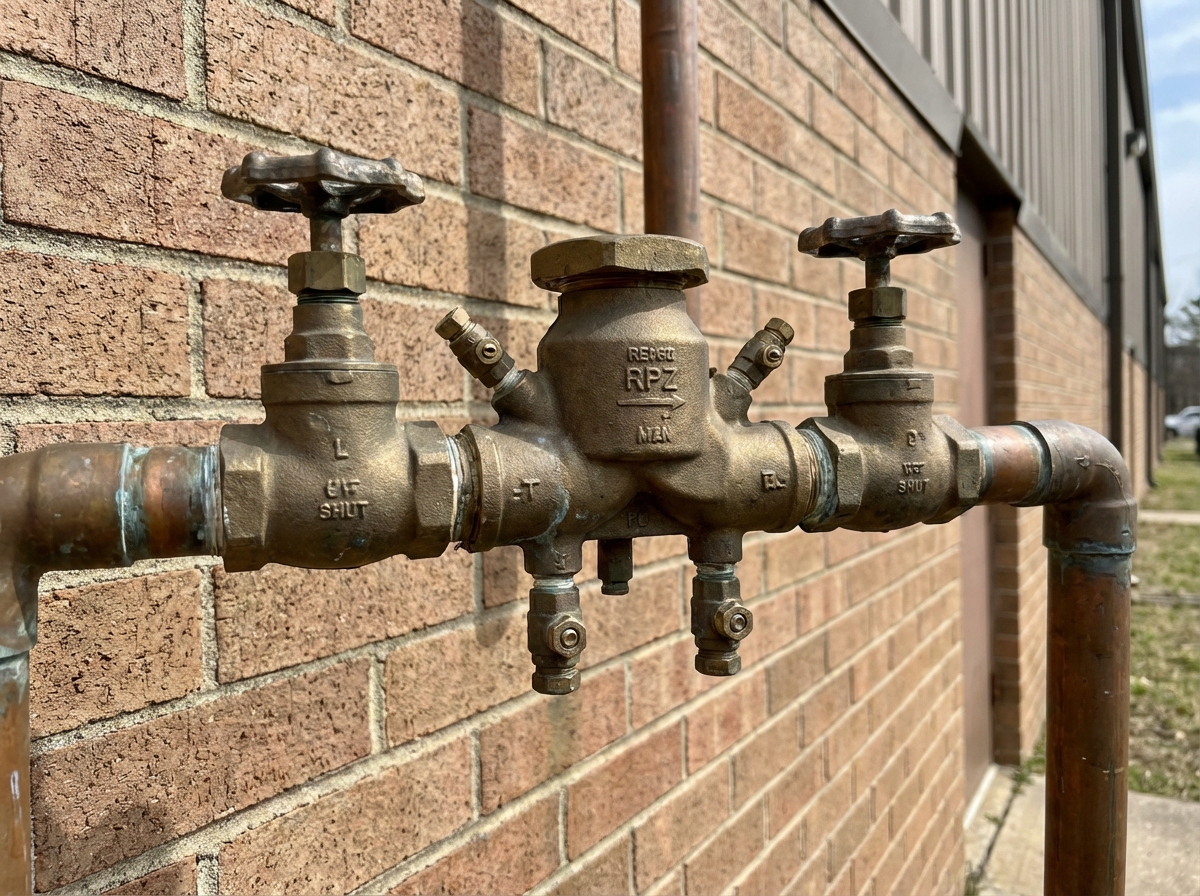 Brass RPZ backflow preventer assembly with test cocks and shut-off valves mounted on copper piping beside a building exterior
What Your Local Code Probably Requires
Backflow prevention requirements vary by state, county, and water utility — there is no single national standard. However, the trends are consistent:
- Most jurisdictions require a backflow preventer on any irrigation system connected to potable water. If you have city water and sprinklers, you almost certainly need one.
- The majority classify irrigation as a high-hazard connection, especially if the system includes chemical injection or submerged sprinkler heads. High-hazard classification typically requires an RPZ or PVB (not a DCVA).
- Annual testing is required in most areas. A certified backflow tester must verify the device works correctly and submit results to the water utility.
- Permits are often required for installation. Many utilities maintain a cross-connection control program and want to know what device is installed, where, and by whom.
If you're unsure what your area requires, contact your water utility's cross-connection control department. They can tell you the specific device type, installation requirements, and testing schedule for your property.
Installation Mistakes That Cause Failures
A backflow preventer is only effective if it's installed correctly. These are the most common installation errors on irrigation systems:
PVB installed too low. The device must be at least 12 inches above the highest sprinkler head in the system. Installers sometimes measure from the highest zone valve instead of the highest head — those are not the same thing. A PVB installed too low will fail inspection and won't protect against backsiphonage.
No shut-off valves. The device needs isolation valves on both sides so it can be tested and serviced without shutting down the entire water supply. Missing shut-offs mean the tester can't do their job.
Installed in a location that can't drain. RPZ relief valves discharge water when they activate. If the device is in a basement, crawlspace, or sealed vault, the discharge has nowhere to go. Install RPZs where drainage is available and where freezing isn't a concern, or provide adequate protection.
Incorrect orientation. Backflow preventers are directional. An arrow on the body indicates flow direction. Installing one backward means zero protection.
No strainer upstream. Debris in the water supply — sand, pipe scale, small stones — can lodge under the check valve seats and prevent them from sealing. A strainer upstream of the device catches this debris before it causes a failure.
Winterization and Seasonal Maintenance
Irrigation backflow preventers are particularly vulnerable to freeze damage because they're typically installed above ground and outdoors. A single hard freeze can crack the body, damage internal components, and leave you with an expensive repair and no backflow protection when the system starts up in spring.
Before the first freeze each year:
- Shut off the water supply to the irrigation system at the main shut-off valve.
- Open the test cocks on the backflow preventer to drain residual water.
- Do not close the shut-off valves on the device completely — leave them partially open (about 45 degrees) so water can expand if any remains inside.
- If your area sees sustained temperatures below 20°F, consider an insulated cover rated for backflow preventers. Generic pipe insulation often doesn't fit the complex geometry of these devices.
- Blow out the irrigation lines downstream of the preventer using compressed air at no more than 80 PSI for PVC systems.
In spring:
- Close the test cocks.
- Slowly open the upstream shut-off valve to repressurize the device. Opening it too fast can cause water hammer that damages check valve components.
- Check for leaks at all connections and at the relief valve (on RPZ assemblies).
- Schedule your annual backflow test before turning the irrigation system on for the season.
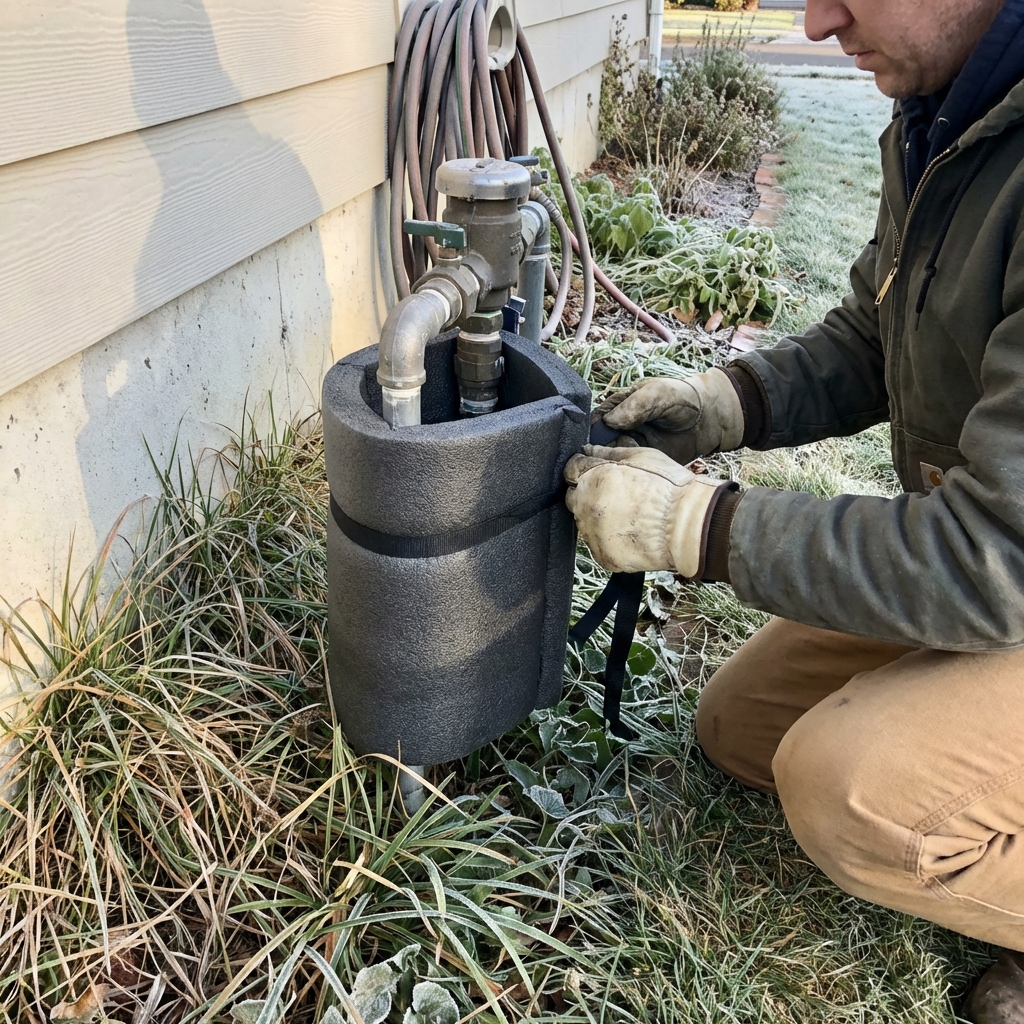 Homeowner wrapping an outdoor backflow preventer with a foam insulation cover before winter with frost visible on nearby grass
Annual Testing: What to Expect
Most municipalities require backflow preventers on irrigation systems to be tested once a year by a certified tester. Here's what the process looks like:
The tester connects a differential pressure gauge kit to the test cocks on your device. They run a series of pressure tests to verify that each check valve is holding and, for RPZ assemblies, that the relief valve opens at the correct differential pressure.
The whole process takes 15 to 30 minutes for a single device. The tester submits a report to your water utility. If the device passes, you're good for another year. If it fails, repairs are needed — usually replacing internal check valve seats, springs, or o-rings. Most testers carry common repair kits and can fix the device on the spot.
Typical costs in 2026:
- Annual test only: $75–$150 depending on your region
- Test with minor repairs (seat replacement, o-ring): $150–$300
- Full device replacement (PVB): $200–$500 installed
- Full device replacement (RPZ): $500–$1,500 installed
Skipping the annual test isn't just a code violation — most water utilities will charge penalties or eventually shut off your water if testing goes overdue.
When to Upgrade Your Existing Device
Several situations call for replacing your current backflow preventer rather than continuing to repair it:
- Your code has changed. Many jurisdictions have upgraded irrigation from moderate-hazard to high-hazard classification in recent years. If you have a DCVA, you may now need an RPZ or PVB.
- Repeated test failures. If the device fails its annual test two or three years in a row, the body or internal seats are likely worn beyond reliable repair.
- You've added chemical injection. Fertigation systems inject fertilizer directly into the irrigation water, which automatically classifies the connection as high hazard. An RPZ is typically required.
- Visible corrosion or physical damage. Green buildup on brass bodies, cracked bonnets, or frozen-and-repaired devices should be replaced, not patched.
- The device is more than 15–20 years old. Internal components degrade over time even with regular testing. At a certain point, replacement is more cost-effective than annual repairs.
Next Steps for Property Owners
If you have an irrigation system and you're not sure about your backflow protection, here's what to do:
- Find your backflow preventer. It's usually near where the irrigation line branches off from the main water supply — often on the side of the house near the garage or near a valve box in the yard.
- Identify the device type. Look for a manufacturer label and model number. If you see test cocks (small valved ports), it's likely a testable assembly. If it's mounted high on the wall with an air inlet on top, it's probably a PVB.
- Check your testing history. Contact your water utility and ask if they have records of annual testing for your address. If there's no record, you're likely overdue.
- Schedule a test. Find a certified backflow tester in your area who can test the device, identify any issues, and confirm that it meets current code requirements for irrigation systems.
Backflow prevention on irrigation systems isn't optional, and it isn't just bureaucratic paperwork. It's the barrier between lawn chemicals and your drinking water. A working, properly installed, and annually tested device is one of the simplest ways to protect your household water supply.