How to Find the Backflow Preventer on Your Property
How to Find the Backflow Preventer on Your Property
If your water utility, plumber, or backflow tester tells you there is a backflow preventer somewhere on your property, the next question is usually very simple: where is it?
Many owners inherit a property without ever being shown the assembly location. Others know they have irrigation, fire protection, or a commercial water service, but they are not sure which device is the actual testable backflow assembly.
The first thing to know is that not every property has the same setup, and not every property has a testable backflow assembly. The location depends on the type of service, the hazard level, local utility rules, and how the property was built or remodeled.
Still, there are a few places that are worth checking first. If you want the public-health background behind these devices, our Learning Center guide on why backflow testing is required is a helpful starting point.
 Wide realistic photo of a homeowner or small commercial property manager standing near a water meter and outdoor service piping while locating an installed backflow preventer on private property, natural daylight, realistic utility setting, no logos or text
First, know what you are trying to find
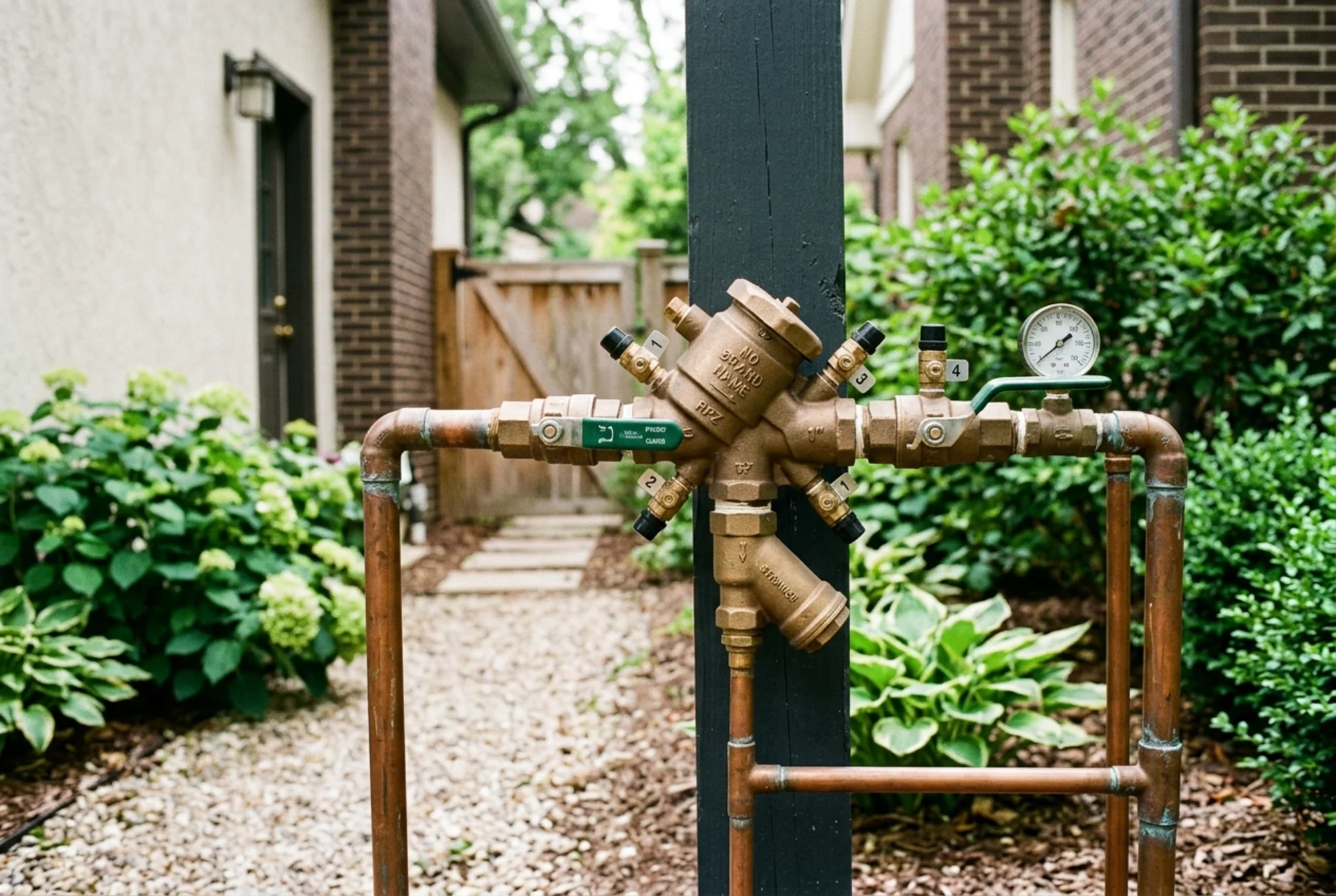
A testable backflow preventer is usually more noticeable than a simple shutoff valve, but it may still be easy to miss if you do not know what features to look for.
In many cases, the assembly will have:
- two shutoff valves, one on each side of the body
- small test cocks or test ports used by a certified tester
- a larger bronze, brass, or coated metal body
- a tag, serial plate, or manufacturer data plate
- on some assemblies, a relief-valve opening that can discharge water
That last clue matters. Portland Water Bureau explains that reduced pressure assemblies are designed so the relief valve can open and discharge water if a check valve leaks. If you see an assembly with a relief opening underneath or in the middle of the body, that may be an RP or RPBA-style device rather than a simple non-testable valve.
If you are not sure what makes an assembly testable, compare this guide with our related post on How to Find Your Backflow Preventer Serial Number Quickly. The serial-number search often starts only after you locate the right device.
The most common places to check first
Near the water meter or property line
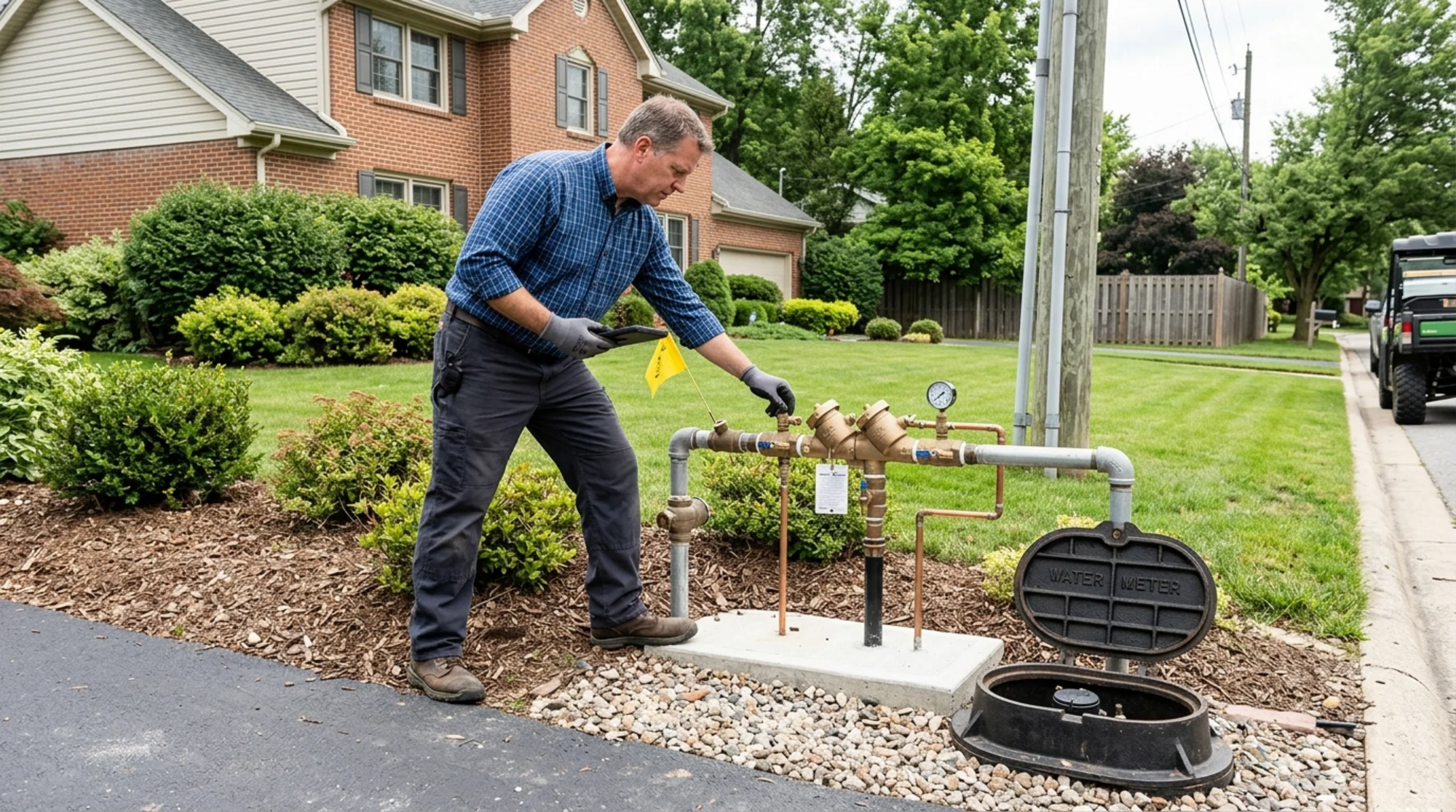
For many irrigation setups, this is the first place to look.
Portland says a residential irrigation double check valve assembly may be installed just after the water meter on private property at the property line. That means you may find it near the front service area, sometimes close to the meter box, and often before the irrigation piping branches deeper into the yard.
If your property has a dedicated lawn sprinkler system, this is one of the most likely places to start. Depending on the assembly type, it may be above grade on exposed piping, inside a valve box or protective enclosure, or close to a side-yard service corridor.
If you manage property in markets with strong irrigation demand, such as Austin, Texas, this meter-area search is especially worth doing first.
In a below-grade vault
Some assemblies are not visible until you open a lid.
Portland notes that a DCVA may be installed in a vault below finished grade. That means the assembly could be sitting in a buried box or pit instead of on exposed piping. On some properties, the lid may look similar to an irrigation valve box or utility access cover, so it is easy to walk right past it.
Look for a box larger than a small sprinkler valve box, check for labels or utility markings, and only open it if it is safe and accessible. Do not force stuck lids or enter confined spaces.
Above grade near a side yard or service entrance
A pressure vacuum breaker assembly often makes itself easier to spot.
Portland says residential irrigation systems commonly use DCVAs and PVBAs, and that a PVBA must be installed at least 12 inches above finished grade. In practical terms, that usually means you may find a visible assembly sticking up along the side of the house, near the irrigation connection, or along a fence-line service path.
These above-grade irrigation assemblies often have a recognizable shape with shutoff handles and test cocks that stand out from ordinary hose or sprinkler valves.
Just inside the building at the service entry
Commercial and multi-use properties often place the assembly indoors.
Portland shows common commercial examples with an RPBA installed inside a building at the water riser and a DCVA installed vertically on a riser just inside from a water meter. So if you are searching a commercial property, mixed-use building, or larger residential building, check places like:
- the water service entry point
- the mechanical room
- the basement
- the utility corridor
- the main riser area
For owners in denser urban markets like Charlotte, North Carolina or Philadelphia, Pennsylvania, indoor service-entry installations are common enough that they should be part of the first walkthrough.
Near the fire service entry or fire riser room
Larger properties may have more than one assembly.
Portland notes that fire protection detector assemblies may be installed just inside the wall of a building or in a vault. That means office buildings, schools, HOAs, warehouses, and other larger sites may have a separate domestic assembly and a separate fire-line assembly.
If your property has a dedicated fire sprinkler room, fire riser, or labeled fire service entry point, inspect that area carefully. Philadelphia Water Department even maintains separate technician resources for domestic systems and fire sprinkler systems, which is a good reminder that these lines may be tracked and tested differently.
How to identify the right assembly without guessing
A few practical clues usually help:
Look for test cocks
Testable assemblies have small test ports that certified testers connect to during annual field tests. If you see a device with several small capped or slotted ports, that is a strong sign you are looking at the right type of assembly.
Look for shutoff valves on both sides
Many testable assemblies are isolated between shutoff valves. A random pipe fitting without those surrounding valves is less likely to be the device you need.
Look for a relief opening on RP assemblies
If the assembly has a relief-valve opening or discharge point, it may be a reduced pressure assembly. Portland explains that a properly functioning RPBA may periodically release small amounts of water because of pressure changes.
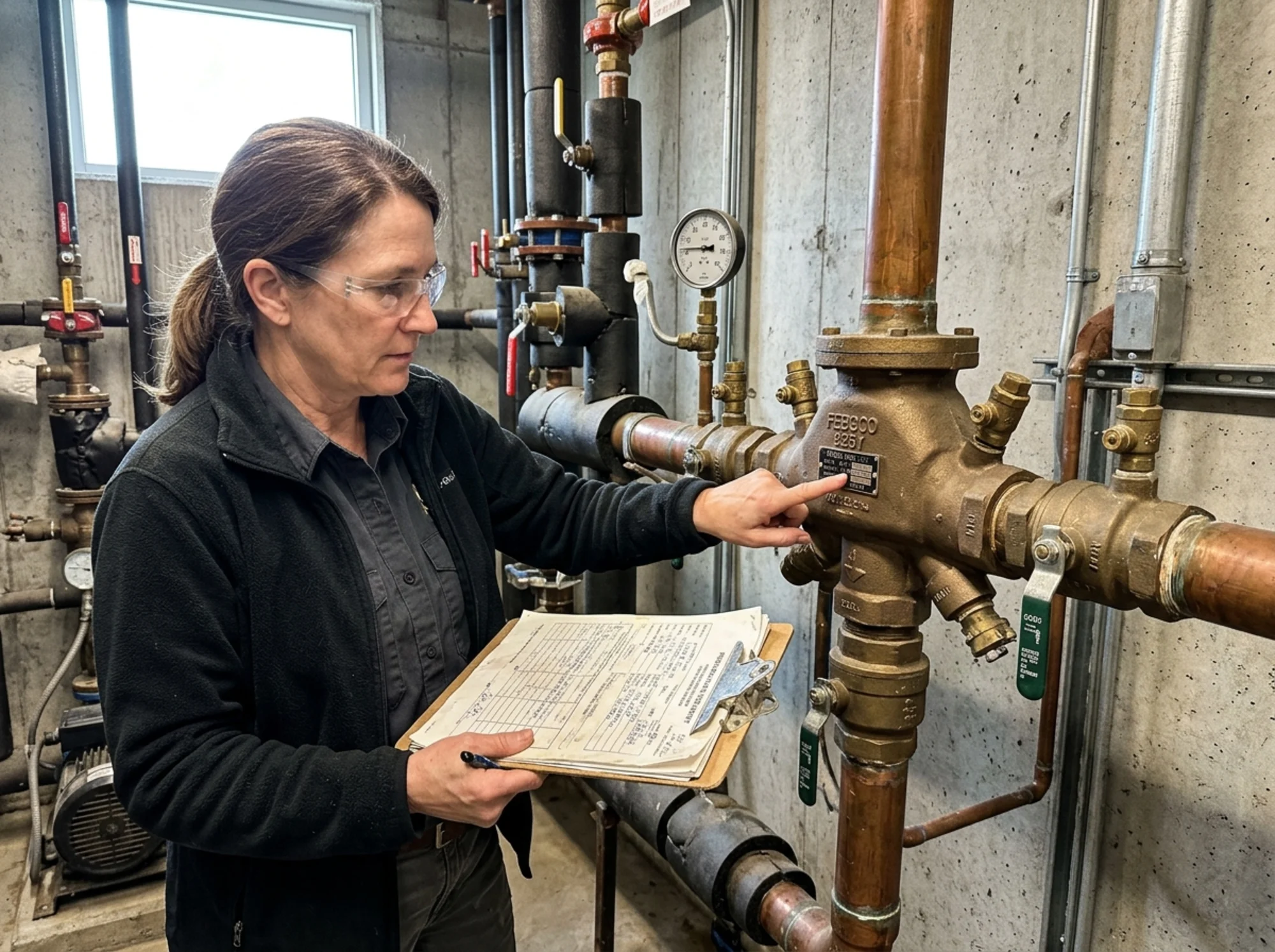
Look for a serial or data plate
Washington Department of Health points people back to the USC-approved assemblies list, which is organized by exact assembly and model. That only works if you can find the plate or markings that identify the unit.
Check your records before assuming the device is missing
Seattle Public Utilities says owners should make sure they receive documentation showing results were submitted. That paperwork often includes the assembly type, location notes, serial number, and tester comments.
 Documentary-style realistic photo of a property owner reviewing a prior backflow test report and utility paperwork beside an indoor mechanical-room assembly with visible data plate and test cocks, natural lighting, no text overlay
The paperwork that can save you time
If the physical search is going nowhere, records are usually the fastest shortcut.
Useful places to check include:
- prior backflow test reports
- utility notices or reminder letters
- installation permits
- plumbing or irrigation invoices
- fire-sprinkler paperwork
- building plans or closeout documents
Philadelphia publishes installation permit forms, test and maintenance records, and approved technician resources. That is useful not just for compliance, but also because older paperwork often tells you exactly where the assembly was installed or what line it protects.
If your utility has a local program page, such as our Philadelphia Water Department backflow testing guide, it may help you figure out which department to contact and what documents to request.
What to do if you still cannot find it
At that point, do not guess.
A better next step is to:
- Ask your water utility whether they have an assembly record or test history for the address.
- Review prior reports to see whether the location is described as meter area, side yard, basement, vault, or fire riser.
- Ask the installer, irrigation contractor, or tester whether they have service notes or a past serial number on file.
- Schedule a site visit with a qualified backflow professional if the layout is complex or the property has multiple water services.
Seattle notes that if one property owner receives testing notices and a neighbor does not, it may be because the utility does not know about the installation or because the device may not require testing.
If you want a broader baseline for owner questions, our FAQs page is a good companion.
Bottom line
The fastest way to find a backflow preventer is to search the places where utilities and installers most commonly put them: near the meter, in a vault, above grade by the irrigation service, just inside the building at the water entry point, or near a fire riser room.
But the more important rule is to identify the right device without guessing. Look for test cocks, shutoff valves, relief openings, and serial plates, then confirm your findings against prior reports or utility records.
If you still cannot find it, that is not unusual. It usually just means the property needs a better paper trail or a professional walkthrough, not that you should start testing random valves and hoping for the best.
Sources
This article references guidance and regulations from authoritative sources including:
- U.S. Environmental Protection Agency (EPA) - Safe Drinking Water Act overview
- American Water Works Association (AWWA) - Cross-Connection Control and Backflow Prevention resources
- Portland Water Bureau - How to choose and install a backflow prevention assembly
- Philadelphia Water Department - Cross-Connection & Backflow Compliance
- Washington State Department of Health - Cross-Connection Control and Backflow Prevention
- Seattle Public Utilities - Backflow Assembly Testing
- Centers for Disease Control and Prevention (CDC) - About Drinking Water
Last updated: April 27, 2026
Need backflow testing soon?
Send one qualified request with your service address, property type, and deadline so local testers have the context they need.