Georgia Backflow Testing Requirements: Atlanta Metro Guide

Georgia Backflow Testing Requirements: Atlanta Metro Area Compliance Guide
If you own property in metro Atlanta, there's a good chance you're responsible for an annual backflow test and don't even know it. Backflow assemblies sit quietly behind irrigation systems, fire lines, and commercial water connections all over Fulton, DeKalb, Cobb, Gwinnett, and the surrounding counties. When your water utility sends that test notice, the clock starts, and missing the deadline can mean a shut-off notice.
This guide walks through who needs testing, how often, what the rules actually say across the major Atlanta-area water providers, and how to stay compliant without the headache.
Why Georgia Requires Backflow Testing
Backflow is when water flows backward through your plumbing, the wrong direction, and pulls contaminants into the clean drinking water supply. It happens during pressure drops, like when a water main breaks or a fire hydrant gets opened nearby. Without a working backflow prevention assembly, fertilizer from your irrigation system, chemicals from a boiler, or worse can siphon back into the public water main.
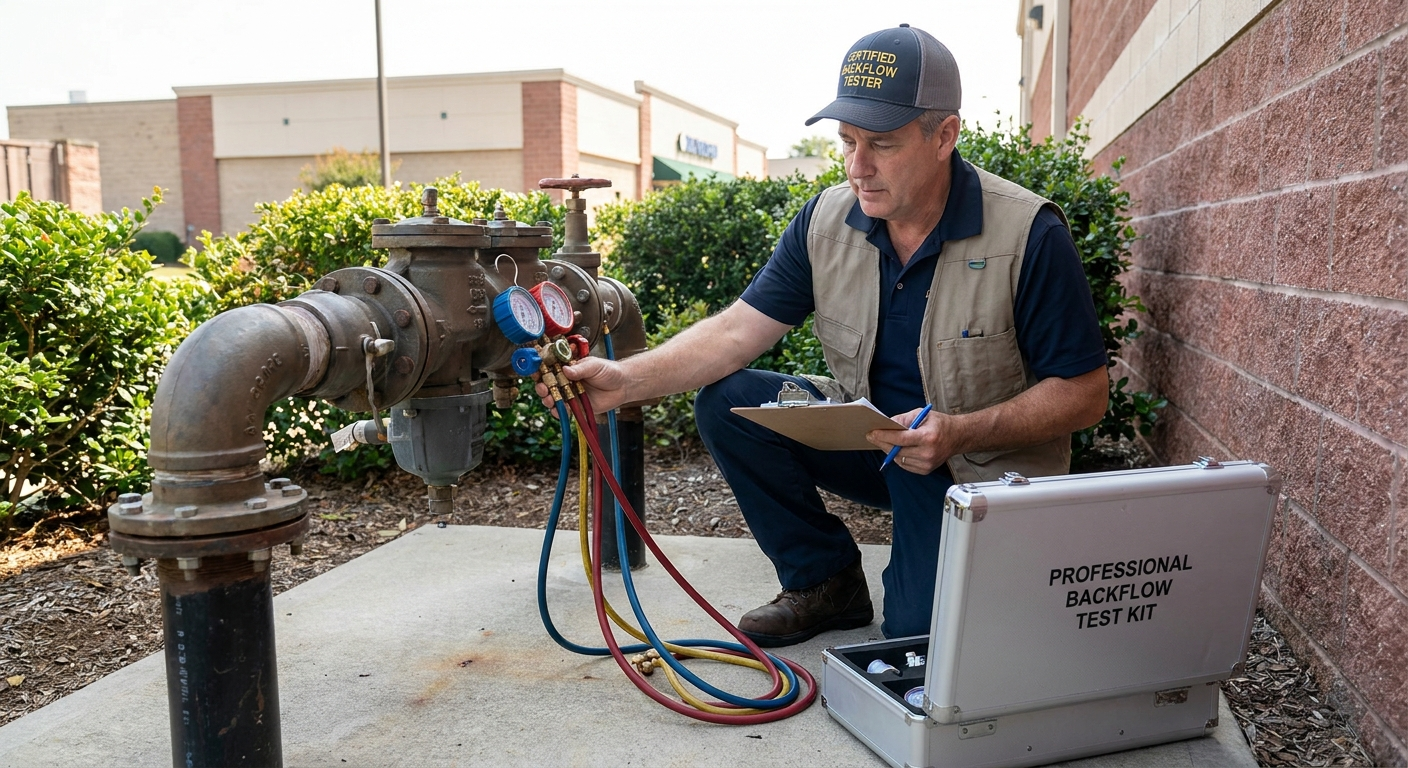 Backflow preventer assembly installed outside residential property
Georgia's rules trace back to the federal Safe Drinking Water Act, which the EPA enforces. The state hands enforcement to the Georgia Environmental Protection Division (EPD), and the EPD requires every public water system to run a cross-connection control program. That's the legal chain that lands a test notice in your mailbox. Your local utility isn't being difficult, they're required by state and federal law to make sure every backflow assembly in their system gets tested by a certified tester at least once a year.
The Georgia rule that governs this is found in the EPD's Rules for Safe Drinking Water (Chapter 391-3-5), which sets the cross-connection control baseline that every water system in the state has to meet or exceed.
Who Needs a Backflow Test in Metro Atlanta
Not every home has a testable assembly, but more properties than you'd think do. You almost certainly need annual testing if you have any of these:
- An irrigation/sprinkler system. This is the single most common reason homeowners get test notices. If you have an in-ground sprinkler system tied to city water, you have a backflow assembly.
- A fire suppression/sprinkler system. Nearly every commercial building and many newer homes with fire lines.
- A commercial or industrial water connection. Restaurants, car washes, salons, medical and dental offices, manufacturing, and any business using boilers, chemicals, or process water.
- A swimming pool with an auto-fill line, a well combined with city water, or a secondary water source.
- Multi-family and HOA properties with shared irrigation or fire systems.
If you're a standard single-family home with no irrigation, no fire line, and no pool auto-fill, you likely don't have a testable assembly. When in doubt, your water utility can tell you whether your account has a device on file.
How Often You Have to Test
The short answer across metro Atlanta: once a year, every year. That's the standard set by the EPD and adopted by essentially every local provider.
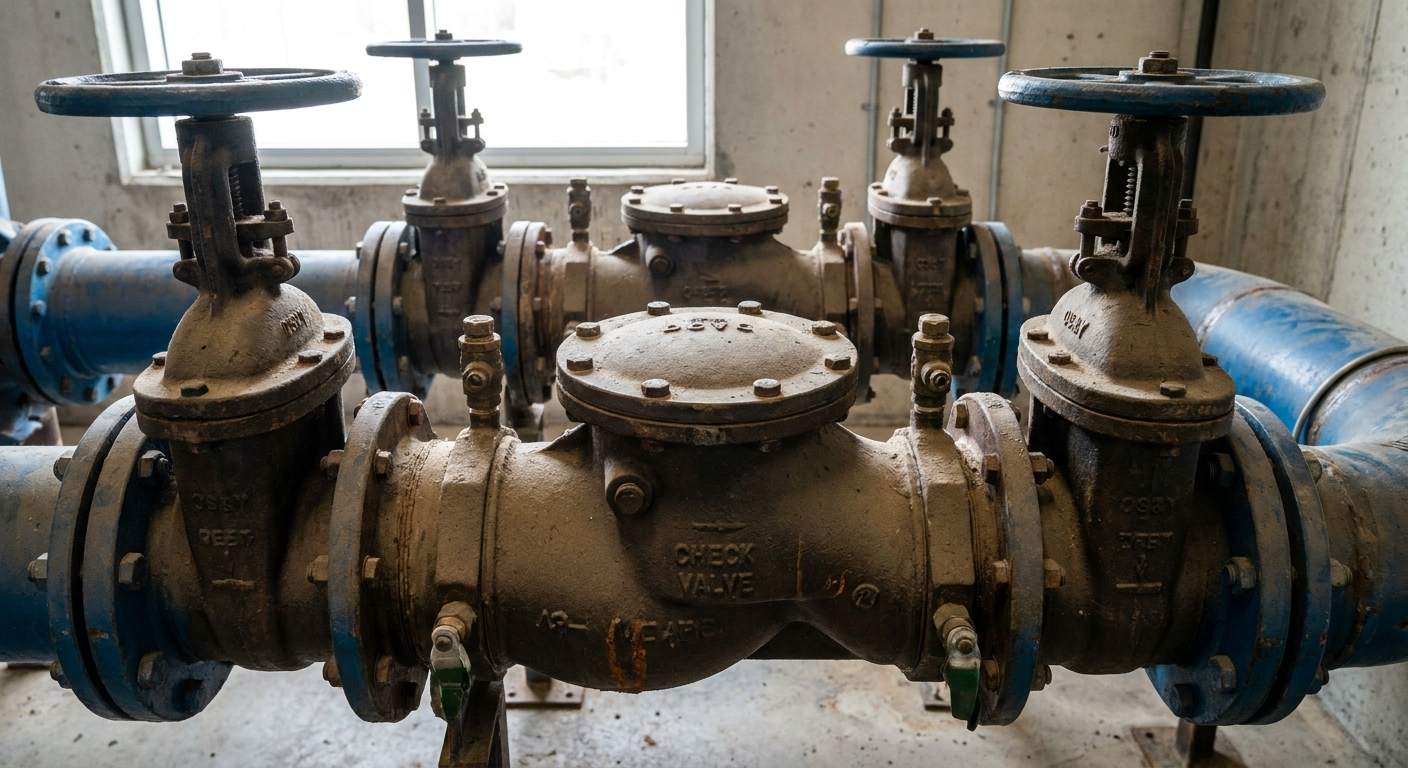 Certified tester inspecting backflow prevention device during annual test
A few situations trigger testing more often or on a different schedule:
- New installation. Any newly installed assembly has to be tested at the time it's put in, before it's approved for use.
- After a repair or relocation. If the assembly gets fixed, rebuilt, or moved, it needs a fresh test.
- High-hazard facilities. Some utilities require more frequent testing for facilities classified as high hazard, like hospitals, labs, and certain industrial sites.
The annual test has to be done by a tester who holds a current Georgia backflow assembly tester certification, and the results have to be submitted to your water provider, not just kept in a drawer.
The Rules by Atlanta-Area Provider
Georgia doesn't run one central backflow program. Each water provider runs its own, within the EPD framework. Here's how the major metro Atlanta utilities handle it.
City of Atlanta (Department of Watershed Management)
Atlanta's Department of Watershed Management runs an active cross-connection control program and requires annual testing on all backflow prevention assemblies. The department sends out test notices and expects results from a certified tester to be filed before the deadline on the notice. Commercial accounts and irrigation systems are the big focus. If you don't comply, the department can issue a notice and ultimately discontinue water service until the assembly is tested and passing.
Cobb County Water System
Cobb County requires annual testing and uses a third-party tracking system to manage notices and results. When your test comes due, you'll get a letter, and your tester submits results electronically. Cobb is strict about irrigation backflow devices, so if you have a sprinkler system in Marietta, Smyrna, Kennesaw, or unincorporated Cobb, expect an annual notice.
Gwinnett County Department of Water Resources
Gwinnett requires annual testing for all backflow assemblies and runs a well-organized cross-connection program. Test results are due by the date on your notification, and Gwinnett uses an online submission portal that most local certified testers already know how to use.
DeKalb County Watershed Management
DeKalb County requires annual testing and has been tightening enforcement on commercial and irrigation accounts in recent years. Notices go out on the assembly's anniversary, and certified test results have to be submitted to the county.
Smaller cities and authorities
Plenty of metro residents are served by city systems or county authorities like the City of Roswell, City of Marietta Power and Water, Clayton County Water Authority, Fayette County, and others. Every one of these runs its own program under the same EPD rules, with annual testing as the baseline. The deadline, submission method, and fee structure vary, so always go by what your specific notice says.
Who Can Legally Test Your Backflow Assembly
In Georgia, a backflow test has to be performed by a certified backflow assembly tester. Certification in Georgia typically comes through programs recognized by the state, often the American Society of Sanitary Engineering (ASSE) 5110 certification or an equivalent program through groups like the American Backflow Prevention Association (ABPA) or the University of Georgia's training programs.
A certified tester carries calibrated test equipment (the gauges have to be calibrated annually themselves), knows how to test the specific assembly type you have, and is registered with your water provider so their results actually get accepted. Hiring an uncertified handyman to "check" your device does nothing for compliance, the utility won't accept the report.
When you hire a tester, confirm three things:
- They hold a current Georgia-recognized tester certification.
- Their test gauge has a current calibration certificate.
- They'll handle submitting the results directly to your water provider.
That third point matters more than people realize. A good tester files the paperwork for you so you're not chasing down portals and fax numbers.
What Happens During a Test
A backflow test is quick, usually 20 to 30 minutes for a typical residential irrigation assembly. The tester shuts off the water briefly, attaches gauges to the test cocks on the assembly, and checks that the check valves and relief valve hold pressure the way they're supposed to.
You'll get one of two outcomes. Pass: the assembly works, the tester files the report, and you're done for the year. Fail: the assembly needs repair or replacement. Common failures are worn rubber check valve seats, fouled springs, or debris stuck in the valve. After repair, the assembly gets retested to confirm it passes, and that passing report is what goes to the utility.
Expect to pay somewhere in the range of $75 to $150 for a standard residential test in metro Atlanta, with commercial and larger assemblies costing more. Repairs and rebuild kits add to that.
What Happens If You Miss the Deadline
Ignoring a backflow notice is the most expensive mistake here. Utilities across metro Atlanta have the legal authority to terminate water service for non-compliance, and most will after sending one or two warnings. Getting reconnected means scheduling a test fast, paying any reconnection fee, and possibly waiting.
The smarter move is to test before the deadline on your notice. Most providers give you a window of 30 to 60 days from the notice date. Don't wait until day 59, because if your assembly fails, you'll need time to repair and retest before the cutoff.
Staying Compliant Year After Year
The easiest way to never miss a deadline is to put your annual test on a recurring schedule. Many certified testers offer reminder programs, they'll reach out each year when your test comes due and handle the submission. Keep a copy of every passing report, note your renewal month, and make sure your contact info on file with the utility is current so notices actually reach you.
If you've bought a property recently, ask the previous owner or your utility when the last test was filed. Backflow obligations follow the property, not the person, so an overdue assembly becomes your problem the day you take the keys.
Sources
- U.S. EPA: Cross-Connection Control Manual
- Georgia Environmental Protection Division: Safe Drinking Water Program
- City of Atlanta Department of Watershed Management: Cross-Connection Control
- Cobb County Water System: Backflow Prevention
- American Backflow Prevention Association (ABPA)
Don't wait for a shut-off notice to find a tester. FindBackflowTesters.com connects you with certified backflow assembly testers across Atlanta, Cobb, Gwinnett, DeKalb, and the entire metro area, testers who know your local utility's rules and handle the paperwork for you. Search your zip code, compare certified pros, and get your annual test booked in minutes.
Need a compliance test filed?
Tell us your service type and property details so we can help route the request to backflow testers near you.