Finding Emergency Backflow Testing When Your Deadline Is Tomorrow
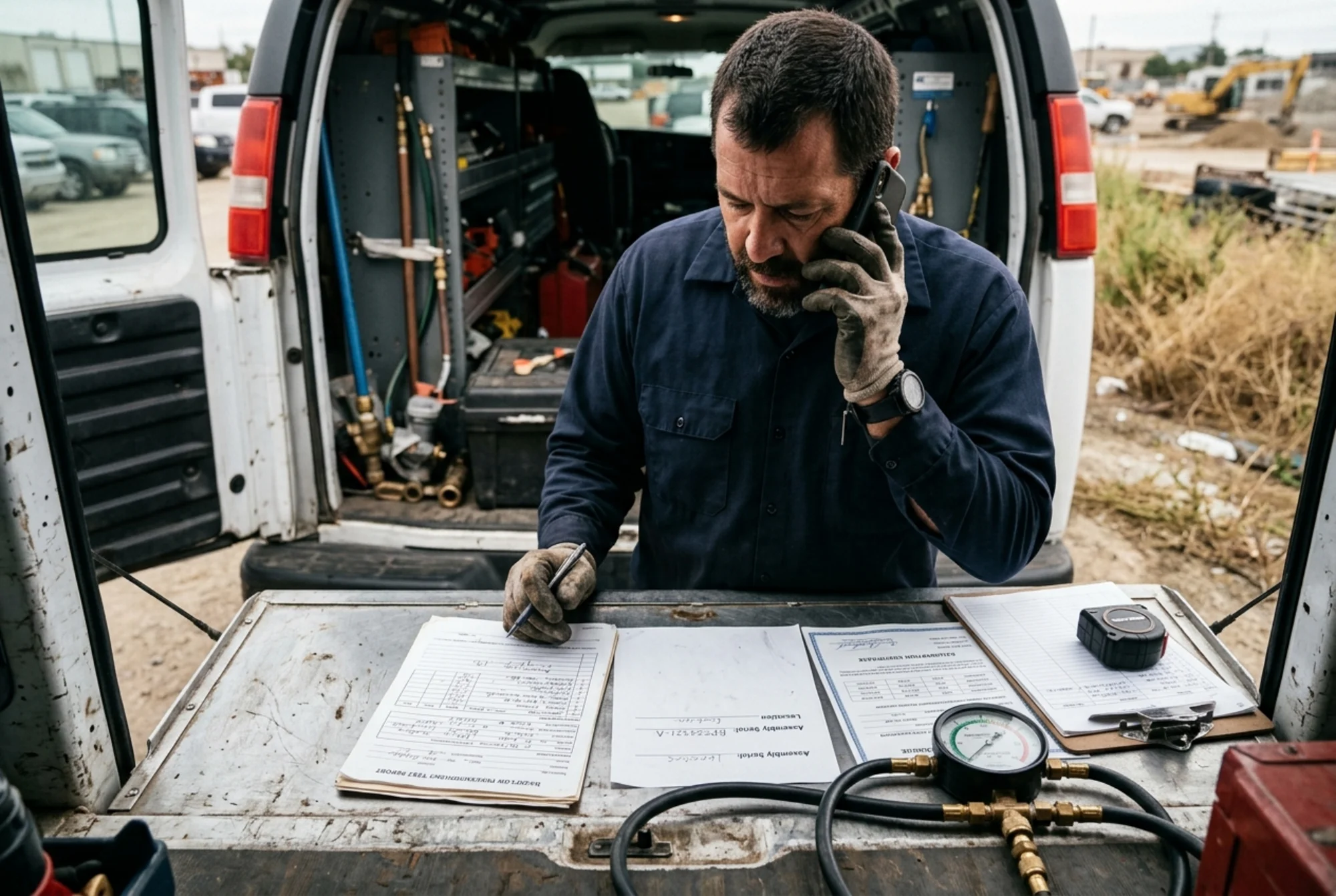
Finding Emergency Backflow Testing When Your Deadline Is Tomorrow
If your backflow testing deadline is tomorrow, the worst move is treating it like a generic plumbing appointment. Backflow testing sits inside a utility compliance process, and when time is short, paperwork matters almost as much as the field test itself.
EPA says the Safe Drinking Water Act protects public health by regulating the nation’s public drinking water supply. Local cross-connection and backflow programs are one of the ways utilities put that responsibility into practice. Seattle Public Utilities says annual testing is required to make sure assemblies are functioning properly, and New York City DEP says certain properties must have devices tested every 12 months by a certified tester.
That means an emergency appointment is not just about finding someone with a gauge kit. It is about finding someone whose certification fits your jurisdiction, who can access the assembly quickly, and who can produce the paperwork your utility expects.
If you need the bigger picture first, start with why backflow testing is required. If the deadline is already staring at you, use the steps below.
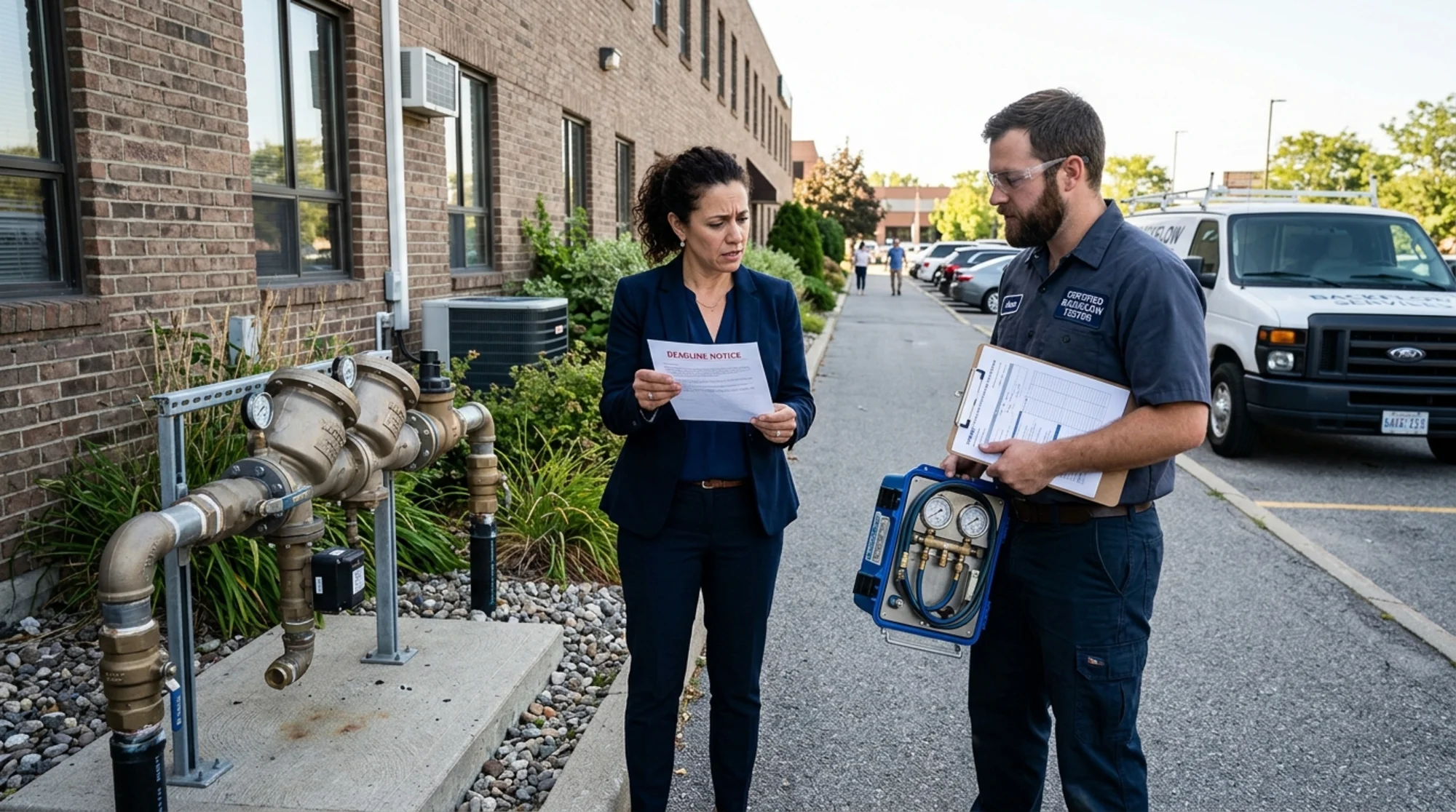 A stressed property manager standing beside an outdoor backflow preventer and reviewing a utility deadline notice with a certified tester arriving with a differential pressure gauge kit, natural daylight, realistic commercial property setting, no logos or text
Step one, confirm what the deadline actually requires
Before you call anybody, read the notice carefully.
There is a big difference between these situations:
- your annual test is due,
- your assembly already failed and needs repair plus re-test,
- your utility wants a first-time installation test,
- or your report was done but never accepted.
Those are not interchangeable.
NYC DEP separates installation, initial testing, and annual testing. For a newly installed device, the signed test report must be submitted within 30 days of installation. After that, the device must be tested every 12 months, and missed annual testing can lead to fines or water service disconnection. Seattle Public Utilities makes a similar distinction between the field test itself and whether the tester’s certification and calibration information are already in the system.
So before you start calling testers, identify which bucket you are in. That alone can save hours.
Step two, gather the details a tester will ask for immediately
When the deadline is tomorrow, you do not want the first five calls to turn into a guessing game.
Have these details ready:
- The exact address and best access instructions.
- A photo of the assembly if possible.
- The device type and size, if you know it.
- A copy or photo of the utility notice.
- Any previous test report you can find.
- Whether the device is domestic, irrigation, fire-related, or tied to another service.
Philadelphia’s backflow compliance page is a good reminder that utilities often care about more than one document. The department publishes official forms, maintenance records, and technician lists because the compliance trail matters. Washington DOH also publishes minimum field-test report content requirements, which tells you the same thing from the state side: this process is structured, not informal.
If you have old paperwork, pull it now. The previous report often tells a tester exactly what assembly is on site and helps them show up prepared instead of losing time identifying everything from scratch.
Step three, call certified testers, not just any plumber
A rushed deadline is when people make the expensive mistake of calling the first plumbing company that answers.
That is risky.
Seattle says all backflow prevention assemblies must be tested by a State of Washington Certified Backflow Assembly Tester. NYC DEP points owners to New York State certified testers. Philadelphia maintains city-certified technician lists for domestic water systems and fire sprinkler systems. Washington DOH publishes both certification verification and a public list of BATs.
The pattern is clear. Utilities and states care about who performs the test, not just whether someone looked at the device.
So when you call, ask these questions up front:
- Are you certified for my jurisdiction?
- Can you test this type of assembly?
- Can you come out today or tomorrow?
- Can you submit the report in the format my utility requires?
- If the assembly fails, can you handle repair and re-test or coordinate it fast?
If the answers are vague, keep calling.
For local options, you can also search by market on FindBackflowTesters. Start with directories like Seattle, Austin, or Philadelphia, then compare the local program pages for Austin Water and the Philadelphia Water Department.
Step four, ask how the paperwork gets submitted
This is where emergency jobs are often won or lost.
A tester showing up tomorrow morning does not solve the whole problem if the utility still does not get an acceptable report.
Seattle tells customers to work with their tester so they receive documentation confirming results were submitted, and it notes that reports cannot be submitted unless required tester certification and calibration documents are already in the system. Philadelphia publishes Form 79-770 for test and maintenance records. NYC DEP says annual test forms must be completed by the appropriate certified professional.
That means you should ask one very direct question:
What is your exact process for getting the finished report accepted by the utility?
Good emergency testers usually have a crisp answer. Maybe they submit directly, maybe they email it the same day, maybe they hand you the signed package and tell you exactly what remains. What you do not want is uncertainty after the field work is done.
If you have never been through an appointment before, how to prepare your property for a backflow test covers the on-site side in more detail.
Step five, clear access and remove avoidable delays
A next-day slot is too valuable to waste.
Before the tester arrives:
- unlock gates or mechanical rooms,
- clear storage and landscaping away from the device,
- make sure someone can authorize access,
- confirm whether shutoffs affect tenants or operations,
- and keep the notice plus previous paperwork nearby.
CDC’s drinking-water guidance tells people to contact their utility or health department if they are concerned about tap water quality. In a compliance crunch, that is a useful mindset too: do not improvise around a regulated water issue if you are unsure what is happening on site.
If the assembly is buried, flooded, blocked, painted over, or otherwise inaccessible, tell the tester before they dispatch. Surprises cost time you probably do not have.
What to do if you cannot get the test done by tomorrow
Sometimes the honest answer is that no qualified tester is available, the device fails and needs repair parts, or the assembly cannot be accessed safely in time.
If that happens, do not go quiet.
Contact the utility or backflow program immediately. Keep a record of:
- when you received the notice,
- which certified testers you contacted,
- what appointments were offered,
- whether the device is failed, inaccessible, or awaiting repair,
- and any scheduled follow-up date.
Seattle says the owner is responsible for making sure assemblies are tested on time, even though reminder notices are sent. It also says non-compliance charges and water shutoff are possible. NYC DEP likewise warns that failure to perform the annual test could result in fines or water service disconnection.
None of that guarantees your utility will grant extra time. But documenting fast, good-faith action is still much better than missing the date with no paper trail at all.
If your issue is more about repeated deadlines than one bad week, read how utilities track backflow test compliance. It helps explain why missing records keep turning into notices.
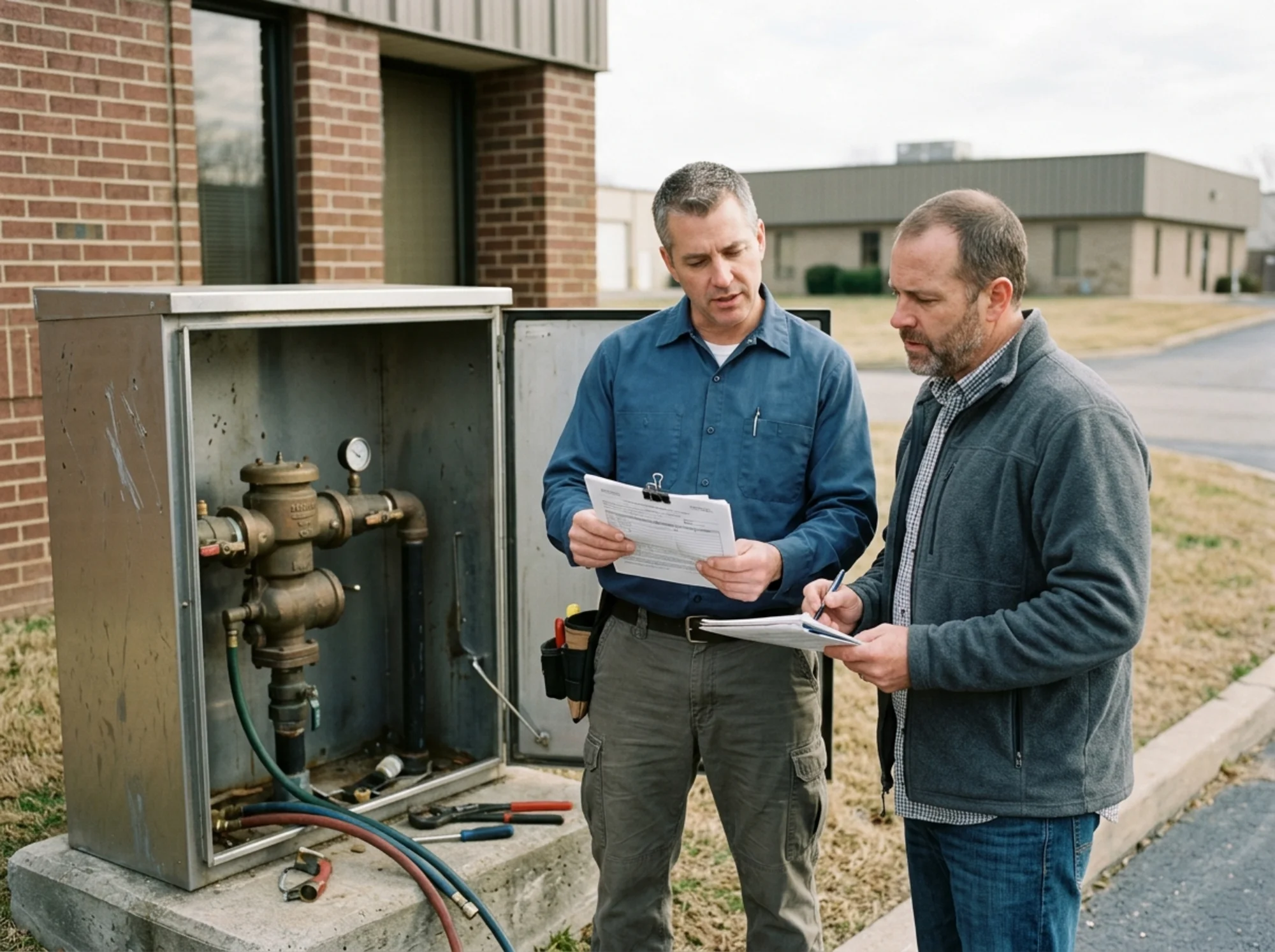 A property owner and backflow tester reviewing a completed field test report, utility notice, and schedule for a follow-up repair beside an outdoor assembly cabinet, natural daylight, no logos or text
A fast checklist for the next 24 hours
If you only have a few minutes, do this in order:
- Read the notice and identify whether it is an annual test, failed assembly, or new-installation issue.
- Pull the last report, assembly photo, and access details.
- Call certified testers and ask about jurisdiction, availability, and submission process.
- Clear access to the device before anyone arrives.
- Get written proof of what was tested, what passed or failed, and how the report was submitted.
- If the deadline cannot be met, notify the utility immediately and document every step.
That is the practical emergency workflow.
Bottom line
Emergency backflow testing is really two jobs happening at once: getting the assembly tested, and getting the compliance paperwork where it needs to go.
When your deadline is tomorrow, the fastest path is usually not calling more random vendors. It is gathering the right information, finding a properly certified tester, confirming the submission process, and documenting everything.
If you need help finding someone quickly, search FindBackflowTesters by city or state, or start with our FAQs if you are sorting out the basics before you call.
Sources
This article references guidance and regulations from authoritative sources including:
- U.S. Environmental Protection Agency (EPA) - Overview of the Safe Drinking Water Act
- American Water Works Association (AWWA) - Cross-Connection Control and Backflow Prevention resources
- Washington State Department of Health - Cross-Connection Control and Backflow Prevention
- Seattle Public Utilities - Backflow Assembly Testing
- New York City Department of Environmental Protection - Backflow Prevention Frequently Asked Questions
- Philadelphia Water Department - Cross-Connection & Backflow Compliance
- Centers for Disease Control and Prevention (CDC) - Preventing Drinking Water-Related Illnesses
Last updated: May 1, 2026
Need a compliance test filed?
Tell us your service type and property details so we can help route the request to backflow testers near you.