Colorado Backflow Testing Compliance: Denver and Front Range Prop
Colorado Backflow Testing Compliance: Denver and Front Range Property Owner Guide
If you own a commercial building, run a business with a sprinkler system, or manage a property anywhere along the Front Range, there's a good chance you're legally required to test your backflow preventer every year. A lot of property owners in Denver, Aurora, Boulder, and the surrounding suburbs don't realize this until they get a notice in the mail, sometimes with a shutoff threat attached.
This guide breaks down exactly what Colorado requires, who enforces it, what the deadlines look like, and how to stay on the right side of your water provider without overpaying or scrambling at the last minute.
What Backflow Testing Is and Why Colorado Cares
Backflow is when water flows backward through your plumbing, the opposite of the way it's supposed to go. Normally, clean water pushes from the city main into your building. But if pressure drops in the main, say a fire hydrant opens up or a water line breaks, the flow can reverse and pull water from your property back into the public supply.
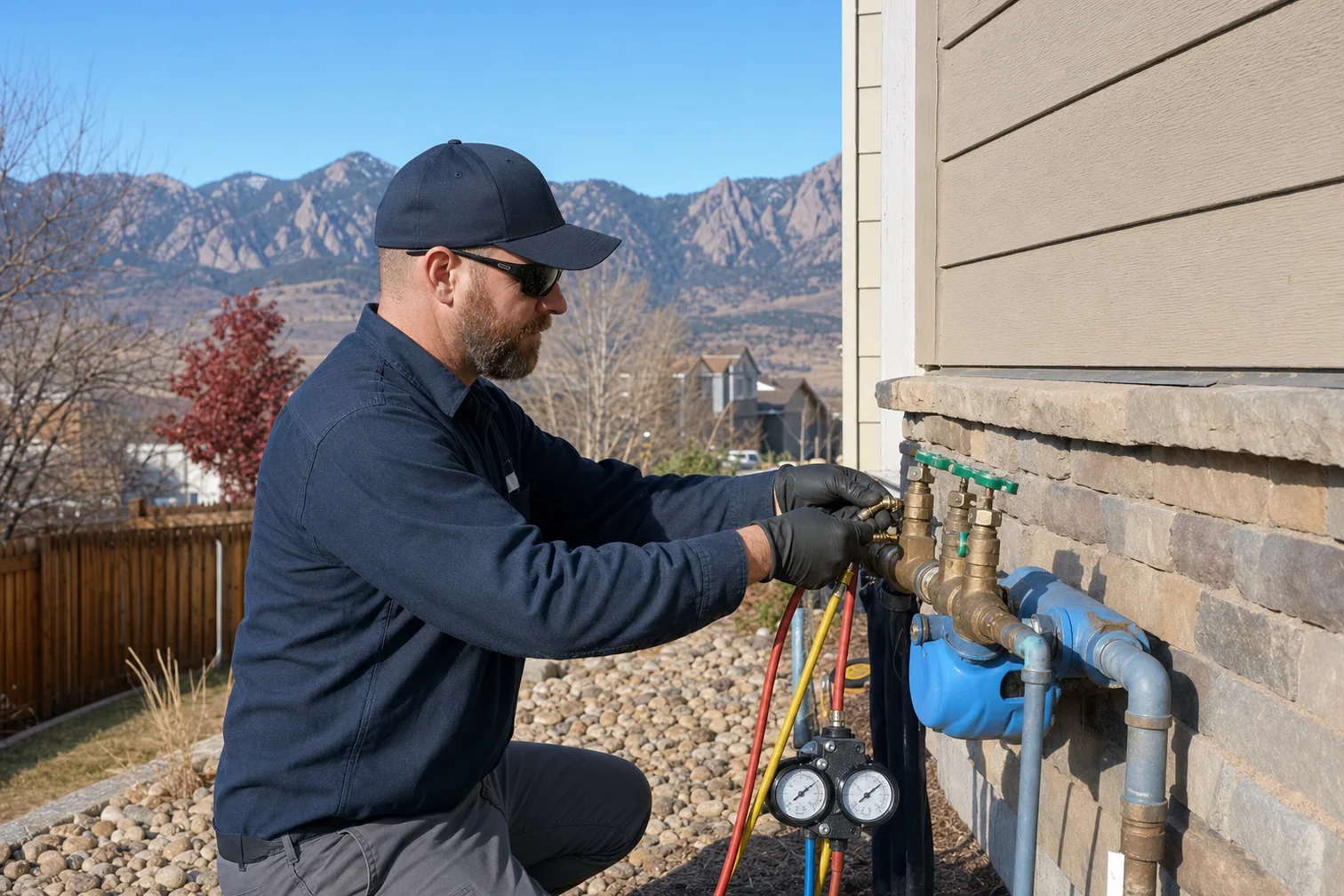
 Backflow preventer assembly installed outside residential property
That matters because the water inside your building isn't always clean. Irrigation systems sit in contact with soil, fertilizer, and pesticides. Boilers hold treated water with chemicals. Fire suppression lines hold stagnant water that's been sitting for months. If any of that gets sucked back into the drinking water system, your neighbors are drinking it too.
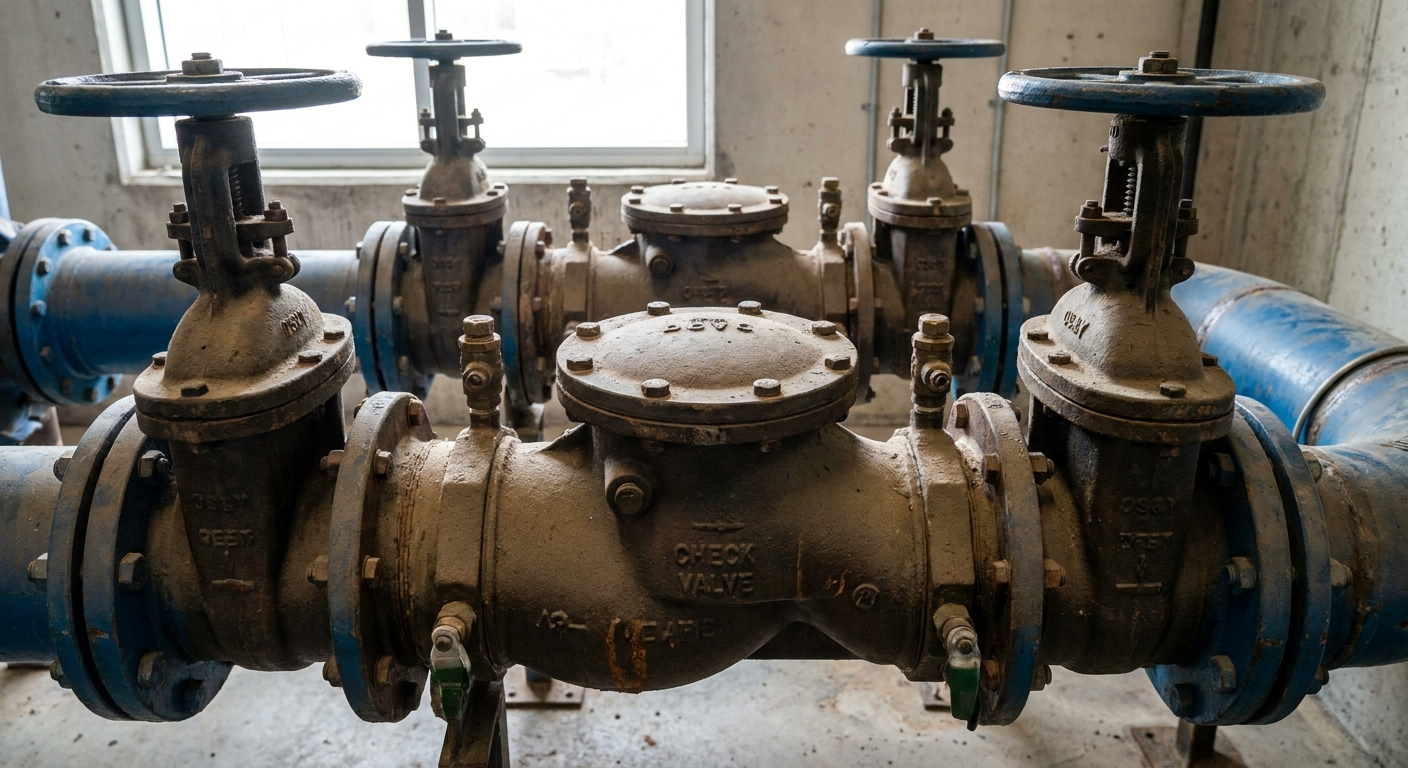
A backflow preventer is a mechanical valve that stops the reverse flow. Like any valve with springs and rubber seals, it wears out and fails quietly. That's why testing is required: a certified tester confirms the device still holds and actually does its job. Colorado treats this as a public health issue, not paperwork, which is why enforcement has real teeth.
The Rules: Colorado's Cross-Connection Control Regulation
The backbone of Colorado's program is the state's Cross-Connection Control rule, adopted by the Colorado Department of Public Health and Environment (CDPHE) under the Water Quality Control Commission's Regulation 11, the Colorado Primary Drinking Water Regulations. This rule lines up with the federal Safe Drinking Water Act and the EPA's cross-connection control guidance.
Here's the key part most property owners miss: CDPHE doesn't usually knock on your door directly. The state requires every public water system, your city or water district, to run its own cross-connection control program. So the actual rules you follow come from your local water provider, even though they all trace back to the same state regulation.
That means the specifics, like which form to use, who you submit it to, and what the late penalties are, change depending on whether you're served by Denver Water, the City of Aurora, the City of Boulder, or one of the dozens of special metro districts out here. The underlying requirement is the same statewide: testable backflow assemblies must be tested at least once a year by a certified tester.
Who Needs to Test
Not every property has a testable backflow assembly, but more do than you'd think. You almost certainly need annual testing if your property has any of these:
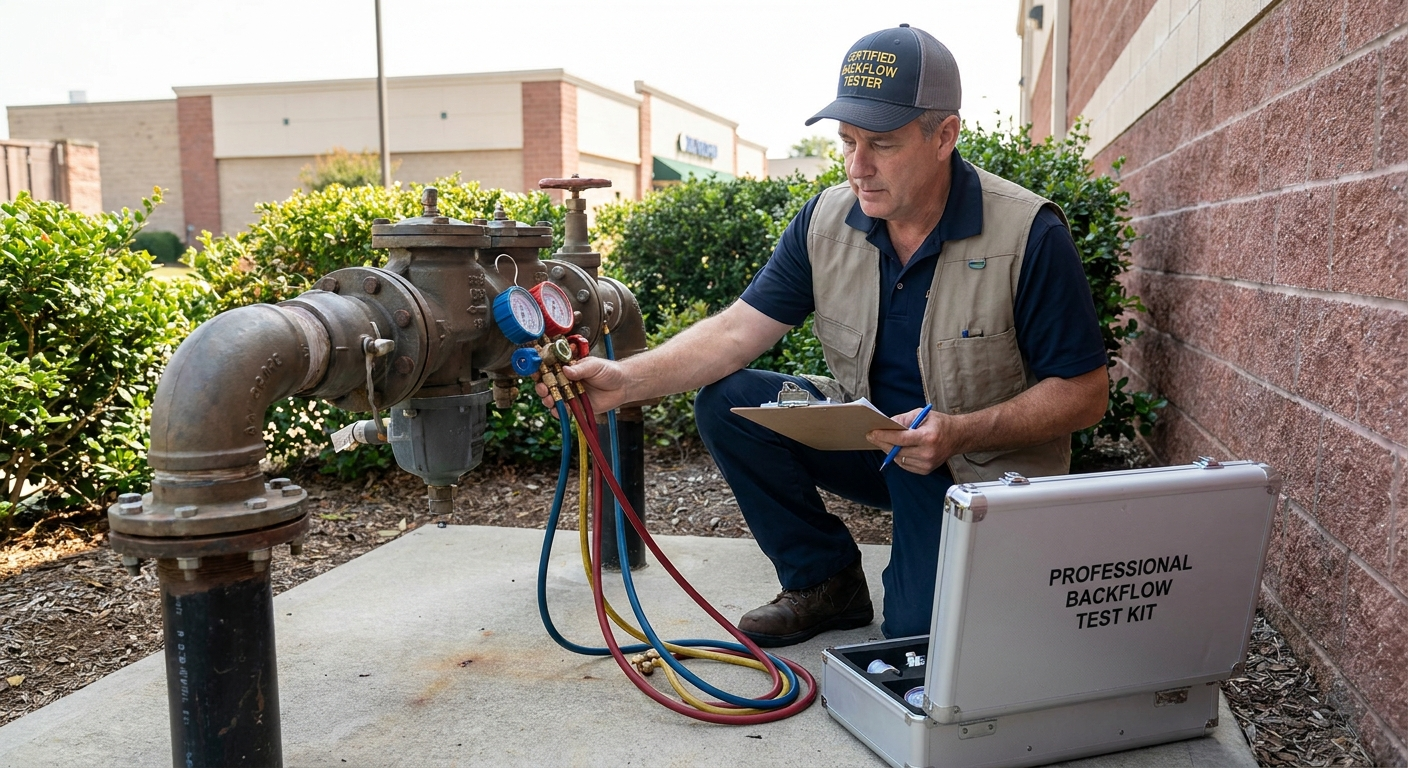
 Certified tester inspecting backflow prevention device during annual test
- A lawn or landscape irrigation system tied into the city water supply
- A fire sprinkler or fire suppression system
- A commercial kitchen, restaurant, or food processing setup
- A boiler or commercial HVAC with a water connection
- A car wash, laundromat, or any business using chemicals near water lines
- A medical, dental, or veterinary facility
- A pool or spa with an auto-fill line
Single-family homes without irrigation systems usually don't have a testable assembly. But the moment you add an in-ground sprinkler system, most Front Range providers require you to install and then annually test a backflow preventer, typically a pressure vacuum breaker or a double check valve.
Commercial and multi-family properties are almost always in scope. If you're not sure, your water provider can tell you whether you have a device on file. Many of them mail an annual test notice precisely because they already have your assembly in their records.
Denver and Front Range Provider Requirements
Each provider runs its program a little differently. Here's what to expect from the big ones.
Denver Water serves Denver and parts of the surrounding suburbs. They require annual testing of all backflow prevention assemblies and ask that test reports be submitted through their cross-connection control program. Denver Water has been tightening enforcement in recent years, and they coordinate with the many distributor districts that buy water from them, so even if you're not a direct Denver Water customer, their rules may flow down to you.
City of Aurora Water runs its own cross-connection control program and requires annual tests submitted within a set window after testing. Aurora is fairly aggressive about follow-up notices.
City of Boulder and City of Fort Collins both operate active programs with annual deadlines and online or mailed reporting.
Special metro districts are everywhere along the Front Range, places like Centennial, Highlands Ranch, Parker, Castle Rock, and the Denver suburbs are often served by their own water and sanitation districts. Each one administers its own program. If your water bill comes from a name you don't recognize as a major city, you're probably in a metro district, and you'll want to check their website or call them directly.
The practical takeaway: find out exactly who bills you for water, then look up that specific provider's backflow or cross-connection program. Don't assume Denver Water's rules apply just because you're in the metro area.
Deadlines, Notices, and What Happens If You Miss Them
Most Front Range providers send an annual notice telling you your test is due, usually tied to the anniversary of your last test or your install date. From the date of that notice, you typically get somewhere between 30 and 60 days to complete the test and submit the report.
Miss the deadline and the consequences escalate fast:
- A reminder notice, often with a firmer tone and a new short deadline
- A final warning, sometimes with a late fee
- Water shutoff, which providers in Colorado are authorized to do for non-compliance
That last step is real. Water providers can and do shut off service for repeated failure to test, because they're legally responsible to the state for protecting the public supply. For a restaurant or any business, a shutoff means closing your doors. It's far cheaper to test on time.
Newly installed assemblies usually need an initial test right after installation, before you even hit the annual cycle. If you just put in an irrigation system, don't wait for a notice. Get it tested and reported.
Who Can Legally Perform the Test
Colorado requires backflow tests to be done by a certified tester. Most providers recognize certification from the American Society of Sanitary Engineering (ASSE), specifically ASSE 5110, or equivalent credentials from organizations like the American Backflow Prevention Association (ABPA) or the AWWA. The tester needs current certification and calibrated test equipment, the gauge has to be calibrated annually for the results to count.
A handyman or general plumber without backflow certification can't submit a valid test. Providers will reject the report. When you hire a tester, ask for their certification number and confirm their test gauge calibration is current. A legitimate tester will hand this over without hesitation.
The tester usually submits the report directly to your water provider on your behalf, which saves you a step. Confirm they're doing that, because if the report doesn't reach the provider, you're still listed as non-compliant even though you paid for the test.
What a Test Costs and How to Keep It Simple
Along the Front Range, a single backflow test typically runs somewhere in the $75 to $150 range for a standard residential or small commercial assembly. Properties with multiple devices pay per device, so a large commercial building or apartment complex with several assemblies will pay more.
If your device fails the test, you'll need a repair or replacement, which costs more. Repair kits for common assemblies are usually cheaper than full replacement, and a good tester can often rebuild a failed valve on the spot.
A few habits keep this painless year after year:
- Test before your notice arrives. Pick a consistent month and test every year on that schedule.
- Keep your test reports. Hold onto a copy even though the tester submits to the provider. Disputes happen.
- Schedule irrigation tests in spring. If you have a sprinkler system, testing right after you turn it on for the season catches problems early and lines up with most annual cycles.
- Confirm submission. A quick call or email to your provider confirming they received the report closes the loop.
Common Mistakes Front Range Owners Make
The biggest one is assuming someone else is handling it. Property managers think the owner is on it, owners think the landscaper is on it, and nobody tests until a shutoff notice shows up. Make one person responsible.
The second is using an uncertified tester to save a few dollars, then having the report rejected. The third is ignoring the notice because the building "passed last year." Backflow assemblies fail year to year, that's the entire reason annual testing exists.
The fourth is forgetting about seasonal devices. Irrigation backflow preventers in Colorado get drained and blown out for winter, then recharged in spring. That cycle stresses the valve, and it's exactly why spring testing matters here more than in warmer states.
Sources
- EPA: Cross-Connection Control Manual - federal guidance on backflow prevention and cross-connection control under the Safe Drinking Water Act
- Colorado Department of Public Health and Environment: Drinking Water Regulations - state primary drinking water regulations, including cross-connection control requirements
- Denver Water: Cross-Connection Control and Backflow Prevention - testing and reporting requirements for Denver Water customers
- American Backflow Prevention Association (ABPA) - tester certification standards and public education on backflow prevention
- American Water Works Association (AWWA): Cross-Connection Control - industry standards and best practices for backflow prevention programs
Backflow compliance isn't complicated once you know who your provider is and when your test is due, but missing it can shut off your water or close your business. The hard part is finding a certified tester you can trust to do it right and submit the report on time. That's where we come in. FindBackflowTesters.com connects Denver and Front Range property owners with certified, vetted backflow testers in your area, so you can book your annual test, stay compliant, and get back to running your property. Find a certified tester near you today.
Need a compliance test filed?
Tell us your service type and property details so we can help route the request to backflow testers near you.