Certified Backflow Tester vs Plumber: Who Should You Hire for Compliance?
If you've been trying to find out what backflow testing costs before you call someone, you've probably already noticed that the internet isn't especially helpful. Most service providers don't list prices online, and the few estimates you do find vary so widely that they're not much use. Is it $50? Is it $300? Why can't anyone just give you a number?
The truth is that backflow testing pricing is genuinely variable — but not in a mysterious or arbitrary way. Once you understand what drives the cost, the quotes you receive will start to make a lot more sense. This guide breaks down what you can expect to pay for residential and commercial backflow testing in 2026, what factors push prices up or down, and how to make sure you're getting a fair deal.
What Does Backflow Testing Actually Involve?

Before getting into numbers, it helps to understand what you're actually paying for — because backflow testing isn't the same as a plumber taking a quick look at a valve.
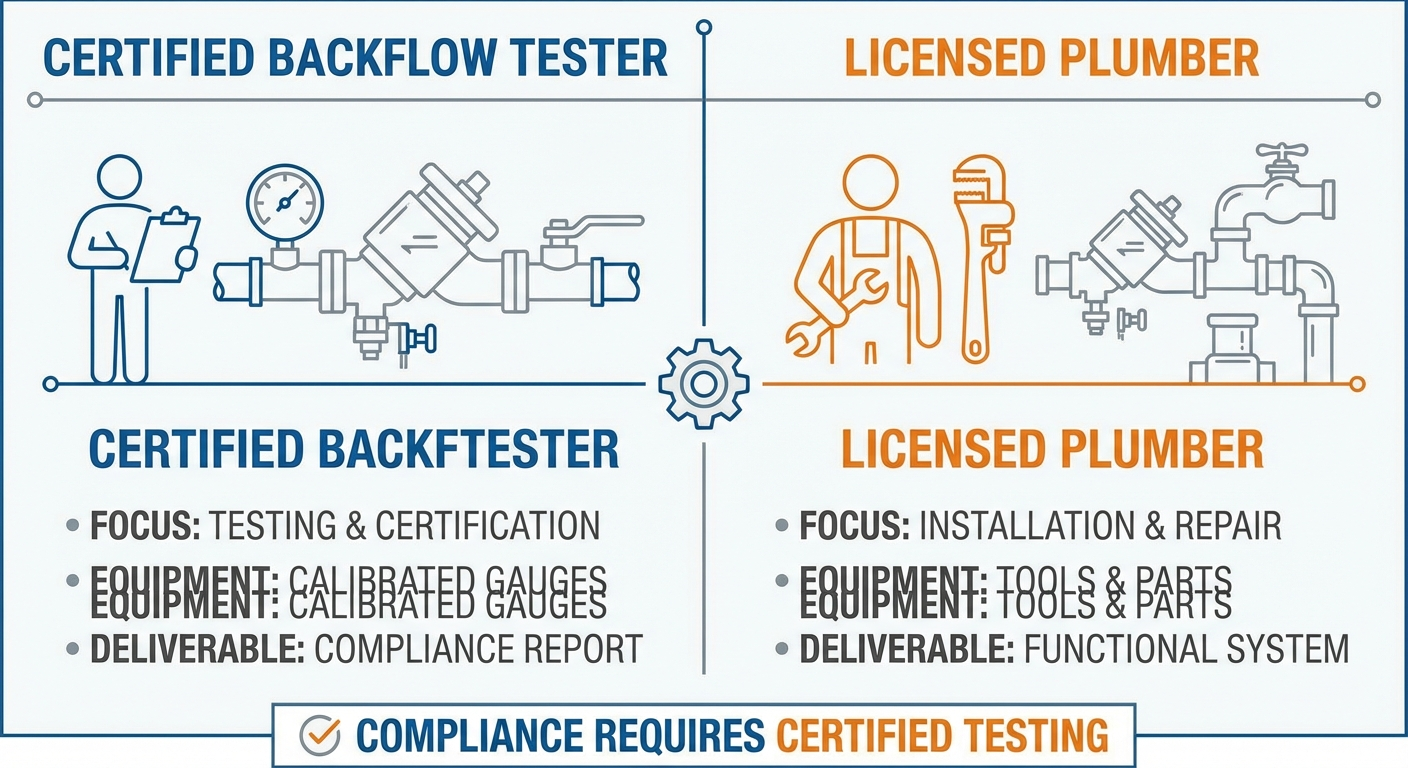
A certified backflow tester arrives with specialized differential pressure gauges that must be calibrated and maintained to manufacturer standards. They shut down the appropriate water supply, connect their test kit to the backflow prevention assembly, and run through a precise sequence of checks that measure how the device performs under specific pressure conditions. Each reading is recorded on an official test form. Once testing is complete, they restore service, remove their equipment, and file the completed report with your water authority — often digitally, through a municipal reporting portal.
A thorough test on a single device typically takes 30 to 60 minutes from start to finish, and that's before accounting for drive time, paperwork, and any complications at the property. That context matters when evaluating pricing — a quote that seems high often reflects the true labor and overhead involved, while one that seems suspiciously low might not.
Average Backflow Testing Costs in 2026
Here are realistic price ranges based on current market conditions across the United States. Keep in mind that your local market may fall above or below these figures depending on where you live.
Residential Backflow Testing

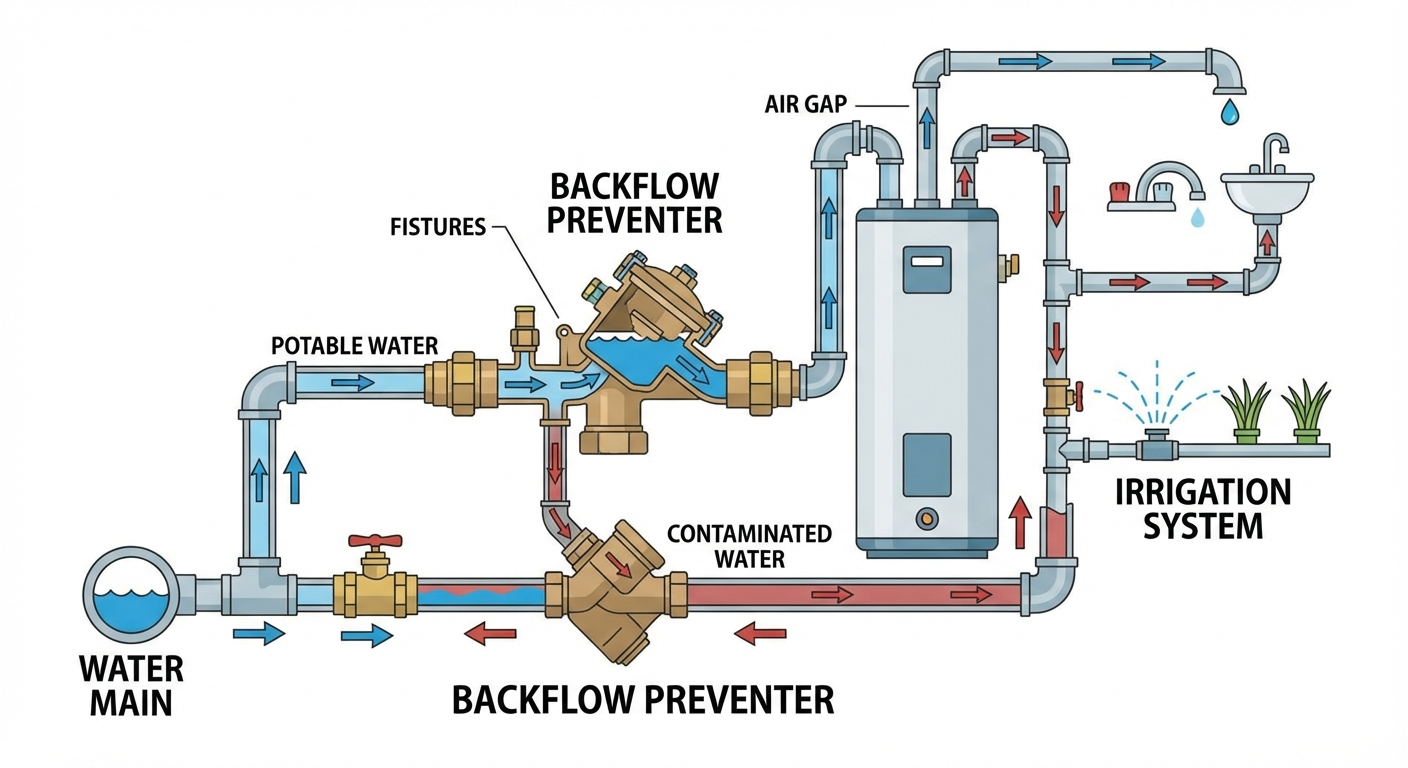
For a single backflow preventer serving a typical home — most commonly on an irrigation system or a home with a private well connection — you can expect to pay somewhere between $65 and $175 for a standard compliance test. The national average tends to cluster around $100 to $125 for a straightforward residential test with report filing included.
Homes with multiple devices — for example, a separate preventer on an irrigation system and another on a boiler — will generally be charged per device, though many testers offer a reduced rate for the second and subsequent assemblies on the same property.
Commercial Backflow Testing

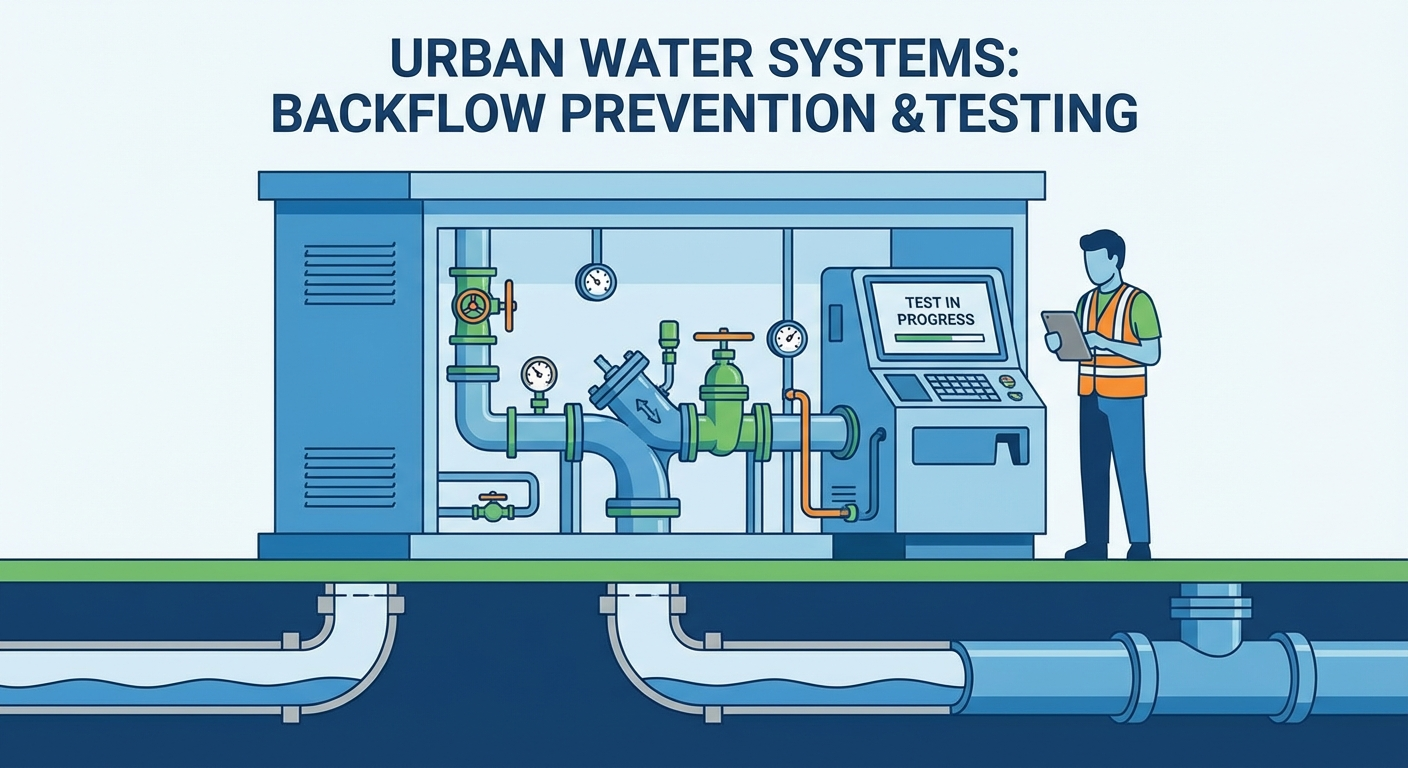
Commercial pricing covers a wider range because commercial properties vary so dramatically in size and complexity. A small retail space or restaurant with one or two devices might pay $100 to $200 per assembly. Larger commercial properties — office buildings, apartment complexes, industrial facilities, or properties with fire suppression systems — can see costs ranging from $200 to $500 or more per assembly, and properties with many devices may negotiate a package or annual service rate.
The higher cost on the commercial side reflects longer test times, more complex assemblies, higher-stakes reporting requirements, and in some cases, the need for water shutoffs that affect multiple tenants or operations.
Factors That Affect Your Price
If you've gotten two quotes and they're notably different, one or more of these factors is almost certainly responsible.
Type and size of the backflow preventer. Not all backflow assemblies are the same. A small 3/4-inch double check valve on a residential irrigation line is quicker and simpler to test than a 2-inch reduced pressure zone (RPZ) assembly on a commercial fire line. Larger, more complex devices take more time and are priced accordingly.
Number of devices on the property. Most testers charge per assembly, but many will offer a small discount when testing multiple devices in the same visit since they're already on-site and the overhead cost is spread across the job.
Geographic location. Like most trades, backflow testing costs more in high cost-of-living markets. A test in Manhattan or San Francisco will cost more than the same test in a mid-sized Midwestern city, simply because labor costs, insurance, and business overhead are higher in those markets.
Local permit and reporting fees. Some municipalities charge a fee to receive and process backflow test reports. This fee is sometimes absorbed by the tester and sometimes passed along to the customer as a line item. It's worth asking upfront whether reporting fees are included in the quoted price.
Scheduling. Standard appointments during normal business hours are priced lower than rush jobs, emergency calls, or weekend service. If you've received a compliance deadline notice and let it go until the last minute, expect to pay a premium for expedited scheduling.
Property access and site conditions. If your backflow preventer is in a difficult-to-access location — a cramped mechanical room, underground vault, or high-ceiling installation — the additional time and effort involved may be reflected in the price.
When Testing Turns Into Repair or Replacement
One thing to be prepared for is the possibility that your backflow preventer fails its test. This happens — these are mechanical devices, and they wear out over time. A failed test doesn't mean you did anything wrong, but it does mean additional work is required before you can be considered compliant.
Repair costs vary depending on what failed. In many cases, a failing device just needs new internal parts — rubber seals, springs, or check discs — which are inexpensive components. A repair involving only parts and labor from an already on-site tester might add anywhere from $50 to $200 to your bill, depending on the assembly type and what needs replacing.
Replacement costs come into play when a device is too old or too damaged to repair reliably. A new residential backflow preventer and its installation typically runs $300 to $600 all-in, including the device and labor. Commercial replacements, especially for larger assemblies or fire line preventers, can run significantly higher — often $800 to $2,500 or more, depending on the size and complexity of the installation.
It's worth noting that if a repair or replacement is needed, a licensed plumber typically needs to do that work — which may mean a separate visit if your tester isn't also a licensed plumber. This is one reason many property owners prefer working with professionals who hold both credentials, since it eliminates the need to coordinate multiple contractors.
What's Usually Included (and What's Not)
Most standard backflow testing quotes include the test itself, the tester's labor and equipment, and submission of the official report to your water authority. That's the core service, and a reputable provider will be clear that these things are covered.
What might be charged separately — or might not be included at all — can vary by provider. Watch for potential add-ons like travel or trip fees (common in rural areas or when your property is outside a tester's normal service zone), report filing fees charged by the municipality, fees for same-day or expedited service, and any parts or labor required if the device needs adjustment during the test to pass.
Always ask for an itemized quote before the work begins. A trustworthy tester will have no problem explaining exactly what is and isn't covered by their quoted price.
How to Get a Fair Price
The best approach is to get two or three quotes before committing, especially for commercial properties where the stakes and the costs are higher. When you reach out to providers, give them the same information each time: the type of property, the number and size of backflow preventers, and your compliance deadline. This makes it easier to compare quotes on an equal footing.
When you speak with providers, ask specifically whether report filing is included, whether there are any travel or trip fees, and what happens to pricing if the device fails and needs repair. A provider who answers these questions clearly and confidently is giving you a good signal about how they operate.
Also check whether your water authority maintains an approved tester list. Many do, and working from that list ensures you're hiring someone whose credentials and reporting process are already accepted by the municipality — which saves potential headaches down the line.
Finally, don't overlook local irrigation companies or plumbing firms that also offer backflow testing as part of their services. They often have competitive pricing and the convenience of handling installation, repair, and testing under one roof.
Is It Worth Shopping Around?
For a straightforward residential test, the honest answer is: probably not too aggressively. If you're looking at quotes ranging from $85 to $130 for the same service, the time you spend chasing the lowest price may not be worth the savings — especially if your compliance deadline is approaching. In this range, it makes more sense to prioritize credentials, responsiveness, and whether report filing is included.
For commercial properties, multi-device jobs, or ongoing annual service agreements, shopping around is absolutely worthwhile. A difference of $50 to $75 per assembly multiplied across many devices adds up quickly, and many providers will negotiate pricing for reliable repeat business or portfolio accounts. If you manage multiple properties, it's worth asking providers whether they offer any kind of service agreement or volume discount.
One caution worth repeating: the cheapest quote isn't always the best value. If a tester can't clearly explain their certification, seems unfamiliar with local reporting requirements, or is offering prices dramatically below the market, those are signs worth taking seriously. A test filed improperly or by an unrecognized tester can leave you out of compliance even after you've paid — meaning you'll have to start over and pay again.
The Bottom Line
Backflow testing is one of those services where the cost is genuinely modest compared to what it protects you from. At $65 to $175 for most residential tests and $100 to $500 or more for commercial assemblies, it's a small annual investment in compliance, safety, and peace of mind. Understanding what drives pricing — device type, location, number of assemblies, and what's included — puts you in a much stronger position when evaluating quotes.
Get your quotes, verify credentials, confirm that report filing is included, and get it done before your deadline. The cost of testing is almost always far less than the cost of fines, shutoffs, or having to redo the job because you hired someone whose certification wasn't accepted by your water authority. A little due diligence now makes the whole process painless.