Backflow Testing Requirements in Florida: Owner's Guide
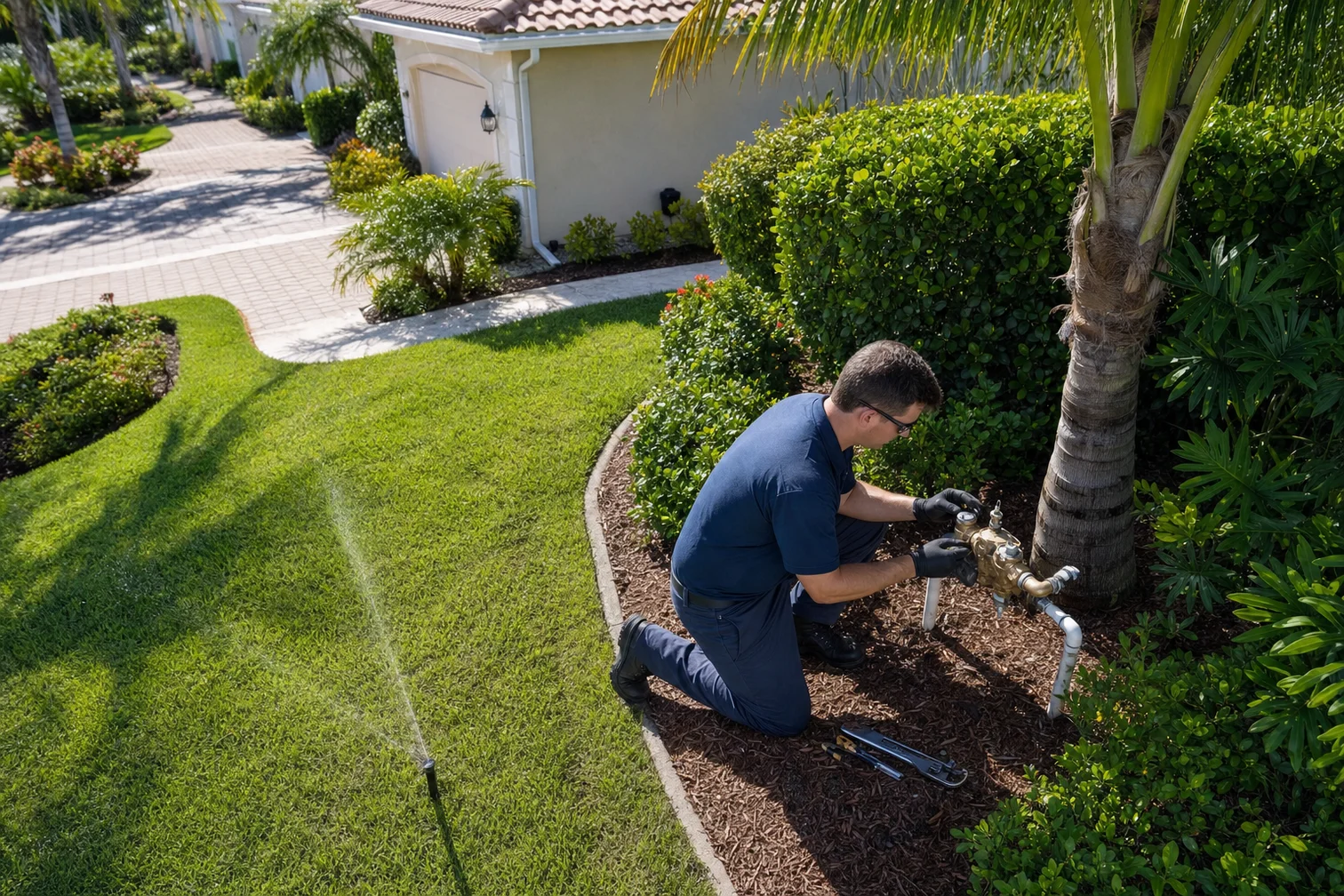
Backflow Testing Requirements in Florida: What Every Property Owner Must Know
If you own a commercial building, run an irrigation system, or manage any property connected to public water in Florida, there's a good chance you're legally required to test your backflow preventer every year. A lot of property owners don't find out until they get a letter from their water utility threatening to shut off service. This guide walks you through exactly what Florida requires, who has to comply, what the deadlines look like, and how to stay on the right side of the rules.
What Backflow Is and Why Florida Cares
Backflow is when water flows the wrong direction through your plumbing. Normally water moves from the utility main into your building. But if pressure drops in the main, say from a water line break or heavy fire hydrant use, the flow can reverse and pull water from your property back into the public supply. That's a problem when the water on your side has been sitting in an irrigation system, a boiler, a chemical injector, or a fire suppression line.
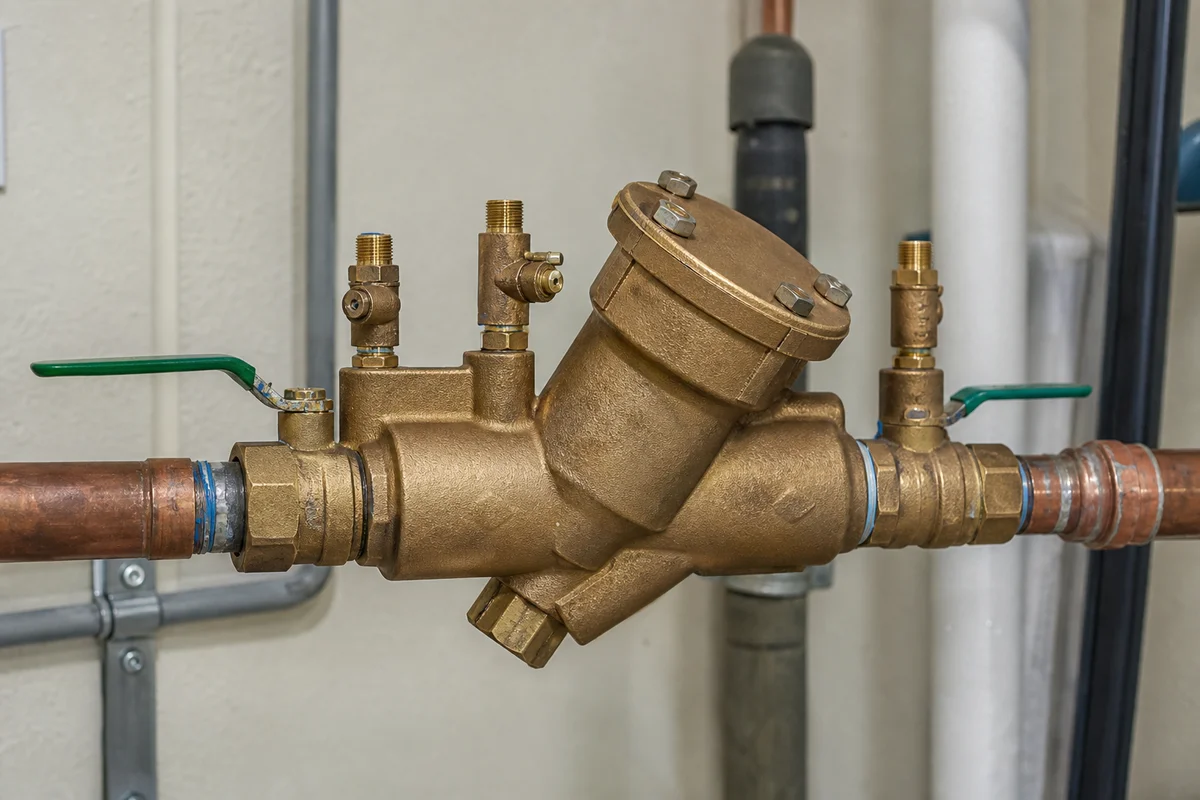 Backflow preventer assembly installed outside residential property
A backflow preventer is a mechanical device that stops that reverse flow. Florida, like every other state, follows federal Safe Drinking Water Act requirements that make water systems responsible for protecting the public supply from contamination. The state puts the day-to-day enforcement on local utilities, which is why the exact rules feel different depending on whether you're in Tampa, Orlando, or Miami-Dade.
The Rules That Actually Apply in Florida
There are a few layers here, and it helps to know which is which.
Federal level: The EPA's Safe Drinking Water Act requires public water systems to control cross-connections. This is the legal foundation for everything below it.
State level: The Florida Department of Environmental Protection (FDEP) regulates public water systems under Florida Administrative Code Chapter 62-555. That rule requires every community water system to have a cross-connection control program. It tells utilities they must identify hazards and require backflow prevention, but it leaves the specifics, like testing frequency and which devices are acceptable, to the local utility.
Local level: This is where the real requirements live. Your city or county utility writes its own cross-connection control ordinance. That ordinance decides who needs a device, what type, how often it gets tested, and what happens if you don't comply.
So when someone asks "what does Florida require," the honest answer is: Florida requires your utility to have a program, and your utility's program is what you actually have to follow.
Who Needs a Backflow Preventer
Not every property in Florida needs an annual test, but more do than people expect. You almost certainly need one if any of these apply:
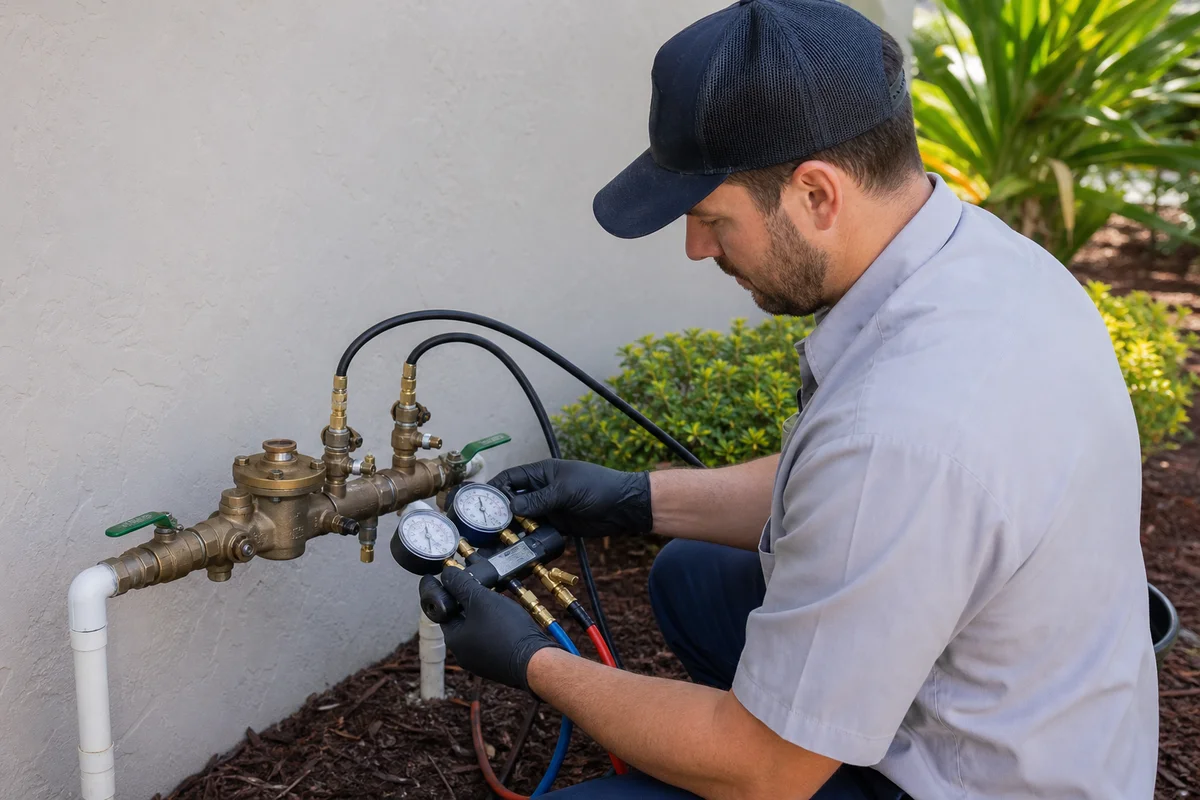 Certified tester inspecting backflow prevention device during annual test
- You have an irrigation or sprinkler system. This is the single most common trigger for residential testing in Florida. Lawns get fertilizer, pesticides, and standing water in the lines, and utilities don't want that pulled back into drinking water.
- You own commercial or industrial property. Restaurants, car washes, medical and dental offices, manufacturing, and warehouses are almost always required to have testable devices.
- You have a fire sprinkler system. Fire lines hold stagnant water and sometimes chemical additives, so they're treated as a hazard.
- You use a private well alongside city water. Any auxiliary water source is a high-priority concern for utilities.
- You have a swimming pool with an auto-fill line, a boiler, or any chemical feed equipment.
If you're a residential homeowner with nothing but standard indoor plumbing and no irrigation, you usually won't have a testable assembly. But the moment you add a sprinkler system, that changes.
How Often You Have to Test
Most Florida utilities require annual testing of testable backflow assemblies. That's the standard across the big systems. A few examples of how local programs handle it:
- City of Tampa requires annual testing of backflow assemblies and sends notices to customers when their test is due.
- Orlando Utilities Commission (OUC) requires annual certification for assemblies on its system.
- Miami-Dade Water and Sewer Department runs a cross-connection control program requiring annual testing for properties with backflow assemblies.
- JEA in Jacksonville requires annual testing and tracks compliance by customer account.
Newly installed devices typically have to be tested at the time of installation before the water gets turned on, and then annually after that. High-hazard facilities, like hospitals or chemical plants, sometimes face more frequent testing depending on the local program.
The clock usually runs from your last passing test, not the calendar year. So if your device passed in March, your next test is generally due the following March.
Who Can Legally Perform the Test
This is where Florida property owners get tripped up. You can't test your own device and you can't have a handyman do it. The test has to be performed by a certified backflow assembly tester using calibrated test equipment.
Certification in Florida typically comes through programs recognized by the utility, often tied to standards from the American Water Works Association (AWWA), the American Backflow Prevention Association (ABPA), or the University of Florida's TREEO Center, which runs one of the most widely recognized backflow tester certification courses in the state. Many utilities maintain a list of testers they accept, and they require the tester's certification and gauge calibration to be current.
The tester checks the assembly, records the readings, and submits a test report. In most Florida systems the tester or a testing company files that report directly with the utility, but it's still your responsibility as the property owner to make sure it gets done and filed on time.
What Testing Actually Costs
Pricing varies by region and device, but for a standard residential or small commercial assembly in Florida you're usually looking at somewhere between $45 and $125 for an annual test. Larger devices, multiple assemblies, or difficult-to-reach installations cost more.
If your device fails, you'll have repair or replacement costs on top of the test. A rebuild kit and labor might run $100 to $300. A full assembly replacement, especially on a larger line, can run several hundred to over a thousand dollars. The good news is that a lot of failures are minor, like a worn rubber check or a stuck relief valve, and a tester who also does repairs can often fix it the same day.
What Happens If You Don't Comply
Florida utilities take this seriously because they're legally on the hook to FDEP and the EPA. If you ignore your testing notice, the typical sequence looks like this:
- You get a reminder letter or email when your test is due.
- You get one or more follow-up notices if you don't respond.
- The utility issues a final warning with a deadline.
- If you still don't comply, the utility can shut off your water service until you provide a passing test.
Some utilities also add non-compliance fees or charge a reconnection fee once service is turned off. Shutting off water is the nuclear option, but utilities do use it, because an untested backflow device is a liability they can't carry. Staying ahead of the deadline is always cheaper and less stressful than scrambling after a shutoff notice.
How to Stay Compliant Without the Headache
A few practical habits keep this from becoming a problem:
- Know your device location and type. Walk your property and find your backflow assembly. It's often near the water meter, the irrigation hookup, or where the main line enters the building.
- Mark your test date on a calendar. Don't rely only on the utility's notice. Mail gets lost and emails go to spam.
- Build a relationship with one certified tester. Many will keep you on a reminder list and handle the utility paperwork for you year after year.
- Keep your test reports. If there's ever a dispute about whether you complied, your copy of the passing report is your proof.
- Fix failures fast. If your device fails, get it repaired and retested before the utility's deadline. Don't let a fixable problem turn into a shutoff.
The Bottom Line for Florida Property Owners
Florida doesn't run backflow testing from a single statewide office. The state requires your utility to protect the public water supply, and your local utility turns that into specific rules you have to follow, usually an annual test by a certified tester. If you have irrigation, run a commercial property, or have a fire line, assume you're covered by these rules and check with your utility if you're not sure. The cost of a yearly test is small. The cost of a contaminated water supply, or a water shutoff during business hours, is not.
Sources
- EPA: Cross-Connection Control and Backflow Prevention - federal guidance and the Safe Drinking Water Act basis for cross-connection control programs.
- Florida Administrative Code 62-555: Permitting and Construction of Public Water Systems - the state rule requiring Florida public water systems to maintain cross-connection control programs.
- American Water Works Association (AWWA): Cross-Connection Control - industry standards for backflow assemblies and tester certification.
- University of Florida TREEO Center: Backflow Prevention Training - one of Florida's primary backflow tester certification and training programs.
- Miami-Dade Water and Sewer Department: Cross-Connection Control Program - example of a local Florida utility backflow testing program.
Need a certified backflow tester near you? FindBackflowTesters.com makes it simple to find vetted, certified testers in your Florida city who know your local utility's rules and can handle the testing and paperwork for you. Search your zip code, compare local pros, and get your annual test scheduled before the deadline sneaks up on you.
Need a compliance test filed?
Tell us your service type and property details so we can help route the request to backflow testers near you.