Backflow Testing for Car Washes and Auto Detailing Shops
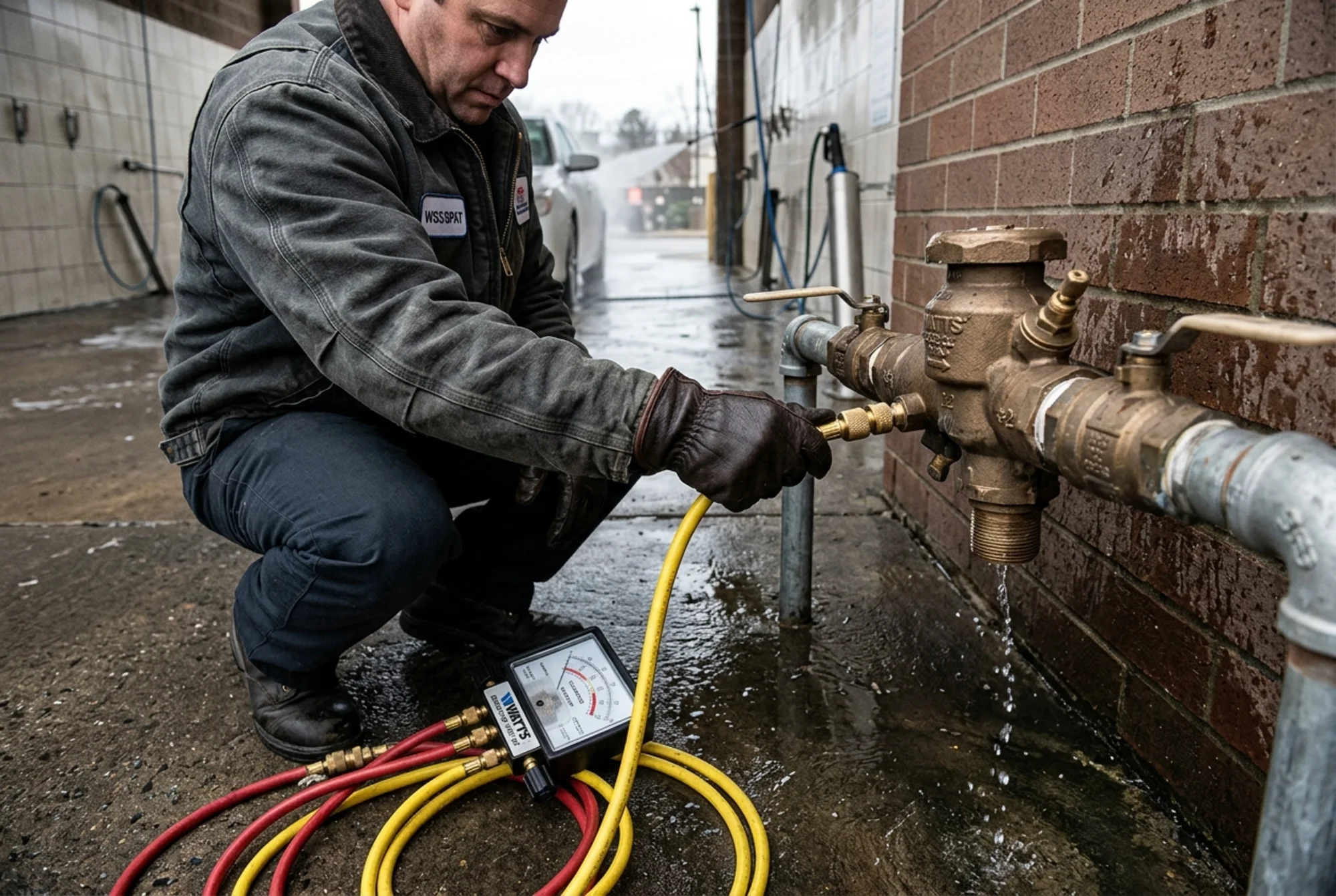
Backflow Testing for Car Washes and Auto Detailing Shops
Car washes move a lot of water, use chemicals, and often have plumbing layouts that are more complicated than a typical storefront. That is exactly why backflow compliance comes up so often for this kind of property.
If you own a tunnel wash, self-serve wash, fleet wash, or detail shop with wash bays, you should not assume the rules are the same as they are for a small office or retail suite. Many utilities treat commercial car washes as higher-risk cross-connections, and some require stronger backflow protection at the service line plus annual testing by a certified tester.
This guide explains what makes these properties different, what annual backflow testing usually involves, and where owners get tripped up. If you want the bigger public-health picture first, start with why backflow testing is required.
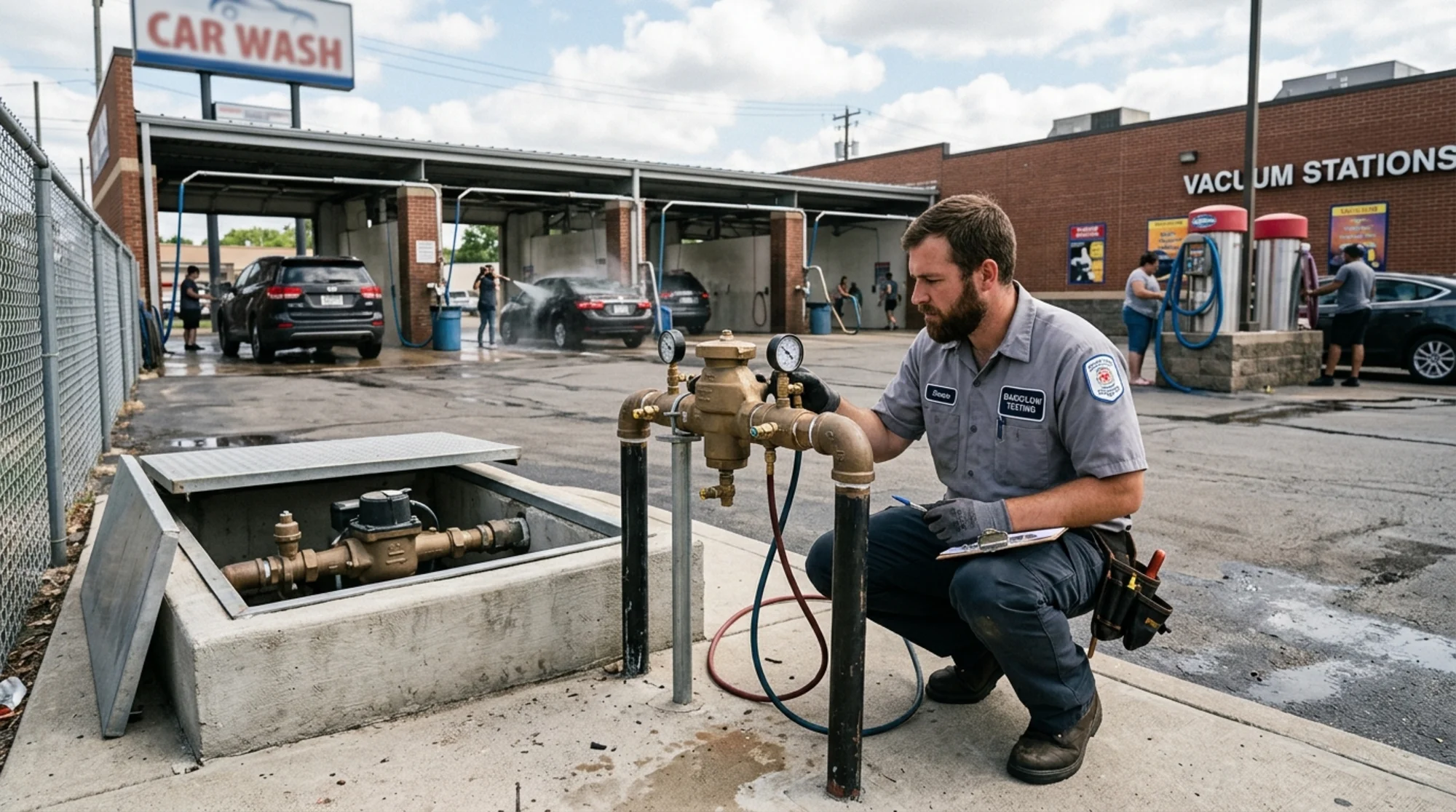 A certified backflow tester inspecting a reduced pressure backflow assembly beside the water meter at a busy commercial car wash, wash bays and vacuum stations visible in the background, natural daylight, no logos or text
Why car washes are treated as a serious cross-connection risk
The basic issue is simple. Backflow prevention exists to keep contaminated water, chemicals, and other non-potable substances from flowing backward into the drinking water system. EPA explains that the Safe Drinking Water Act exists to protect public health by regulating the nation’s public drinking water supply, and local cross-connection programs are one of the practical ways utilities carry out that protection.
Car wash properties often create more opportunities for cross-connections than lower-risk businesses do. There may be chemical injectors, hose connections, wash equipment, reclaim or reuse systems, booster equipment, or multiple pieces of plumbing connected to the same water service. Even when the business is well run, the hazard profile is different from a basic office tenant that only has sinks and restrooms.
Seattle Public Utilities makes this explicit. Its backflow requirements page says the required protection is determined by hazard, and it lists car washes among examples of high health hazard facilities. For those higher-hazard sites, Seattle requires premises isolation with a reduced pressure backflow assembly. That does not mean every utility copies Seattle exactly, but it is a strong real-world example of how seriously many programs view these properties.
New York City takes a similar posture. NYC DEP lists commercial car washes among the property types that are legally required to install and operate backflow prevention devices. DEP also notes that annual testing is required every 12 months by a certified tester and that failure to perform the annual test can lead to fines or even water service disconnection.
Car wash versus detailing shop, they are not always treated identically
This is where owners can make expensive assumptions.
A full commercial car wash is often called out directly in utility or city guidance. An auto detailing shop is not always named as clearly. That does not mean a detailing business is automatically exempt. It usually means the utility, engineer, or local cross-connection program will look at the actual hazard and plumbing configuration instead of relying on the business label alone.
NYC DEP says owners whose property type is not clearly covered should use a risk assessment process through a qualified design professional. Seattle says the protection required is determined by the hazard. Put those two ideas together and the practical rule is straightforward: if your detailing shop has wash bays, chemical feed, water reuse, or other plumbing arrangements that create a real cross-connection risk, expect the utility to look closely.
That is why detail-shop owners should not ask only, "Am I technically a car wash?" The better question is, "How does my local utility classify the hazard at my property, and what device and testing schedule does that classification trigger?"
For local provider options, it can help to compare markets where cross-connection programs are active, like Seattle, Washington and New York, New York.
What annual testing usually means for these properties
For most owners, the yearly requirement is not just "someone comes out and looks at it." It is a formal field test of the installed backflow assembly by someone who holds the right credential for that jurisdiction.
Seattle Public Utilities says all backflow prevention assemblies must be tested annually by a State of Washington Certified Backflow Assembly Tester, and the tester is responsible for providing certification and test-kit calibration information before reports can be submitted. Washington DOH backs that up with statewide resources for BAT duties, field test report content requirements, certification verification, and a public list of certified testers.
Texas uses a different licensing structure, but the same idea. TCEQ says a person who repairs or tests the installation or operation of backflow prevention assemblies must hold a TCEQ-issued license. That matters if you run a wash in a Texas market and are comparing vendors in places like Austin or reviewing the Austin Water backflow testing program.
In practical terms, a proper annual test usually includes:
- identifying the assembly type and location,
- connecting a calibrated differential pressure test kit,
- recording pass or fail readings for each check and relief component as required,
- documenting the tester credential and gauge calibration information,
- and submitting the report to the utility or local program if that is how your jurisdiction handles compliance.
If the assembly fails, the process can expand into repair, retest, and updated paperwork.
Paperwork is where a lot of owners get burned
For car wash properties, backflow compliance is not just mechanical. It is administrative too.
Seattle tells customers to work with their tester so they receive documentation confirming the results were submitted. NYC DEP says annual test forms must be completed by the appropriate certified professional and warns that missed testing can lead to enforcement. Washington DOH publishes minimum field-test report content guidance because incomplete paperwork is not a small technicality, it affects whether the utility accepts the test at all.
That means you should ask a backflow tester a few direct questions before scheduling:
- What credential do you hold for my jurisdiction?
- Is your test kit currently calibrated?
- Will you submit the report, or do I need to?
- What happens if the assembly fails?
- Will I get a copy of the completed report for my records?
If the answers are vague, keep looking. A car wash property has too much compliance risk to rely on guesswork.
Common compliance mistakes at wash and detailing properties
The most common mistake is assuming the property is too small to matter. A compact detail operation can still create a cross-connection concern if the plumbing and equipment create a real hazard.
The second mistake is assuming installation and annual testing are the same thing. They are related, but they are not the same. NYC DEP separates the installation approval process from the ongoing annual test cycle. Seattle also distinguishes between required assembly installation, report submission, and annual retesting.
The third mistake is hiring a general plumbing company without confirming whether the individual tester holds the required backflow credential for that state or utility program. If you need help screening vendors, see how to choose a qualified backflow tester and our FAQs.
Another frequent problem is poor recordkeeping. CDC’s drinking-water guidance tells people to contact their utility or health department if they have concerns about water quality or notice problems. From a property-management angle, that means you want your compliance history easy to produce, especially if the utility says a report is missing or if your site changes ownership.
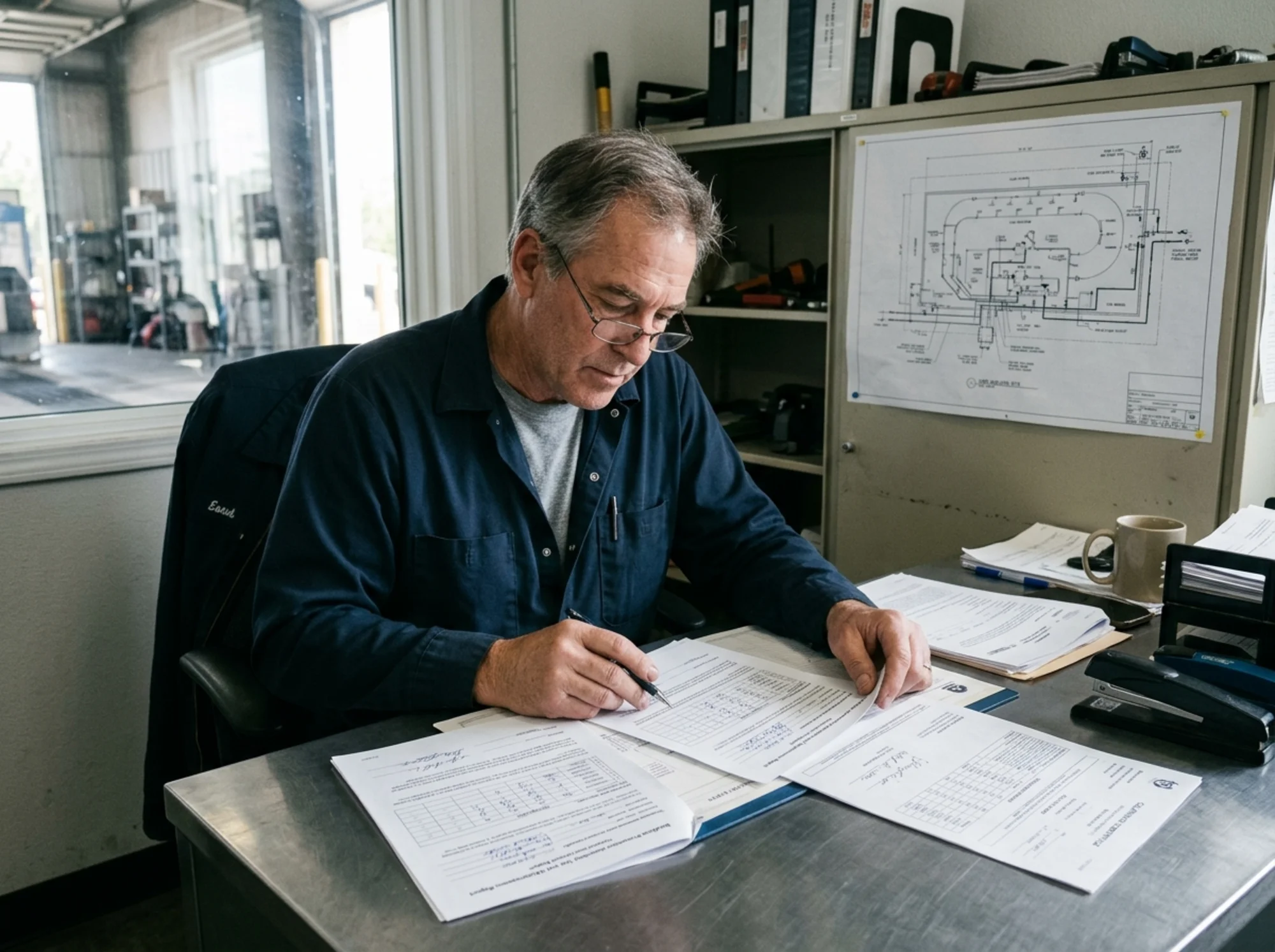 A car wash manager reviewing a completed backflow test report, tester certification, and gauge calibration certificate at an office desk with a site plumbing diagram, natural indoor lighting, no logos or text
A practical checklist for owners before the next due date
If you run a car wash or auto detailing business, use this checklist before your next compliance deadline:
- Confirm whether your utility classifies the site as a high hazard or otherwise requires premises isolation.
- Confirm what type of assembly is installed and where it is located.
- Verify whether your local rules require a certified tester, a state license, or both.
- Ask whether the tester submits results directly to the utility.
- Keep copies of the test report, certification, and calibration details.
- If your business has changed equipment or plumbing, ask whether a new hazard review is needed.
That last point matters. Expanding from hand-detailing into a fuller wash operation can change the property’s compliance picture even if the address stays the same.
Bottom line
Commercial car washes are one of the clearer examples of a business type that utilities often see as a meaningful backflow risk. Auto detailing shops can land in the same conversation when their plumbing setup creates a similar hazard, even if the local rules do not name them as directly.
The safest move is not to assume. Check how your local utility classifies the property, make sure the right assembly is installed, and hire a tester whose certification actually matches the jurisdiction. Done right, backflow testing becomes routine paperwork and annual maintenance. Done badly, it can turn into rejected reports, enforcement notices, or a water-service problem you did not need.
If you need to compare providers or program expectations, start with city pages like Seattle and Austin, then review a utility-specific page like Austin Water’s program guide before booking service.
Sources
This article references guidance and regulations from authoritative sources including:
- U.S. Environmental Protection Agency - Overview of the Safe Drinking Water Act
- Seattle Public Utilities - Requirements & Types of Backflow Prevention
- Seattle Public Utilities - Backflow Assembly Testing
- New York City Department of Environmental Protection - Backflow Prevention Frequently Asked Questions
- Washington State Department of Health - Cross-Connection Control and Backflow Prevention
- Texas Commission on Environmental Quality - Backflow Prevention Assembly Tester Information and Requirements
- Centers for Disease Control and Prevention - Preventing Drinking Water-Related Illnesses
- American Water Works Association - Cross-Connection Control / Backflow Prevention Resources
Last updated: April 30, 2026
Need a compliance test filed?
Tell us your service type and property details so we can help route the request to backflow testers near you.