Backflow Testing Cost Calculator: Get an Instant Estimate for Your Property
If you just got a notice from your water utility saying your backflow preventer needs to be tested, the first thing you probably want to know is: how much is this going to cost me?
The honest answer is that prices vary a lot depending on where you live, what kind of device you have, and whether you just need a test or also need a repair. That range can feel frustrating when you are trying to budget. So we built a tool to help.
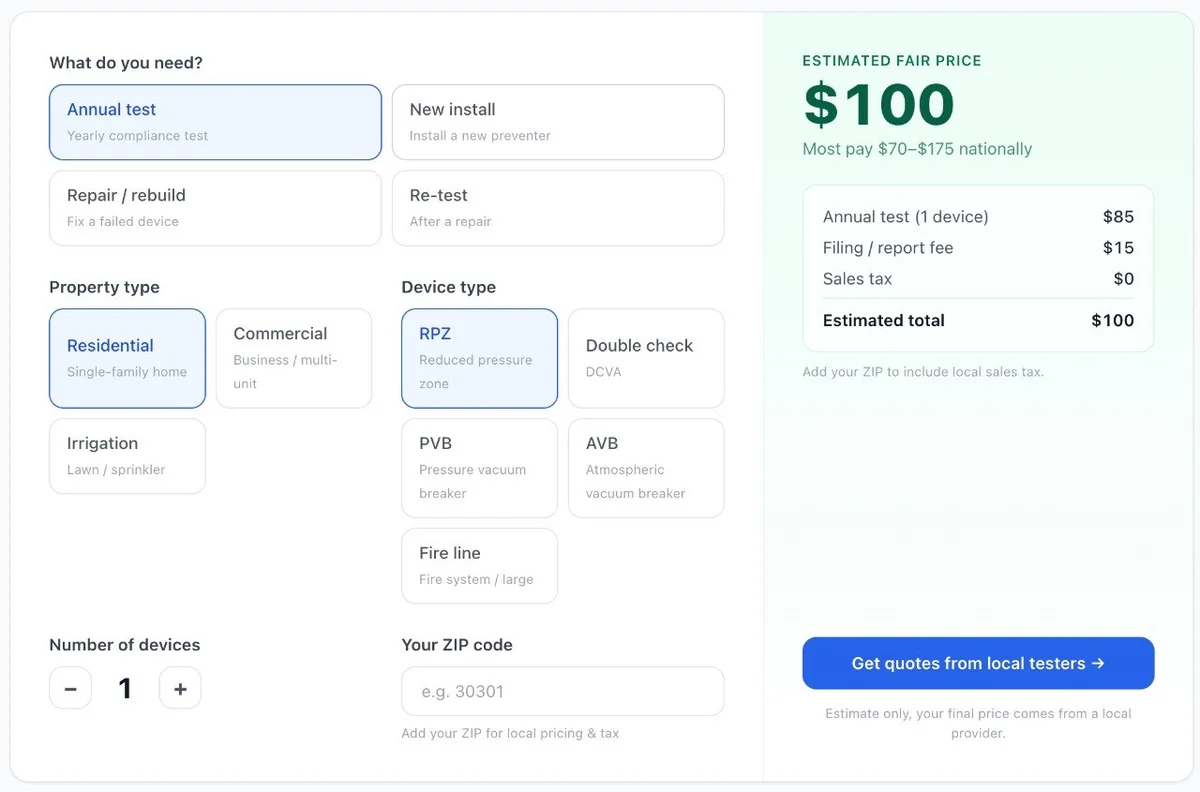
The Backflow Testing Quote Generator at FindBackflowTesters.com/pricing gives you a real estimate in about 30 seconds. You enter a few details about your property and device, and it shows you a price breakdown based on actual local data.
Here is how to use it, what the numbers mean, and what to do next.
The Backflow Testing Quote Generator — enter your ZIP code, device type, and property to get an instant local estimate.
How to Use the Backflow Testing Quote Generator
Step 1: Choose Your Service Type
The calculator starts by asking what kind of service you need. There are four options:
- Annual test - This is the most common one. Most water utilities require backflow preventers to be tested once a year by a certified tester. If you got a compliance notice, this is probably what you need.
- New install - If you are putting in a new backflow preventer for the first time, costs are higher because it includes parts and labor for the full installation.
- Repair or rebuild - If your device failed its test, the tester may need to replace internal parts. This is sometimes called a "rebuild."
- Re-test - After a repair, your utility may require a second test to confirm the device is now working. Re-tests are usually cheaper than a standard annual test.
Step 2: Select Your Property Type
Next, pick your property type: Residential, Commercial, or Irrigation.
This matters because commercial properties often have larger or more complex devices, and some water districts charge higher filing fees for commercial accounts. Irrigation systems are a separate category because the backflow preventer is usually installed at the irrigation meter and may have different local requirements.
Step 3: Pick Your Device Type
This is where a lot of people get stuck, so do not stress if you do not know this off the top of your head. Check your previous test report, your water meter area, or ask the tester when they arrive. The device type options are:
- RPZ (Reduced Pressure Zone) - Common in commercial buildings, fire lines, and higher-hazard applications. These are more involved to test and repair.
- Double Check (DCVA) - Frequently used for residential and irrigation connections. Generally less expensive to service than an RPZ.
- PVB (Pressure Vacuum Breaker) - Often found on irrigation systems. Usually the least expensive to test.
- AVB (Atmospheric Vacuum Breaker) - Less common for annual testing requirements, but included for completeness.
- Fire line - Backflow preventers on fire sprinkler systems have their own testing requirements and typically cost more.
Step 4: Enter the Number of Devices
If you have more than one backflow preventer on your property, enter the total count. The calculator adjusts the estimate accordingly. Most residential properties have one device. Commercial properties sometimes have two or more, especially if they have both a domestic water connection and an irrigation meter.
Step 5: Enter Your ZIP Code
This is what makes the estimate actually useful. Backflow testing prices vary significantly by region because of differences in labor costs, local utility filing fees, and whether your state requires the tester to submit the test report electronically. The calculator pulls in local pricing data and applies the correct filing fee and sales tax for your area.
Once you fill everything in, you will see a breakdown that looks like this:
- Base cost for the service
- Filing fee (if your local utility charges one)
- Sales tax (where applicable)
- Total estimate
You will also see a note that nationally, most homeowners and businesses pay somewhere between $70 and $175 for a standard annual test. That context helps you know whether your local estimate is in a normal range or if you should shop around.
Backflow Testing Price Reference Table
Here is a general breakdown of what different services typically cost across the country. These are ranges based on real quotes, not inflated estimates.
| Service | Residential | Commercial |
|---|---|---|
| Annual backflow test | $55 to $160 | $95 to $300 |
| Re-test (after repair) | $35 to $110 | $60 to $200 |
| Repair or rebuild | $130 to $500 | $250 to $1,000 |
| New install | $220 to $1,200 | $1,100 to $5,500 |
A few things that push prices toward the higher end of those ranges:
- RPZ devices (more parts, more time to test and rebuild)
- Remote or rural locations where fewer certified testers are available
- Same-day or rush scheduling
- Utility filing fees that get passed through to the customer
- Fire line devices, which require additional procedures
Things that keep costs lower: simple device types like a PVB, areas with lots of competition among certified testers, and bundling the test with other plumbing service calls.
Frequently Asked Questions
Why do prices vary so much between ZIP codes?
Two main reasons. First, labor costs differ by region, just like any skilled trade. Second, water utilities set their own rules about annual filing fees, and some charge $25 or more just to record the test report in their system. That fee gets added on top of the tester's charge. Some utilities charge nothing. The calculator accounts for this.
What if my device fails the test?
A failed test does not automatically mean you owe more money that day. The tester notes the failure on the report and submits it to your utility. You then have a window of time (usually 30 to 60 days depending on your utility) to have the device repaired and re-tested. You will want to get a repair quote from the tester before they leave, since rebuilding an RPZ can run $130 to $500 or more for residential devices.
Do I have to use the tester my water utility recommends?
No. Your utility will provide a list of certified testers, but you are free to hire any certified backflow tester in your area. Prices can vary between companies, so it is worth getting more than one quote, especially for commercial properties. Use our tester search at FindBackflowTesters.com to find certified testers near you and compare.
Is the estimate from the calculator a guaranteed price?
No. The tool gives you a realistic range based on your inputs and local data. The final price depends on the specific tester you hire and any surprises they find when they inspect the device. Think of it as the same kind of estimate you would get over the phone before scheduling, not a locked-in quote. Use it to understand what is reasonable before you start calling around.
What to Do After You Get Your Estimate
Once you have a sense of what you should expect to pay, the next step is to find a certified tester in your area and confirm pricing before you book.
Head to the FindBackflowTesters.com tester search to find certified professionals near you. You can filter by ZIP code and see testers who serve your area.
If you want to read more about how backflow testing works, what happens if you skip it, or how to read your test report, check out the FindBackflowTesters.com blog for guides on those topics.
The Backflow Testing Quote Generator is free to use and does not require you to sign up or enter any contact information. Use it as many times as you like to compare scenarios, like checking what a re-test would cost versus a full rebuild, before you decide how to proceed.
Sources
- U.S. Environmental Protection Agency - Cross-Connection Control Manual (EPA 816-R-03-002)
- American Water Works Association (AWWA) - M14 Manual: Recommended Practice for Backflow Prevention and Cross-Connection Control
- USC Foundation for Cross-Connection Control - Manual of Cross-Connection Control, 10th Edition
Last updated: June 2026
Ready for a local price?
Use the article as a guide, then send your address, service type, and device count so nearby testers can quote the actual job.