What Does Backflow Testing Actually Cost? A Breakdown by Device Type
What Does Backflow Testing Actually Cost? A Breakdown by Device Type
If you've received a notice from your water utility demanding a backflow test, your first question is probably: "How much is this going to cost me?" The answer depends almost entirely on what type of backflow prevention device you have installed. A simple residential dual check valve and a large reduced pressure zone assembly on a commercial fire line are completely different animals — and the testing costs reflect that.
This guide breaks down real-world backflow testing costs by device type so you know what to expect before you call a certified tester.
Why Backflow Testing Costs Vary So Much
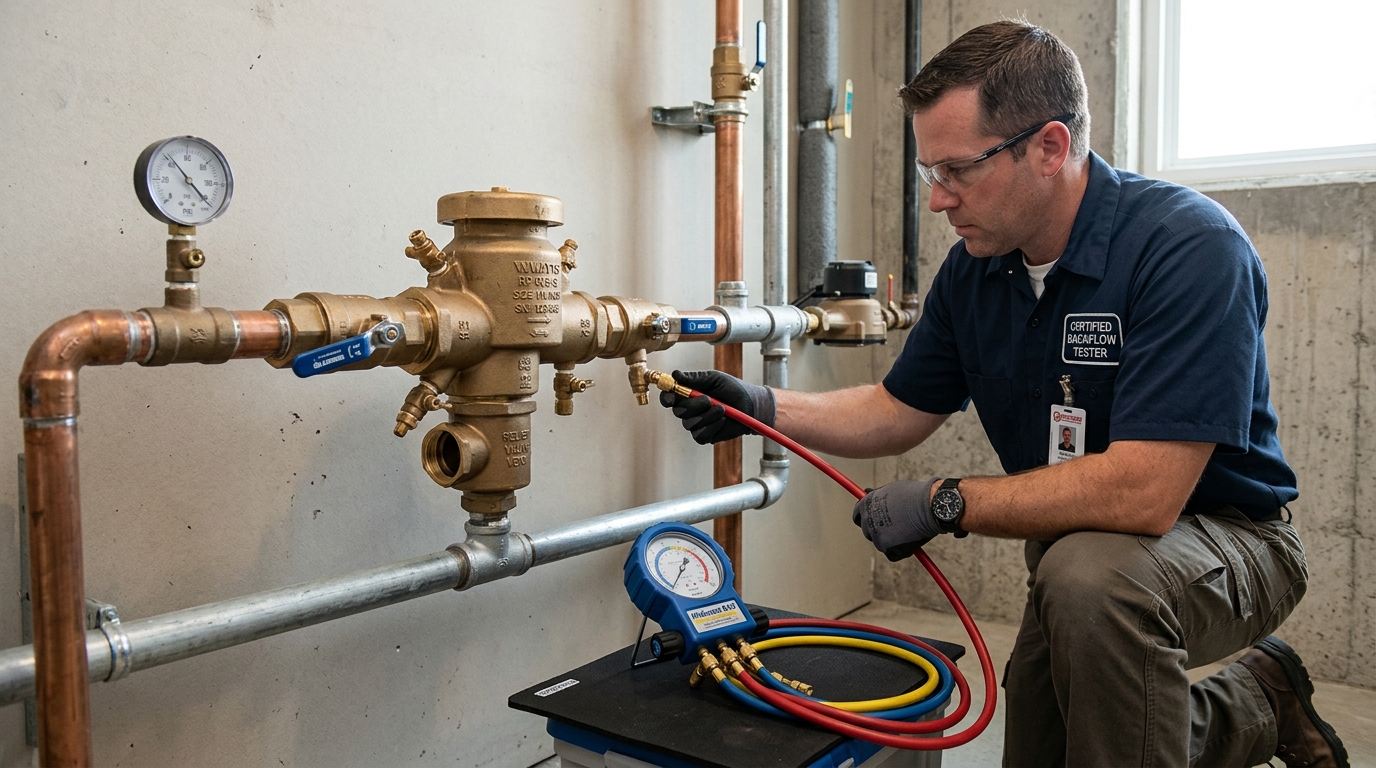
Before diving into specific numbers, it helps to understand what drives the price differences. Backflow testing isn't just someone glancing at a valve. A certified tester connects a differential pressure gauge kit to the device's test ports, runs water through the assembly under controlled conditions, and verifies that each check valve and relief valve operates within manufacturer specifications.
The cost differences between device types come down to three factors:
- Physical complexity — More internal components means more test points and more time.
- Size of the device — Larger assemblies require more water flow, bigger gauge kits, and sometimes two testers working together.
- Access and shutdown requirements — Some devices require isolating water supply to an entire building, which adds coordination time.
A certified tester typically spends 15 to 45 minutes per device depending on the type, and most charge a flat rate rather than hourly.
Pressure Vacuum Breaker (PVB) Testing Costs
Typical cost: $50 – $100 per test
The pressure vacuum breaker is the most common backflow device on residential irrigation systems. It's that brass assembly sticking up out of the ground near your house, usually close to where the sprinkler line branches off the main water supply.
PVBs are the simplest and cheapest devices to test. They have one check valve and one air inlet valve — two test points total. A competent tester can complete a PVB test in 15 to 20 minutes, including paperwork.
What you're paying for:
- Connection of the test gauge kit to two test ports
- Forward flow test of the check valve (must hold at least 1 PSI)
- Air inlet valve opening test (must open within 1 PSI of the check valve)
- Completion and submission of the test report to your water authority
PVBs are only rated for non-health hazard applications and can't handle back-pressure, so they're limited to irrigation and similar low-risk uses. If your tester finds a PVB where a higher-rated device should be, expect a conversation about upgrading.
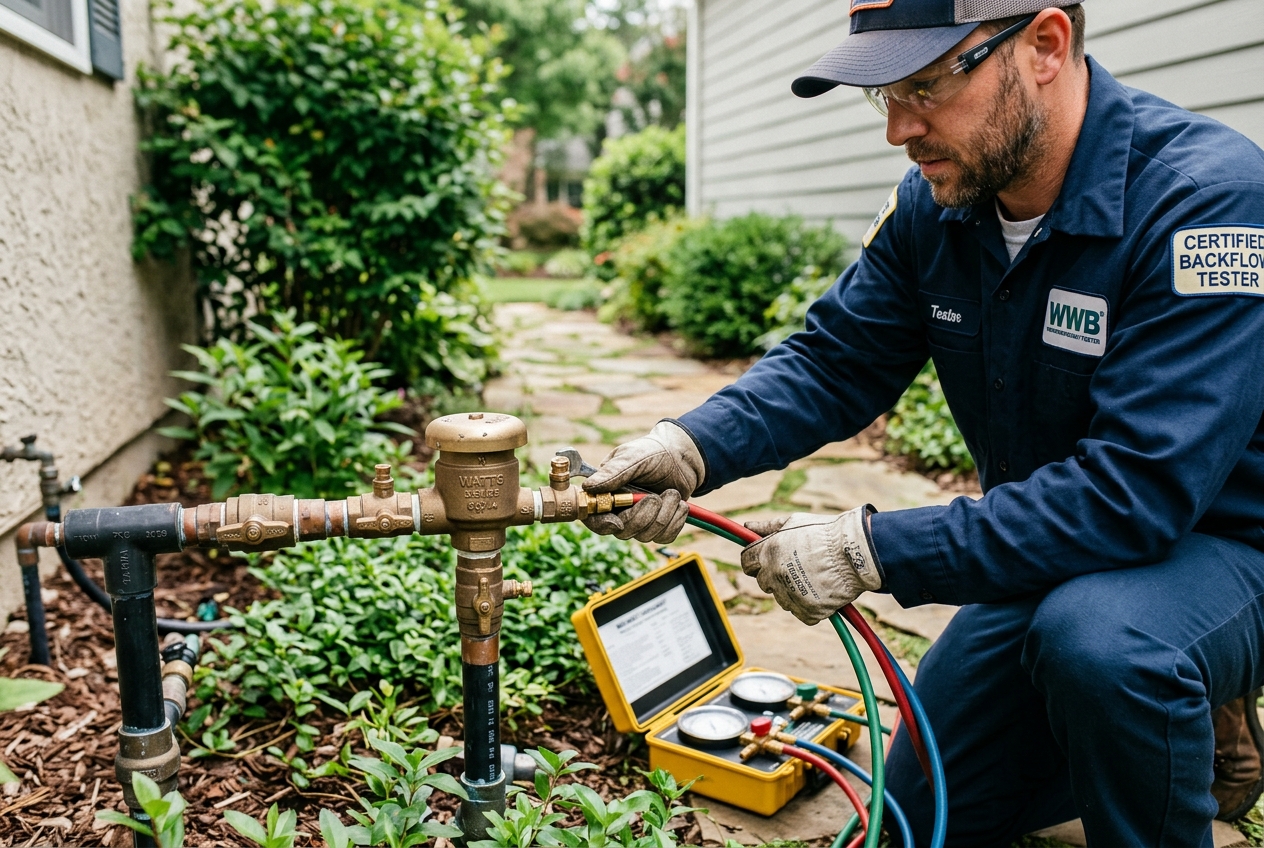 Certified tester connecting a differential pressure gauge kit to a brass pressure vacuum breaker on a residential irrigation line
Anti-Siphon Valve and Atmospheric Vacuum Breaker Costs
Typical cost: $35 – $75 per device (visual inspection only)
Atmospheric vacuum breakers (AVBs) and anti-siphon valves are the simplest backflow devices. You'll find them on individual sprinkler zone valves, hose bibs, and utility sinks. They work by allowing air into the line when water flow stops, breaking any siphon effect.
Here's the thing most people don't realize: AVBs typically don't require a formal gauge test. They receive a visual and functional inspection — the tester verifies the air vent opens and closes properly, checks for leaks, and confirms the device is installed at the correct height (must be at least 6 inches above the highest downstream outlet).
When a water authority does require AVB testing, the cost is lower because it takes less time and doesn't require the full differential pressure gauge setup. However, many jurisdictions simply require replacement rather than testing if an AVB shows signs of wear.
When replacement makes more sense than testing:
- The device is more than 10 years old
- Visible corrosion or mineral buildup on the air vent
- The cost of testing approaches the cost of a new $15–$30 AVB
Double Check Valve Assembly (DCVA) Testing Costs
Typical cost: $75 – $150 per test
Double check valve assemblies are the workhorses of commercial backflow prevention. They protect against back-siphonage and back-pressure in non-health hazard applications — think commercial irrigation, fire sprinkler supply lines (in some jurisdictions), and boiler feeds.
DCVAs have two independently operating check valves and four test ports. Testing takes longer than a PVB because the tester must verify both check valves independently, confirming each holds adequate pressure in the correct direction.
What the test involves:
- Shutting the downstream gate valve to isolate the assembly
- Testing the #2 check valve first (must hold at least 1 PSI)
- Testing the #1 check valve (must hold at least 1 PSI)
- Checking both gate valves for leakage
- Restoring flow and verifying no visible leaks under operating pressure
A standard 3/4-inch to 2-inch DCVA test runs 20 to 30 minutes. Larger assemblies (3-inch and above) often cost $150 to $250 because they require heavier gauge equipment and sometimes a second person to operate the valves.
Size-based pricing for DCVAs:
| Device Size | Typical Test Cost |
|---|---|
| 3/4" – 1" | $75 – $100 |
| 1-1/2" – 2" | $100 – $150 |
| 3" – 4" | $150 – $200 |
| 6" and above | $200 – $300+ |
Reduced Pressure Zone Assembly (RPZ) Testing Costs
Typical cost: $100 – $200 per test (residential/small commercial)
The RPZ — also called an RP or reduced pressure principle assembly — is the gold standard of backflow prevention. It's required wherever a cross-connection poses a health hazard: chemical feed systems, medical facilities, commercial kitchens, car washes, and many municipal connections.
RPZ testing costs more because these devices are more complex. They contain two check valves plus a differential pressure relief valve in a zone between them. The relief valve is designed to dump water if either check valve fails, which means the tester must verify three components instead of two.
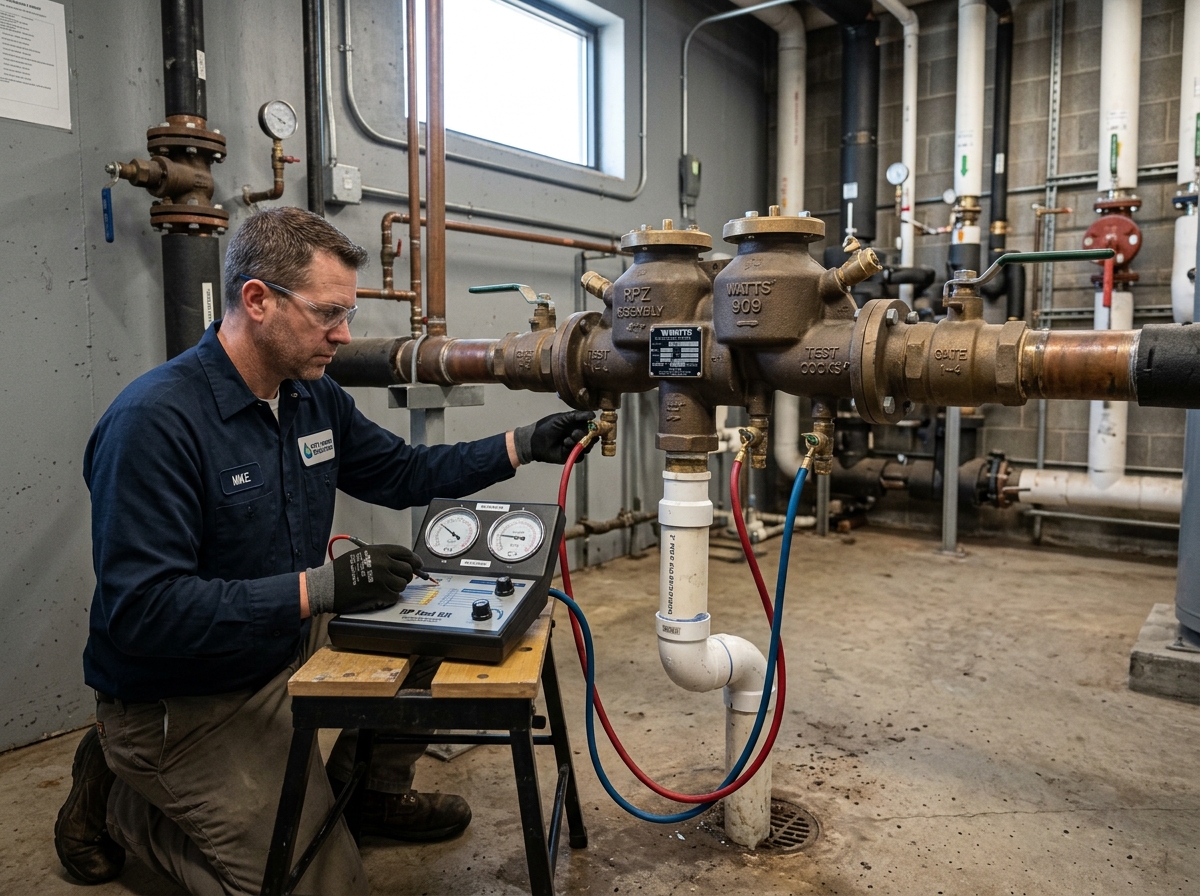 Technician testing a large reduced pressure zone assembly in a commercial building mechanical room with visible test gauges and drain piping
What makes RPZ testing more involved:
- Three independent components to test (two checks, one relief valve)
- The relief valve test requires precise measurement — it must open when the pressure differential drops to 2 PSI or less
- RPZ devices discharge water during testing (sometimes a lot of it), requiring drain access
- Failed components require immediate repair since the device protects against health hazards
Size-based pricing for RPZs:
| Device Size | Typical Test Cost |
|---|---|
| 3/4" – 1" | $100 – $150 |
| 1-1/2" – 2" | $125 – $200 |
| 3" – 4" | $200 – $350 |
| 6" – 8" | $300 – $500 |
| 10" and above | $500 – $800+ |
Large commercial and industrial RPZs (6 inches and above) are where costs climb significantly. These assemblies can weigh hundreds of pounds, require substantial water flow to test properly, and the tester needs heavy-duty gauge equipment rated for the higher flow rates. Many testers add a surcharge for devices above 4 inches, and some won't test them at all without a second technician on site.
Fire Line Backflow Assemblies
Typical cost: $150 – $400+ per test
Fire sprinkler supply lines usually have either a double check detector assembly (DCDA) or a reduced pressure detector assembly (RPDA). These are the same internally as standard DCVAs and RPZs, but they include a small bypass meter that detects unauthorized water use on the fire line.
Testing a detector assembly means testing both the main assembly and the bypass assembly — essentially two tests in one. The bypass line has its own small backflow preventer (usually 3/4-inch) that must be tested independently.
Why fire line testing costs more:
- Two assemblies to test (main line + bypass)
- Coordination with fire alarm monitoring companies (shutting down the sprinkler supply may trigger alarms)
- Larger pipe sizes — most fire lines are 4 inches or bigger
- Some jurisdictions require the fire department to be notified before the water supply is interrupted
- Documentation requirements are stricter
If your building has a fire line backflow device, budget for the higher end of the cost range and expect the test to take 45 minutes to an hour.
What's Usually Not Included in the Test Price
The quoted price for backflow testing typically covers the test itself and the paperwork. Here's what might cost extra:
Repairs: If a device fails the test, repairs are a separate charge. Common repairs include replacing check valve rubber kits ($30–$80 in parts for residential sizes), cleaning fouled seats, or replacing the relief valve on an RPZ ($50–$150 in parts). Labor for repairs usually runs $75–$200 depending on complexity.
Report filing fees: Some testers include the filing fee in their price; others pass through the $10–$25 fee that many water authorities charge for processing the test report.
Access issues: If the tester can't reach your device because it's buried, fenced in, or blocked by equipment, expect a surcharge or a return trip fee.
Shutoff coordination: For commercial properties where water shutdown requires tenant notification or after-hours scheduling, some testers charge a premium.
How to Save Money on Backflow Testing
Bundle multiple devices. If you have several backflow devices on one property, most testers offer a per-device discount. Testing five RPZs at once is far more efficient than five separate trips, and that savings gets passed along.
Schedule during off-peak months. Spring is the busiest season for backflow testing because most annual test deadlines fall between April and July. If your jurisdiction allows flexibility in scheduling, booking a test in late summer or fall may get you a better rate.
Maintain your devices. A clean, accessible, well-maintained device tests faster and passes more often. Clear vegetation away from outdoor assemblies, make sure test ports aren't corroded shut, and replace worn gate valve handles before the tester arrives.
Don't skip the test. This is the most expensive mistake. Late fees, violation fines, and water shutoff penalties from your utility will always cost more than the test itself. Some water authorities charge $50–$200 per month in non-compliance penalties, and a few will shut off water service entirely after 90 days of non-compliance.
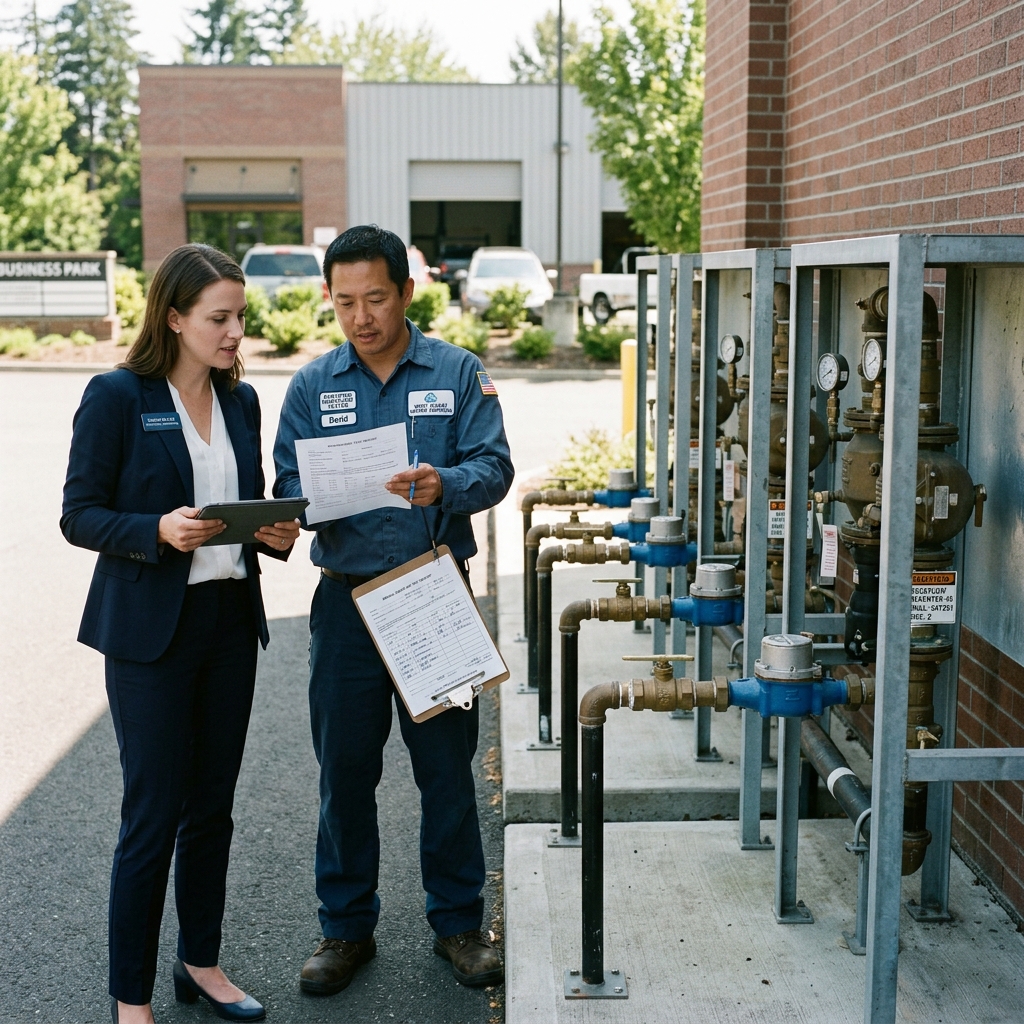 Property manager reviewing a backflow test report with a certified tester next to a row of metered water connections at a commercial property
What to Do Next
If you've received a test notice or you're just getting ahead of your annual requirement, here's your action plan:
Identify your device type and size. Look at the assembly — the manufacturer, model, and size are stamped on the body. Knowing this before you call lets the tester quote you accurately.
Check your deadline. Your water authority's notice will list a compliance date. Give yourself at least 3–4 weeks of lead time in case repairs are needed after a failed test.
Get two or three quotes. Pricing varies between testers, and the cheapest option isn't always the best. Verify that the tester is certified in your state and that they'll handle filing the report with your water authority.
Find a certified tester near you. Use FindBackflowTesters.com to search for licensed, certified backflow testers in your area. You can compare testers, check their certifications, and request quotes — all in one place.
Backflow testing is one of those maintenance costs that's easy to put off but expensive to ignore. Knowing what your specific device should cost to test puts you in a much better position to budget for it and avoid overpaying.