How to Tell When Your Backflow Preventer Needs Repair or Replacement
Why a Failing Backflow Preventer Is a Bigger Deal Than It Looks
A backflow preventer is one of those devices that quietly does its job for years, then suddenly becomes the most important piece of plumbing on your property. Its single purpose is to keep contaminated water — irrigation runoff, boiler chemicals, fire suppression foam, fertilizers, industrial process water — from reversing course and entering the potable supply that you, your tenants, or your customers drink.
When it fails, the failure mode is rarely dramatic. There's no flood, no alarm, no smoke. The device simply stops doing the one thing it was installed to do. That's why recognizing the warning signs early matters far more here than with most plumbing. A leaking water heater inconveniences you; a failed backflow assembly can cross-contaminate a municipal supply and trigger a public health notice.
The good news is that backflow assemblies almost always telegraph their problems before they fail completely. The check valves wear, the relief valve weeps, the test cocks corrode, the rubber seats harden. If you know what to look at, you can catch most issues during a routine walk-around — long before the annual certified test forces an emergency repair.
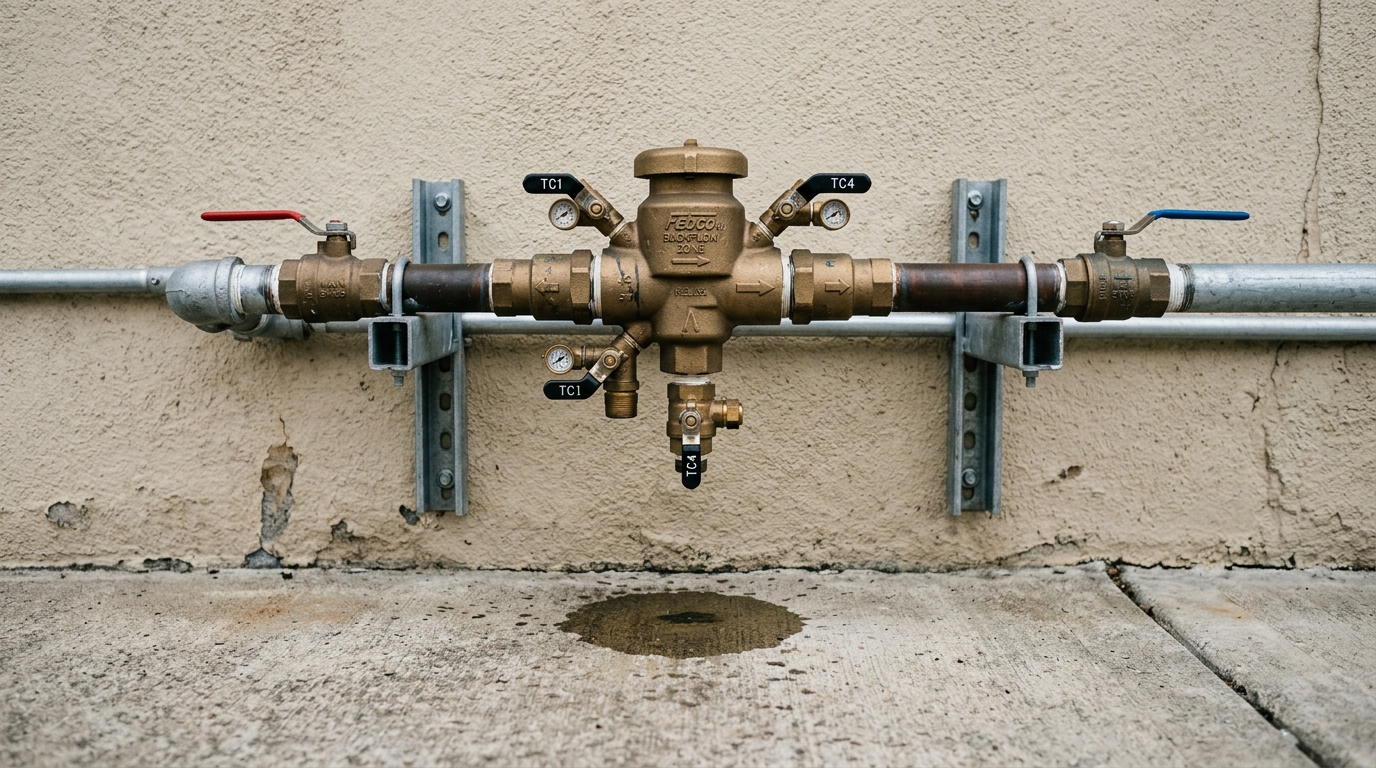
 A brass reduced pressure zone backflow assembly mounted on an exterior wall with visible test cocks and a small puddle on the concrete below
Visible Water Around the Device
The most common early warning sign is also the most misunderstood: water around the assembly.
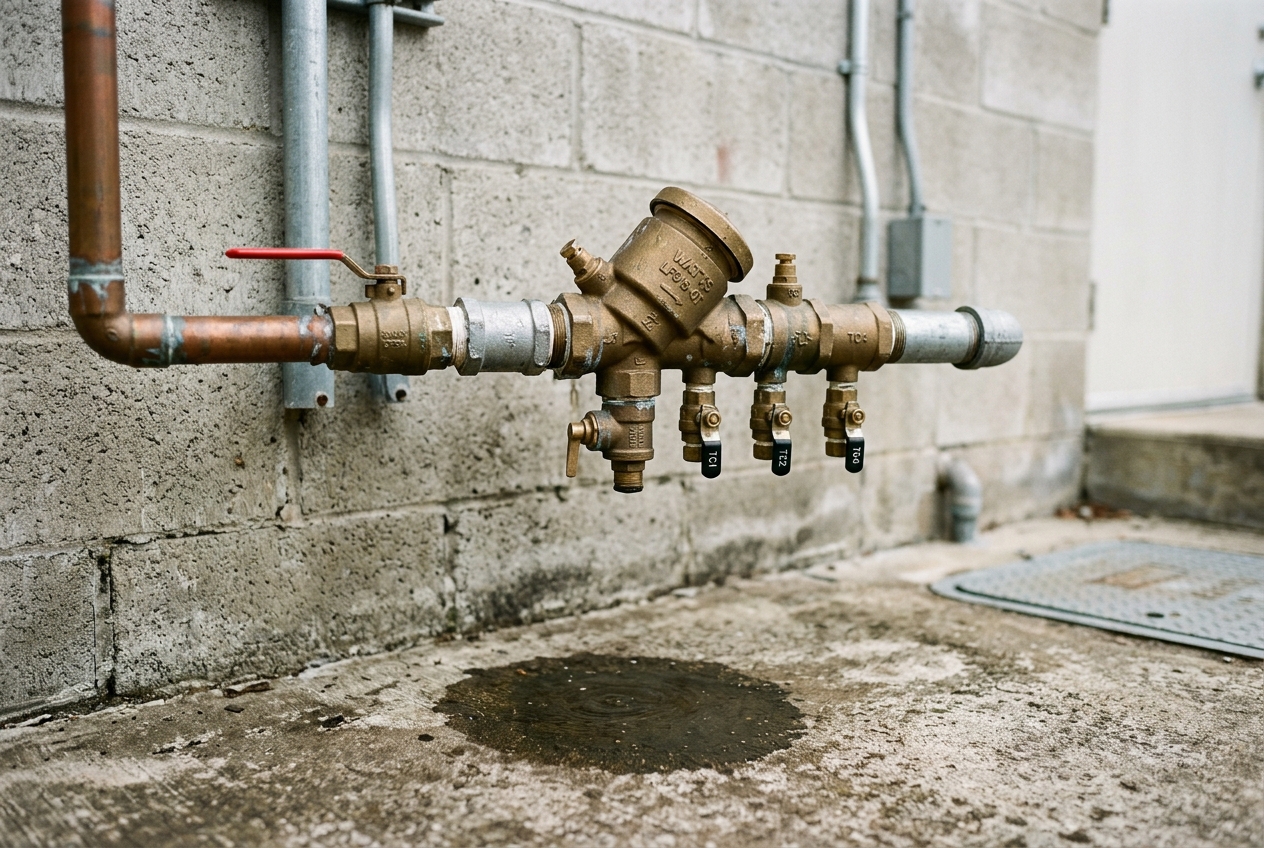
A reduced pressure zone (RPZ) device has a relief valve specifically designed to dump water when the internal check valves can't hold pressure. A small, occasional discharge during a pressure spike is normal. A constant drip, a steady stream, or a puddle that keeps reappearing after you wipe it dry is not. It means the first check valve is fouled, the relief valve seat is damaged, or both.
For double check valve assemblies (DCVAs) and pressure vacuum breakers (PVBs), there's no relief valve, so any external leak is abnormal. Water seeping from the bonnet, the test cock plugs, or the ball valve packing nuts indicates worn seals or cracked components. In freezing climates, a hairline crack from a missed winterization can take months to show itself — usually as a slow weep that worsens once spring irrigation kicks on.
What to watch for specifically:
- Mineral staining on the device body or the surface below it
- Mulch or soil that stays damp around an above-ground assembly
- A vault or pit that has more water in it than the drain can clear
- Rust trails running down from any joint, fitting, or test cock
A device that leaks during testing but holds during normal service is still a failed device under most jurisdictions. The annual test exists precisely to catch leaks you can't see during everyday operation.
Drops in Water Pressure Downstream
A healthy backflow preventer causes a small, predictable pressure drop — usually three to twelve PSI depending on size, type, and flow rate. When that drop suddenly becomes noticeably worse, the internal components are usually the cause.
Property owners often blame the water utility first, then the building's piping, then finally the backflow device. Reverse that order. If your morning shower has lost pressure, your irrigation zones aren't reaching their normal coverage, or your tenants are complaining about weak flow on upper floors, check the preventer before you call the city.
A fouled first check valve restricts flow. Debris caught on the seat — sand, scale flakes, pipe dope, a fragment of a rubber gasket from an upstream repair — forces water through a partially obstructed opening. The pressure loss is real, and it's the device's way of telling you something is wedged where it shouldn't be.
A simple diagnostic: compare static pressure upstream and downstream of the assembly using gauges on the test cocks. A certified tester can do this in a few minutes. If the differential is significantly higher than the manufacturer's published spec for your device at typical flow, the assembly needs servicing.
Discolored, Cloudy, or Off-Tasting Water
Backflow itself can introduce contaminated water into a building's plumbing, but a failing assembly can also dump its own debris downstream. Worn rubber check seats shed material. Corroded internal springs flake. A device that hasn't been serviced in fifteen years is essentially a small reservoir of accumulated grit.
When you start seeing brown or cloudy water at fixtures closest to the backflow device — particularly hose bibs, irrigation valves, or a janitor's sink fed off the same branch — and the discoloration clears as you let the tap run, the device itself may be the source.
This is more common in commercial settings where the assembly is larger and older, but it happens in residential irrigation setups too. A homeowner notices their drip lines clogging more often, or their sprinkler heads spraying erratically. The emitters and nozzles are catching debris that the backflow preventer's internal screen used to hold back — until that screen tore or the check valve disintegrated enough to feed solids downstream.
If your water has a metallic taste that wasn't there last year and you've ruled out the water heater, look at the backflow preventer. Aging brass bodies do eventually leach.
Hissing, Chattering, or Banging Sounds
Backflow assemblies should be silent. A healthy device makes no audible noise during normal operation. If you can hear yours, something is wrong.
Hissing usually means air or water is escaping through a worn seal — often the relief valve diaphragm on an RPZ. The sound is faint, so you'll only catch it if you're standing within a few feet during a quiet moment.
Chattering — a rapid clicking or fluttering — happens when a check valve disc can't seat firmly. It bounces between open and closed as flow conditions change. This often points to a broken or stretched spring, a deformed disc, or pressure conditions that the device wasn't sized for.
Water hammer, the loud bang when flow stops abruptly, isn't usually the backflow device's fault — but a worn check valve will fail to dampen reverse flow the way a healthy one does, making hammer events more violent. If your building suddenly developed a banging problem after years of quiet operation, and your plumbing hasn't changed, the preventer is a reasonable suspect.
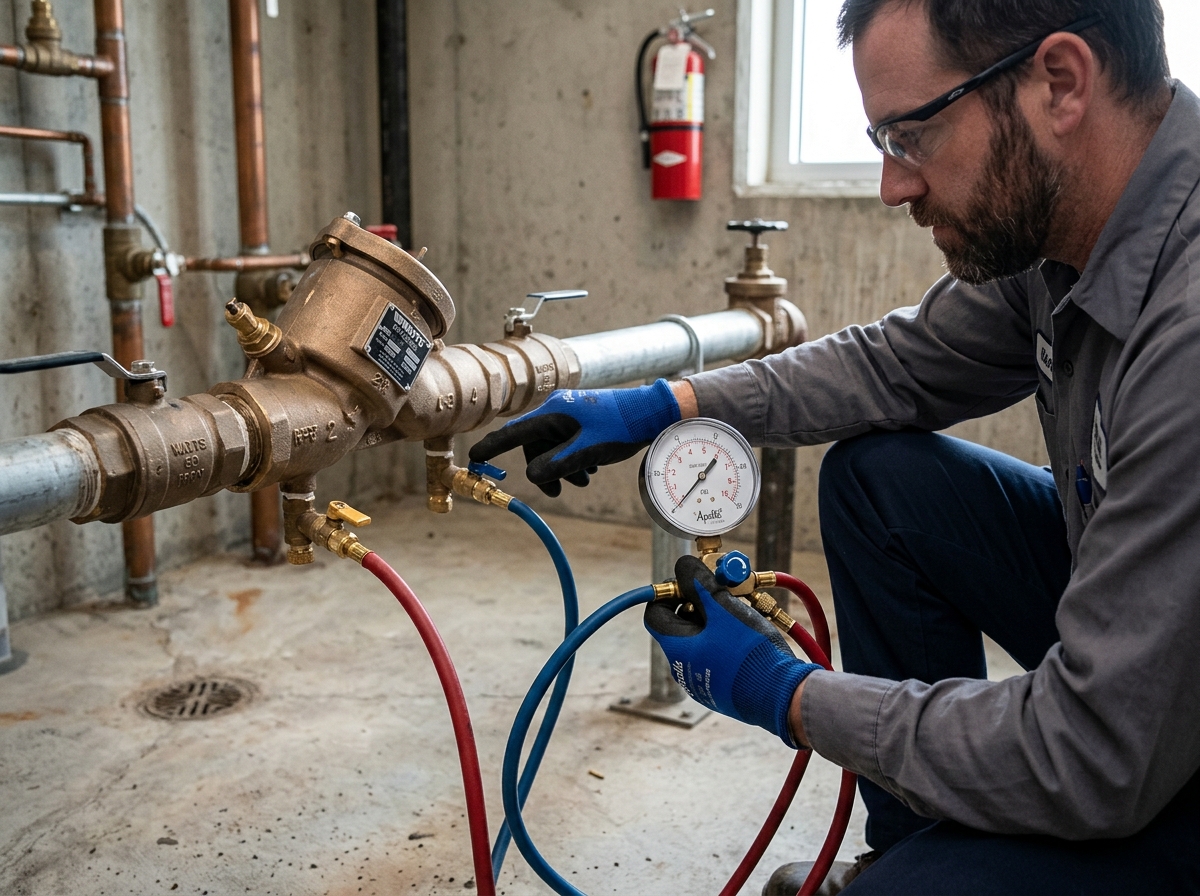 A technician in work gloves using a differential pressure gauge kit connected to the test cocks of a backflow preventer
Failed or Borderline Annual Test Results
Every jurisdiction with a cross-connection control program requires annual testing of backflow assemblies by a certified tester. The test report is your single most reliable diagnostic tool — and it tells you more than just pass/fail.
Look at the actual numbers, not just the checkbox at the bottom. A device that passed at the minimum acceptable threshold this year and the year before is trending toward failure. A check valve that opened at 1.2 PSID last year and 1.0 PSID this year is degrading, even if both readings technically pass.
Common failure patterns and what they typically mean:
- First check valve fails to hold: debris on the seat, worn rubber, or a damaged disc
- Second check valve fails: usually wear, since the second check sees less stress
- Relief valve opens late or doesn't open: stuck diaphragm, scale buildup, or sensing line blockage
- Relief valve opens early or won't close: torn diaphragm or seat damage
A tester who flags borderline numbers and suggests preventive rebuilding is doing you a favor. The cost of a scheduled rebuild — typically a fraction of replacement — is far lower than an emergency call when the device fails between annual tests and the water authority issues a violation notice.
Visible Corrosion, Cracks, or Physical Damage
Walk up to the assembly and actually look at it. This sounds obvious, but most property managers haven't laid eyes on their backflow device since installation.
What you're inspecting for:
- Green or white crust on brass surfaces, especially at joints
- Cracks in the body, bonnets, or test cock fittings
- Bent or damaged shutoff valve handles
- Missing or broken test cock caps (which allow debris and insects inside)
- Heavy rust on any steel components, including support brackets and strainer housings
- Insulation that's torn, missing, or visibly waterlogged on cold-climate installations
- Damage from lawn equipment, vehicles, or vandalism on above-ground installs
Freeze damage is the most common reason a previously healthy device suddenly fails. A single hard freeze on an unprotected assembly can split the brass body, crack a check valve seat, or rupture the relief valve diaphragm. The damage often isn't visible from outside — the device looks fine until you pressurize it and water sprays from a hairline fissure.
If your assembly took an unexpected freeze, don't wait for the annual test. Schedule an inspection.
Age and Service History
Manufacturers don't publish a hard expiration date, but the practical service life of most backflow assemblies is fifteen to twenty-five years, depending on water quality, climate, and how diligently the device has been maintained.
Hard water, high chlorine or chloramine levels, and frequent pressure fluctuations all shorten that timeline. Devices on irrigation systems in regions with mineral-heavy groundwater can need major rebuilds at ten years. Commercial RPZs on industrial sites with aggressive water chemistry sometimes don't last that long.
Check the manufacturer's date stamp on the device body. If you can't find it, the tester can usually identify the model and approximate vintage. Once an assembly passes the twenty-year mark, you're in replacement territory regardless of test results. Rebuild kits become harder to source, internal castings start to fatigue, and the cost of repeated repairs starts to exceed the cost of a new unit.
Service history matters too. A device that's been rebuilt three times in five years isn't being maintained — it's being kept alive. At some point, replacement is the cheaper and safer choice.
When Repair Makes Sense vs. When to Replace
The repair-versus-replace calculus comes down to four questions:
How old is the device? Under ten years with a good service history, almost always rebuild. Over twenty years, almost always replace.
What failed? Check valve internals, relief valve diaphragms, and seats are designed to be serviced — rebuild kits exist for exactly this purpose. Cracked bodies, damaged shutoff valves welded to the inlet/outlet, or frozen-and-split castings are replacement territory.
Is the device still compliant? Codes change. A device installed in 2005 may not meet current standards for the application it's serving, particularly if the hazard classification of the connection has changed. Your tester or local cross-connection control authority can confirm.
What does the math say? A rebuild on a one-inch RPZ typically costs a few hundred dollars in parts and labor. A full replacement on the same device — including new shutoffs, possible re-piping, and permit fees — runs several times that. But repeated rebuilds, downtime, and the risk of an uncontrolled failure tip the math toward replacement faster than most owners expect.
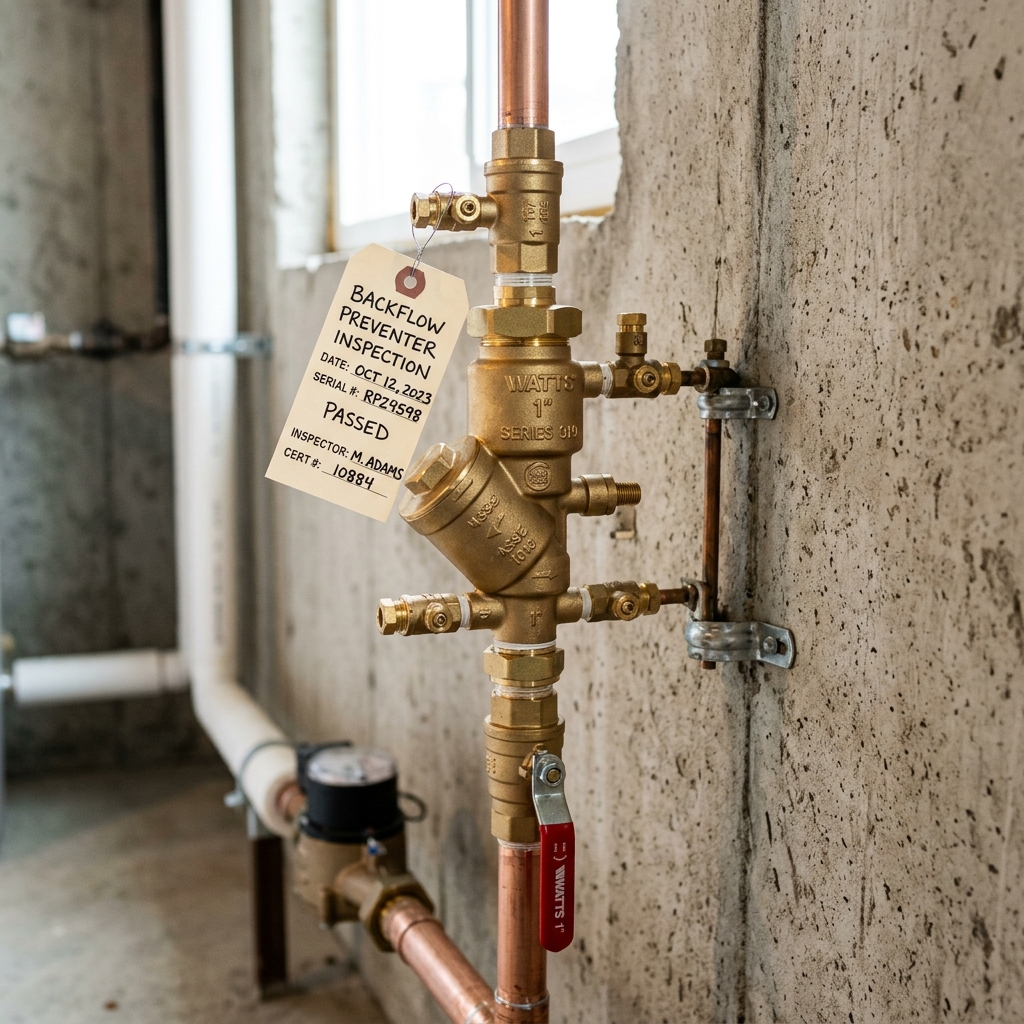 A newly installed shiny brass backflow preventer assembly with fresh pipe fittings and a tag attached showing inspection date
Practical Next Steps
If you've recognized any of the warning signs above on your own property, the sequence is straightforward.
First, locate the device and confirm its type, size, and approximate age. Take a photo of the data plate if you can find one. This information will save you and the tester time.
Second, schedule a certified backflow test even if you're not due for your annual yet. Most testers will perform a diagnostic test for a modest fee and apply it toward repairs if needed. Ask specifically for the differential pressure readings on each check valve, not just a pass/fail.
Third, get a written estimate for both repair and replacement before authorizing work. A reputable tester will recommend the more conservative option when it makes sense and explain clearly when replacement is the better investment.
Fourth, if the device serves a fire suppression system, irrigation system on a separate meter, or any commercial process water connection, notify your facilities team or property manager immediately. These systems often have additional regulatory requirements, and a failed backflow assembly can trigger shutdown of the protected system until certification is restored.
Finally, keep records. Every test report, every rebuild invoice, every photograph of the device goes into a folder you can hand to the next tester, the next property manager, or the next water authority inspector who asks. A well-documented service history is the difference between a routine annual test and an expensive surprise.
The backflow preventer protects something far more valuable than the device itself: the integrity of the water that everyone connected to your building or property is going to drink, cook with, and bathe in. Treating it with the attention it deserves — recognizing the early signs of wear, acting on borderline test results, and replacing it before it fails — is one of the highest-leverage maintenance decisions any property owner can make.