When a Backflow Preventer Fails: Emergency Repair Procedures
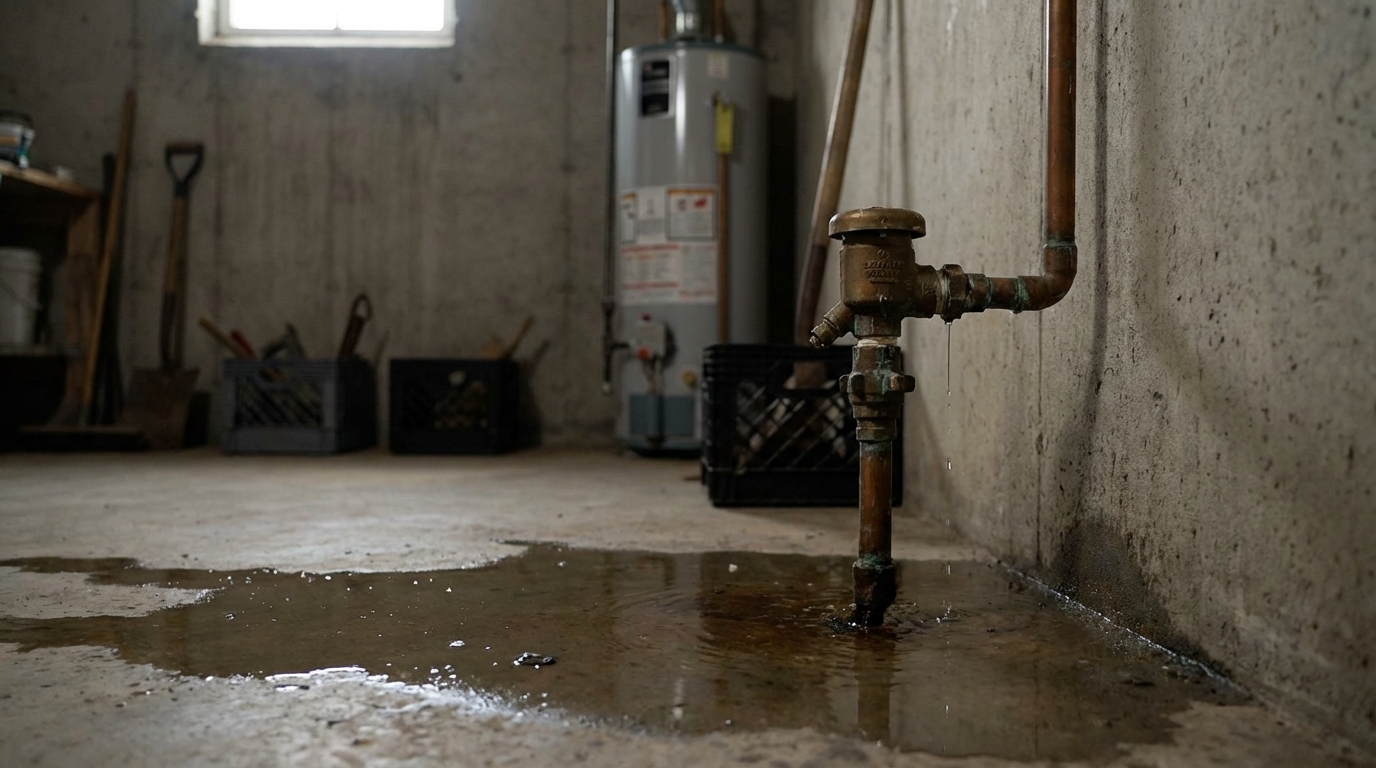
When a Backflow Preventer Fails: Emergency Repair Procedures You Need to Know
A backflow preventer doesn't usually give you advance notice before it fails. One day you're running your irrigation system or filling a boiler, and the next you've got water shooting from a relief valve, a flooded mechanical room, or a notice from your water utility that your device failed its annual test. Some failures are minor. Others put your drinking water supply at risk right now.
This guide walks through what to do when a backflow preventer fails unexpectedly — from immediate steps to protect your property and water supply, through the repair process itself, and what comes after.
Recognizing a Backflow Emergency vs. a Routine Failure
Not every backflow problem is an emergency. Understanding the difference determines how fast you need to act.
True emergencies include:
- Visible backflow of non-potable water into your domestic supply
- A broken or cracked body on the device with uncontrolled water flow
- Complete device failure on a system protecting against high-hazard connections (sewage, chemicals, medical equipment)
- A failed device on a fire sprinkler system that your fire marshal requires to remain in service
- Water utility issuing an immediate shut-off order due to a failed device
Urgent but not emergency situations include:
- A relief valve that drips continuously but isn't gushing
- A device that failed its annual test but is still partially functional
- Minor leaks around test cocks or fittings
- A device that passes in one direction but shows marginal readings
The key question: Is contaminated water actively entering or at risk of entering the potable supply right now? If yes, that's an emergency. If the device is degraded but still providing some protection, you have hours or days — not minutes — to arrange repair.
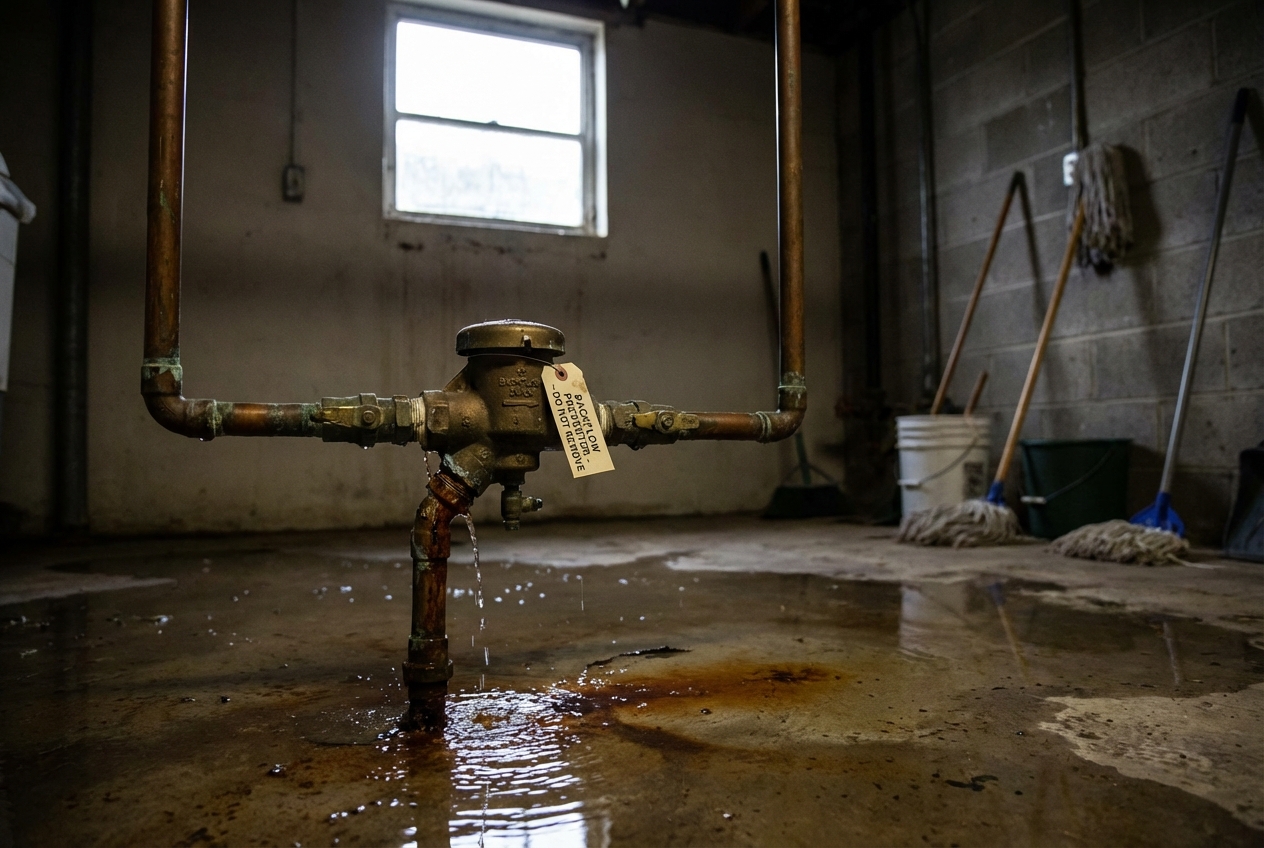 Flooded utility room with water pooling around a failed backflow preventer mounted on copper piping
Immediate Steps When a Backflow Device Fails
Before you call anyone, take these actions in order:
1. Shut Off the Water Supply
Locate the shut-off valve upstream of the backflow preventer and close it. On most installations, this is a gate valve or ball valve within a few feet of the device on the supply side. If you can't find or operate the upstream valve, shut off the main water supply to the building or the specific zone the device serves.
For irrigation systems, this usually means closing the irrigation shut-off valve. For fire sprinkler systems, do not shut off the supply without notifying your fire alarm monitoring company first — an impaired fire suppression system has its own notification requirements under NFPA 25.
2. Open the Downstream Shut-Off
If the device has a downstream shut-off valve, open it to relieve pressure on the device. This can slow or stop uncontrolled discharge from relief valves.
3. Document the Failure
Before anyone touches the device, take photos and note:
- What the device is doing (leaking, gushing, making noise)
- Water color and any odor from the discharge
- The device make, model, and serial number (stamped on the body)
- The date of the last test tag, if visible
- Any upstream or downstream conditions that seem unusual
This documentation matters for insurance claims, warranty coverage, and your repair technician's diagnosis.
4. Notify Your Water Utility
Most jurisdictions require you to report a backflow device failure, especially on high-hazard connections. Your water utility's cross-connection control department needs to know. In many cases, they'll already know if the failure triggered a pressure anomaly on their system.
Call them. Don't wait for them to call you.
5. Call a Certified Backflow Repair Technician
This is not a DIY repair. In every U.S. state and Canadian province, backflow preventer repairs must be performed by a technician holding a valid backflow tester/repair certification. The device must be tested after any repair before it can be returned to service.
Finding Emergency Backflow Repair Service
Standard backflow testing companies may not offer same-day emergency service. When you need someone fast:
- Call your regular backflow testing company first. Many have emergency or priority service tiers, even if they don't advertise them. If they tested your device last, they already have your records.
- Contact your plumber. Licensed plumbers who also hold backflow certification can often respond faster than specialty testing firms, especially for residential emergencies.
- Check with your water utility. Many cross-connection control offices maintain a list of certified testers in your area, and some can flag which ones offer emergency response.
- Use a backflow tester directory. Services like FindBackflowTesters.com let you search for certified professionals near your location who handle repairs, not just annual testing.
When you call, tell them:
- The device type (RPZ, DCVA, PVB, SVB) and size
- What the device is doing right now
- Whether the water supply is currently shut off
- What the device protects (irrigation, fire line, boiler, industrial process)
- Whether you've been contacted by the water utility
This information helps the technician show up with the right parts and tools.
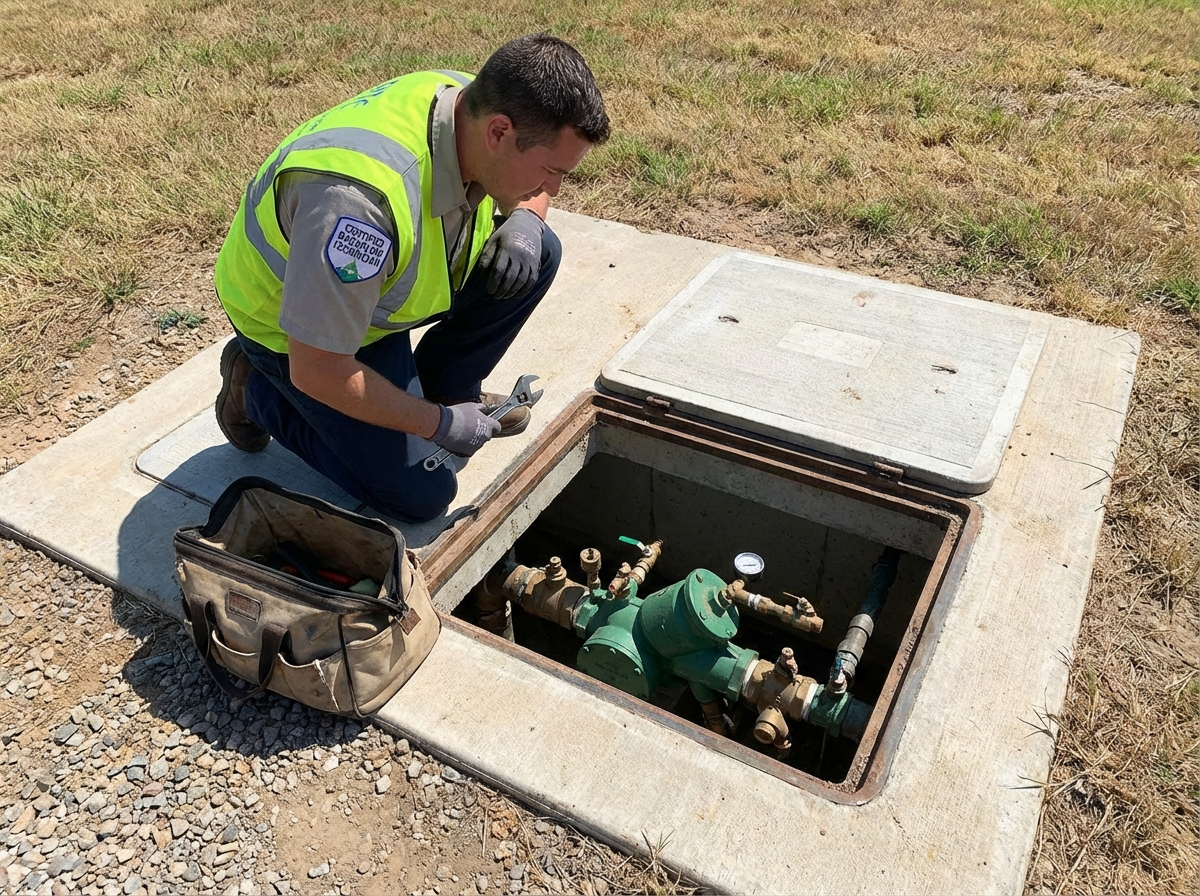 Certified backflow technician with tool bag kneeling beside an open RPZ valve assembly in a ground-level vault
What Happens During an Emergency Backflow Repair
Here's what to expect once the technician arrives.
Diagnosis
The technician will perform a visual inspection and then run a differential pressure test using a backflow test kit. This identifies which internal component has failed:
- Check valves — the spring-loaded valves inside the device that prevent reverse flow. Worn seats, cracked discs, or debris fouling are the most common failure points.
- Relief valve (on RPZ assemblies) — the valve between the two check valves that dumps water when it detects backpressure. A relief valve that won't close usually means a fouled seat or a failed check valve upstream of it.
- Diaphragms and O-rings — rubber components that degrade over time, especially in devices exposed to heat, chlorine, or UV light.
- Springs — the return springs that keep check valves closed. Broken or weakened springs allow the valve to drift open.
Repair vs. Replacement
Most backflow preventer failures can be repaired in the field using manufacturer-approved repair kits. A typical repair involves:
- Isolating the device (shutting upstream and downstream valves)
- Relieving internal pressure
- Removing the check valve modules or relief valve assembly
- Replacing rubber kits, springs, seats, or complete check modules
- Reassembling and performing a passing test
A complete rubber kit for a residential 3/4-inch or 1-inch device typically costs $30 to $120 in parts. Labor for an emergency repair visit usually runs $150 to $400 depending on your market, time of day, and device accessibility.
When replacement is the better option:
- The device body is cracked, corroded through, or frost-damaged
- The device is so old that repair parts are no longer manufactured
- Repair cost approaches 60–70% of replacement cost (common on larger commercial devices)
- The device has failed repeatedly within a short period, suggesting systemic issues
- Code requirements have changed since installation, and the existing device type no longer meets current standards
Post-Repair Testing
After any repair, the technician must perform a full backflow prevention assembly test and submit the passing test report to your water utility or local authority. This is not optional — an unverified repair is treated the same as a failed device by most jurisdictions.
The technician should leave you with:
- A copy of the passing test report
- A new test tag attached to the device
- A list of what was replaced
- Any recommendations for preventing future failures
Common Causes of Sudden Backflow Device Failure
Understanding why devices fail helps you prevent emergencies:
Debris and sediment. Particles in the water supply lodge under check valve seats, preventing them from sealing. This is the single most common cause of failure, especially after water main breaks, hydrant flushing, or construction on the municipal supply.
Freeze damage. Water expands when it freezes. An unprotected device in a below-grade vault or exposed outdoor location can crack its body or rupture internal components during a hard freeze. In 2025 and into 2026, freeze-related claims have been a leading cause of emergency backflow calls in southern states that experienced unusual cold snaps.
Age and wear. Rubber components have a finite lifespan. Most manufacturers recommend rebuilding check valves every 5 to 7 years, regardless of test results. Waiting until failure means an emergency instead of a scheduled repair.
Pressure spikes. Water hammer, pump cycling, and municipal pressure surges can damage check valve springs and seats. Devices on systems with variable-speed pumps or frequent start-stop cycles fail faster than those on steady-pressure supplies.
Improper installation. Devices installed without adequate strainers, in the wrong orientation, without required clearances, or in locations subject to flooding or submersion will fail prematurely.
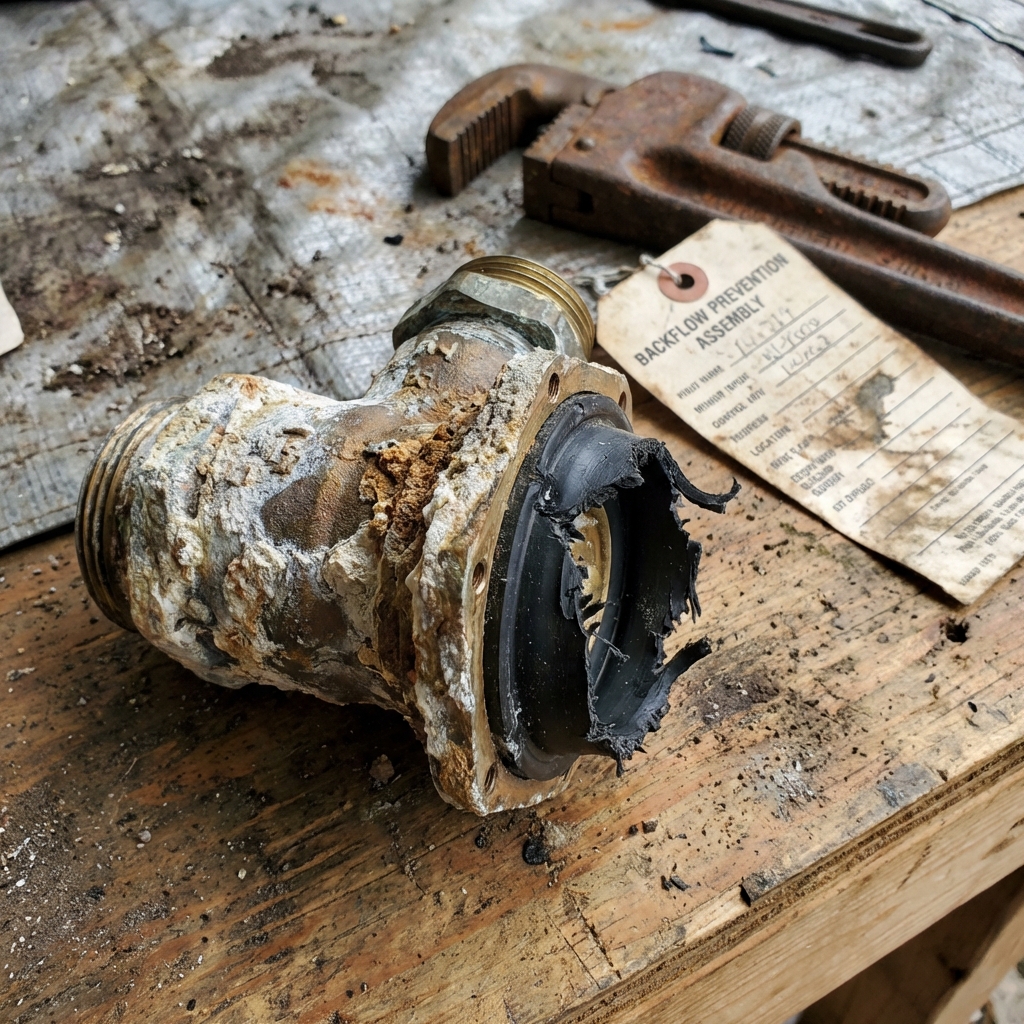 Close-up of a corroded check valve module removed from a backflow preventer showing mineral buildup and a torn rubber disc
Preventing the Next Emergency
Once the immediate crisis is resolved, take these steps to reduce the chances of another unexpected failure:
Install a strainer upstream of the device. A Y-strainer or basket strainer catches debris before it reaches the check valves. This is inexpensive insurance, typically $40 to $150 for residential sizes, and it's the single most effective thing you can do to extend device life.
Keep your annual testing schedule. Annual testing isn't just a regulatory checkbox. A skilled tester can identify a device trending toward failure — marginal readings, slow response times, visible corrosion — and recommend proactive repair before the device fails in service.
Protect against freezing. Insulate exposed devices. In cold climates, use insulated enclosures rated for your minimum expected temperature. For seasonal irrigation systems, ensure the backflow preventer is properly drained and winterized before the first freeze.
Budget for rebuilds. Plan to rebuild the device every 5 years, whether it has failed or not. A $100 scheduled rebuild is far cheaper than a $400 emergency call plus whatever damage the failure caused.
Know your device. Keep a record of the make, model, serial number, installation date, and repair history. This information speeds up emergency response and helps your technician arrive with the correct parts.
When Your Water Utility Gets Involved
If your water utility learns about a backflow device failure — through your report, their own monitoring, or a failed test result — they may:
- Issue a compliance notice requiring repair within a set timeframe (often 14 to 30 days for non-emergency failures)
- Require an immediate shut-off of the protected service until the device is repaired and tested
- In extreme cases, disconnect your water service to protect the public supply
Take utility notices seriously. The penalties for non-compliance range from daily fines to service termination, depending on your jurisdiction. Most utilities are reasonable about timelines if you can show you've already engaged a certified repair technician and are working toward resolution.
Next Steps After an Emergency Repair
Once the device is repaired and tested, follow through on these items:
- File the test report with your water utility if the technician hasn't already submitted it electronically.
- Update your maintenance records with the repair date, parts replaced, and technician information.
- Review your insurance coverage. Water damage from a backflow device failure may be covered under your property insurance — document everything.
- Schedule your next annual test. Don't let the device go unmonitored for another year just because it was recently repaired.
- Get a second opinion if failures recur. Repeated failures may indicate a systemic issue — wrong device type, installation problems, or water quality conditions that need to be addressed upstream of the device.
A backflow preventer failure feels urgent because it is. But with the right response — shut the water off, document, call a certified professional, and follow through — most emergencies resolve within hours, not days. The best emergency plan is the one you never have to use, so invest in regular maintenance and know who to call before you need them.