Annual Backflow Test Prep: Complete 4-Week Checklist for 2026
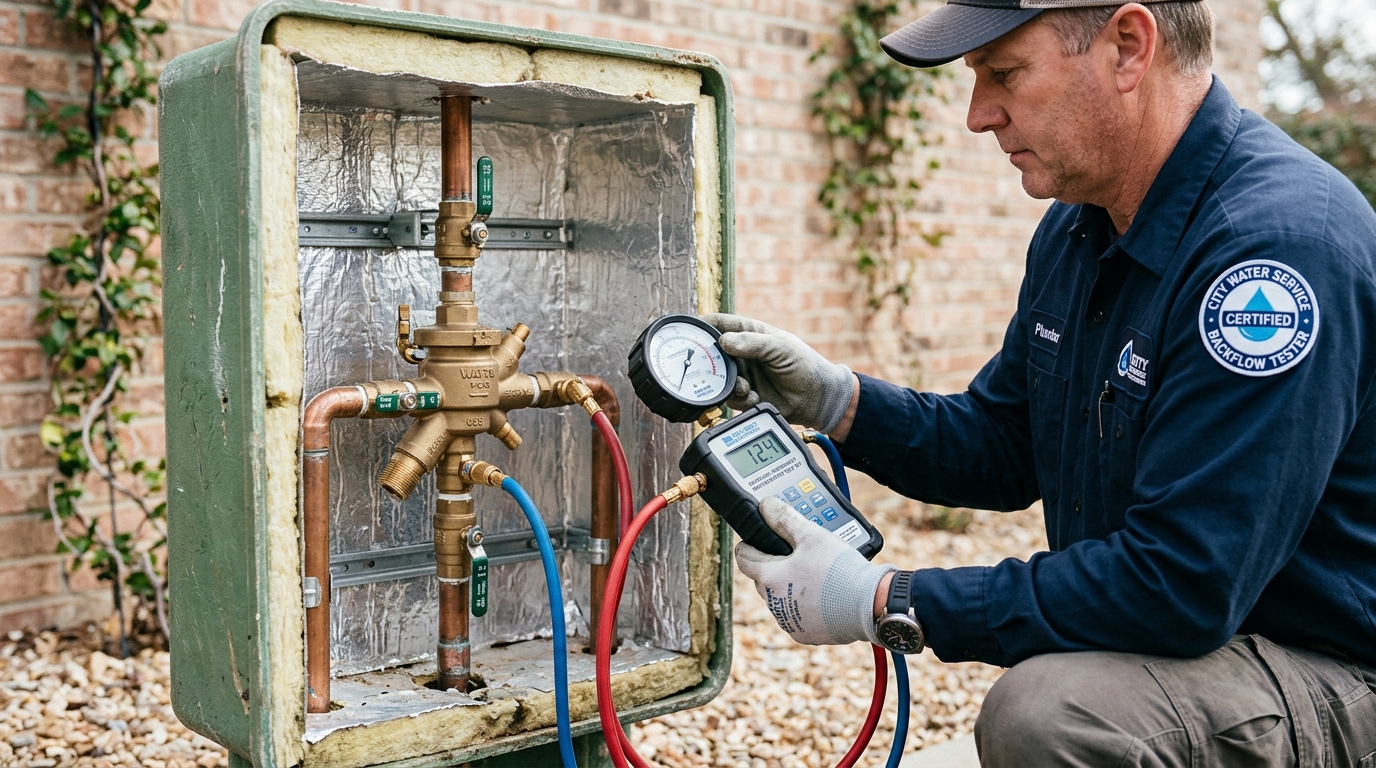
Why Annual Backflow Testing Matters More Than You Think
Your backflow preventer is the silent guardian standing between your drinking water and everything else your plumbing touches: irrigation runoff, boiler chemicals, fire suppression water that's been sitting stagnant for months, soap from a commercial dish line, fertilizer from a lawn injection system. When it works, you never think about it. When it fails, contaminated water can siphon backward into the potable supply, and the consequences range from a bad-tasting glass of water to a public health notice that shuts down your building.
That's why nearly every water purveyor in North America requires annual testing of devices on cross-connection control lists. The test itself takes about twenty minutes. The preparation, paperwork, and follow-up are where most property owners get tripped up. A test that should cost $75 to $150 turns into a $600 repair, a fine from the water authority, or a missed deadline that gets your water shut off.
This guide walks you through exactly what to do in the four weeks before your annual test, on test day, and after, whether you're a homeowner with a single irrigation RPZ or a property manager juggling sixty devices across a portfolio.
Know Which Device You Have and Where It Lives
Before you can prepare, you need to know what you're preparing. Pull out your last test report or the tag wired to the device. You're looking for four pieces of information:
- Device type: RPZ (reduced pressure zone), DCVA (double check valve assembly), PVB (pressure vacuum breaker), or SVB (spill-resistant vacuum breaker).
- Manufacturer and model number: Watts 909, Febco 825YA, Wilkins 975XL, Apollo 4A, and so on.
- Size: Typically 3/4", 1", 1-1/2", 2", or larger for commercial mains.
- Serial number: Stamped on the body or on a metal tag.
Then locate it physically. Common spots include the mechanical room near the water meter, a basement utility area, an outdoor enclosure or hot box near the irrigation manifold, a riser room for fire suppression, or behind a landscaped shrub that's been growing over it for three years. If you can't find the device, your tester will charge you for the search time or reschedule, and the deadline clock keeps ticking either way.
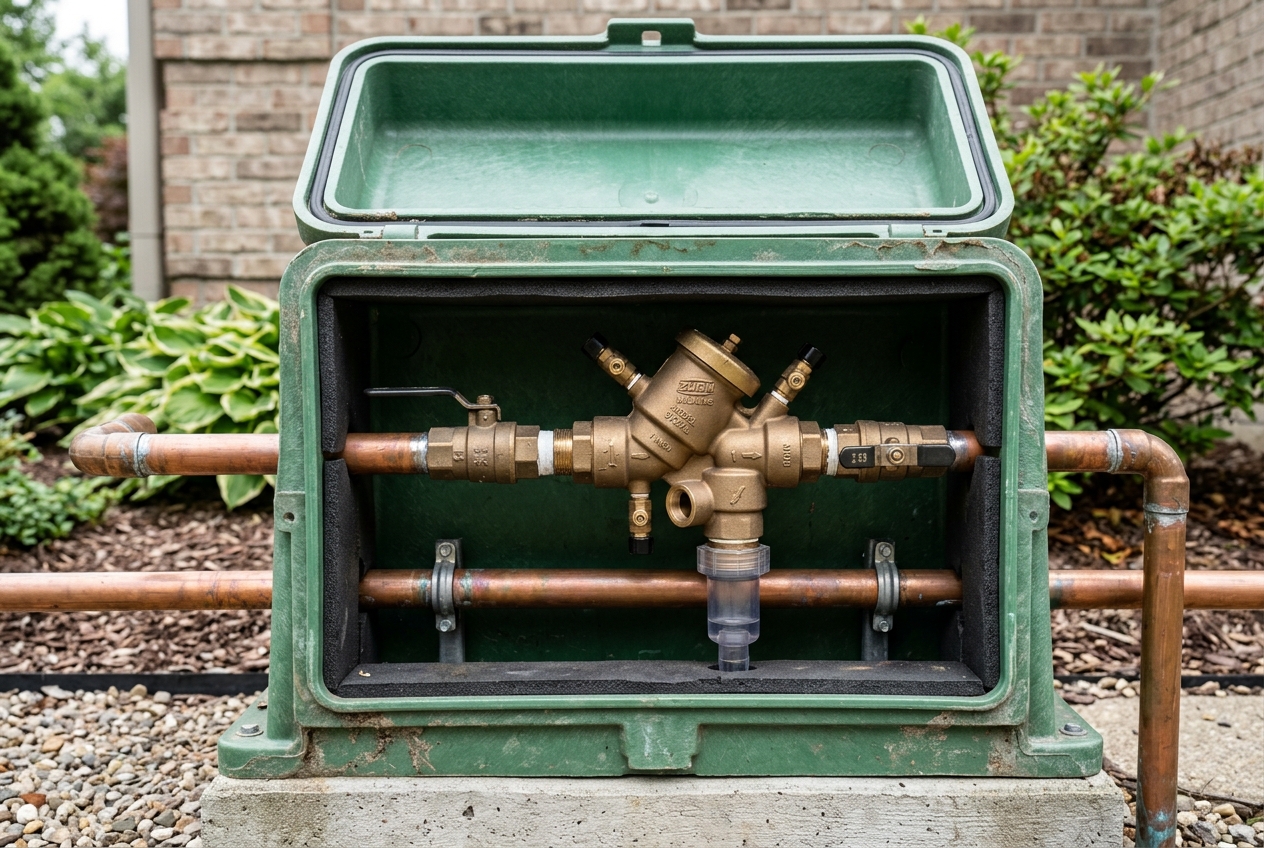 A brass RPZ backflow preventer mounted horizontally on copper piping inside a green outdoor insulated enclosure with the lid open
If the device is outdoors, walk out and inspect it now. Is the enclosure intact? Is the lid bolted down? Has a landscaper buried the test cocks under mulch? Is there a yellowjacket nest in there? These are all common reasons a tester arrives, takes one look, and leaves without testing.
Confirm Your Deadline and Who Reports the Results
Annual doesn't always mean "twelve months from the last test." Some water purveyors run on a calendar year, some on the device's installation anniversary, and some send a notice with a hard 30-day deadline once your renewal window opens. Check the notice from your water authority and write the deadline down. If you haven't received a notice and you know your device is due, call the cross-connection control coordinator at your utility and ask. Don't wait.
You also need to confirm how test results get submitted. In 2026, most utilities use an online portal where the certified tester uploads the report directly. A handful still require the customer to mail or email a paper copy. A few use third-party compliance platforms like Aqua Backflow, Syncta, or BSI Online. Ask your tester which system applies to your jurisdiction and confirm they're set up to file there. A test that doesn't get reported counts as no test at all.
Schedule Early, and Pick a Certified Tester Carefully
Testers get slammed in spring (irrigation season startup) and fall (winterization). If your deadline falls in April, May, September, or October, book at least three weeks out. For commercial portfolios with multiple devices, four to six weeks is safer.
When you hire, verify these things before you sign anything:
- Current state or county certification. Backflow tester certifications expire annually or biennially depending on the jurisdiction. Ask for the certification number and the expiration date. Cross-check it on your state's online registry if one exists.
- Calibrated test kit. The differential pressure gauge used to test the device must itself be calibrated, usually annually. Ask when the kit was last calibrated and request a copy of the calibration certificate if you want to be thorough. An out-of-calibration gauge invalidates the test.
- Insurance. General liability at minimum. Testing requires shutting off water and discharging it; mistakes can flood mechanical rooms.
- Repair capability. Roughly one in five tests fails. If your tester can't do repairs on the spot or schedule them quickly, you'll lose days getting a second contractor out.
Get the price in writing, including any trip fees, repair labor rates, and parts markup. Lowball quotes from unfamiliar names often turn into surprise invoices.
Prepare the Site So the Tester Can Actually Work
This is where most preventable delays happen. Two days before the appointment, do a physical walk-around:
Clear access. The tester needs to stand at the device with a kit bag, hoses, and a bucket. Move stored boxes, garden hoses, recycling bins, and seasonal decorations. For outdoor devices, trim shrubs back at least 18 inches on all sides and pull weeds away from the enclosure base.
Verify shutoff valves work. Every backflow preventer has shutoff valves on both sides. Try them. Open and close each one. If a valve is seized, frozen open, or leaks past when closed, the tester can't isolate the device and the test will fail or be cancelled. This is the single most common cause of a wasted appointment, and replacing a seized ball valve is a separate job that takes another visit.
Check for visible leaks or damage. A cracked relief valve cover, a constant drip from the relief port, a missing test cock cap, corrosion blooms, or freeze damage are all things you want to know about before the tester arrives so you can decide whether to schedule a repair simultaneously.
Make sure the device is in service. Sounds obvious, but a winterized irrigation backflow with no water to it can't be tested. The system needs to be pressurized and active. If you shut your irrigation down for winter, coordinate the test with your spring startup.
Confirm power and lighting. For indoor devices in dark mechanical rooms, replace the bulb or set up a work light. Testers shouldn't have to perform a precision pressure test by phone flashlight.
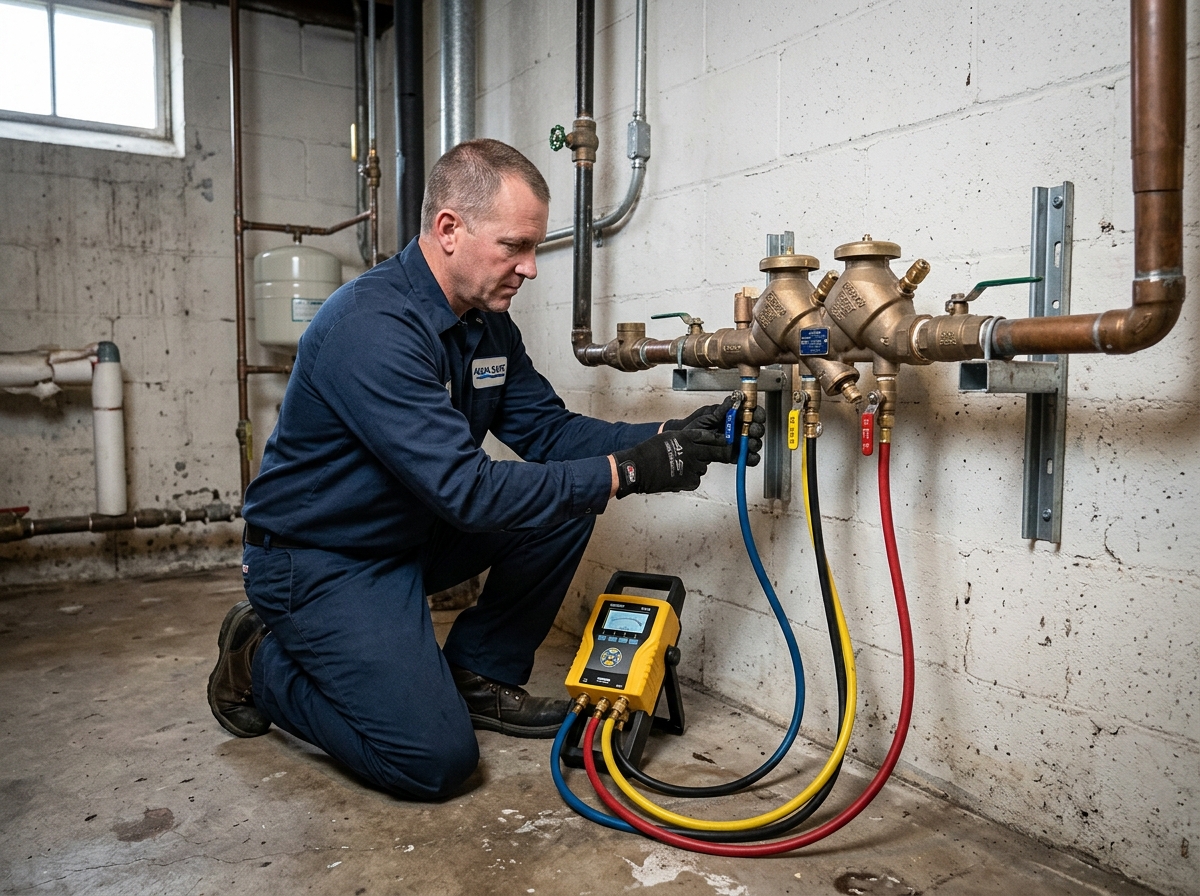 A technician kneeling next to a wall-mounted backflow preventer in a basement mechanical room, attaching a test kit with three color-coded hoses to the test cocks
Notify Anyone Who Will Be Affected by the Water Shutoff
Testing usually requires shutting off water downstream of the device for ten to twenty minutes. For a single-family home with an irrigation-only RPZ, that's a non-event. For a commercial building, restaurant, medical office, multi-family property, or any site with a fire suppression system, it matters a lot.
For commercial and multi-tenant buildings: Notify tenants 48 to 72 hours in advance. Specify the time window and which fixtures will be affected. Restaurants need to plan around prep schedules. Medical and dental offices may need to reschedule procedures that require running water.
For fire suppression devices: You almost always need to notify the central alarm monitoring company before testing, because draining or repressurizing the system can trigger a flow alarm. Call the monitoring service, put the zone on test, and confirm the test window. After testing is complete, call back and take the zone off test. Failing to do this can send the fire department to your building and result in a false alarm fee of several hundred dollars in many municipalities.
For irrigation systems: Turn off the controller before the test so it doesn't try to run a zone mid-test.
For boilers and chemical feed systems: Coordinate with your mechanical contractor if the backflow protects a closed-loop system with glycol or treatment chemicals. The test may require isolating and bypassing the feed.
Budget for the Possibility of Repair
A test failure isn't a moral judgment. Rubber seats wear out, springs weaken, debris from the municipal supply gets stuck in check valves, and freeze damage cracks brass. Common repairs include:
- Rubber kit replacement (relief valve disc, check valve discs, springs): $80 to $250 in parts depending on device size, plus 30 to 60 minutes of labor.
- Internal parts replacement beyond a standard kit: $150 to $500 in parts.
- Full device replacement if the body is cracked or the device is obsolete: $400 to $1,500 for residential sizes, $1,500 to $5,000+ for larger commercial assemblies, plus installation.
If your device is more than fifteen years old, ask your tester whether repair or replacement makes more sense. Some older models have parts that are no longer manufactured, and a same-day repair becomes a two-week parts hunt.
Build a repair contingency into your annual maintenance budget. A reasonable rule of thumb: assume that one out of every five devices in a portfolio will need some repair each year, and budget $200 to $300 per device on average across your portfolio for repair reserves.
What to Expect on Test Day
The tester will arrive with a calibrated differential pressure gauge, hoses, fittings, a bucket or discharge tube, and paperwork. They'll:
- Visually inspect the device, shutoff valves, and surrounding plumbing.
- Close the downstream shutoff to isolate the device.
- Attach hoses to the test cocks in a specific sequence depending on device type.
- Read pressure differentials across the check valves and, for RPZs, observe the relief valve opening point.
- Record numerical readings on the test form.
- Reopen valves, restore service, and confirm the system pressurizes cleanly.
You don't need to hover, but be available in case the tester needs the main shutoff location, a key to a locked room, or someone to silence an alarm. Ask for a copy of the test report before the tester leaves, even if they're filing electronically. You want it for your own records.
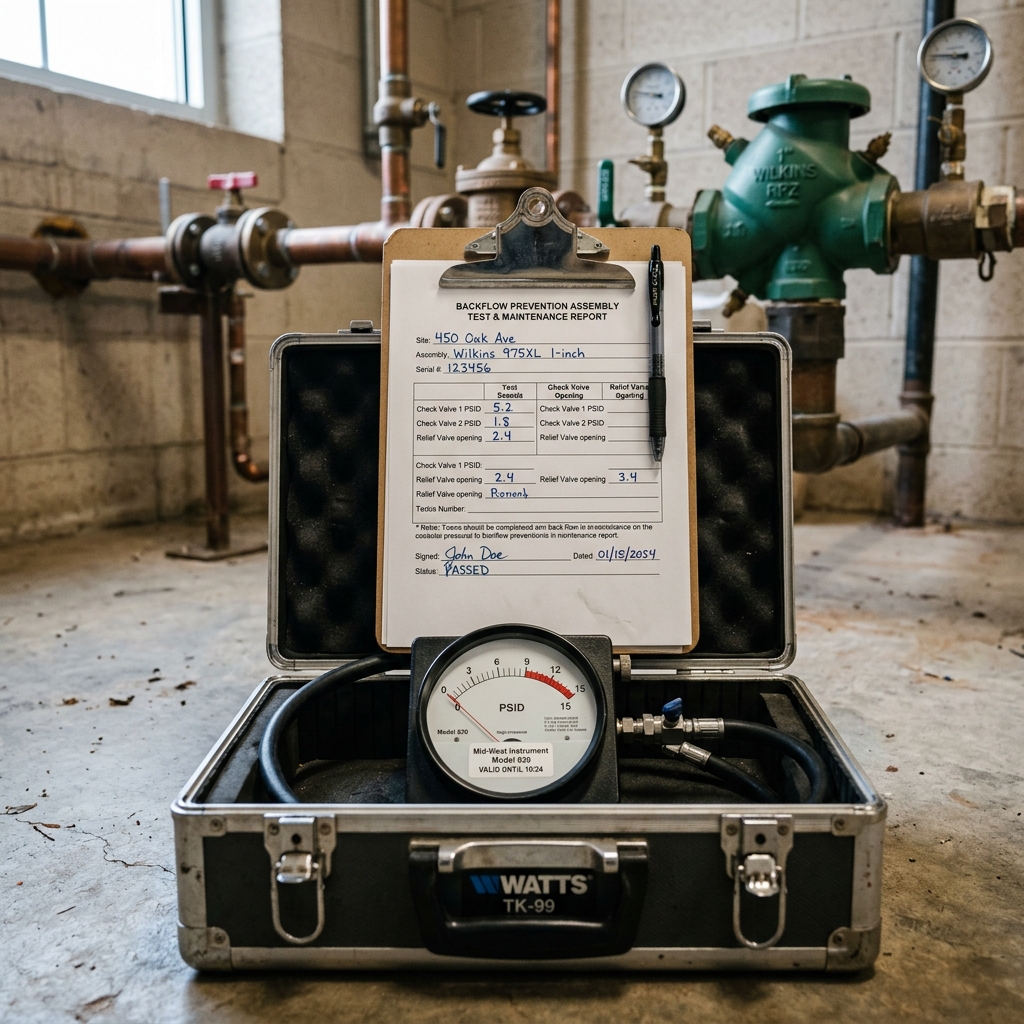 A completed paper backflow test report on a clipboard sitting on top of an open metal test kit case with a calibrated differential pressure gauge visible inside
After the Test: Don't Skip the Paperwork
This is where compliant becomes non-compliant for surprisingly many owners. Within a week of the test:
- Confirm submission. Log into your water authority's portal or call to verify the report was received and accepted. "The tester said they sent it" is not confirmation.
- File your copy. Keep a digital copy with the device's serial number, test date, and pass/fail status. For portfolios, a simple spreadsheet or any of the compliance tracking platforms works.
- Update the device tag. The metal or plastic tag on the device should reflect the latest test date and tester ID.
- Calendar next year's test now. Set a reminder for 60 days before the next deadline. The single biggest cause of late testing is "I'll deal with it next year" turning into a panicked call eleven months later.
If your test failed and required a repair, the device must be retested after the repair, and that retest is what gets filed for compliance. Don't assume the repair alone satisfies the requirement.
Quick Reference: Four-Week Preparation Checklist
- Week 4: Locate device, gather make/model/size/serial, confirm deadline with water authority, book a certified tester.
- Week 2: Clear access, trim vegetation, verify shutoff valves operate, check for visible damage, confirm the system is in service.
- Week 1: Notify tenants and alarm monitoring company, schedule any anticipated repair work, confirm appointment time.
- Test day: Be available, get a copy of the report, ask about any concerns the tester noticed.
- Week after: Confirm electronic submission, file your copy, update the tag, calendar next year's test.
Annual backflow testing isn't complicated, but it punishes procrastination. Treat it like the recurring infrastructure task it is, build a small routine around it, and you'll never get a shutoff notice or a public health letter in your mailbox. If you manage multiple properties, the single best investment you can make is a tracking system, even a spreadsheet, with deadlines, serial numbers, and tester contact info. Devices don't forget their birthdays. Your job is to make sure you don't either.